
Climate Change: When Do Weather Patterns Become the New Norm?
Quick Reference
- Temporary patterns: Driven by high and low pressure systems. Last 5 to 14 days. Heat waves, cold snaps.
- Cyclical patterns: El Nino, La Nina, North American Monsoon. Last months to a year, cycle every 3 to 7 years.
- Long-term shifts: Driven by ocean temperatures and atmospheric chemistry. Last decades.
- Meteorologist rule of thumb: 5 years of recurrence makes a trend; 30 years makes a “climate normal.”
- Almanac position: We observe trends, respect the science, stay non-political.
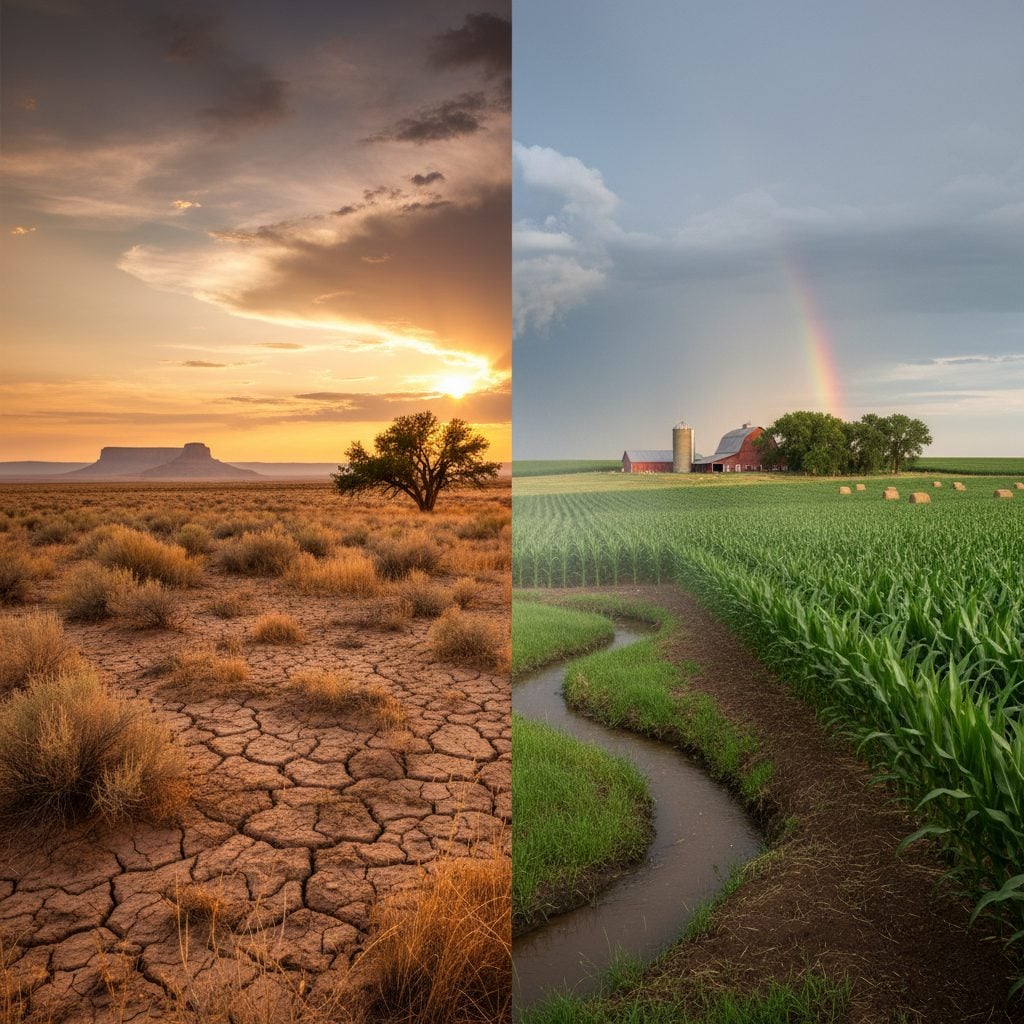
Have you ever noticed when the weather seems stuck for days on end? Normally, weather systems pass through a region steered by the jet stream. But when the upper atmosphere stalls, weather can park itself over one spot for days or weeks. The question that follows is the one this article is about: when does a stuck weather pattern become a real long-term climate shift?
Gone in Days, or Here to Stay?
Knowing whether to ride out a weather pattern or adjust to it long term is hard to call in the moment. But the type of pattern gives strong clues. The Almanac groups them into three categories: temporary, cyclical, and long-term.
Temporary Weather Changes: Days to Weeks
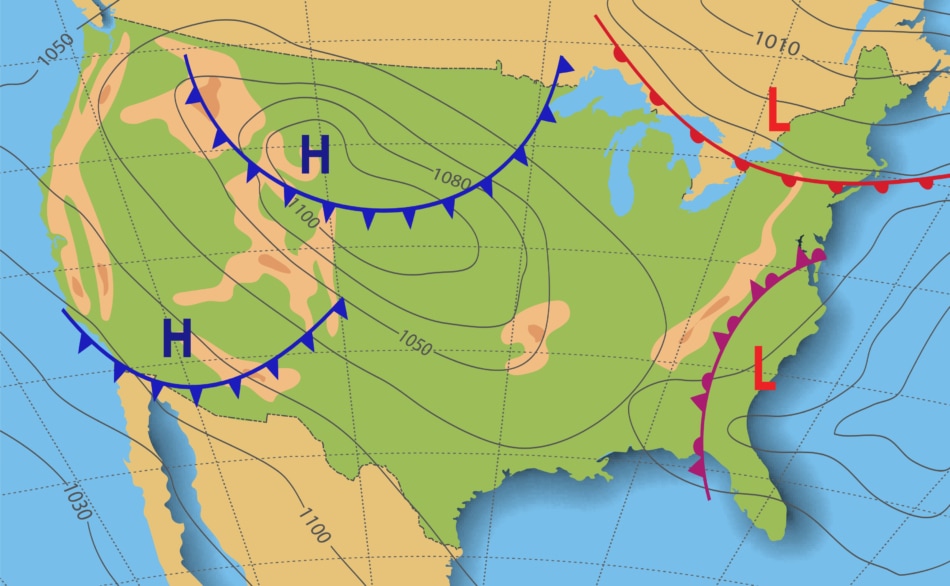
If the pattern is driven by high or low pressure systems (the H’s and L’s on the weather map), expect it to last several days to a couple of weeks. Long enough to feel like a new norm, short enough that it usually breaks.
Heat Waves and Cold Snaps
Heat waves form when a stubborn high in the upper atmosphere parks over a region, blocking other systems from moving through. Cold snaps form the same way around displaced lobes of the polar vortex. Both highs and lows generally weaken or get pushed along after 5 to 7 days. The weather they produce goes with them.

Cyclical Patterns: Months to a Year
Patterns driven by ocean temperature swings and large-scale atmospheric coupling tend to last months to a year, then return on a cycle of 3 to 7 years. The two best-known examples in North America:
- El Nino: A warming of central Pacific waters that shifts the U.S. jet stream south. Brings milder northern winters and wetter southern winters. Lasts about a year, returns every 3 to 5.
- La Nina: The cool-phase opposite. Wetter Pacific Northwest, drier Southwest, colder northern U.S. winters.
- The North American Monsoon: June through September pattern bringing rain and thunderstorms to the Southwestern U.S. Annual, dependable, well-documented.
- The Pacific Decadal Oscillation: A 20- to 30-year warming or cooling of the North Pacific. The longest of the well-mapped cycles.
We know these patterns are real because scientists have observed them for decades, long enough to recognize their cycle.
Long-Term Shifts: Decades
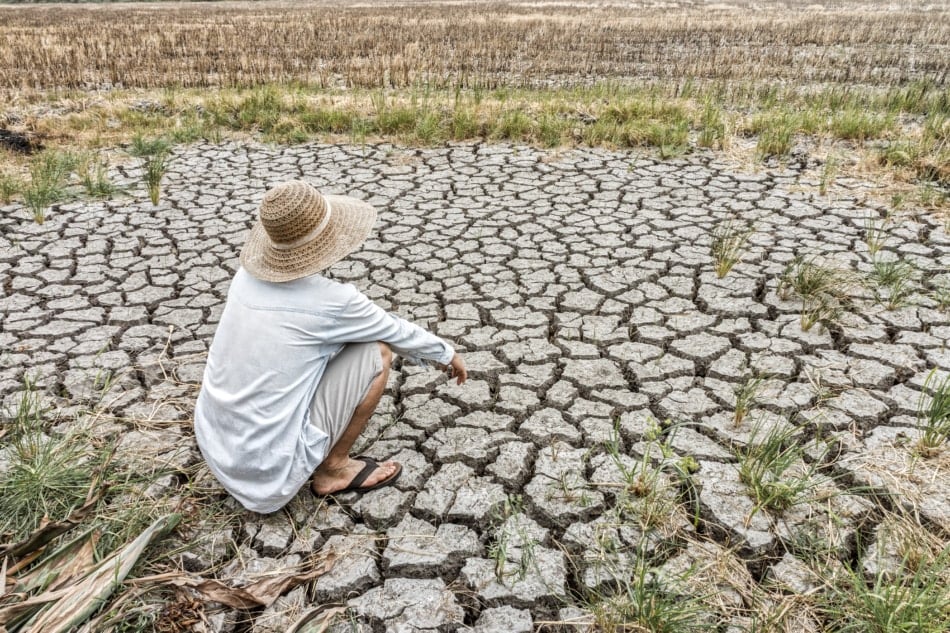
Some patterns are not cycles. They are gradual shifts driven by changes in ocean heat content and atmospheric chemistry. Droughts are the simplest example. A drought begins as a string of rainless weeks. Because precipitation varies week to week, it takes time to see whether a dry spell will break or build.
Meteorologists use a working rule of thumb when looking for trends: if a pattern recurs over 5 years or longer, it is showing signs of a new norm. Anything shorter is generally natural variability. To call a pattern a “climate normal,” the National Weather Service uses a 30-year reference window. A pattern has to show up consistently across at least three decades before it changes the reference numbers your local TV weather person reads off the chart.
The Three Tiers at a Glance
| Tier | Duration | Driver | Example |
|---|---|---|---|
| Temporary | Days to weeks | Pressure systems, jet stream | Heat wave, polar vortex outbreak |
| Cyclical | Months to a year, recurring 3 to 30 yrs | Ocean temperatures, atmospheric coupling | El Nino, North American Monsoon |
| Long-term | Decades | Ocean heat content, atmospheric chemistry | Long droughts, regional warming or cooling |
Climate Change: A Working Definition
This topic gets political fast. The Farmers’ Almanac is not a political publication. Since 1818, we have observed nature, tracked trends, and respected tradition across generations of readers. We try to do the same here.
The United Nations definition: “Climate change refers to long-term shifts in temperatures and weather patterns. These shifts may be natural, but since the 1800s, human activities have been the main driver of climate change, primarily due to the burning of fossil fuels which produces heat-trapping gases.”
In practical terms for a planner, gardener, or farmer: anything that lasts under 5 years is most likely a cycle. Anything that recurs over 5 to 30 years deserves a hard look at planting zones, water supply, and infrastructure. Anything beyond 30 years has rewritten the local “climate normal” your grandfather used.

Frequently Asked Questions
When does a weather pattern become climate change?
Meteorologists use a 5-year rule of thumb to identify a likely new trend, and a 30-year rule for an official “climate normal.” Anything shorter is generally natural variability or a cyclical pattern like El Nino or La Nina.
How long do heat waves typically last?
5 to 14 days. They form when a strong high in the upper atmosphere parks over a region, blocking other weather from passing through. The high eventually weakens or gets pushed along, and the heat wave breaks.
What is El Nino?
A warm-phase ocean pattern in the central Pacific that shifts the U.S. jet stream south. Brings milder northern winters and wetter southern winters. Lasts about a year, returns every 3 to 5 years on average.
What is the difference between weather and climate?
Weather is what is happening today and this week. Climate is the long-term average of weather across decades. More here.
How does the Farmers’ Almanac approach climate topics?
We observe nature, track trends, and report what the patterns show. We use the United Nations and U.S. National Weather Service definitions when discussing climate. We stay out of political framing and let the dates and numbers speak.
What should a gardener or farmer do if a pattern feels permanent?
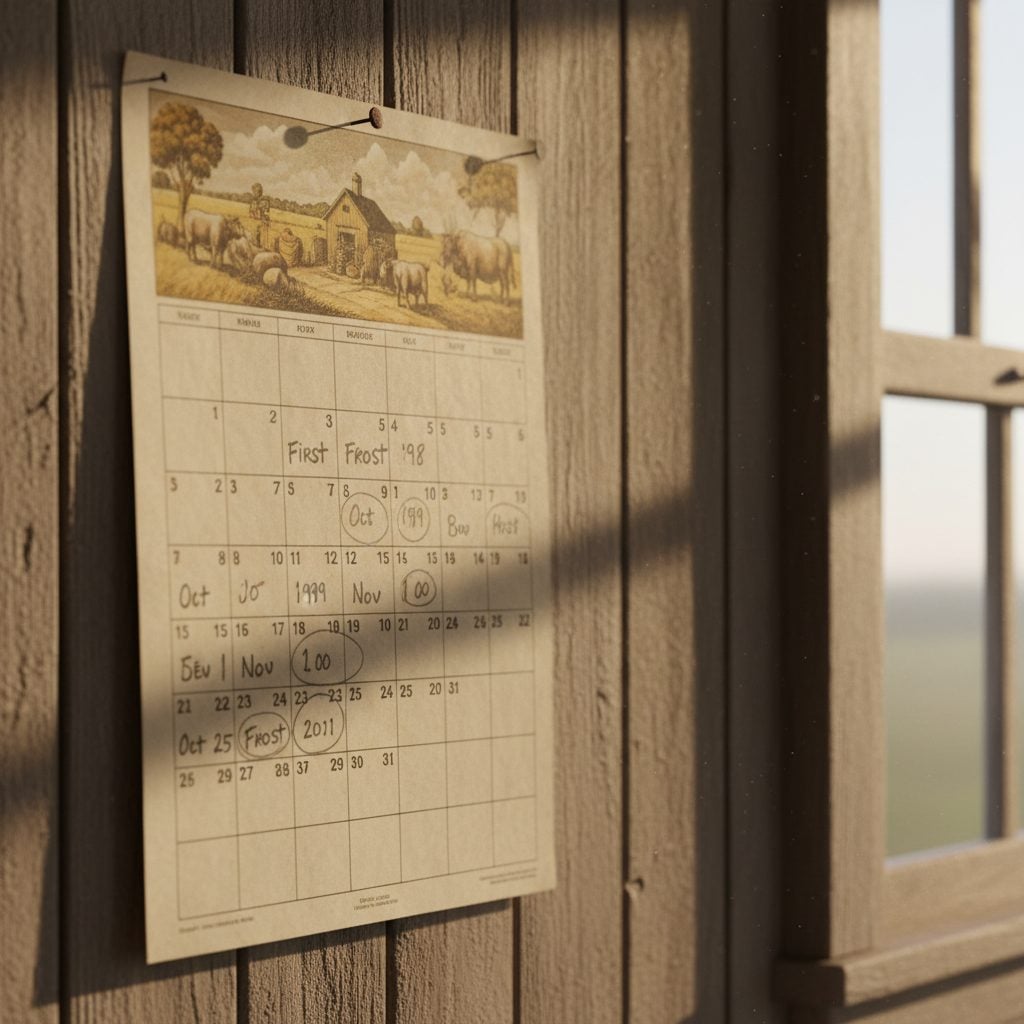
Wait through 5 years of records before redesigning a long-term plan. Watch the USDA Plant Hardiness Zone map, which is updated every 10 to 15 years. Track local first and last frost dates. If they have shifted by two weeks or more across a decade, the local climate normal is changing.
Keep Learning
- What’s the difference between weather and climate?
- Glossary of Weather Terms
- The Atmosphere That Affects the Weather
- United Nations climate change resources


Tiffany Means
Tiffany Means is a freelance writer and a degreed meteorologist. She specializes in weather forecasting and enjoys making the subject of weather (and the science behind it) more relatable. She currently resides in the Blue Ridge Mountains of North Carolina.
- Tiffany Means

- Tiffany Means
- Tiffany Means
- Tiffany Means



i believe that we self-aggrandize our human selves when we attribute warming to ourselves. there may be abnormal, and perhaps harmful, changes in our atmosphere. but to attribute them to ourselves is a gross ego trip. we probably do have some very minor degree and effect on atmospheric changes, however human life is a minor and perhaps temporary blip on universal goings on within eternity.
Of course the climate is going to change. It has been since the beginning of time on planet Earth. What happened to the dinosaurs? The Earth is like a spinning top. To think that the Earth will spin on it’s same axis and revolution for infinity doesn’t make sense. Then there’s the sun, a burning ball of fire. Do we also assume that it will remain static for infinity as well? These events definitely effect climate. Human kind also contributes to the climate, just to what degree? Are the current proposed solutions well thought out with a consideration of how the implementation might actually effect the environment as well as the economy? It would seem pretty ignorant to spend tons of money for something that really makes little impact on controlling the climate and could be extremely detrimental. Mining for lithium minerals to replace all fossil fuel equipment would be monumental and a huge impact on the surface of the planet. Then how do you dispose of the massive amount of toxic waste that will be produced by such an endeavor? This all or nothing approach is dangerous to say the least and to demonize people who express concerns with the plan is foolish. Think people!
I am lucky enough to live in the mountains of Western North Carolina and the weather here is normally mild. However, what I have noticed are the trees budding sooner. By sooner I mean a month before normal time. Most people attribute it to warmer months which can typically be caused by weather patterns. Yet plant growth is dependant upon soil temperature. Part of a plants growth is budding in the spring and these trees in my area have started their growth almost a full month and a half earlier. I also notice animals, whose normal habitats are being invaded by people and affected by weather, traveling hundreds of miles away to find new homes. There are more panthers/cougars in my area that had almost vanished due to upswing in building and human growth. Still, their habitats in Florida are growing smaller and less suitable so they are on the move again. I do not claim any political affiliations and do not listen to politicians on the matter of climate change but I do listen to animals and nature, and they are starting to chatter!
If climate change is real, why isn’t the whole globe on board with stopping oil production? I see it as political and a lot of climate change experts trying to control everyone and getting rich. I’ve seen a lot of different weather patterns and there is no climate change where I live. I hope farmers almanac stays neutral from politics and is truthful with all the info that is written.
HI ANN
THE MASS WILD FIRES, FLOODING AND EXTREME HIGH TEMPERATURES IN OUR COUNTRY AND ALL THROUGH OUT EUROPE SHOULD BE A WAKE UP CALL FOR THE WORLD.
SCIENTISTS ALL OVER THE WORLD PLUS NASA THE U.S. WEATHER SERVICE AND NOAH HAVE PROVEN TIME AND TIME AGAIN CLIMATE CHANGE IS REAL. PLEASE LOOK AT THE EVIDENCE AND NOT LISTEN TO THE POLITICAL RHETORIC WHICH HAS IGNORED THE EVIDENCE DO TO THE LOBBYING BY THE FOSSIL FUEL INDUSTRY!!! JUST GOOGLE THE FLOODING AND SUFFERING IN PAKISTANI.
THERE ARE PLENTY OF DOCUMENTARIES BY NATIONAL GEOGRAPHIC CALLED LIVING DANGEROUSLY AND BEFORE THE FLOOD WHICH DISCUSS AND HAVE UNDISPUTED EVIDENCE THAT CLIMATE CHANGE IS OCCURRING AS WE SPEAK.
HOUSTON TEXAS HAD 48 INCHES OF RAIN AFTER A HURRICANE WENT THROUGH SEVERAL YEARS AGO. EASTERN KENTUCKY HAD 12 INCHES IF RAIN IN THE APPALACHIAN AREA WHICH HAS DEVASTATED PEOPLES HOME AND BUSINESSES.
IF YOU OPEN YOUR HEART AND LOOK AT THE EVIDENCE AND NOT LISTEN TO THE POLITICIANS YOU MAY HAVE A DIFFERENT OPINION.
Maybe forest management should be a priority? The CO2 that is expelled by the fires is enormous. Then a result of the fires is that the burnt trees on the ground continue to expel CO2 and are no longer available to absorb the CO2. Cleanup up the forest floors of the burnt trees and replant new ones to absorb the CO2. Flooding is another major concern that should be managed. We have places ravaged by drought and decimated by floods. Why can’t we build infrastructure to be able to move water from flooded areas to drought areas? Even the Romans knew how to build aqueducts. Like everything else in our society, politicization will be the demise, and it ain’t just one side that’s doing it. Demonizing people that don’t agree is foolish. How about a open serious discussion?
Excellent article! Based on facts and science not politics.