
Sleet vs Freezing Rain: What’s the Difference?
What's the difference between sleet and freezing rain? How about hail? We explain.
Quick Reference: Sleet vs Freezing Rain vs Hail vs Graupel
- Hail: ice balls (≥5 mm), summer thunderstorms, milky white, very hard. Record: 8-inch hailstone, Vivian, SD, July 23, 2010.
- Sleet: small clear ice pellets (<5 mm), winter. Starts as snow, melts in a warm layer, refreezes in a cold one.
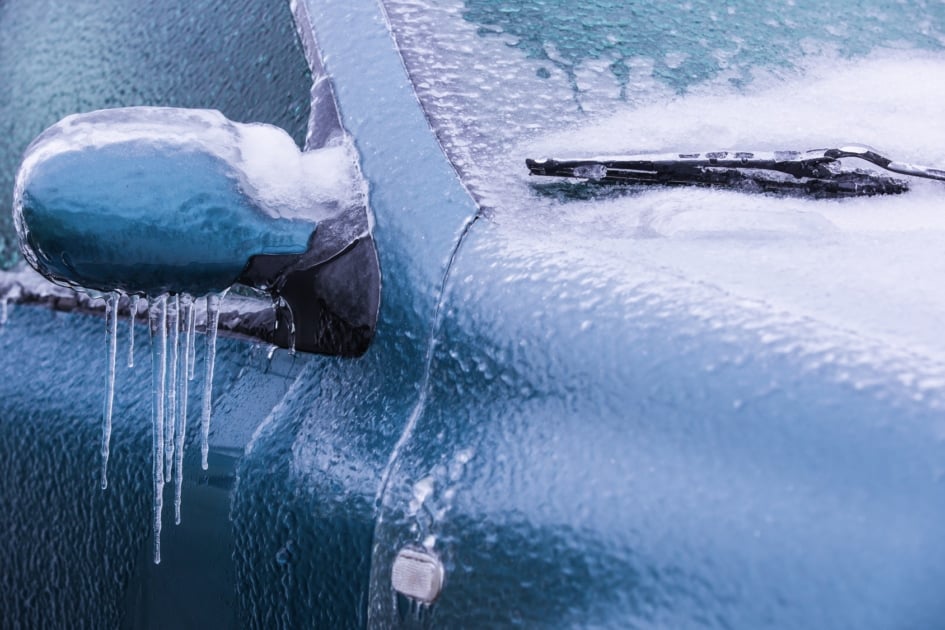
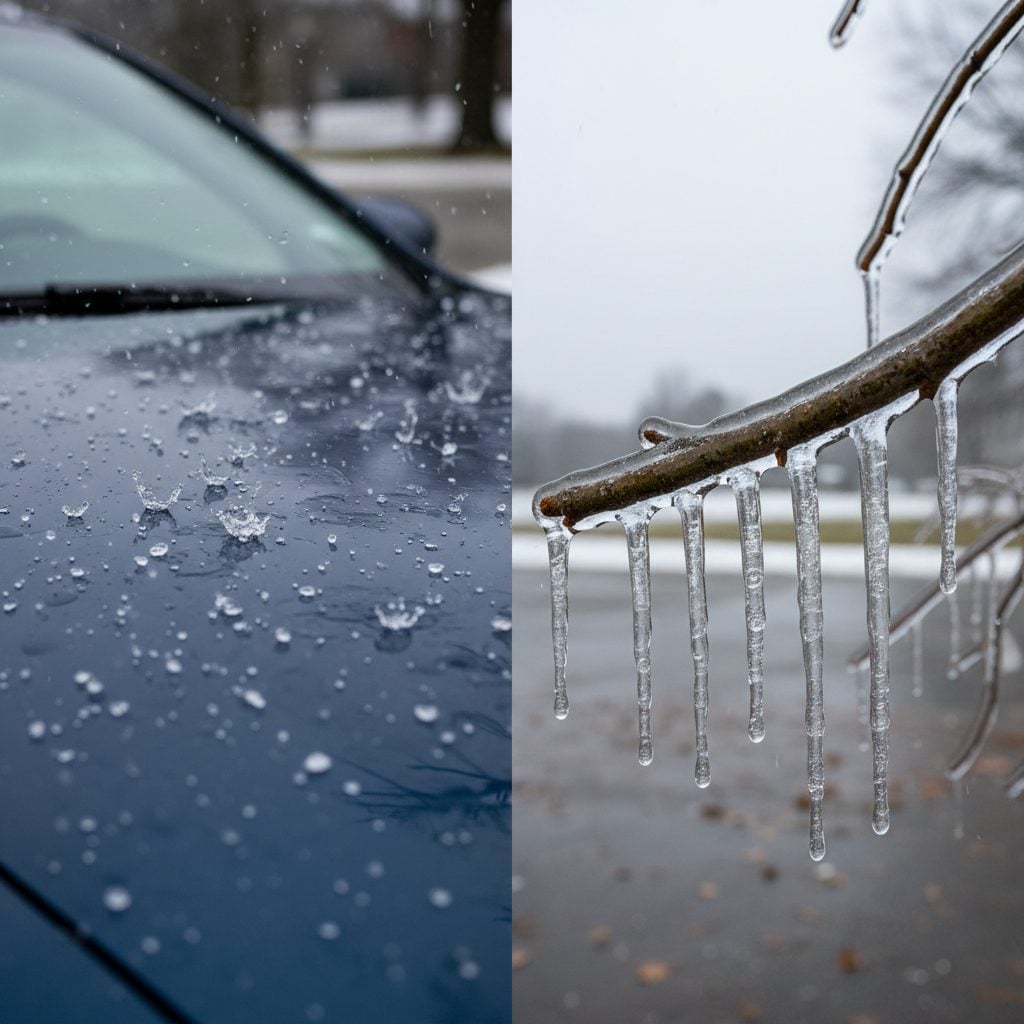
- Freezing rain: liquid rain that freezes on contact with sub-freezing surfaces. The “glazed donut” coating. Brings down power lines.
- Graupel: “soft hail.” Snowflakes coated with rime ice. Crushable, bouncy, white.
- Snain: unofficial term for a rain-snow mix. UK and Canada call it sleet; U.S. forecasters do not.
- Most dangerous: freezing rain, hands down. A quarter inch turns roads, sidewalks, and trees into glass.
No matter what the season, all kinds of things can fall from the sky in the form of precipitation. There is some confusion about what is what when the temperature drops. Here is an explanation of the differences between the different types of frozen precipitation that can occur and when you are most likely to see it. NOAA’s winter precipitation training page has the official meteorological definitions.
Hail
While hail is usually associated with summer storms, it can form any time, anywhere, when the conditions are right. Many people confuse hail with other types of frozen precipitation. Here is how hail differs.
Hailstones start with water droplets that are carried high into the clouds (past the freezing level) by the updrafts of a thunderstorm. The frozen water droplets fall once more, sometimes melting a bit as they reach warmer layers of air, and then they are carried back up into the freezing layer by yet another updraft. The more this happens, the larger the hailstones get. When the updraft can no longer support the weight of the hail, or it weakens, they fall.
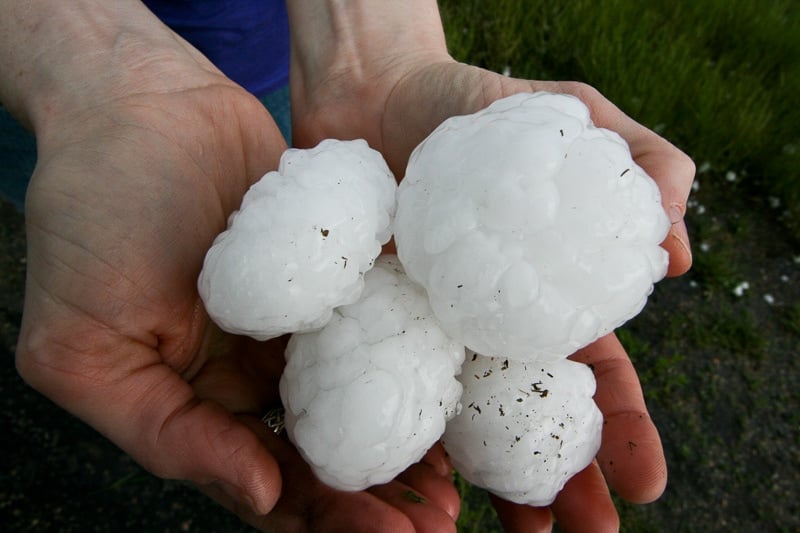
To be classified as a hailstone, balls of ice need to be at least 5 millimeters in diameter, although they are often much larger. The largest recorded hailstone ever fell to Earth on July 23, 2010, in Vivian, South Dakota. This hailstone, found by local resident Les Scott, was an enormous 8 inches in diameter, and that was after it had melted for a little while. At two pounds in weight, this massive chunk of ice was nearly the size of a volleyball.
Hailstones are usually milky white in color and very hard. They can do severe damage to trees and property and can be deadly to people and livestock.
Sleet
Sleet is probably the most confusing kind of precipitation to fall. Many people use the term sleet when referring to the mix of rain and snow you sometimes see when a line of warm and cold air masses meet. Both the British and Canadians refer to these rain-snow mixes as sleet, but the unofficial American term for this wintery mix is “snain.”
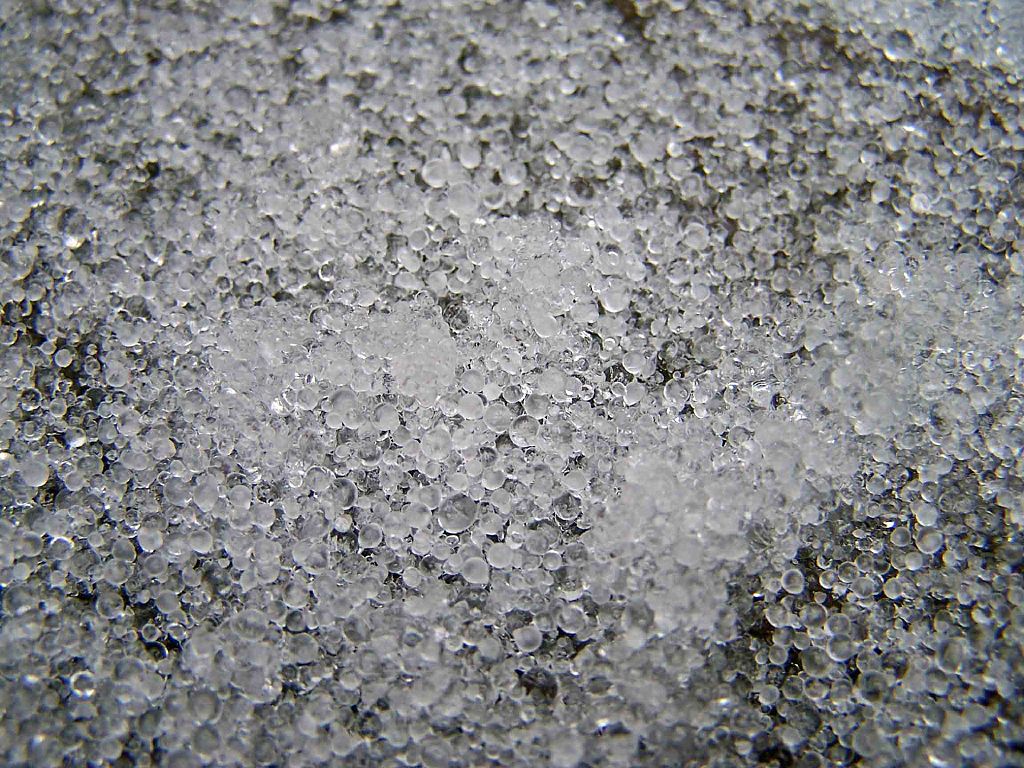
Americans define sleet as ice pellets. It is very similar to hail, but much smaller, less than 5 millimeters in diameter, and forms under different conditions. Sleet is a winter weather occurrence and usually appears as clear, hard pellets.
Sleet starts out as snowflakes high in the clouds, then falls through a warm layer of air, where it melts and turns into partially melted snowflakes and raindrops. Before reaching the Earth’s surface, sleet must fall through another layer of below-freezing air, where it re-freezes into ice pellets. It hits the ground with that all-too-familiar sound that is unmistakable to those of us who live in cold climates.
Freezing Rain
Freezing rain is another winter occurrence and probably the most dangerous for pedestrians and motorists. The formation of freezing rain is very similar to that of sleet, so similar in fact that you will often see sleet and freezing rain at the same time if the surface temperature is just right, around 32°F. Like sleet, freezing rain usually starts as snowflakes, and then falls through a warm layer in the atmosphere where it turns into rain. It refreezes when it touches surfaces that are below freezing. Its telltale mark is that “glazed donut” effect on cars and sidewalks, and it is what brings down tree limbs and power lines. A quarter-inch ice storm can shut down an entire region for a week.
Graupel
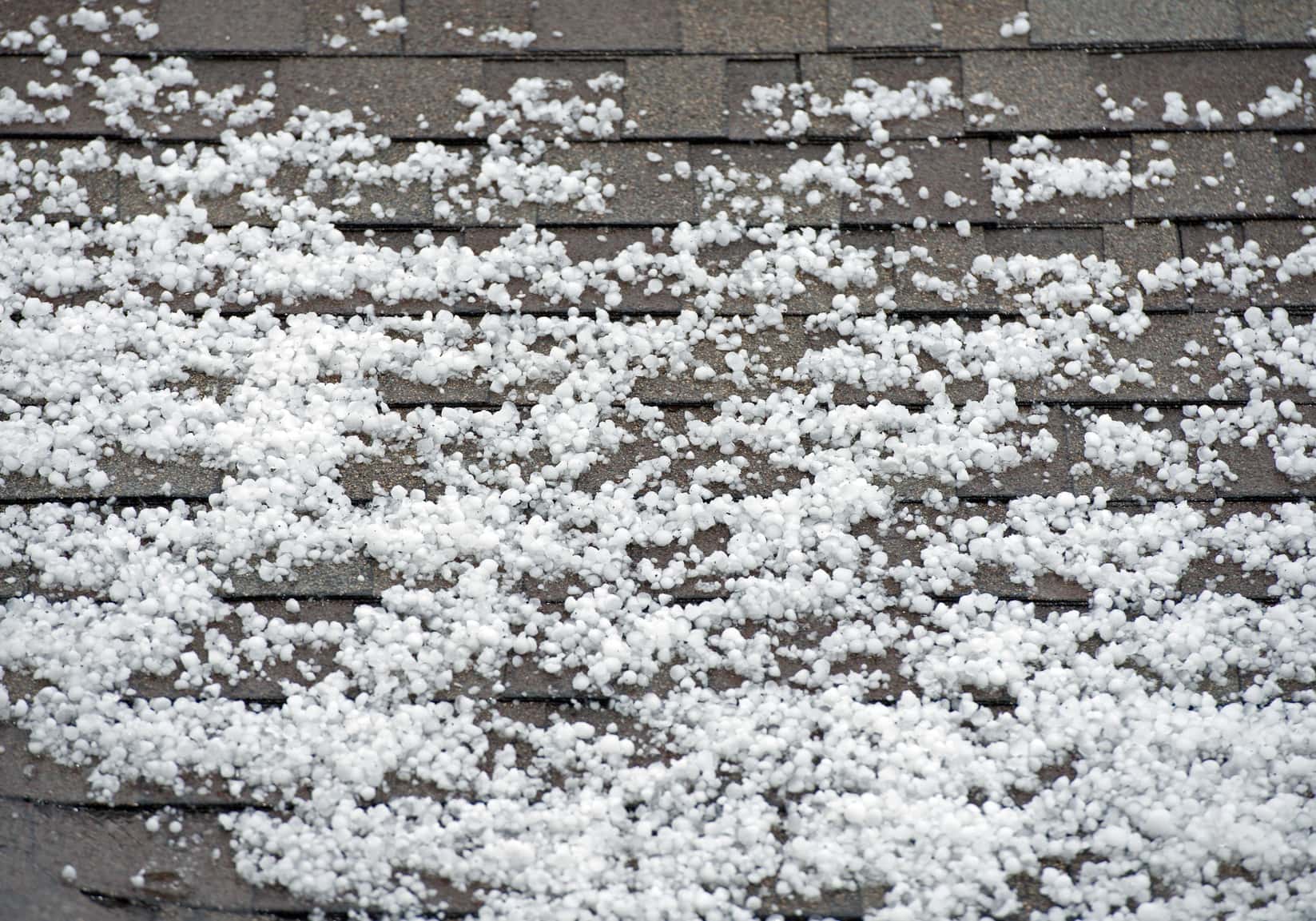
You have never heard of graupel? It is a real thing and looks a lot like sleet or small hailstones, but the small balls are made of snow, not ice, and they are white. They almost look like tiny Styrofoam pellets.
This form of precipitation starts as snowflakes, then the flakes grow larger as supercooled water funnels up into the clouds and bonds to them. You can tell the difference between graupel and hail or sleet by picking up the tiny snowballs; if they are soft and easy to crush, it is graupel. Graupel is often referred to as “soft hail.” It often bounces and breaks apart once it hits the ground.
Frozen Precipitation Cheat Sheet
| Type | What it looks like | How it forms | Season |
|---|---|---|---|
| Hail | Hard, layered ice ≥5 mm. Milky white. Can reach golf-ball or softball size. | Updrafts in thunderstorms recycle drops through the freezing layer. | Warm season, severe weather |
| Sleet (ice pellets) | Small clear hard balls <5 mm. Bounces. | Snow melts in a warm layer aloft, refreezes in a cold layer below. | Winter |
| Freezing rain | Liquid drops that glaze surfaces with clear ice on contact. | Snow melts to rain in warm layer, drops fall through shallow cold layer too thin to refreeze them, freeze on touching cold ground/objects. | Winter, around 32°F |
| Graupel | Tiny soft white pellets. Crushable. | Snowflakes accrete supercooled cloud droplets (rime). | Late fall through spring |
| Snow | Flakes of ice crystals, six-sided. | Water vapor freezes directly onto particles aloft. | Winter |
| Snain (informal) | Half rain, half snow. | Marginal temperatures near 32°F. | Winter |
Plan the week around the freezing line
Sleet or snow? Mostly that’s a forecast.
The Farmers’ Almanac extended forecast tells you when the freezing line is likely to come for your zip code, so you can plan plowing, errands, and the driveway.
Frozen Precipitation FAQ
What is the difference between sleet and freezing rain?
Sleet refreezes in the air on the way down and lands as a hard pellet. Freezing rain stays liquid in the air and freezes only when it touches a cold surface, coating everything in clear glaze. Sleet pings; freezing rain glistens.
Is sleet the same as hail?
No. Hail forms in summer thunderstorms when updrafts recycle water droplets through the freezing layer; pellets are large and milky white. Sleet is a winter ice pellet, smaller, clear, and from a different vertical temperature profile.
What is graupel?
“Soft hail.” A snowflake coated with rime ice from supercooled cloud droplets. White, easy to crush, often bouncing on a hard surface like a tiny Styrofoam bead.
What is the largest hailstone ever recorded?
A hailstone 8 inches in diameter and about 2 pounds that fell in Vivian, South Dakota, on July 23, 2010. The largest ever in the U.S., possibly the world.
What is “snain”?
An informal U.S. term for a rain-snow mix on the borderline of freezing. The Canadians and the British call it sleet; American forecasters reserve “sleet” for ice pellets.
Which type of frozen precipitation is most dangerous?
Freezing rain. A quarter-inch coating downs trees and power lines and turns roads to glass. Major U.S. ice storms have caused billions of dollars in damage and weeks-long outages.
Can hail happen in winter?
Rarely. Hail needs strong thunderstorm updrafts. Winter does not usually have the convection. A few western U.S. storms produce small “hail” in cold months, but the larger summer-style hailstones are warm-season.
What is falling in your backyard? Take pictures and tag us on social media. For more winter weather reading, see our companion guides: how to melt ice naturally, beat the winter blues, and why there are more stars in the winter sky.
All-Access Membership
Weather glossary plus the long-range forecast.
Members get the full archive: weather lore, glossary, planting calendars by zip code, weekly updates, the long-range forecast, and the printable Almanac for the year ahead.


Amber Kanuckel
Amber Kanuckel is a freelance writer from rural Ohio who loves all things outdoors. She specializes in home, garden, environmental, and green living topics.
- Amber Kanuckel

- Amber Kanuckel
- Amber Kanuckel
- Amber Kanuckel





Have always refired to Graupel as snow pellets. Here in NW Montana, we get it at some point every year. Use to say, looks like God’s beanbag chair sprung a leak.
I’d like to learn more about gardening and astronomy
So, what are these? Micro icicles? Falling today in Southern Illinois in Bond County. Between 1/8 and 1/4 inch long, light and fluffy.
Photo of the precip on my car windows
Had some this morning in Vermont’s Northeast Kingdom.
I’ve always called it Dippin’ Dots for obvious reasons!
I live in South Central Michigan. We see graupel occasionally. In fact we are experiencing some today!
I saw graupel this morning when I took out the trash. I have seen lots of frozen things on the ground in my 71 years, but never these pretty, white things. I had to look it up on the internet to find out what it was. We’re never too old to learn, folks.
Excellent website. Just saw some graupel today in the Boston suburbs. First time I’ve seen it and first time I learned the name.
Thanks, Jennifer! Graupel is so strange, isn’t it?
Finally!!! An answer!!! Went out a couple weeks ago and thought my flower pot fell over and the fertilizer from the dirt was on the ground, but it was all over. Tried to pick it up and it melted. I told my mother about it, because it was so strange. I have seen a lot of snow, etc. but this is the first time that I can say I have ever seen this. Looked like styrofoam all over. Graupel, I will always remember. Thanks!!!!
During the past couples days I have hear the weather people in the Seattle area using the word graupel in the weather report.I looked it up only to find it is a term used for soft hail. When I asked some of my older friends about the condition, we came to the same conclussion, ” our weather people have way to much time on their hands”. Oddly enought not to be out done I heard another broadcaster on a different channel use the word on one of their broadcast.Please lets just call it what we all know and understand “Hail “.
Hi Jerry Morris, Graupel is a bit different from hail, and actually almost looks like styrofoam dust, in little round light pellets, in addition to the time of year you’ll find it. Its makeup is different from straight ice. It is an odd name, though, isn’t it.
But it’s different than hail. It’s snowy pellets not icy pellets!
❄️❄️❄️We’ve had it about 10 times today for about 5 minutes at a time with sunshine in between.
Freaky but cool.