
Sneezing? Don’t Blame Goldenrod!
Goldenrod is more than just a weed and probably not the cause of your seasonal allergies, so leave it for the bees! Learn how it's full of legends, beauty, and the power to heal.
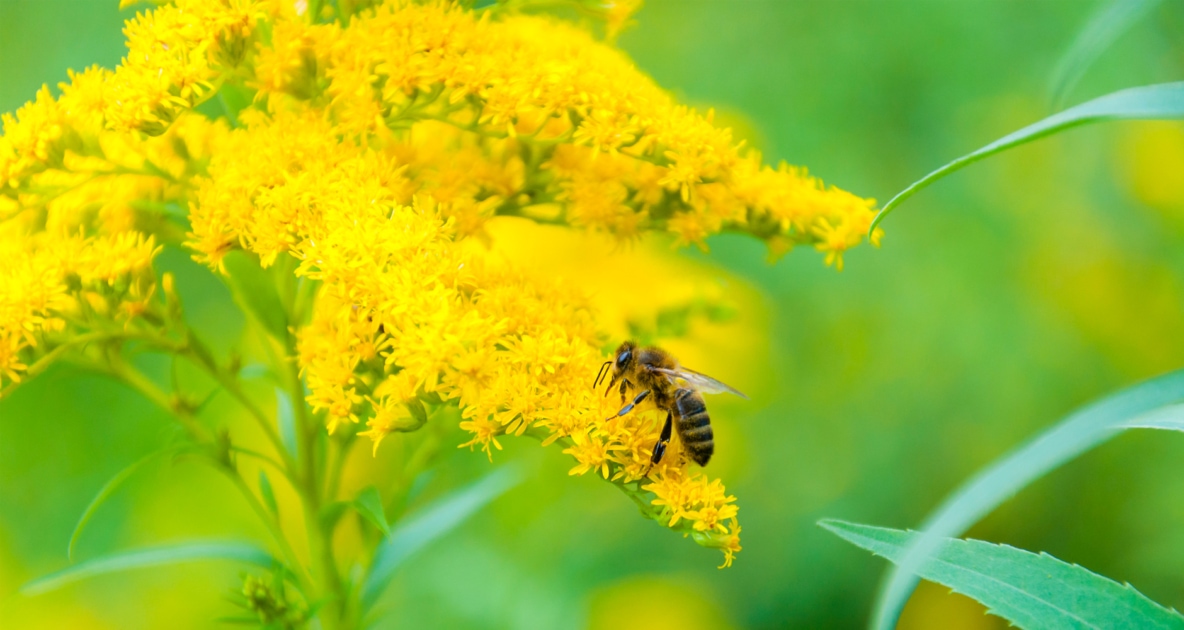
Quick Reference: Goldenrod
- Family: Asteraceae (daisy family). Genus Solidago, from Latin solidus, “whole” or “to heal.”
- How many species: over 100 in North America. Solidago canadensis (Canada goldenrod) is the most common.
- Bloom window: late July through October, peaking in September.
- Not the allergy culprit: goldenrod’s pollen is heavy and insect-pollinated. The hay fever you blame on it is almost always ragweed.
- Old folk rule: first goldenrod bloom = first frost in 6 weeks. Surprisingly accurate in much of the U.S.
- Modern use: approved in Germany for urinary tract issues and kidney stones. Avoid if pregnant or with serious heart/kidney conditions.
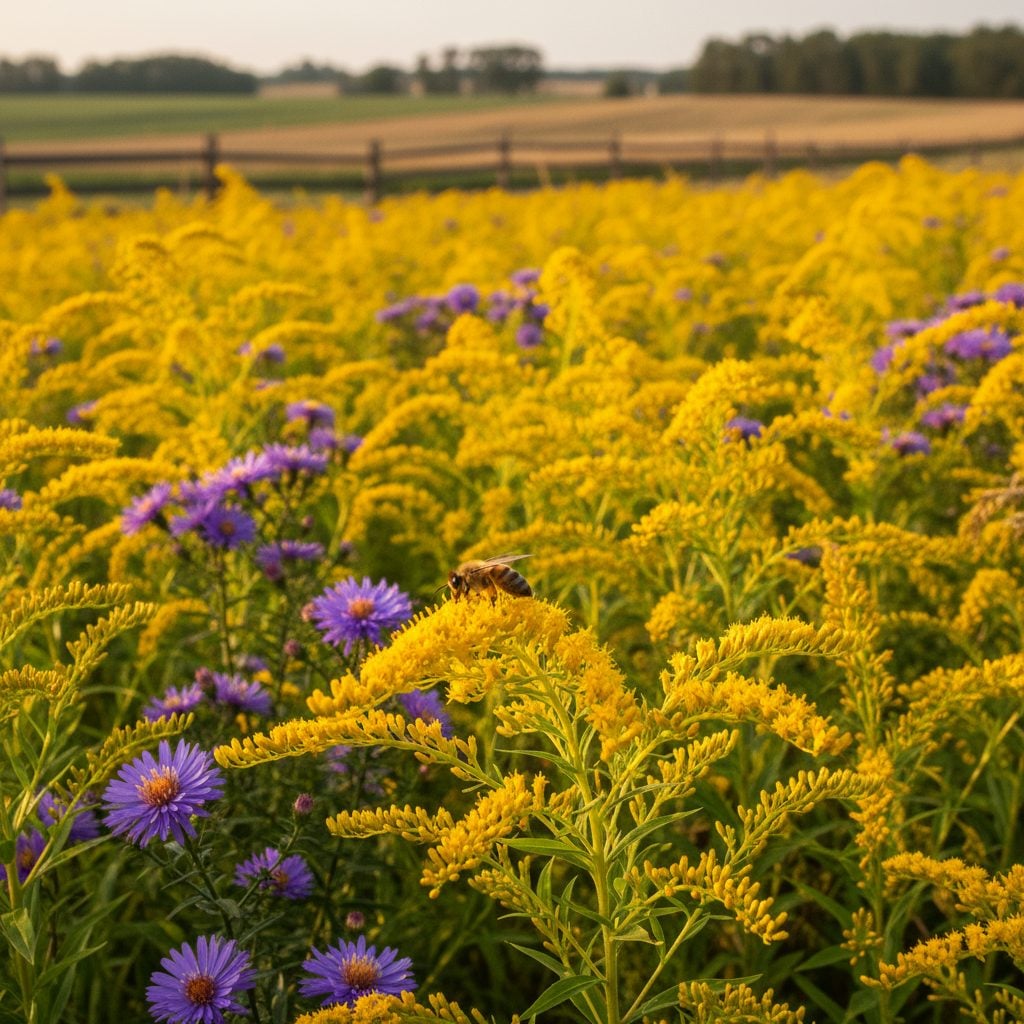
Did you know that throughout North America there are more than 100 different varieties of goldenrod? This member of the daisy family tends to appear in all its bright yellow glory in abandoned fields, along roadsides, and anywhere else it can grow undisturbed. The multitudes of golden blooms appear in late summer and through fall, adding rich color to the landscape and attracting many beneficial insects. The Britannica entry on goldenrod gives the botanical basics; the folklore is what makes it interesting.
The Source of the Sneeze?
Although this herb (yes, it is technically an herb) is sometimes considered a nuisance weed by gardeners, it is commonly and mistakenly blamed for seasonal allergies. It blooms at the same time as ragweed, which is the real culprit behind hay fever. So if you are sneezing this time of year, do not blame goldenrod. Leave it for the bees. The clincher: goldenrod’s pollen grains are large, sticky, and heavy. They drop straight to the ground unless an insect carries them. Ragweed pollen is small, dry, and wind-borne; it gets into your nose. The two plants just happen to bloom at the same time.
Goldenrod actually has a variety of uses, and there are many myths and legends surrounding it. People have used it to make dye, as a cure-all, and even as a good luck charm. During the American Revolution, when colonists ran out of British tea, they made a beverage called Liberty Tea from goldenrod.
A Healing Plant
The scientific name for the goldenrod family is “Solidago,” which comes from the Latin word solidus, or “whole.” Experts believe this refers to goldenrod’s healing properties. Herbalists around the world have used the plant to treat anything from inflammation to urinary tract infections.
Native Americans boiled the leaves and used them externally as an antiseptic for healing wounds and for relief from eczema, arthritis, and other skin conditions, and internally to treat ulcers and problems with the lungs and kidneys. Some tribes referred to their goldenrod mixtures as “sun medicine.” Pioneers used goldenrod as a salve for easing the pain of bee stings.
More recently, German researchers have officially recognized goldenrod as an effective treatment for kidney stones; it is listed as an approved herbal medicine for urinary tract issues in the German Commission E monographs. The 17th-century English herbalist John Gerard claimed there was no better herb for staunching the flow of blood from a wound.
Note: while there are no known major side effects of goldenrod, either alone or with other drugs or herbs, you should avoid it if you are pregnant or have serious heart or kidney problems. Always check with a clinician before adding a new herbal supplement.
Goldenrod Wisdom and Folklore
Several traditions show that people found goldenrod useful for more than medicine. In Great Britain, for instance, it is said that goldenrod will point the way toward buried gold and silver. Here are a few more bits of traditional wisdom.
- People once used goldenrod to find water, believing that wherever it grew, a hidden spring was nearby.
- In the United States, farmer’s wisdom says that when you see the first goldenrod blooms, you can expect a frost in six weeks.
- This flower is a symbol of wealth and good fortune. Some say that if goldenrod starts growing near your home, your family will have a run of unexpected good luck.
Goldenrod in Myths and Legends
Many flowers have great stories surrounding them, and goldenrod is no exception. In one legend, an elderly woman was walking through a forest at night. She was tired and scared, and as she walked, she asked the trees around her for a walking stick. No tree would agree to help, but she finally found a small stick on the forest floor. She asked the stick if it would help, and the stick agreed, so she leaned on it throughout the rest of her journey. When she finally made her way out of the forest, she transformed into a fairy princess. As a reward, she sprinkled gold dust on the stick, transforming it into goldenrod.
Another myth tells of two young girls who visited an old woman rumored to have magic powers. One girl had golden hair, and the other had dark violet eyes. The golden-haired girl asked the old woman to make her into something that everyone admired, while the girl with the violet eyes wanted to always be the golden-haired girl’s best friend.
According to the legend, the old woman gave each girl a corn cake, and after that day, the girls were never seen again. But wherever the girls had walked, there grew two flowers that no one had ever seen before: the goldenrod and the purple aster. The people who tell this tale say that this legend is the reason asters and goldenrods pair so well together in fall landscapes and floral arrangements.
Goldenrod vs Ragweed: How to Tell Them Apart
| Trait | Goldenrod (Solidago) | Ragweed (Ambrosia) |
|---|---|---|
| Flower color | Bright yellow plumes | Pale yellow-green, easy to miss |
| Flower shape | Dense, branching sprays | Tiny spikes along the stem |
| Pollen | Heavy, sticky, insect-carried | Light, dry, wind-borne |
| Causes hay fever? | No | Yes, the main U.S. fall trigger |
| Habitat | Open fields, roadsides | Same fields, often next door |
| Height | 2 to 6 ft | 1 to 4 ft |
Goldenrod bloom = frost in six weeks
Plan your harvest around the first yellow plumes.
The Farmers’ Almanac extended forecast pairs the folk timing with the long-range temperature outlook for your zip code.
Goldenrod FAQ
Does goldenrod cause hay fever?
Almost never. Its pollen is large, sticky, and carried by insects, not wind. The actual culprit blooming at the same time is ragweed, whose tiny dry pollen drifts for miles.
When does goldenrod bloom?
In most of North America, from late July through October, peaking in September. The first plumes are a classic folk signal of frost arriving in about six weeks.
How many species of goldenrod are there?
More than 100 in North America. Canada goldenrod (Solidago canadensis) and tall goldenrod (S. altissima) are the two most common.
Can you make tea from goldenrod?
Yes. Pick the open flowers, dry them in a warm shaded spot, and steep one to two teaspoons in hot water for 10 minutes. The colonists called it Liberty Tea.
Is goldenrod good for kidney stones?
Germany’s Commission E lists goldenrod as approved for urinary tract complaints and kidney support thanks to mild diuretic and anti-inflammatory action. Talk to a clinician before relying on it.
Is goldenrod safe for pollinators?
Very safe. It is one of the most important late-season nectar sources for bees, butterflies, and migrating monarch caterpillars. Leave a patch standing if you can.
Can I grow goldenrod in my garden?
Yes. Most species are USDA zone 3 to 9, drought tolerant, and easy from seed or division. Cultivars like ‘Fireworks’ are well-behaved in beds. Avoid the rhizome-spreading wild types in small gardens.
So when you pass fields of this wispy yellow wildflower growing in abundance, view it as more than just a weed, and remember its legends, beauty, and power to heal. For more late-summer reading, see our companion guides: edible flowers, witch hazel, nature’s magic potion, and why we call them the dog days of summer.
All-Access Membership
Folklore, forecast, and the printable Almanac.
Members get the full archive: weather lore, planting dates, frost windows, weekly updates, and the printable Almanac for the year ahead.


Amber Kanuckel
Amber Kanuckel is a freelance writer from rural Ohio who loves all things outdoors. She specializes in home, garden, environmental, and green living topics.
- Amber Kanuckel

- Amber Kanuckel
- Amber Kanuckel
- Amber Kanuckel





I have year round allergies. There’s usually something in the air that will trigger an allergic response.
I chopped down some goldenrod believing it was a weed. Now I learn it’s good stuff.
Glad you enjoyed the story!
Got some growing in my yard in a place of honor–
So glad you’re up and running
I remember as a child the name of the paper we used was called “goldenrod”.
Becka Duke Aldava is this your cure. It always grows in the back pasture every fall
So many things nature provides, are beneficial. Read The Farmers Almanac to learn so much!