
Are Your Trees Dropping Green Acorns Like Crazy?
Green acorns? What does it mean, and what does it mean for the upcoming winter?
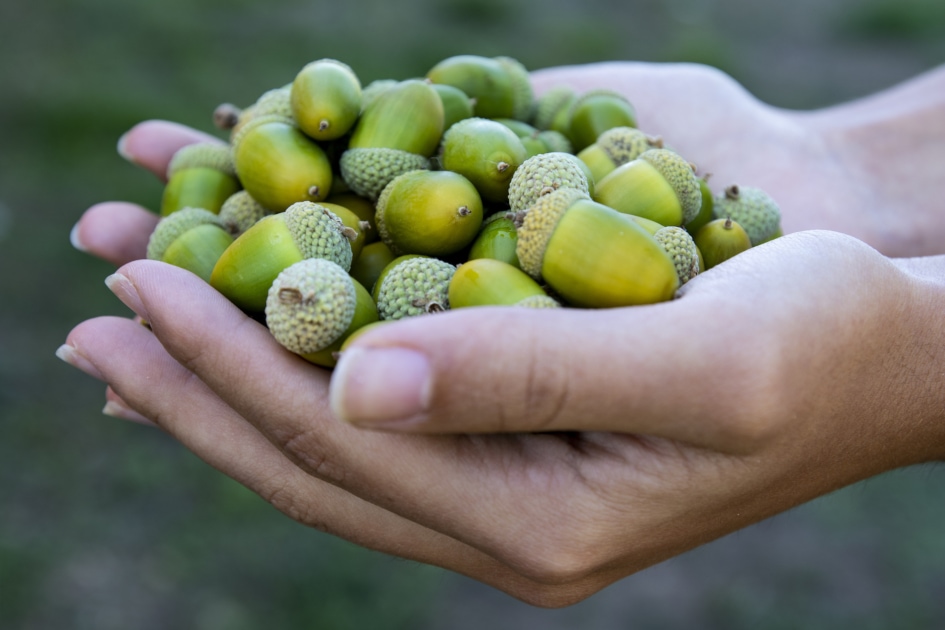
Do falling acorns have anything to do with predicting the weather? If you have oak trees in your yard, you are probably familiar with the task of raking up tons of acorns in the fall. However, sometimes many small green acorns fall from oak trees like crazy, even in the middle of summer. What does this mean and does the amount of green acorns mean anything about winter weather?
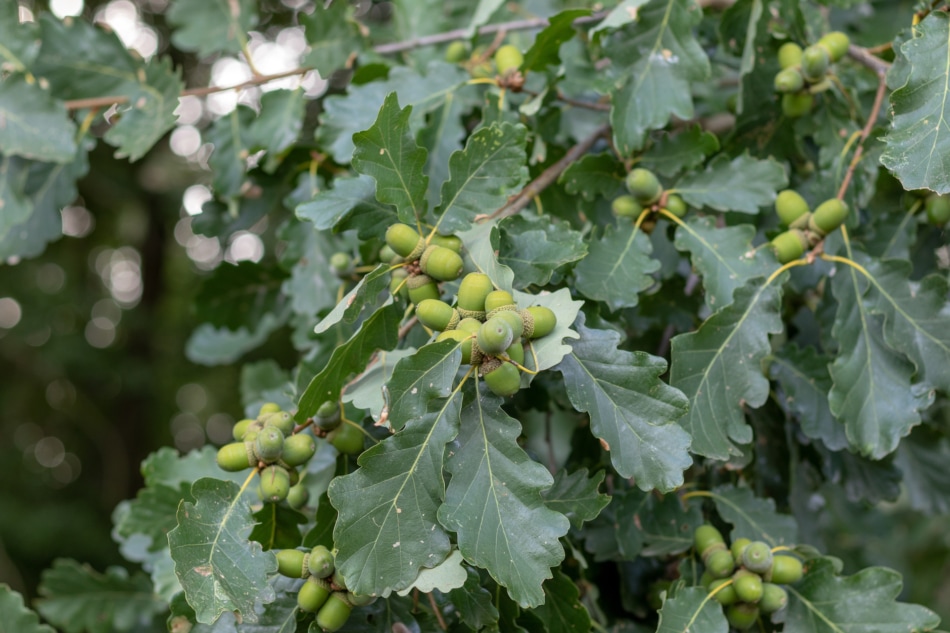
Typically, acorns fall during the autumn season, serving the purpose of planting new trees and providing food for critters. However, if green acorns are dropping prematurely, it indicates that the tree is stressed due to adverse weather conditions.
Normally, acorns ready to drop are brown or tan. Premature shedding suggests that the trees are prioritizing other tasks over seed production.
Summer Tree Stressors
A tree’s stress can be from too much rain, too little rain, a too-hot summer, or other factors. But it’s usually dependent on local conditions. In fact, just like “mast years” can happen in Virginia but not in neighboring North Carolina, the same is true for stressed-out trees dropping green acorns. It’s not happening everywhere.
Acorns and Winter Weather Folklore
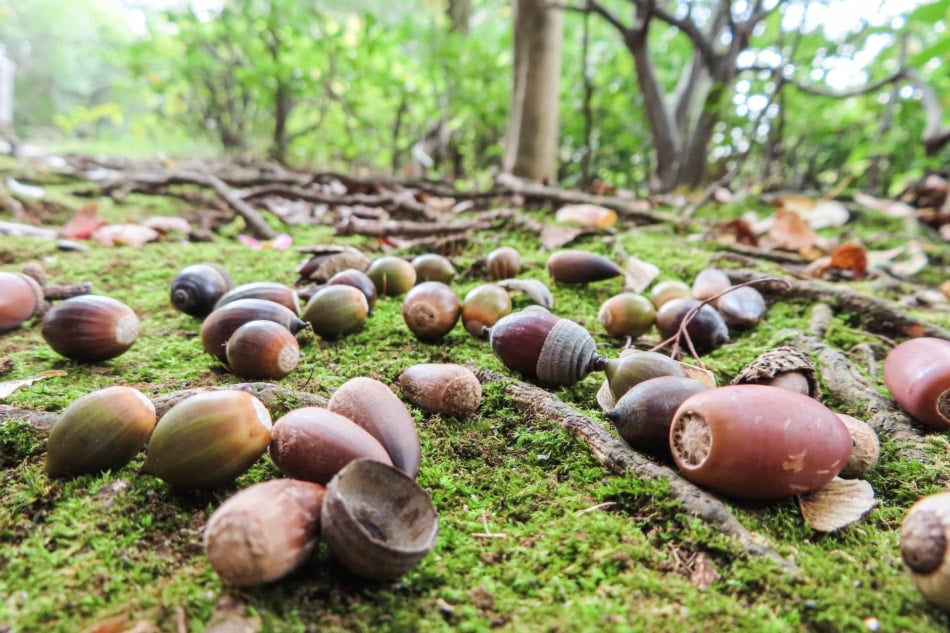
In our article, 20 Signs of a Bad Winter Coming, we delve into the folklore surrounding nature’s indicators of harsh winter weather. One such sign is the profuse dropping of acorns, which typically refers to brown acorns falling during autumn months. According to tradition and lore, seeing an abundance of brown acorns falling means a severe winter is predicted.
Join the Discussion
What are the acorns like by you?
Are you seeing lots of green acorns on the ground in your backyard?
Let us know in the comments below!


This article was published by the Staff at FarmersAlmanac.com. Any questions? Contact us at questions@farmersalmananac.com.
- Farmers' Almanac Staff

- Farmers' Almanac Staff
- Farmers' Almanac Staff
- Farmers' Almanac Staff






I live in North Louisiana, and we’re seeing an Insane amount of Large brown acorns falling. I’m hoping my tree is OK.
Mostly brown acorns falling from our oak trees, all hours of the day and night. Not even needing a gust of wind or breeze. Our Subaru has many dents from these falling buggers. Visiting friends have been startled thinking it’s gun Fire as they hit the metal roofs. Crazy year! Southern, Oregon
Here in Western North Carolina the acorns are falling rapidly from my White Oak tree. They’re brown but small. I think it’s a natural cycle. We’re due a big snow storm, haven’t had one in several years.
Hi Joline, Thank you so much for telling us. This surely suggests this winter will be one to remember! If you like snow … fingers crossed! Please check back in to let us know what you end up seeing. ❄️
West Atlantic County here in South Jersey.. so many green acorns are dropping from the Chestnut Oaks! I’ve looked at a few for insect holes but they’re clean. We finally had 3 days of rain but it has been dry. It’s September 19 and it’s going to be 85°!
Wow! Thanks for sharing with us, Shelley! Hope you’re enjoying the warm days … and excited for some snow this winter! ❄️❄️❄️
Lots Green acorns falling – 2” to 3” in length. Location – Far Northern California, Redding, California
South central Michigan. Lots of small light brown acorns. Seem to be very brittle. Break into pieces when they hit the ground. Then it’s like walking on glass cause of the sharp pieces
Stood under an oak today whilst it dropped lots of green acorns, in Aberdeenshire Scotland. I was looking last year but there was none. Now I find they are no use for planting. Sigh.
We have had tons of mainly green acorns falling since mid August. We live in central Maryland.
Here in Southern Ontario we have had unusually hot and humid weather, in excess of 40 degrees Celsius for weeks at a time. Went for a walk with my daughter yesterday and passed a bunch of Red Oaks- they were shedding green acorns like crazy. I gathered them up and thought about spouting them, but they’re immature and they will not germinate.
Tons of green acorns have been falling at my house for about 2 weeks and it is Aug.14,2025. We have 6 acres of all kinds of oak trees, so there are small, skinny and large acorns. Also, a lot of sap/pitch is dropping. I live in N. Calif. Not sure why the sap this year.
We live on 45 acres and have the same thing going on. We too live in Northern California