

Hedge Apples, Pine Cones, and 5 More Natural Winter Weather Forecasters
Before Doppler radar and other high-tech gizmos, people relied on indicators from the natural world to predict the weather. See the list!
Quick Reference: Reading Winter Signs from Nature
- What this is: five natural signs old-timers used to forecast winter severity.
- When to read: September through early November, before the first hard frost.
- Tools needed: none. Eyes, a basket, a kitchen knife.
- Most reliable sign: pine cone scale movement (humidity indicator, scientifically supported).
- Most regional sign: Osage orange (hedge apple), native to Texas, Oklahoma, and Arkansas but planted across the Plains as windbreaks.
- Pair it with: the Almanac’s 200-year-old math-based long-range winter forecast.
Long before satellite imagery and Doppler radar, our great-grandparents read the woods, the orchard, and the kitchen counter to tell what kind of winter was coming. The same five signs they trusted, hedge apples, walnut shells, squirrel nests, onion skins, and pine cones, are still on trees and in gardens this fall. Here is what each one is supposed to mean, what the science actually supports, and how to read them in a single afternoon walk around your yard.
Folklore weather forecasting is observation passed down. None of these signs is foolproof, and most have a more boring biological explanation than “the trees know.” But each rule is rooted in a real seasonal pattern, which is why it survived in farming communities for two centuries. Treat folklore signs as a planning hint, not a guarantee.
For the meteorological side of the picture, the National Weather Service publishes the official short-range forecast. Folklore and the Almanac’s long-range outlook handle the rest of the planning calendar.
Count The Hedge Apples
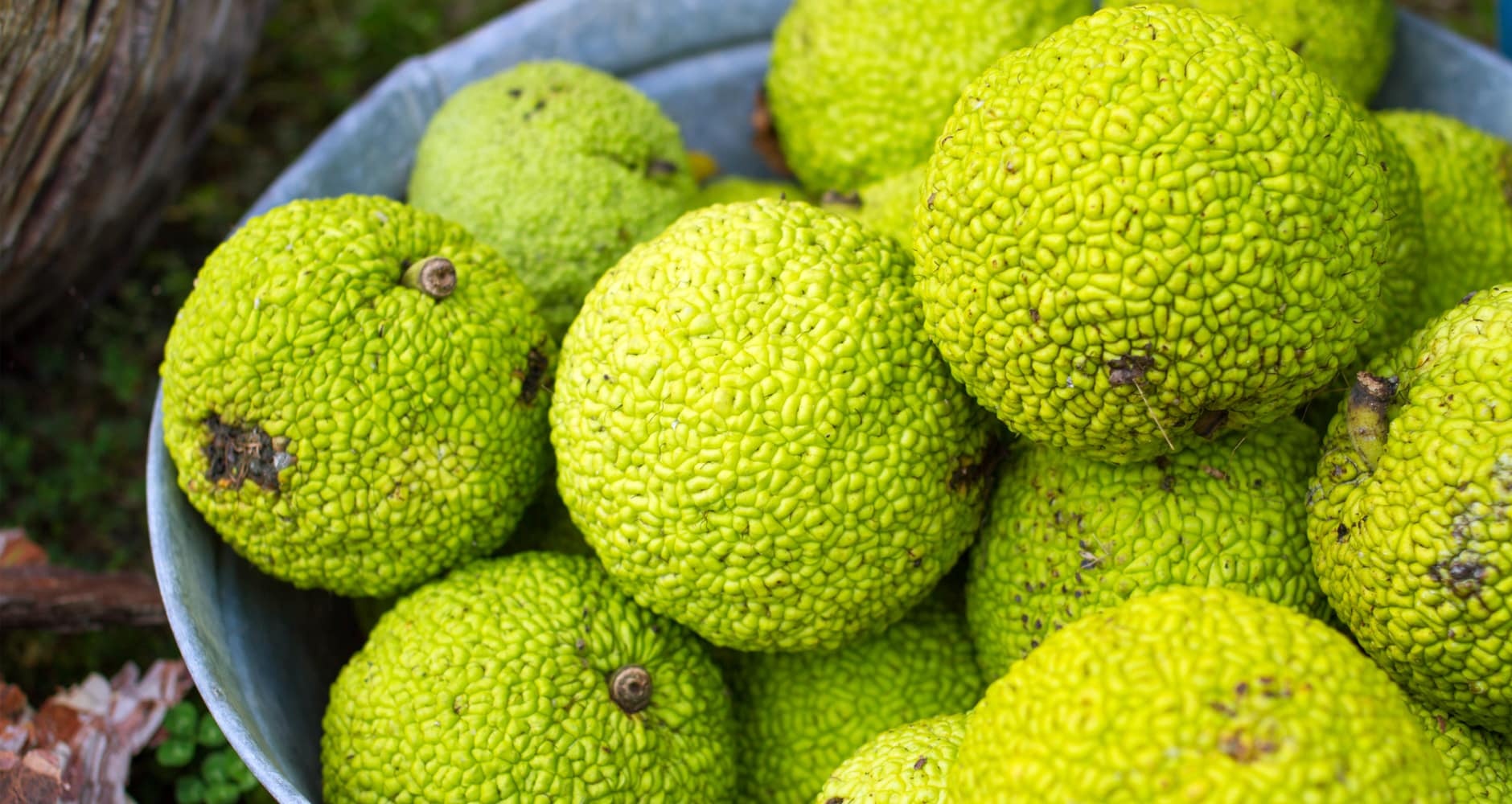
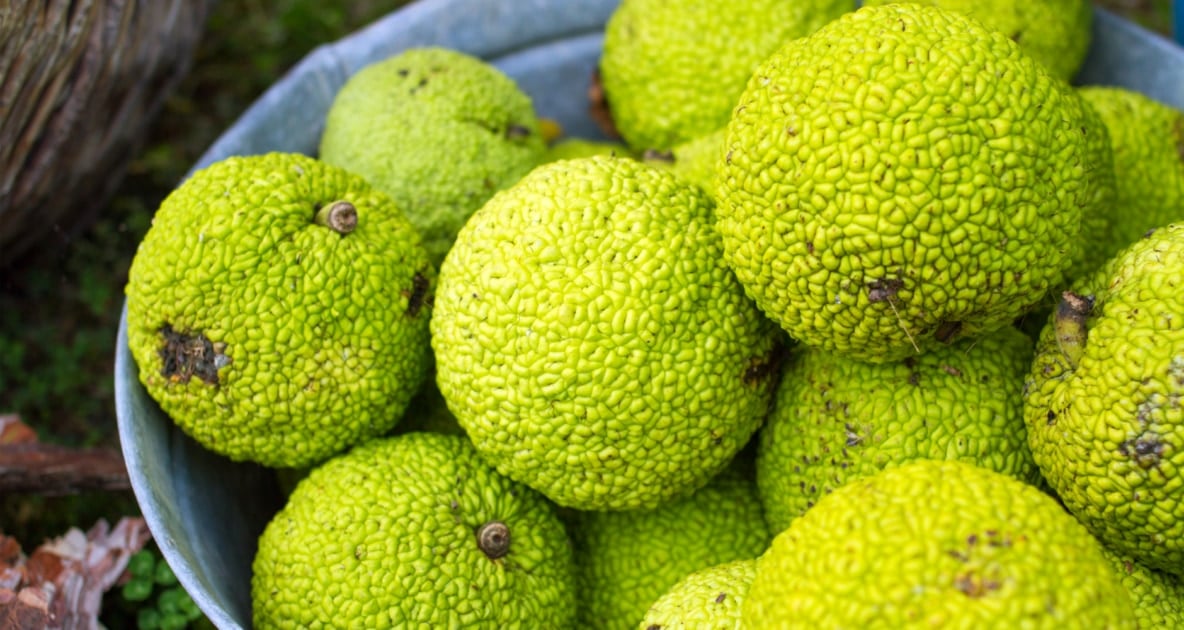
First, you might wonder, “what are hedge apples?” Also known as Osage oranges, these bumpy green softball-sized fruits are hard to mistake. About the size of a grapefruit, with a knobby, brain-like exterior, they earned the nickname “monkey brains.” The Osage orange tree is native to a small triangle of Texas, Oklahoma, and Arkansas, but it was planted across the Plains in the 1800s as thorny living fencerows. That is why you can find hedge apples on the ground from Nebraska to Pennsylvania each fall.
Three things to watch, according to regional folklore:
- Drop date. If the fruit falls later than usual, expect a cold and snowy winter.
- Crop size. A heavier-than-normal harvest hints at a harsher winter.
- Fruit size. Bigger hedge apples point to colder temperatures; smaller fruit suggests a milder season.
Why the rule may hold: hedge apple trees set their crop based on the previous spring and summer, so an unusually bountiful fall often follows a wet, warm growing season, conditions that frequently precede a cold, wet winter in the central US. The science is not airtight, but it is not random either.
Cracking Hints From Walnut Shells
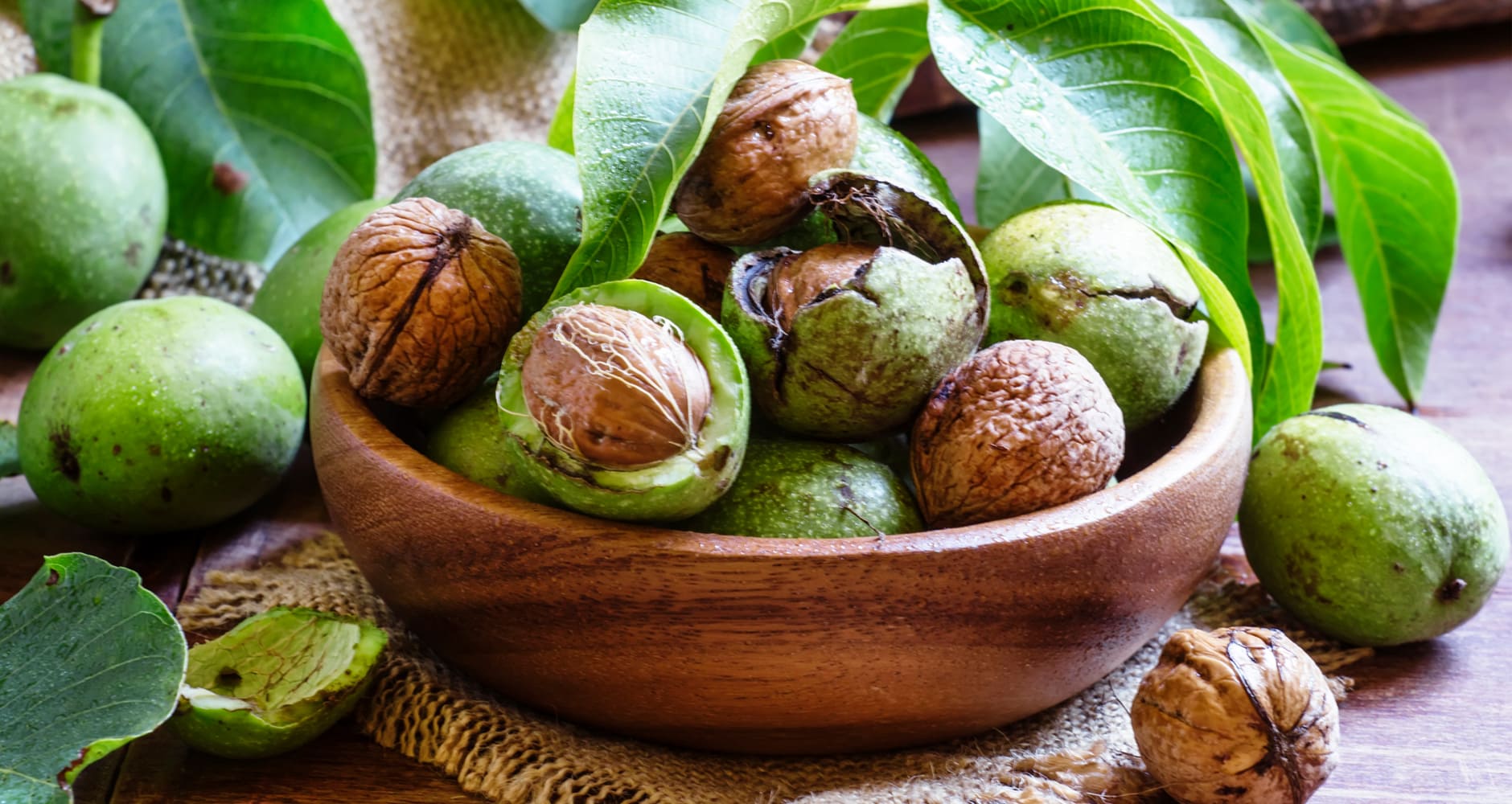
Walnut country, which is most of the eastern United States, has its own version of the rule. A heavy walnut crop is said to mean a cold winter; a sparse year suggests mild conditions. The shell itself is the second tell. Crack a walnut open: thicker shells point to colder temperatures ahead, while thinner shells indicate a milder season.
No walnut tree nearby? Hickory nuts and acorns work the same way. Old farmers will tell you that a bumper acorn year (“a mast year”) always means the squirrels are working overtime, and “the squirrels know.”
Where Are Squirrels Building Nests?
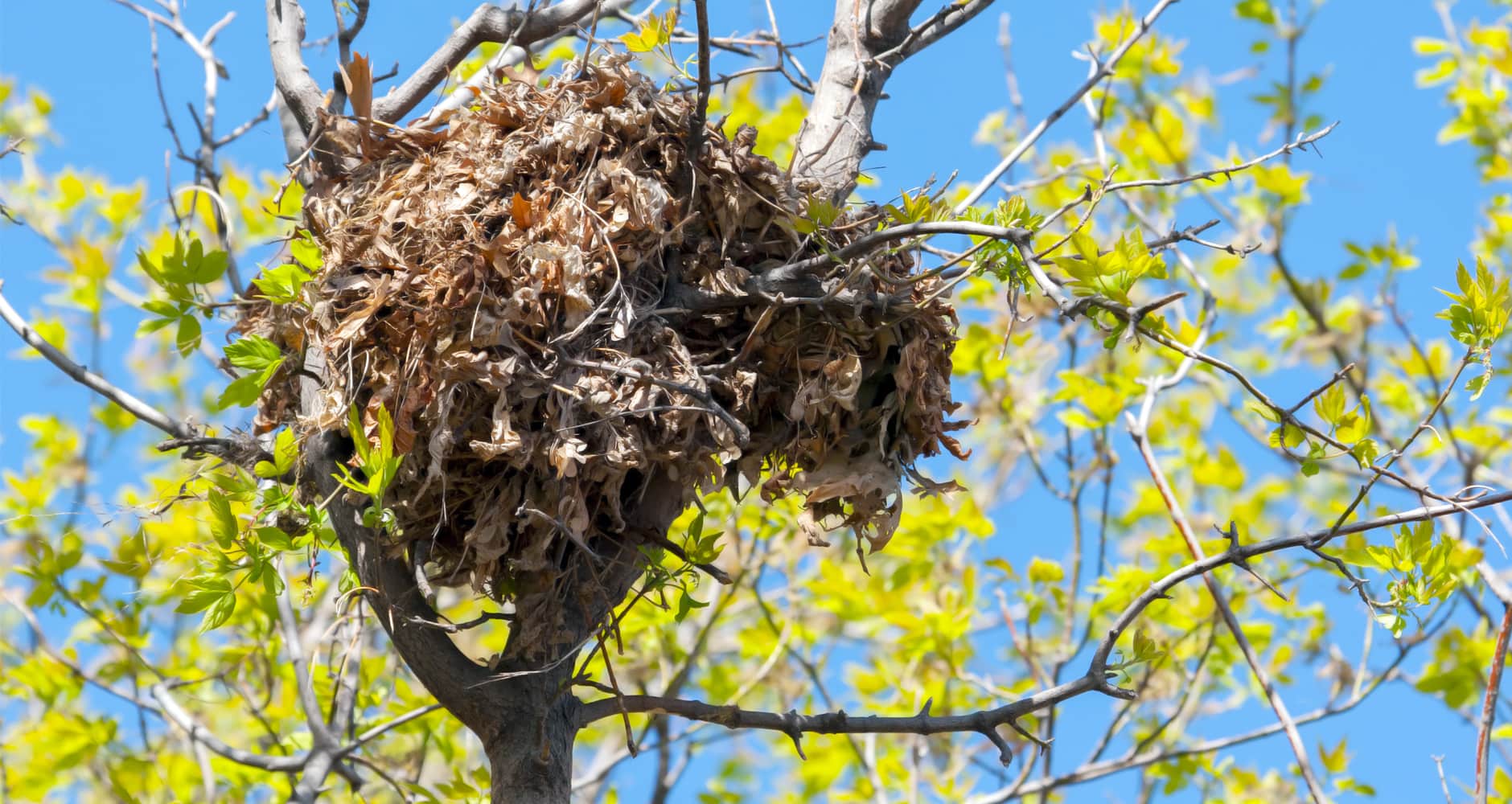
A folklore rhyme says squirrels gathering nuts “in a flurry” mean a harsh winter is on tap. The newer rule, less famous but more interesting, is about where they build. Gray squirrels build two kinds of homes: dens hollowed inside trees, and leaf-cluster nests called dreys, woven into the outer branches.
Watch the dreys:
- High in the tree, tight to the trunk. Folklore reads this as preparation for a severe winter.
- Lower in the tree or out toward the branch tips. A milder season is on the way.
Wildlife biologists offer a different read: squirrels build higher dreys when they expect heavier snow pack, because a high nest stays drier. Whatever the mechanism, drey height is one of the easier signs to spot on an October walk.
Onions And Apples: Clues In The Skins
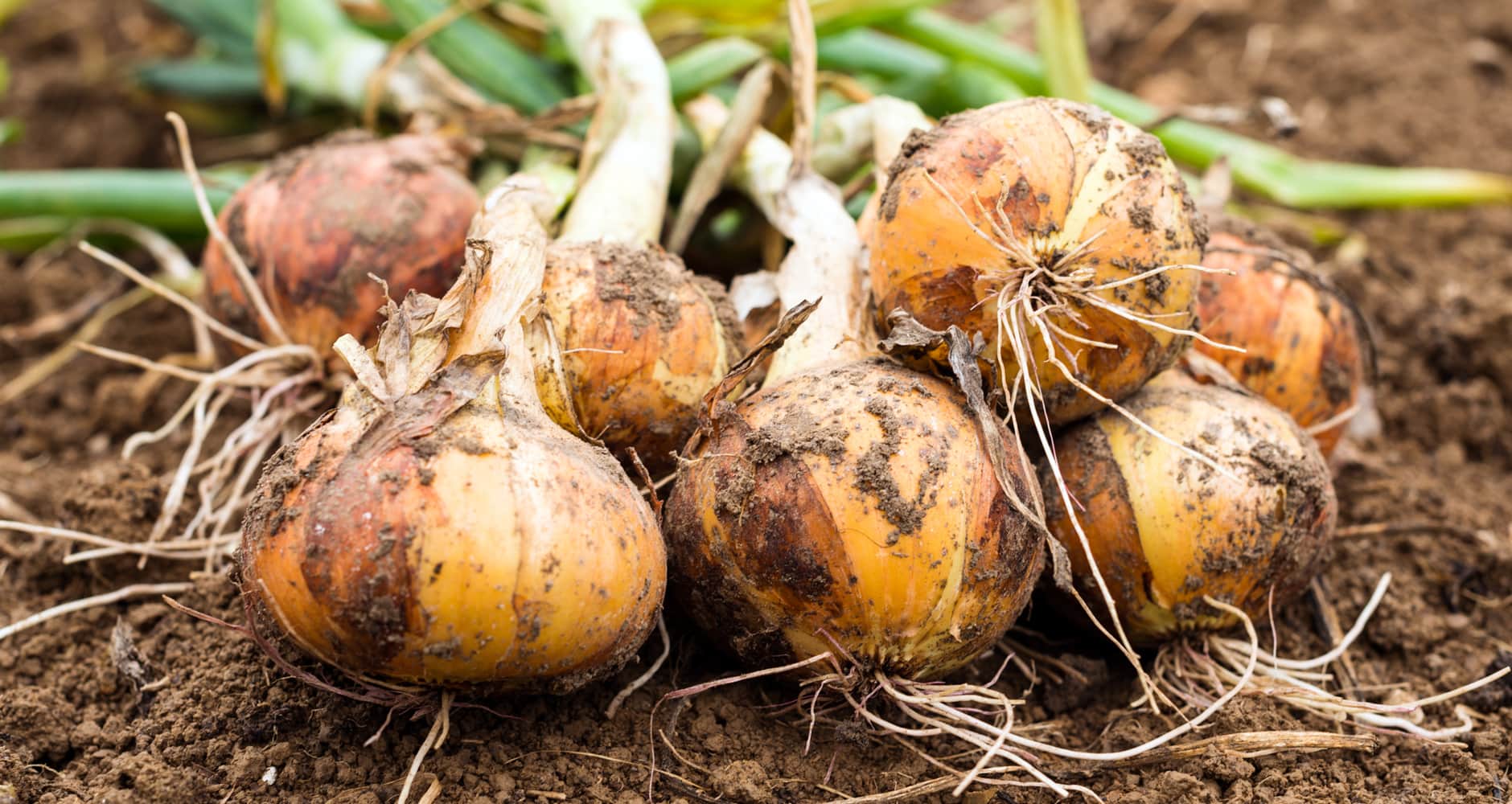
Check this old folklore rhyme:
Onion skins very thin,
mild winter coming in.
Onion skins thick and tough,
coming winter cold and rough.
Use a homegrown onion if you can. The storage-grade bulbs on supermarket shelves are bred for shipping and grown in many climates, so the skin thickness reflects the breeder, not your local winter. The same rule applies to apples: thicker skin on a tree-ripened apple is said to mean a colder winter ahead.
The science is reasonable. Onion and apple skin thickness is heavily influenced by late-season weather. A cool, dry late summer (the kind that often precedes a real winter) tends to produce thicker, tougher skins as the plant protects itself against early frost.

Can Pine Cones Predict the Weather?
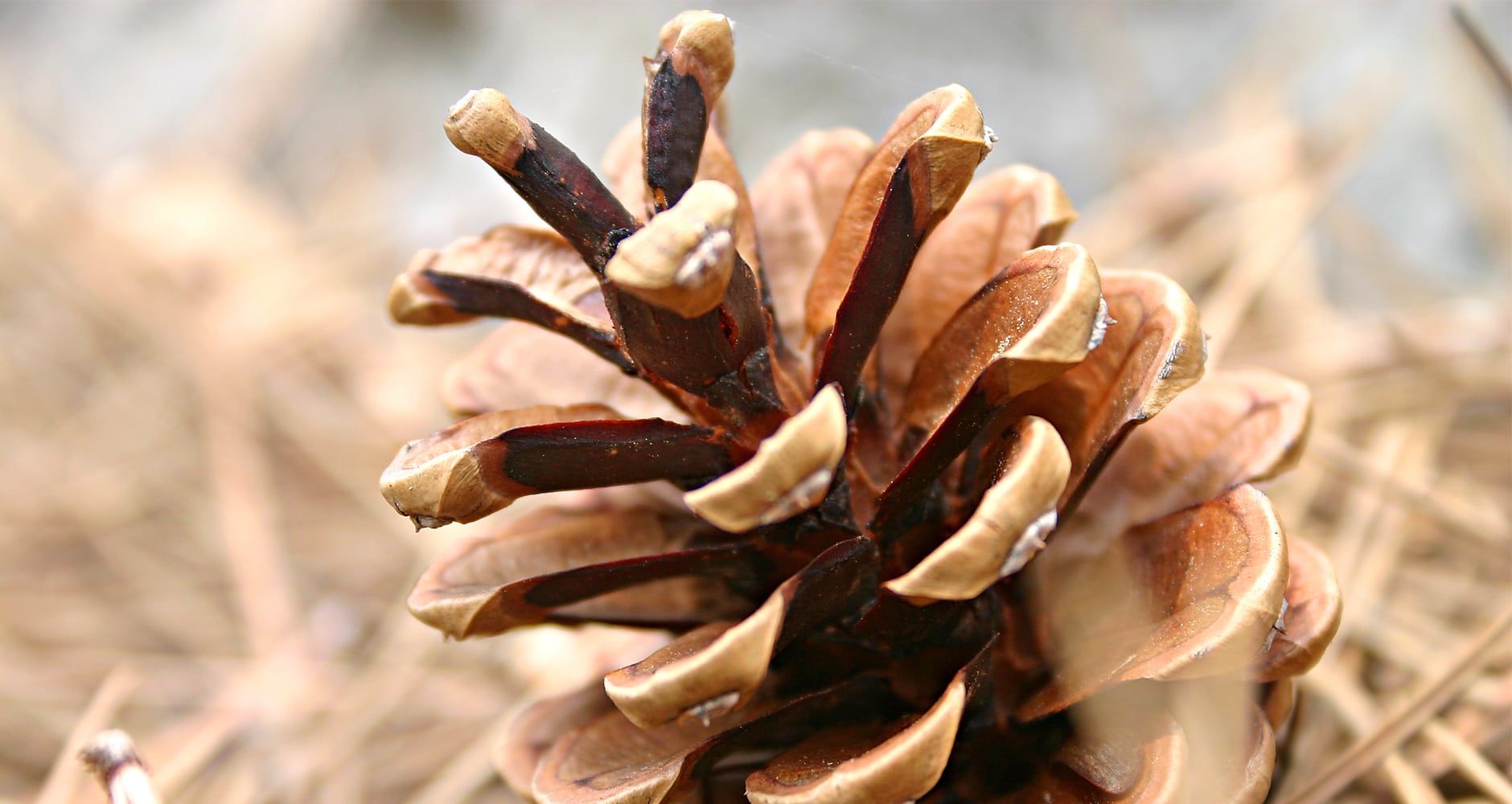
Pine cone folklore reads two ways. The first is the seasonal version: an unusually heavy pine cone crop in fall is said to foretell a long, cold winter. Scientists are skeptical of this one, because pine trees can take three years to produce a cone, so the harvest you are looking at was set by weather two summers ago, not by what is coming.
The second reading is far more reliable: pine cones predict today’s weather. In dry air, the scales open so the seeds can blow free. As humidity climbs ahead of an incoming rain, the scales absorb moisture, expand, and close back up. A closed pine cone on a still afternoon often means rain within a day. This is not folklore at this point, it is a well-documented hygroscopic reaction in the woody cells. Pick a cone up from the yard, set it on a windowsill, and it will keep telling you about incoming weather all winter long.
Bonus Sign: The Wooly Bear Caterpillar
If you live anywhere from Maine to Iowa, fall walks turn up small black-and-rust-banded wooly bear caterpillars crossing the road. The legend, dating at least to a 1948 study by Dr. Howard Curran at the American Museum of Natural History, says the wider the rust-colored middle band, the milder the winter. A short rust band predicts a harsh one. Color in any one caterpillar is set by age and species, so a single wooly bear is a coin flip. Average the band width across 20 of them on the same afternoon, though, and you get a sample worth a guess.
Why Some Of These Signs Quietly Work
None of these rules is a forecast in the meteorological sense. There is no measurement of an upcoming jet-stream pattern, no satellite data. What folklore weather signs do measure is the trailing edge of the growing season: the soil moisture, the late-summer temperature, the fall photoperiod, the early-frost timing. Those variables are the same ones that influence whether the next winter behaves like the one before it. So when the pine cones are heavy, the squirrels build high, and the onions split with thick skins, the trees and squirrels and the kitchen are reading the same late-summer signal you are. That is why the rules persist.
The Almanac’s own long-range formula, in use since 1818, weighs sunspot cycles, lunar position, tidal pull, and historical weather patterns. It does not consult hedge apples. The underlying spirit is the same though: pattern recognition across long records. The forecasts run about 80 to 85 percent of the way to accurate, according to the Almanac’s own published figures, which is what makes them useful planning tools rather than coin flips.
Regional Cheat Sheet
- Central US (KS, OK, NE, IA, IL, MO): hedge apple is your strongest local sign because Osage orange grows freely in old fencerows.
- Northeast and upper Midwest: wooly bear caterpillar, squirrel drey height, and acorn mast year are the most useful signals.
- Appalachia and the Ozarks: persimmon seed shape is the classic local sign, paired with walnut shell thickness.
- South and Mid-Atlantic: onion skin, apple skin, and pine cone scale humidity are the most reliable signs since hard freezes are intermittent.
- Mountain West: pine cone crop size and willow bark thickness are the regional signs to watch.
How To Read Your Own Yard In One Afternoon
- Walk the perimeter of the yard in mid-October, basket in hand.
- Note the height of any visible squirrel dreys.
- Pick up 5 representative pine cones; observe whether they are mostly open or closed.
- Collect any hedge apples, walnuts, or acorns on the ground; weigh them in your hand against past years.
- Slice a homegrown onion that night and check the skin thickness.
- Write the results in a notebook with the date. Compare year over year. After three winters you will have your own neighborhood almanac.

Winter Weather Folklore FAQ
How accurate are folklore winter forecasters?
No formal accuracy rate exists because the underlying claims are not testable like a meteorological forecast. What folklore signs do reliably is reflect late-summer growing conditions, which weakly correlate with the following winter. Treat them as a regional planning hint, not a substitute for the National Weather Service short-range forecast or the Almanac’s long-range outlook.
Are hedge apples really poisonous to insects?
Hedge apples contain compounds that repel some insects, which is why old farmhouses placed them on windowsills and in basements as natural spider and roach deterrents. Whether they work better than chance is debated, but the practice has persisted across the central US for generations.
Why do pine cones close before it rains?
Pine cone scales are made of two layers of woody cells that expand at different rates when humidity rises. The outer layer swells faster, bending the scale inward and closing the cone. The same mechanism that protects the seeds from rotting in wet weather makes a pine cone a reliable short-range humidity indicator on your windowsill.
Do all squirrels build leaf nests?
Gray squirrels and fox squirrels do. Red squirrels prefer tree cavities. A yard with mostly red squirrels will not show the drey-height sign. Identify the species first before you read the nest.
Where can I see the Farmers’ Almanac long-range winter forecast?
The full regional long-range winter forecast is published each August on farmersalmanac.com. The print edition reaches newsstands the same week.
Are these signs the same in Canada?
Most of them, yes. Hedge apple is the exception, since the Osage orange tree does not survive most Canadian winters. Pine cone, walnut, onion skin, squirrel drey, and wooly bear all read the same north of the border.
For more weather folklore reading, see 20 Natural Signs of a Harsh Winter, Dandelions and 5 More Plants that Predict the Weather, How Did a Fuzzy Caterpillar Become a Weather Forecaster?, and Persimmon Seeds: How Do They Predict the Winter?


Amber Kanuckel
Amber Kanuckel is a freelance writer from rural Ohio who loves all things outdoors. She specializes in home, garden, environmental, and green living topics.
- Amber Kanuckel

- Amber Kanuckel

- Amber Kanuckel
- Amber Kanuckel

An abundance of Cicadæ, realized by hearing a cacophony of sound, an over-abundance of song of the Cicadæ is one of the best of winter forecasters. Why? Because trees need pruning. Which is what Cicadæ do for their lives. So, hard winter with ice storms come; limbs ice up, Cicadæ larvæ have eaten through the cambium layer, killing the end of the limb, henceforth, the limb drops to the forest floor, thus, forest pruned. Loud Cicadæ song. Listen for them.
I have noticed my acorns were falling very early this year and they were very tiny. I could tell the squirrels were trying to get the acorns out of them but there was not hardly anything in them. I have also noticed my pecan tree which hasn’t produced in years started dropping pecans very early but they have very soft green shells and the pecans are not good on the inside. I more thing my dogs were shedding terrible definitely more than normal.
? ??? ???? over 17? USD ??? ???? ??????? from home. l never thought I’d be able to do it but my Best friend makes over 18543 USD a month doing this and she convinced me to try. The possibility with this is endless.
Details HERE…. http://www.livejob247.com
Crack walnuts to forecast the weather? I have 2 sixty foot high English walnut trees in my back yard but I will not be using them to forcast the weather, make nut rolls for Christmas, or anything else. Why, you ask? Every squirrel in the county came and stole all the nuts. Most were even green, but no matter, they ate them anyway. My neighbors are too close to allow me to shoot the squirrels safely. What am I to do? Any suggestions?
Hi Dean, the fact that the squirrels stole them all is another sign of a hard winter ahead! Are you wondering what to do about the squirrel population? You can contact your local wildlife experts, but we do not recommend shooting them.
My onion skins are really thick this year in my garden… I live about 10 miles from Canadian border in northern Minnesota
Osage orange trees or hedge apples as they are called are all over Ohio. We have several trees at the back of our property and they are falling already! They are NOT edible, not to be confused with pawpaw fruit which tastes like banana, mango and citrus all rolled in one. The balls fall all over the backyard and if hit by one, they do hurt! Sometimes they will break open and a white milky sap oozes out. When they decompose, they smell awful! They can be used around the garage and house to keep spiders and critters at bay.
Interesting information, Karen. Thanks for writing!
We called these ” Paw Paws ” when I was a kid. So now I don’t know what a Paw Paw is. But we were told not to eat them as they were poisoness.
Paw Paws are edible fruit and look nothing like hedge apples
I’m from Ohio and the hedge apples here have all fallen off their trees already. I use a few in my house to ward off winter spiders and insects.
The picture of walnuts are actually hickory nuts.
Hedge apples are not to be eaten. Native Americans used them for several things, including repelling spiders. The wood from the tree makes the best bows for bow and arrows.