

How to Grow Carrots: Planting, Soil, and Harvest Tips
Few things are sweeter than a homegrown carrot fresh from the garden. Here's how to grow these summer favorites!
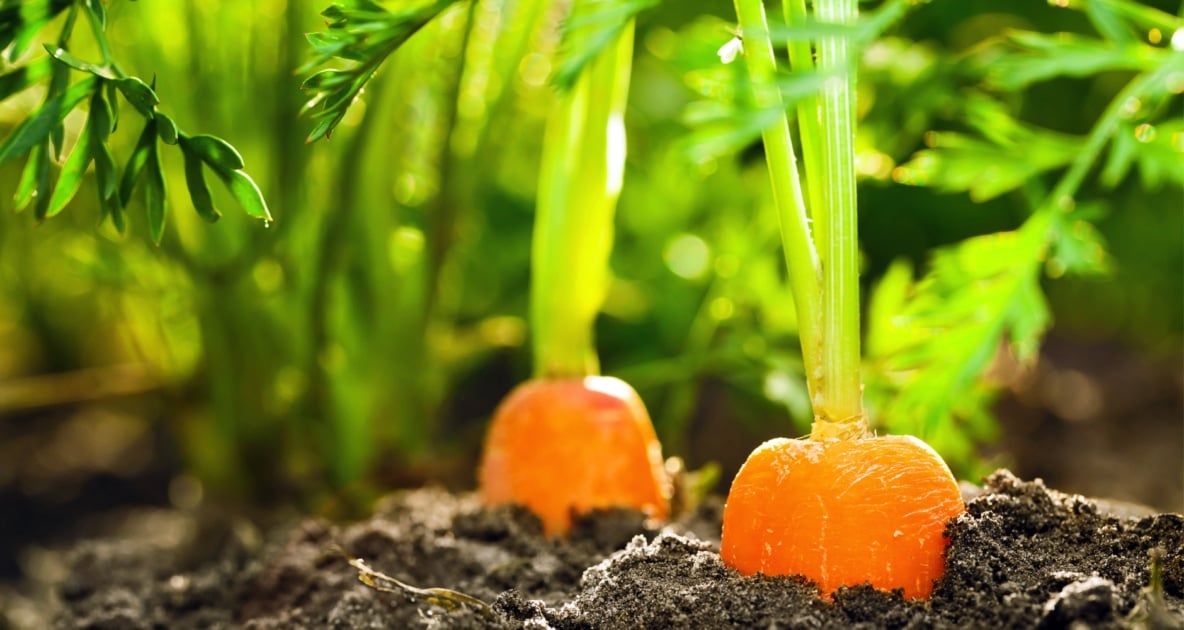
Quick Reference: Growing Carrots
- Sow when: directly outdoors, 2 to 4 weeks before your last spring frost, as soon as the soil is workable.
- How deep: sow thinly in rows 12 inches apart, cover with 1/2 inch of fine soil, and never transplant.
- Thin to: 1 inch apart once seedlings stand about 3 inches tall.
- Soil: loose, well worked, and free of rocks, with a pH of 6.0 to 6.8 and full sun.
- Harvest: about 70 days, give or take, since carrots keep growing past that mark.
Few things are sweeter than a homegrown carrot fresh from the garden. With a variety of sizes and colors to choose from, the home gardener can find a carrot well suited to their garden as well as their taste. They are one of the friendlier crops for a first-time grower, since the seed goes straight in the ground and the harvest stretches from midsummer well into the cold months. Here is how to grow carrots from seed to supper this 2026 season, whether you are working a long row or a single raised bed.
How To Plant Carrots
Start: Carrot seeds can be sown directly outdoors, 2 to 4 weeks before the last frost, as soon as the soil is workable. Sow thinly in rows 12 inches apart. Cover with 1/2 inch of fine soil. Do not transplant, as this will result in carrots that are crooked and forked. Thin to stand 1 inch apart when seedlings are 3 inches tall. The University of Maryland Extension keeps a plain-language guide to growing carrots if you want to double-check the spacing for your own ground.
Water: Keep plants well watered during dry periods to promote uninterrupted growth. Overwatering may cause carrots to fork or crack, so keep the soil moist but not saturated. Carrots need about 1 inch of rain per week, and a long, slow soak beats a quick daily sprinkle.
Soil: Carrot beds need to be well prepped before planting. Soil should be well worked, loose, and free of rocks. A rock or a hard clod is all it takes to split or bend a growing root, which is why loose ground matters so much for this crop. For longer varieties of carrots, the soil will need to be worked and loosened deeper than for shorter varieties. Aim for a pH of 6.0 to 6.8.
Light: Full sun.
Fertilize: Choose a fertilizer that has more potassium and phosphate than nitrogen, and use half the recommended concentration. Too much fertilizer may result in less flavorful carrots with forked or hairy roots, so a light hand serves you better than a heavy one here.

Gardening by the Moon for Carrots
Carrots grow below ground, which makes them a root crop. Traditional Gardening by the Moon wisdom says to plant root crops during the dark, or waning, of the Moon, when the old timers believed the pull of moisture moved downward toward the roots. Above-ground crops like lettuce and beans go in during the light, or waxing, of the Moon. It is a planning method, not a guarantee, but it costs nothing to time your sowing alongside good soil and a workable bed.
- Carrots are a root crop. Favor the dark of the Moon for sowing.
- The Gardening by the Moon Calendar lists this month’s Best Days to plant root crops in your area.
When to Plant Carrots by Region
The rule stays the same across the country: sow 2 to 4 weeks before your last spring frost, as soon as the soil is workable. Only the calendar date moves, because frost dates run weeks apart from one region to the next. Many gardeners sow a short row every couple of weeks for a staggered harvest, and most regions get a second window in late summer for a fall crop.
| Region | Average last spring frost | When to sow carrots |
|---|---|---|
| Deep South and Gulf Coast | Late February into March | January into February, and again in September |
| Mid-South and Southern Plains | Mid to late March | February into March, and again in August |
| Mid-Atlantic and Ohio Valley | Mid to late April | Late March into April, and again in July |
| Midwest and Great Lakes | Early to mid May | Mid April into May, and again in July |
| Northeast and New England | Mid to late May | Late April into May, and again in early July |
| Mountain West and Pacific Northwest | Mid May into early June | Late April into May |
In Canada, gardeners in British Columbia and southern Ontario often sow from mid to late spring, while the Prairies, Quebec, and the Maritimes wait until the soil thaws and can be worked, usually late spring. In every region the trigger is the same: workable soil, 2 to 4 weeks before your last frost.
Companion Plants for Carrots
Carrots share the bed well with onions, leeks, and chives, whose strong scent helps mask carrots from the carrot rust fly. Rosemary and sage do similar work, and lettuce makes a tidy neighbor since it finishes before the carrots need the room. Keep carrots away from dill and from close planting with potatoes. For a fuller pairing chart, see our companion planting guide, and if you want to branch out, our look at how to grow your own potatoes covers another easy root crop for the same beds.
Harvesting Carrots
Harvest: Carrots reach maturity after about 70 days, though they can be harvested before or after this mark, as they grow continuously. Soak the soil around the carrots just before harvest to make them easier to pull. Carrots can be left in the ground after frost in cold climates but should be harvested before the ground freezes. In warmer climates, carrots can be left in the ground and harvested all winter.
Notes: Carrots can be harvested mid-summer and a second crop planted for a fall harvest. Tops should be cut off close to the carrot if the carrots are to be stored, since the greens pull moisture out of the root and shorten its keeping time.
Helpful Carrot Links
Check our Gardening By the Moon Calendar
Companion Planting: 10 Veggies That Should Grow Together
Purple Carrots, Anyone?
Carrot Recipes
Once the harvest is in, the kitchen is where homegrown carrots earn their keep. Two of our favorites are worth the dirt under your nails.
Best Carrot Cake Recipe
Roasted Pumpkin, Carrot, and Turmeric Soup

Growing Carrots: Frequently Asked Questions
When should I plant carrots?
Sow carrot seeds directly outdoors 2 to 4 weeks before your last spring frost, as soon as the soil is workable. The calendar date shifts by region since frost dates vary, so a Southern garden may sow in late winter while a Northern one waits until mid or late spring. Most regions also get a second window in late summer for a fall crop.
How deep do I plant carrot seeds and how far apart?
Sow thinly in rows 12 inches apart and cover the seed with 1/2 inch of fine soil. Once the seedlings reach about 3 inches tall, thin them to stand 1 inch apart so each root has room to size up. Do not transplant carrots, since moving them produces crooked, forked roots.
How long do carrots take to grow?
Carrots reach maturity after about 70 days, but they grow continuously, so you can harvest them a little before or well after that mark. Soak the soil around the roots just before harvest to make them easier to pull without snapping.
Why are my carrots forked or crooked?
Forking usually comes from rocks or hard clods in the bed, from transplanting instead of direct sowing, or from too much fertilizer. Work the soil loose and free of rocks, loosen it deeper for long varieties, and use a fertilizer with more potassium and phosphate than nitrogen at half the recommended concentration.
What kind of soil and pH do carrots need?
Carrots want soil that is well worked, loose, and free of rocks, with a pH of 6.0 to 6.8 and a spot in full sun. For longer varieties, work and loosen the soil deeper than you would for short ones so the roots can drive straight down.
Can I leave carrots in the ground over winter?
It depends on your climate. In cold climates carrots can stay in the ground after a frost but should be pulled before the ground freezes. In warmer climates you can leave them in the ground and harvest all winter long. If you are storing carrots, cut the tops off close to the root so the greens do not draw out moisture.


This article was published by the Staff at FarmersAlmanac.com. Any questions? Contact us at [email protected].
- Farmers' Almanac Staff

- Farmers' Almanac Staff

- Farmers' Almanac Staff

- Farmers' Almanac Staff




I read lots of the helpful information, though my main catch of the Farmers Almanac is the moon phases for planting above and below ground. Great help in every way. Thanks!
i love the farmers almanac, it is filled with great info on all sorts of thing you need to know on farming! i am a gardener but i still use it to help me with some things here in the garden
i love you word things!
Love the farmers almanac. Trying to plant by moon phases. How can I apply the info to my South african veggie and flower gsrden.
What happened to the “Crunch a Munch” variety of carrots…??? We loved them and they have pretty much disappeared?