
Wild Turkeys Sleep in Trees. Yes, Really! Here’s Why

Wild turkeys spend much of their lives on the ground, strolling through fields, wandering across backyards, and scratching through fallen leaves for something to eat. But when bedtime rolls around, they head somewhere you might never think to look.
Up into the trees.
That’s right. Those big, heavy-looking birds can fly, and they routinely spend the night perched high above the ground. If you’ve ever watched a flock of wild turkeys lumber across a lawn, the thought of those same birds settling into the treetops might seem downright ridiculous.
But there’s a very good reason they do it.
Why Do Wild Turkeys Sleep in Trees?
The short answer is safety.
Wild turkeys have plenty of natural enemies, including coyotes, foxes, bobcats, and other predators. Spending the night on the ground would leave them more vulnerable, especially because they don’t see particularly well in the dark.
Roosting in trees puts some distance between sleeping turkeys and predators hunting on the forest floor.
According to the Smithsonian’s National Zoo, wild turkeys are active during the day and rest in trees at night. They generally return to the ground in the morning to feed and go about their business.
They don’t build a special sleeping nest in the branches, either. They simply settle onto sturdy limbs, often with other members of their flock nearby.
It’s a surprisingly effective nighttime arrangement for a bird that looks more comfortable walking than flying.
How Do Such Big Birds Get Into Trees?
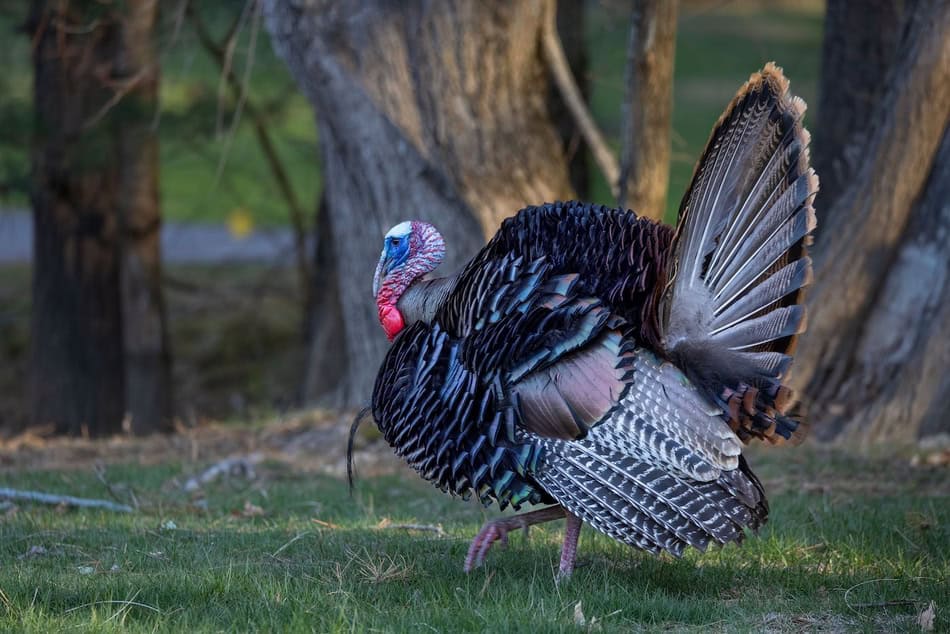
If you’ve only seen domesticated Thanksgiving turkeys, you might assume turkeys can’t fly. But wild turkeys are different.
They have powerful wings and can launch themselves into the air with a burst of rapid wingbeats. They’re not built for soaring long distances like hawks or eagles, but they can fly well enough to reach the trees.
According to the Cornell Lab of Ornithology, turkeys often fly onto lower branches around sundown, then work their way higher from limb to limb until they reach a suitable place to spend the night.
And they’re not particularly quiet about it. A wild turkey taking flight can produce an impressive racket of flapping wings.
That loud burst of movement near sunset might be your first clue that a flock is getting ready for bed.
Where Do Wild Turkeys Sleep at Night?
Wild turkeys generally look for large, mature trees with sturdy branches that can support their weight.
They may return to familiar roosting areas, but they don’t necessarily sleep in the exact same tree every night. The National Wild Turkey Federation notes that the birds often favor large trees and may change roosting spots.
Their choices can also depend on the weather. Hardwood trees are commonly used in fair conditions, while evergreens can provide more shelter when conditions turn cold and windy.
If you live near woods, you might have a flock sleeping in the trees nearby without ever realizing it.
Do Wild Turkeys Sleep Together?
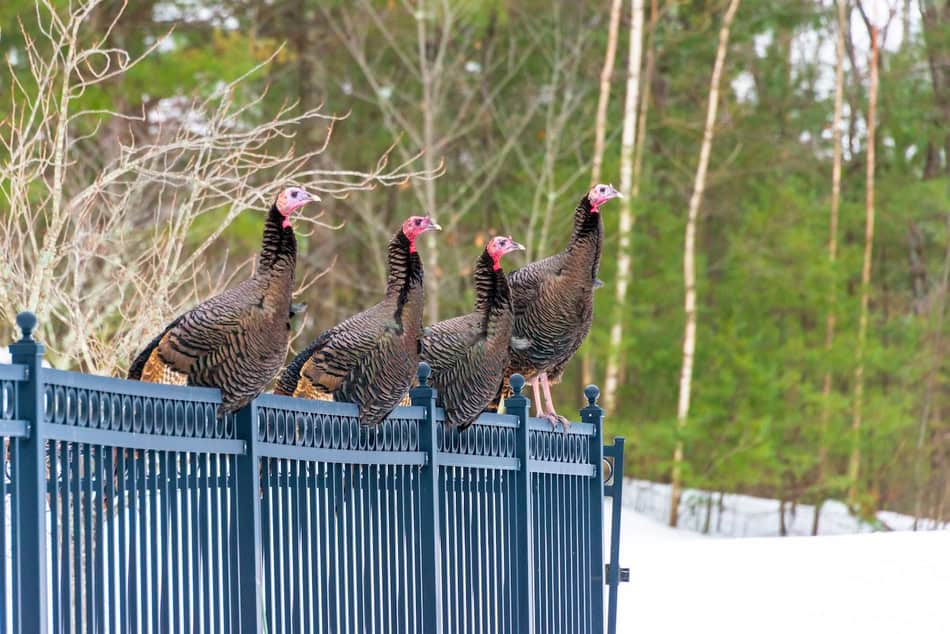
Often, yes.
Wild turkeys are social birds, and they commonly gather in flocks. You may see several birds feeding together during the day, then heading toward the woods as evening approaches.
They frequently roost in groups, although individual birds sometimes sleep alone. The size and makeup of flocks also change through the year.
There’s something amusing about picturing a group of large turkeys perched among the branches, but for them, it’s just another ordinary night.
What About Baby Turkeys?
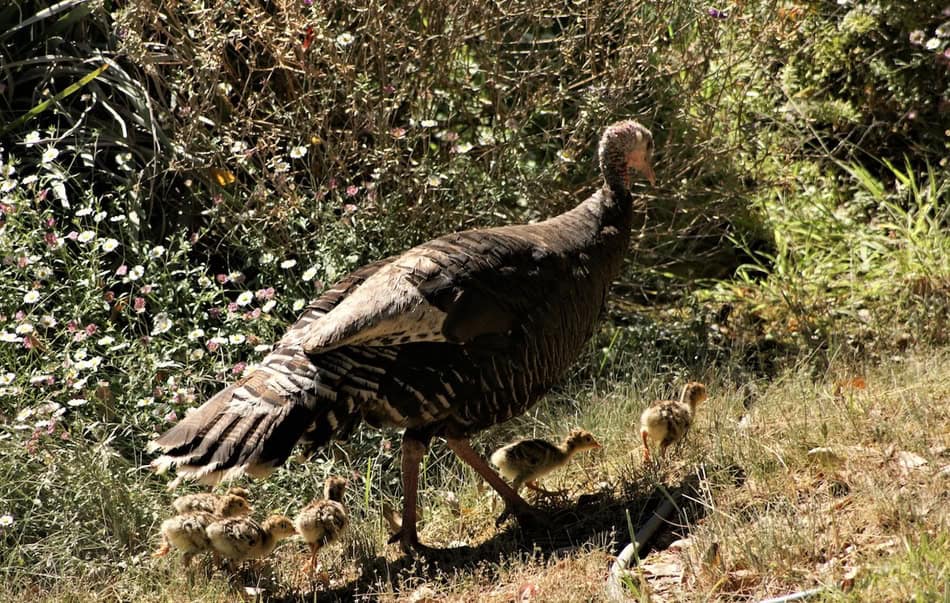
Young wild turkeys can’t fly into trees right after hatching.
Baby turkeys, called poults, spend their earliest nights on the ground under the protection of their mother. This is a particularly vulnerable time because the little birds can’t yet escape to the safety of the treetops.
According to the Florida Fish and Wildlife Conservation Commission, poults are initially flightless and generally become capable of reaching low branches or small trees at around four weeks of age.
As their wings develop, they can begin joining the adults in elevated roosts.
Want to See Wild Turkeys Flying Into Trees?
Late afternoon is a good time to watch, particularly if you already know where a flock spends its days.
Look around the edges of wooded areas where turkeys have access to fields, clearings, or open ground. As sunset approaches, watch for birds making their way toward larger trees.
You may hear them before you see them. Their wingbeats can be surprisingly loud, and turkeys sometimes make calls around their roosting sites. The New York Department of Environmental Conservation recommends listening near dawn and dusk, when the birds are moving to and from their nighttime perches.
If you’re lucky, you might spot one flying up to a branch, followed by several more.
Keep your distance, though. Don’t approach a roosting flock, shine bright lights into the trees, or try to startle the birds into flight. They’re settling in for the night, and there’s no reason to disturb them.
You can also look for turkeys early in the morning, when they leave the trees and return to the ground to search for food.
Can the Turkeys We Eat for Thanksgiving Fly, Too?
Not like their wild relatives.
Most commercially raised turkeys have been bred to grow much larger and heavier, particularly in the breast. That makes sustained flight impractical for many domestic birds.
Wild turkeys, by contrast, retain the strength and flying ability needed to escape danger and reach their nighttime roosts.
For more interesting facts about these familiar November birds, see our 5 Fun Turkey Facts for Thanksgiving.
The next time you see wild turkeys wandering around your neighborhood, remember that their lives don’t end at the edge of the lawn. Come sunset, those same birds may be preparing for a short flight into the treetops.
And once you know to look for them up there, you might never see a flock of turkeys quite the same way again.

- Maggie Konrad

- Maggie Konrad
- Maggie Konrad
- Maggie Konrad