Not All Pickles Are Fermented. Here’s What to Look for on the Jar

That jar of dill pickles in your refrigerator might contain live bacteria. Or it might not. Although both kinds look and taste like pickles, the way they’re made can be surprisingly different.
Some cucumbers develop their tangy flavor through fermentation, a process involving naturally occurring bacteria. Others get their sourness directly from vinegar. And if you’re buying pickles specifically for their live cultures, that distinction matters.
November 14th is National Pickle Day, so it’s a good time to clear up what those labels actually mean.
Quick Reference: Fermented vs. Vinegar Pickles
- Fermented pickles: Develop their sour flavor when bacteria convert natural sugars into lactic acid.
- Vinegar pickles: Get their tang from added vinegar, without fermentation.
- Live cultures: Some fermented pickles contain them, but heat processing can destroy them. Not all fermented pickles are probiotic.
- What to check: Look for “naturally fermented” and “contains live cultures” on the label. Refrigeration alone doesn’t guarantee either.
- Which is better? Both can be enjoyed. Choose based on flavor, ingredients, and whether you’re specifically looking for live cultures.
What’s the Difference Between Fermented and Vinegar Pickles?
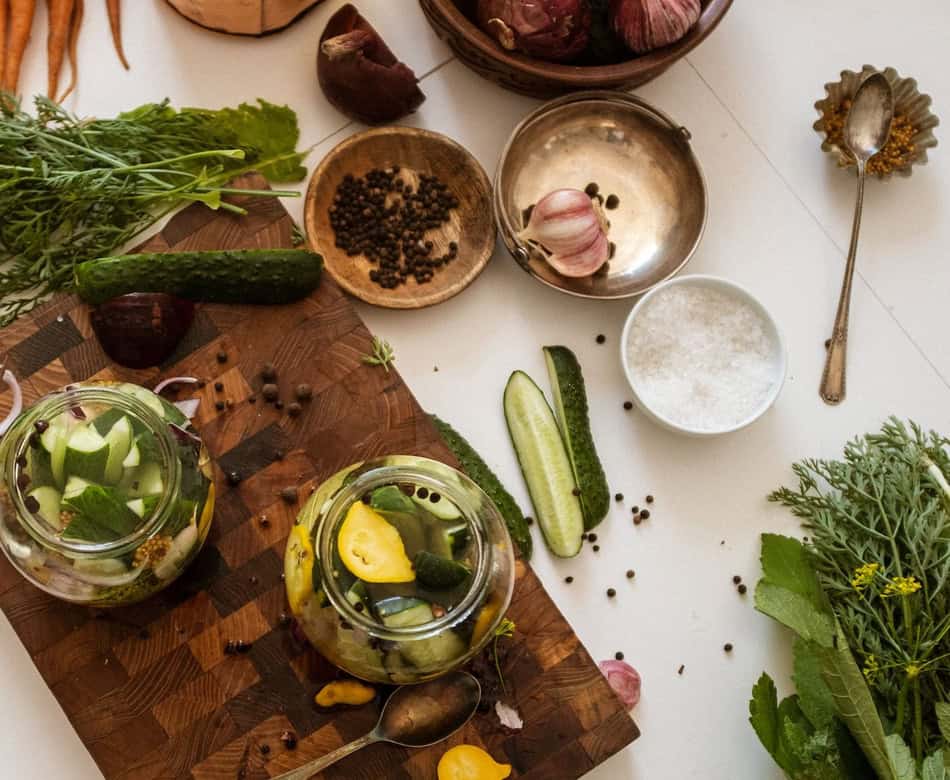
Traditional fermented pickles begin with cucumbers submerged in a salty brine. Under the right conditions, lactic acid bacteria convert some of the cucumbers’ natural sugars into lactic acid.
That acid gives the pickles their sour flavor and helps preserve them. The process takes time, often several weeks, while the cucumbers gradually change in flavor, color, and texture.
Vinegar pickles take a shortcut. Instead of waiting for bacteria to produce acid, the acid is added directly, usually in the form of vinegar. Cucumbers absorb the seasoned liquid and develop their familiar tang without undergoing fermentation.
Both methods have long been used to preserve food. According to the National Center for Home Food Preservation, traditional fermented dill pickles commonly require about three weeks of curing, while quick-process vinegar pickles can be prepared much faster.
That difference helps explain why two jars labeled “dill pickles” may contain products made by entirely different processes.
How to Tell Which Kind You’re Buying
Start with the ingredients.
If vinegar appears prominently on the label, you’re likely looking at a vinegar-pickled product. If the ingredients list begins with cucumbers, water, salt, and seasonings, with no vinegar, it may be naturally fermented.
But ingredients alone don’t always settle the question. Some fermented pickle recipes include a small amount of vinegar, too.
The label is more useful when it specifically says “fermented,” “naturally fermented,” or “contains live cultures.”
Check where the pickles are sold as well. Refrigerated pickles are worth investigating if you’re looking for live cultures, but refrigeration by itself proves nothing. Many ordinary vinegar pickles are also sold cold.
And don’t rely on the word “dill.” It describes the seasoning, not the preservation method.
Do Fermented Pickles Have More Health Benefits?
This is where the distinction gets particularly interesting.
Fermentation involves microorganisms, some of which may still be alive in the finished food. But that doesn’t mean every fermented pickle contains live cultures by the time you eat it.
Many commercially prepared fermented foods are heated after fermentation to extend their shelf life. That processing can eliminate the live microorganisms.
The National Institutes of Health also makes an important distinction: Not every fermented food contains microorganisms with proven probiotic benefits.
In other words, “fermented” and “probiotic” aren’t interchangeable terms.
If live cultures are your reason for buying fermented pickles, look for a refrigerated product that specifically identifies them on its label. Even then, the presence of live microorganisms doesn’t guarantee a particular digestive-health benefit.
Vinegar pickles remain perfectly reasonable foods to enjoy. They simply don’t acquire live fermentation cultures through the vinegar-pickling process.
Both kinds can also contain substantial amounts of sodium, so the Nutrition Facts label is worth checking.
Can You Tell From the Color or Cloudy Brine?
Sometimes fermented pickles look different from their vinegar-preserved counterparts.
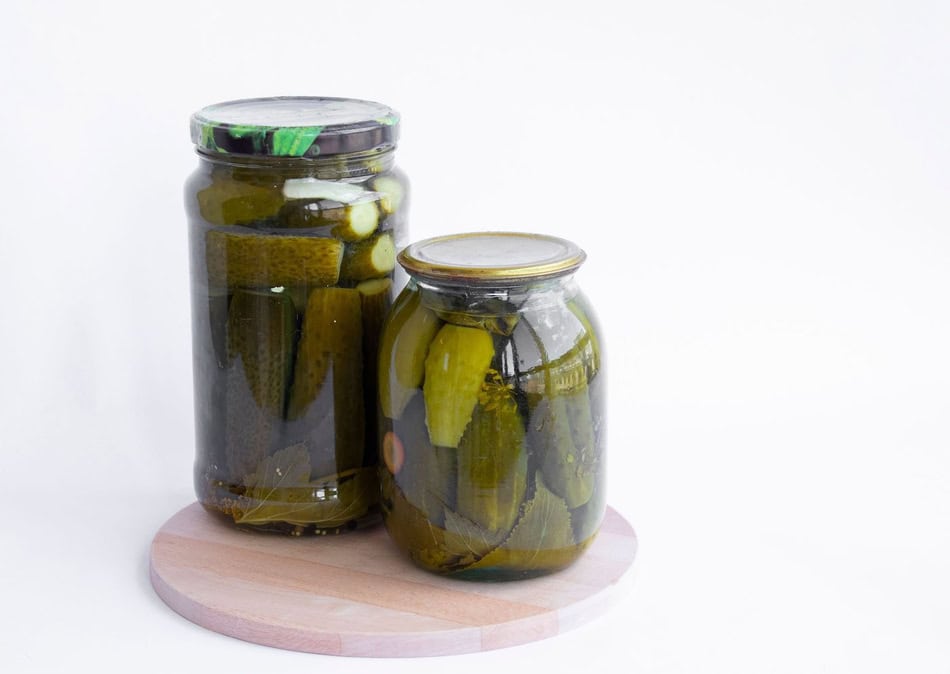
During fermentation, cucumbers can change from bright green to a more olive-green color. The brine may also turn cloudy as bacteria grow.
But neither clue is foolproof.
Cloudiness can result from ingredients or minerals in the water, and cloudy liquid can also be associated with spoilage in some pickled products. You shouldn’t use appearance alone to decide whether a pickle is fermented or safe to eat.
The Oregon State University Extension Service explains how fermentation changes a pickle’s color, texture, and acidity.
For a commercially prepared jar, the label and manufacturer’s description are much more reliable than trying to judge the brine.
Which Pickles Are Better?
That depends on what you want.
If you enjoy the complex sour flavor produced by fermentation, traditional fermented pickles are worth trying. Their taste develops as bacteria work on the cucumbers’ natural sugars.
Vinegar pickles deliver a more direct acidity, and the seasoning can range from sharply sour to sweet and spicy. They’re also convenient to prepare at home without waiting weeks for fermentation.
If you’d like to make a batch, our refrigerator dill and bread-and-butter pickle recipes use the quicker vinegar method.
Fermenting your own cucumbers is another option, but it requires more attention to salt concentration, temperature, and cleanliness. Follow a tested recipe rather than improvising the brine. The National Center for Home Food Preservation’s fermented dill pickle recipe provides instructions for doing it safely.
One final distinction is worth remembering: A pickle can be fermented without containing live cultures when you eat it, and a refrigerated pickle isn’t necessarily fermented at all.
So the next time you’re standing in front of a shelf full of pickle jars, take a closer look at the labels. That familiar crunch can come from two very different traditions of food preservation.

- Maggie Konrad

- Maggie Konrad
- Maggie Konrad
- Maggie Konrad