Squirrels Bury Thousands of Nuts. How Do They Find Them Again?

Every fall, squirrels race across lawns and gardens, burying acorns and other nuts in seemingly random places. A single fox squirrel may stash thousands of nuts over the course of a year, often hiding them one at a time.
But how do squirrels find that food again? Weeks or even months later, fallen leaves have covered the ground, snow may have arrived, and many of the hiding places look nothing like they did in autumn.
Scientists once thought squirrels relied primarily on their sense of smell. It turns out their memory is far more impressive than anyone realized.
Quick Reference: How Squirrels Find Buried Nuts
- Memory: Squirrels remember hiding places using spatial memory and visual landmarks.
- Sense of smell: Their noses help locate buried nuts, including food hidden by other squirrels.
- Organization: Some squirrels store different types of nuts in separate areas, making their supplies easier to locate.
- Survival strategy: Spreading nuts across many hiding places reduces the risk of losing an entire food supply to thieves.
- Forgotten nuts: Nuts that remain buried may germinate, helping oak trees and other plants spread to new locations.
Squirrels Remember Where They Bury Their Nuts
In a 1991 study published in Animal Behaviour, researchers allowed gray squirrels to bury hazelnuts in an outdoor enclosure. The animals were later returned to the same area, where their own hiding places were mixed with locations used by other squirrels.
Even after 12 days, the squirrels recovered significantly more nuts from their own hiding places than from those used by other squirrels.
The findings challenged the long-standing assumption that squirrels simply sniffed around until they found buried food. They could actually remember where they had put it.
A 1997 study offered further evidence. After 20 days, gray squirrels searched within about two inches of the correct location in nearly two-thirds of their attempts. Researchers also found evidence that some squirrels remembered locations after 43 and even 62 days.
This ability is called spatial memory. Squirrels use landmarks and other visual clues to navigate back to places where they’ve stored food. A tree trunk, for example, can help them recognize the general location of a buried acorn, even when the surrounding ground has changed.
Their Sense of Smell Helps, Too
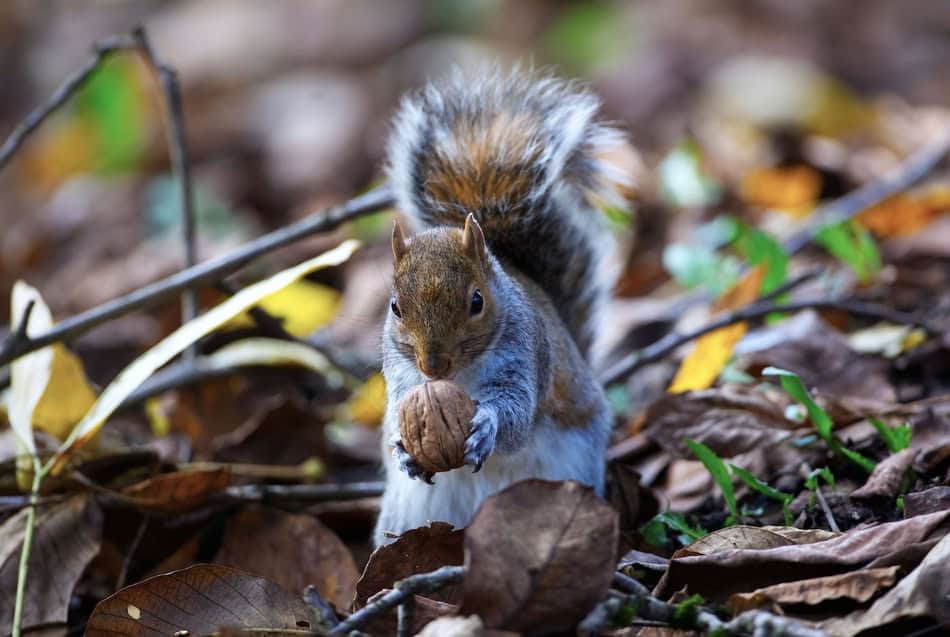
Memory gets a squirrel back to the right area, but its nose can help with the final search.
Squirrels have a keen sense of smell and can detect nuts concealed beneath soil or leaves. This also helps explain why they sometimes dig up food that another squirrel has buried.
Of course, finding someone else’s food works both ways. A squirrel that spends all afternoon hiding acorns may lose some of them to an equally resourceful neighbor.
And when snow covers the ground or other conditions make scents harder to detect, remembering where food was buried becomes especially useful.
Some Squirrels Sort Their Nuts Into Different Areas
Squirrels may be more organized than their frantic autumn activity suggests.
In 2017, researchers at the University of California, Berkeley, studied how wild eastern fox squirrels stored different kinds of nuts, including almonds, walnuts, hazelnuts, and pecans.
When the squirrels collected nuts from a single location, they frequently buried each variety in a different area rather than mixing everything together.
The researchers called this behavior “spatial chunking.” It’s a way of organizing information into smaller, more manageable groups.
Imagine putting all your canned goods in one cupboard and your baking supplies in another. Instead of searching the entire kitchen for a particular ingredient, you know where to look.
The squirrels appeared to use a similar system with their food. Interestingly, the behavior depended on how they collected the nuts. When food came from several locations, they tended to avoid areas where they had already buried something rather than sorting their caches by variety.
The Berkeley researchers believe these flexible storage strategies may help squirrels manage their extensive food supplies.
Why Don’t Squirrels Keep All Their Nuts Together?
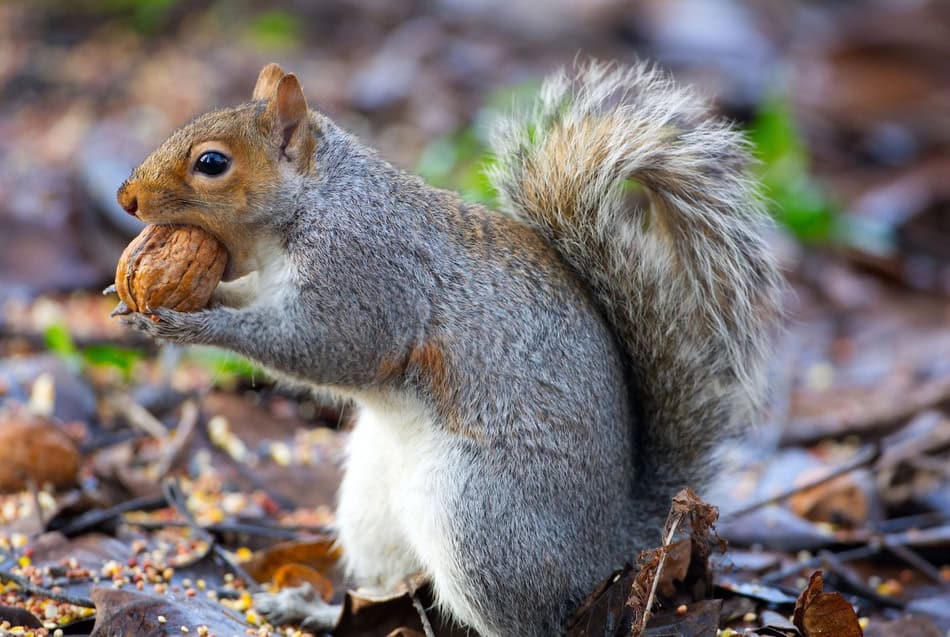
Burying food in numerous hiding places is called scatter-hoarding, and it has a practical advantage.
If a squirrel stored its entire winter food supply in one place, another animal could discover it and eat everything. Spreading the nuts across dozens or hundreds of locations reduces that risk.
Squirrels are also selective about what they bury. Research has found that they adjust their behavior according to the type of nut and the possibility of another animal stealing it.
A squirrel’s seemingly endless digging and darting around the yard is part of a food-storage strategy that helps it get through winter, when fresh food is harder to find.
Unlike some other small mammals, gray squirrels don’t hibernate. They remain active throughout the winter and rely partly on their stored supplies.
What Happens to All the Nuts They Never Find?
Squirrels don’t recover every nut they bury, and that turns out to be good news for trees.
Some nuts are stolen by other animals. Others remain underground, where they may eventually germinate if conditions are right.
By carrying acorns away from their parent trees and burying them, squirrels help spread oak seeds to new locations. Some of those buried acorns escape being eaten and grow into seedlings.
This makes squirrels important participants in forest regeneration. Their food-storage habits can help establish new trees in places where the seeds might never have reached on their own.
Of course, an unrecovered acorn doesn’t necessarily mean a squirrel forgot where it was buried. The animal may never have needed it, another creature may have taken it, or the squirrel may not have survived to retrieve it.
Still, some of those abandoned hiding places eventually produce new growth.
So when you see a squirrel burying an acorn in your lawn this fall, there’s a good chance it will remember where to look for it later. And if that acorn is never retrieved, you might find a young oak tree growing there one spring.

- Maggie Konrad

- Maggie Konrad
- Maggie Konrad
- Maggie Konrad