
Why Do Some Brownies Have That Perfect Crackly Top? Here’s the Secret

December 8 is National Brownie Day, and we’re celebrating by answering one of home baking’s most delicious mysteries: What makes that shiny, crackly brownie top, and how can you get it every time?
Some homemade brownies develop it perfectly. Others come out with a dull, smooth top, even when they taste every bit as delicious.
So what’s the difference? It isn’t a special pan, a secret ingredient, or an oven trick. Much of it comes down to something sitting in nearly every kitchen: ordinary sugar.
What Makes Brownies Have a Shiny, Crackly Top?
The secret is getting enough sugar to dissolve in the brownie batter before it goes into the oven.
As brownies bake, dissolved sugar can move toward the surface, where it becomes concentrated and forms a very thin crust as the brownies finish baking and cool. That delicate layer is responsible for the shiny finish and satisfying crackle.
Eggs also contribute to the surface structure, which is why some bakers compare the crust to a very thin layer of meringue.
But here’s where things get interesting: Simply adding more sugar isn’t necessarily the answer. How you combine the ingredients matters.
King Arthur Baking tested different techniques for creating shiny brownie crusts and found that warming butter and sugar together, then adding chocolate chips or chopped semisweet chocolate to the warm batter, produced particularly good results in its fudge brownie recipe.
The explanation is surprisingly simple. Butter contains a little water, and warming it with sugar helps that water begin dissolving the sugar. Moisture from the eggs helps dissolve more once the batter is mixed.
That dissolved sugar has a better chance of forming the delicate crust we’re after.
How to Get a Shiny Brownie Top at Home
You don’t necessarily need a new brownie recipe. But if your usual batch lacks that crackly finish, these techniques are worth trying.
1. Warm the Butter and Sugar Together
If your recipe calls for melted butter, try using a recipe that heats the butter and sugar together before the remaining ingredients are added.
The mixture should be warm enough to help dissolve some of the sugar, but it doesn’t need to boil. Don’t worry if it still looks a little grainy.
One important detail: sugar doesn’t dissolve in butterfat itself. It’s the moisture in the butter and other ingredients that does the work.
Follow the temperatures and mixing directions in your chosen recipe, particularly when adding eggs, so you don’t accidentally cook them in the warm mixture.
2. Don’t Skip the Chocolate Chips
Here’s a good excuse to add chocolate to something that’s already chocolatey.
During its brownie experiments, King Arthur Baking found that adding chocolate chips or chopped semisweet chocolate to the warm batter helped produce a shiny crust.
The bakers couldn’t establish exactly why the added chocolate made such a difference, although the extra sugar in the chocolate may help.
That doesn’t mean every recipe needs a mountain of chocolate chips. The amount matters, and adding them can change the finished texture. But if you’re following a tested recipe that includes melted or chopped chocolate, don’t automatically leave it out.
3. Pay Attention to How You Mix the Eggs
Some brownie recipes call for beating eggs and sugar together until the mixture becomes thick and lighter in color. Others incorporate the eggs into a warm butter-and-sugar mixture.
Both approaches can help produce a delicate crust, but they don’t necessarily create identical brownies.
Beating eggs and sugar can help dissolve the sugar and incorporate air. This is one reason the crust is sometimes described as meringue-like.
The important thing is to follow a method designed for the kind of brownie you’re making. Mixing the batter longer isn’t automatically better, especially after you’ve added the flour.
Why Do Some Brownies Have a Dull Top?
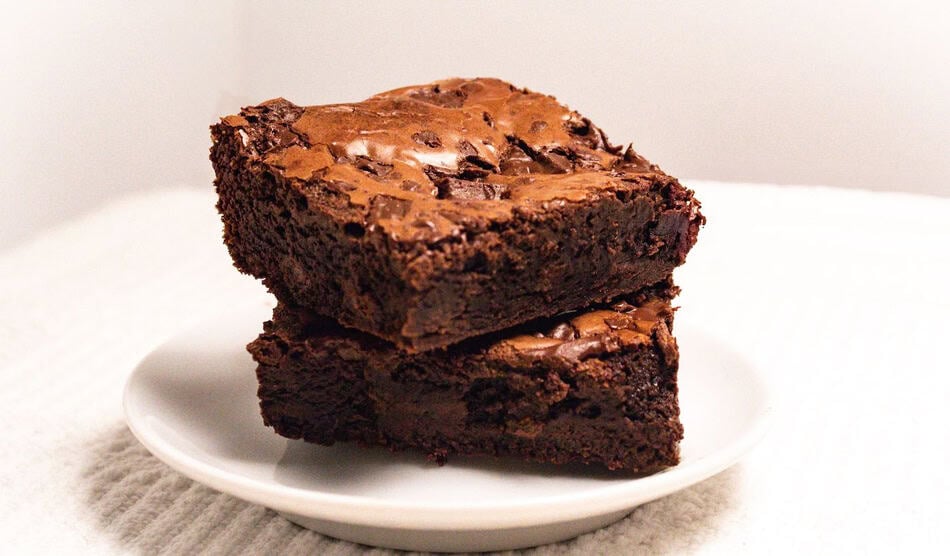
A dull surface doesn’t necessarily mean anything went wrong. Some brownie recipes are simply designed to produce a different texture.
A recipe that uses cocoa powder without melted chocolate, for example, may produce wonderful fudgy brownies without the distinctive glossy crust.
King Arthur Baking’s comparison of fudgy, chewy, and cakey brownies explains how differences in ingredients and preparation can change the finished dessert.
Here’s a quick comparison:
| What you notice | What may be happening |
|---|---|
| Shiny, crackly crust | Enough sugar dissolved to help form a thin surface layer |
| Smooth, dull top | The recipe or mixing method didn’t encourage that crust to form |
| Dry, cake-like center | The recipe may contain more flour or produce a lighter texture |
| Dense, fudgy center | The balance of fat, flour, and mixing favors a richer texture |
A brownie can be delicious with or without a shiny top. The crust is a texture preference, not a test of whether you’ve baked it correctly.
Do Boxed Brownies Get Shinier Tops?
If you’ve ever noticed that brownies from a boxed mix develop a lovely crackly top while your favorite homemade recipe doesn’t, you’re not imagining things.
The ingredients and proportions in boxed mixes can make that finish easier to achieve. Very fine sugar and the way the mixture is formulated may help create the thin surface crust.
But homemade brownies can develop the same finish. The trick is choosing a recipe that encourages enough sugar to dissolve while keeping the center rich and moist.
If you want a tested starting point, King Arthur Baking’s Fudge Brownies recipe is specifically designed to produce a chewy, fudgy center with a shiny top.
Is the Crackly Top Worth the Fuss?
If you love the contrast between a delicate crust and a soft, chocolatey center, absolutely. That little crunch is part of what makes a great fudgy brownie so satisfying.
But you don’t need to turn an afternoon of baking into a chemistry experiment. Start with a reliable recipe, pay attention to how it handles the sugar, and resist the temptation to make too many changes at once.
And if the brownies come out without a single shiny crackle? Serve them warm with a scoop of vanilla ice cream.
Nobody’s going to complain.

- Maggie Konrad

- Maggie Konrad
- Maggie Konrad
- Maggie Konrad