
7 Thanksgiving Cooking Myths That Can Ruin Your Dinner

Some Thanksgiving cooking advice gets passed down for generations. Unfortunately, a few familiar kitchen habits can leave you with dry turkey, soggy skin, or food that’s unsafe to eat.
Before you start cooking, here are seven myths worth putting to rest.
Quick Reference: 7 Thanksgiving Cooking Myths
- Wash the turkey? No. Rinsing raw poultry can spread bacteria around your kitchen.
- Trust the pop-up timer? Use a meat thermometer. Turkey must reach 165°F in the breast, thigh, and wing.
- Pink meat means it’s undercooked? Not necessarily. Temperature, not color, determines safety.
- Baste constantly for juicy turkey? Frequent basting doesn’t keep the inside moist and can soften the skin.
- Stuffing is better inside the bird? Baking it separately makes safe cooking easier and gives you a crisp top.
- Roast turkey overnight at low heat? Not below 325°F in a conventional oven, according to USDA guidance.
- Leave pumpkin pie on the counter? Refrigerate homemade pumpkin pie within two hours of baking.
Most important: Use a food thermometer to check turkey and stuffing temperatures. Both must reach 165°F.
1. You Should Wash the Turkey Before Cooking It
Skip the rinse. Washing raw turkey doesn’t make it safer. Water can splash bacteria onto nearby countertops, utensils, and other food.
The CDC recommends putting the turkey directly into the roasting pan and cooking it thoroughly. Wash your hands after handling raw poultry, and clean anything its juices touch.
2. The Pop-Up Timer Will Tell You When the Turkey Is Done
That little plastic button isn’t a substitute for a meat thermometer.
A turkey is safe to eat when its internal temperature reaches 165°F in the thickest part of the breast and the innermost parts of the thigh and wing.
Check all three locations, avoiding the bones. The USDA recommends using a food thermometer even when the turkey comes with a pop-up indicator.
3. Turkey Isn’t Done Until All the Pink Is Gone
Cooked turkey can retain a pink tint, particularly near the bones. Color alone won’t tell you whether the meat is safe.
According to the USDA, chemical changes during cooking can leave poultry looking pink even after it reaches a safe temperature.
Use your thermometer rather than judging by color or the appearance of the juices.
4. Frequent Basting Makes Turkey Juicier
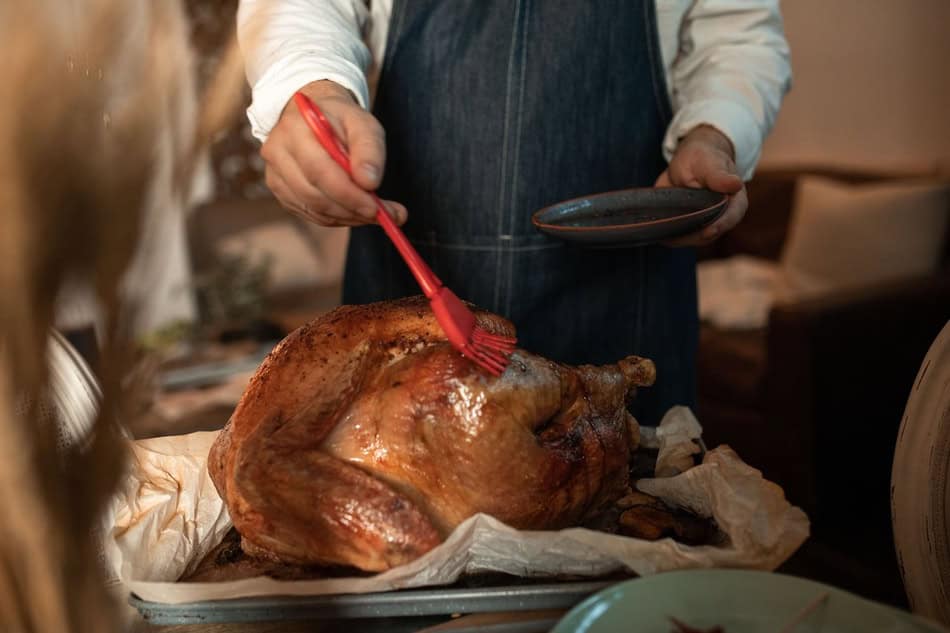
Spooning pan drippings over the turkey adds flavor to the surface, but it doesn’t force moisture deep into the meat.
Frequent basting can also soften the skin and requires opening the oven repeatedly.
For moist turkey, focus on proper seasoning and avoiding overcooking. Salting the bird ahead of time, often called dry brining, can help it retain moisture.
5. Stuffing Is Always Better Cooked Inside the Turkey
Stuffing cooked inside the bird absorbs flavorful drippings, but it also presents a food-safety challenge.
The turkey meat may reach 165°F before the stuffing in the cavity does. Continuing to roast until the stuffing reaches a safe temperature can leave the breast meat overcooked.
Baking stuffing separately makes temperature control easier and produces a browned, crisp top.
Prefer the traditional method? Add the stuffing immediately before roasting and check that its center reaches 165°F.
For recipe ideas, see our Thanksgiving stuffing recipes.
6. Roasting the Turkey Overnight at a Low Temperature Is Safe
An oven set to 200°F or 250°F might sound like a convenient way to have Thanksgiving dinner ready by morning, but that temperature is too low for safely roasting a whole turkey using conventional methods.
The USDA recommends setting the oven to at least 325°F so the bird moves through unsafe temperature ranges appropriately.
If you’re working backward from dinner time, use a roasting-time chart to plan, then rely on the meat thermometer to determine when the turkey is ready.
7. Homemade Pumpkin Pie Can Sit Out All Day
Pumpkin pie may look like an ordinary baked dessert, but its filling contains eggs and milk.
Homemade pumpkin pie needs refrigeration. Let it cool, then refrigerate it within two hours of baking.
The FDA’s holiday food-safety guidance specifically includes pumpkin pie among the foods that should be refrigerated promptly.
A refrigerated pie can be served chilled or brought out shortly before dessert. Don’t leave it on the counter from breakfast until the Thanksgiving dishes are cleared.

- Maggie Konrad

- Maggie Konrad
- Maggie Konrad
- Maggie Konrad