Why Do Some Birds Stay Behind When All the Others Fly South?

By early November, the backyard sounds a little different. The hummingbirds have disappeared from the flowers, the swallows are long gone from their summer haunts, and flocks of migrating birds have been passing overhead for weeks. Yet there’s a chickadee hopping through the bare branches, a cardinal calling from the hedge, and a woodpecker tapping away at a tree as though winter isn’t coming at all.
Why do some birds travel thousands of miles to escape the season while others stay right where they are, even when temperatures drop below freezing?
You might think the birds that remain are simply better at handling cold weather. That’s part of the explanation, but the biggest difference often comes down to something much more practical: what’s on the menu.
Why Do Some Birds Migrate While Others Stay?
It’s easy to assume birds fly south because they can’t stand the cold. But for many species, the real problem isn’t the temperature. It’s finding enough food to survive.
Think about a swallow that catches flying insects in midair. During summer, there may be plenty of mosquitoes, flies, and other insects to eat. But as autumn progresses and temperatures fall, that food supply becomes increasingly difficult to find.
A bird that depends on catching flying insects may have little choice but to travel somewhere those insects are still active.
Now consider a chickadee. Instead of relying entirely on insects flying through the air, it can search tree bark for insect eggs, larvae, and other tiny creatures hiding through winter. It also eats seeds and stores some food for later.
Both birds need energy to survive, but they’ve developed very different ways of finding it.
According to the Cornell Lab of Ornithology, migration is largely about taking advantage of food and breeding opportunities that change with the seasons. Many birds are capable of tolerating freezing temperatures as long as they can find enough to eat.
That doesn’t mean temperature is irrelevant. Cold weather increases the energy birds need to stay warm, and severe conditions can be dangerous. But food availability helps explain why one species leaves while another remains.
Which Birds Stay All Winter?
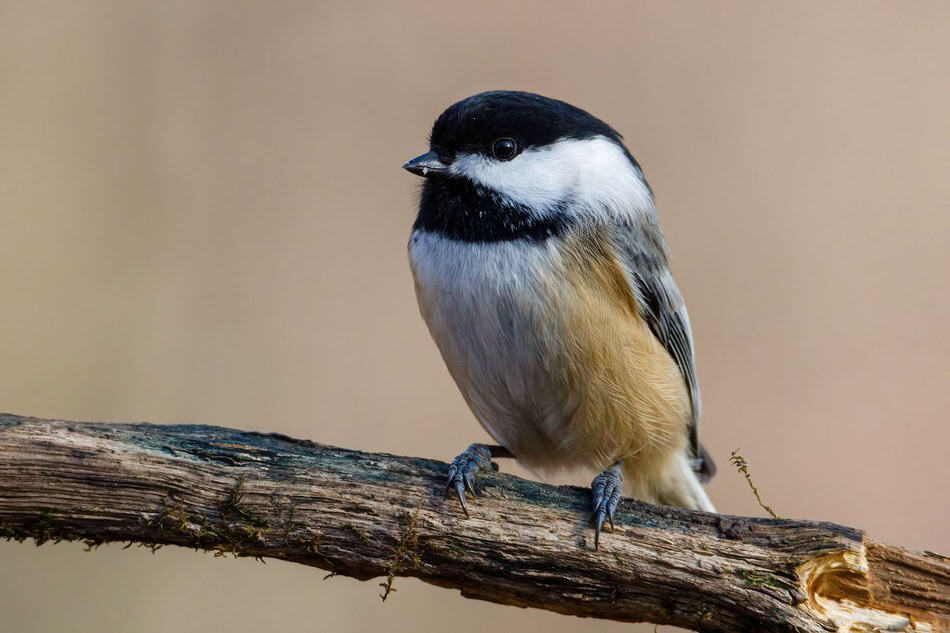
In many parts of the northern United States, some familiar backyard birds can be seen throughout the year.
Black-capped Chickadees are among the most remarkable examples. These tiny birds weigh only a fraction of what most household pets do, yet they’re capable of surviving bitter winter nights. Their thick feathers provide insulation, and their ability to find and store food helps them get through periods when meals are scarce.
Downy Woodpeckers and other resident woodpeckers spend winter searching tree trunks and branches for hidden insects. Their specialized bills and climbing abilities allow them to reach food that many other birds can’t.
Northern Cardinals, Blue Jays, White-breasted Nuthatches, and Tufted Titmice are also familiar year-round residents across much of their respective ranges.
The Cornell Lab’s guide to how songbirds survive winter explains how chickadees and other small birds use food storage, insulation, and energy-saving behaviors to survive cold weather.
Of course, a bird’s winter habits depend on where you live. A species that stays year-round in one state may migrate from another. Even birds of the same species don’t always follow identical seasonal routes.
That’s one reason backyard birdwatching can be so interesting. Your winter visitors may be different from those living just a few hundred miles away.
How Do Such Small Birds Keep From Freezing?
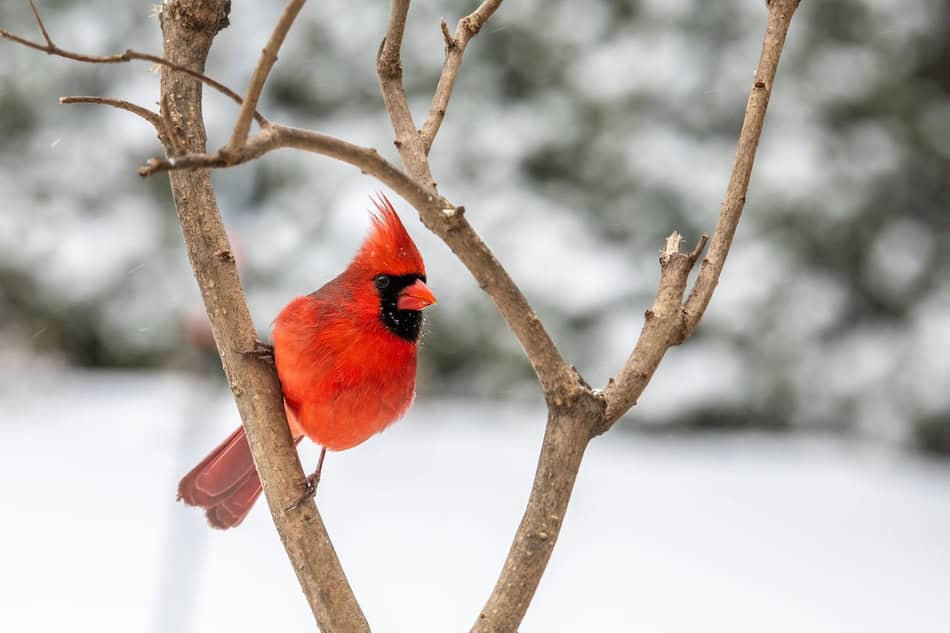
A chickadee perched on a snowy branch hardly looks equipped for a January cold snap. Yet beneath those feathers are some impressive adaptations.
Bird feathers trap insulating air close to the body, helping reduce heat loss. On especially cold days, you may notice birds puffing themselves up into round little balls. By fluffing their feathers, they can trap more air and improve their insulation.
Some birds also roost in sheltered places, such as tree cavities or dense evergreen branches, where they’re less exposed to wind.
And a few species can lower their body temperature at night to conserve energy.
Still, surviving winter takes fuel. Small birds lose heat relatively quickly because of their size, so finding enough food during the short daylight hours is critical.
A bird may be perfectly capable of withstanding a freezing night but still struggle if a prolonged storm prevents it from finding food the following day.
For winter residents, locating reliable food and shelter is an ongoing part of life.
Some Birds Travel South, but Not as Far as You Think
Another surprise is that migration isn’t always a journey from Canada to the tropics.
Some birds travel only a few hundred miles. Others move from higher elevations into valleys, where conditions are less severe and food may be easier to find.
And some species are partial migrants, meaning certain populations migrate while others remain in place.
American Robins are a familiar example. Many people think of the robin as a sure sign of spring, but robins can remain in northern regions throughout winter. Instead of hunting earthworms on lawns, they may gather in flocks and feed on available fruits and berries.
You might not see them in your yard for weeks, only to discover dozens feeding together in a stand of berry-producing trees.
American Crows also vary in their seasonal movements, with some remaining near their breeding areas and others traveling farther south.
The important point is that birds don’t all follow one simple rule. Their movements depend on species, geography, available food, and the conditions they encounter.
Why Are There New Birds in My Yard During Winter?
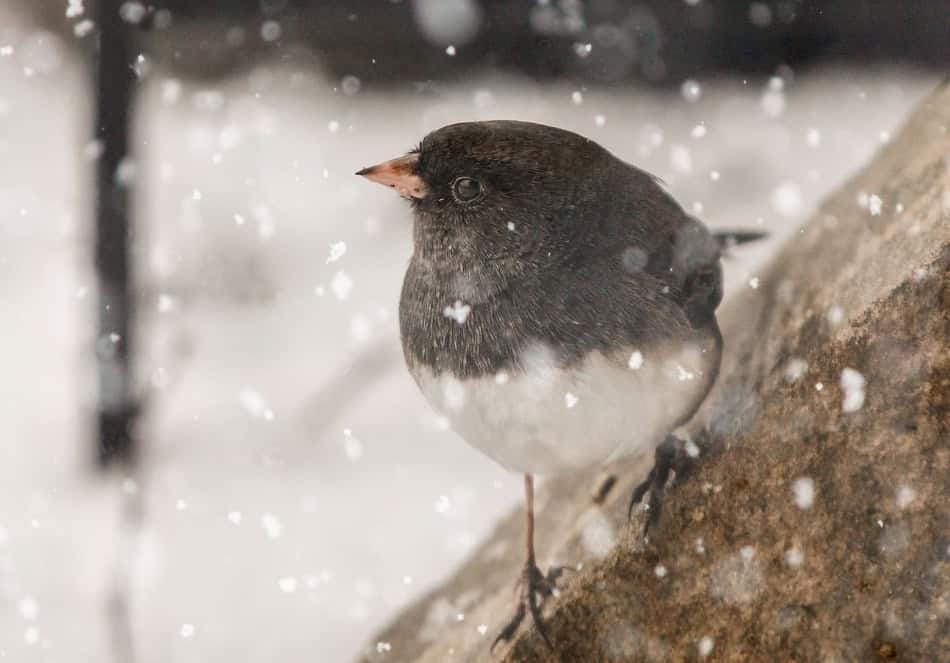
Here’s an interesting twist: Some of the birds you see in winter may have migrated south to reach you.
Dark-eyed Juncos, for example, often become more noticeable across much of the United States during the colder months. Many spend the breeding season farther north or at higher elevations before moving into areas where they can find food through winter.
Other northern-breeding birds also move into the United States as temperatures fall.
The National Audubon Society points out that while some familiar summer birds are leaving, others are arriving from farther north.
That means your backyard’s winter population isn’t necessarily made up only of birds that stayed behind. It can be a mixture of year-round residents and seasonal visitors.
A bird that looks perfectly at home in your snowy yard may actually have traveled a considerable distance to spend the winter there.
Does Putting Out a Bird Feeder Keep Birds From Migrating?
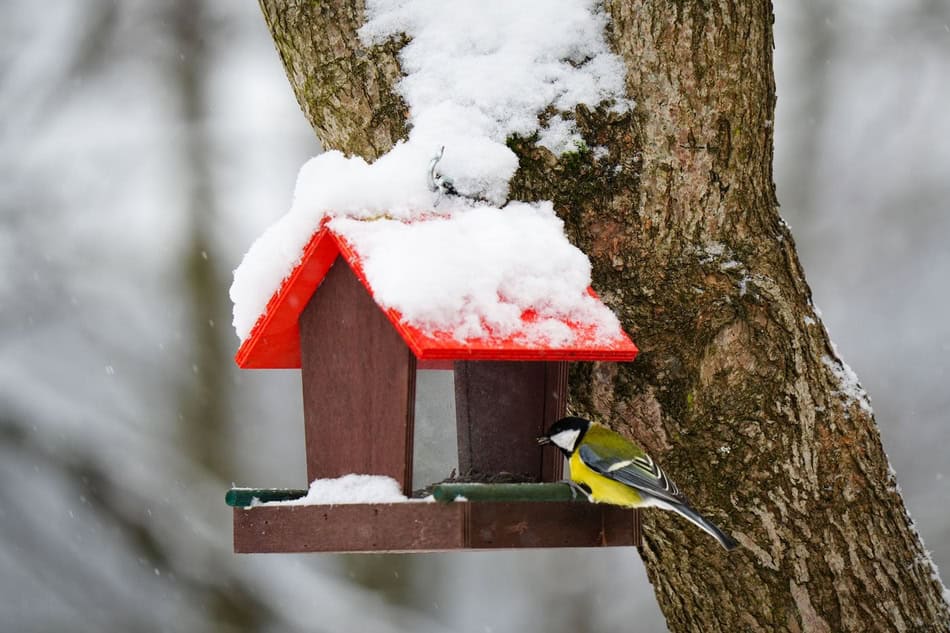
This is a question that comes up every autumn, especially when people wonder whether it’s time to take down their feeders.
Fortunately, feeding birds doesn’t normally persuade migratory species to abandon their seasonal journeys.
Migration is influenced by inherited biological rhythms and environmental cues, including changes in daylight. For many species, the urge to migrate develops well before winter food becomes scarce.
The National Audubon Society explains that backyard feeders generally don’t override those migratory instincts.
A feeder may provide valuable fuel for a bird passing through, while also supplying an additional food source for year-round residents.
If you’re interested in helping the birds that remain, see our Farmers’ Almanac guide to why a fall bird feeder matters.
The Birds That Stay Have Their Own Winter Story
It’s tempting to watch a flock of geese heading south and imagine that every bird would rather be somewhere warmer. But nature doesn’t work quite that way.
For a swallow, traveling hundreds or thousands of miles may be the best way to find food. For a chickadee, remaining in familiar woods and searching for hidden insects can be an equally successful strategy.
Neither bird has chosen an easier life. They’ve simply adapted to different ways of surviving the seasons.
So when you look out on a frosty morning and see a little bird working its way through the bare branches, take a moment to appreciate what you’re watching.
While countless other birds have departed for distant places, this one has everything it needs to make winter its home.

- Maggie Konrad

- Maggie Konrad
- Maggie Konrad
- Maggie Konrad