

How to Grow Brussels Sprouts: A Full Garden Guide
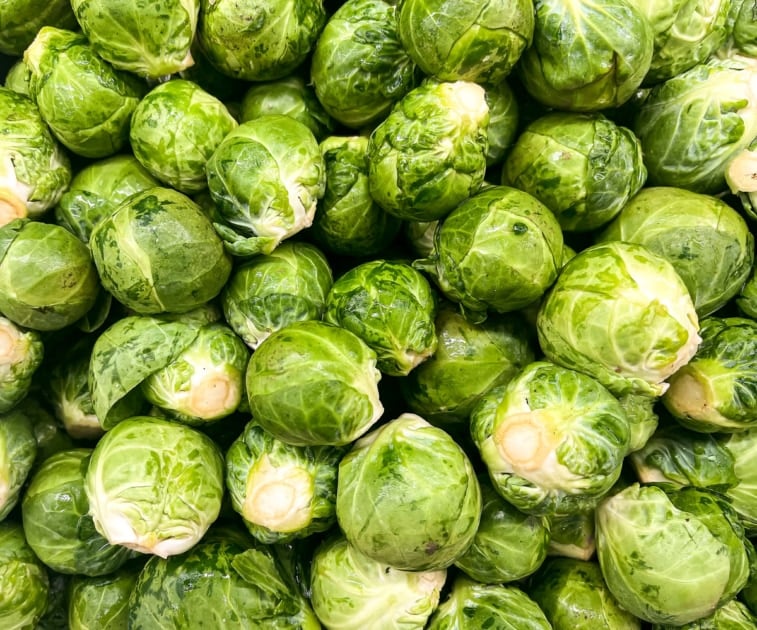
Quick Reference: How to Grow Brussels Sprouts
- When to plant: sow seeds in May or early June; transplant into the garden in late June into early July so sprouts mature in cool fall weather.
- Spacing: set transplants 15 to 18 inches apart in rows 36 inches apart; thin direct-seeded plants to one every 18 inches.
- Soil and light: fertile, well-drained soil at pH 6.2 to 6.8, full sun, and at least an inch of water a week.
- Days to maturity: a fairly long season of 80 to 100 days; this is a cool-season crop.
- Harvest: pick firm sprouts one to two inches across, and wait for the first frost for the best flavor.
Brussels sprouts can be easy to grow, and the whole crop turns on one bit of timing. The trick is sowing seeds so the buds develop after the mid to late summer heat is over. To do that, plant seedlings around the start of summer so they mature in the cool weather, ready for a fall or early winter harvest. A light frost only makes them sweeter. Here is a plain guide to how to grow Brussels sprouts, from the first seed in May right through to the last stalk you cut in the cold. The University of Minnesota Extension keeps a plain-English guide to growing Brussels sprouts if you want to double-check the timing for your own ground.
Getting Started: Two Methods
You can start Brussels sprouts two ways, by raising your own transplants indoors or by sowing seed straight into the garden. Both work. The difference is mostly a matter of timing and how much fuss you want to make early in the season.
1) Indoor Preparation and Transplanting
Transplanted Brussels sprout plants tend to give better results than direct seeding. Either way, it is very important to prepare the soil weeks before planting, which we cover in the Soil section below.
- Sow seeds in May or early June, then transplant into the garden in late June into early July.
- Plant seedlings 15 to 18 inches apart in rows that are 36 inches apart.
2) Planting Seed Outdoors
- Direct-seeded Brussels sprout plants need about three more weeks than transplants to develop, so count roughly four months back from your local average frost date in the autumn. Time it so the plants will bud during the cooler months.
- Place three seeds together about a quarter inch deep, 18 inches apart.
- Thin to one seedling per 18 inches once the seedlings are established.
Water
Plants need at least an inch of water weekly to develop the best crop and to lessen stress during the summer heat. Steady moisture matters most while the plants are growing tall in July and August, before the sprouts begin to form along the stalk.
Soil
Brussels sprouts want well-drained, fertile soil with a slightly acidic pH of 6.2 to 6.8. Work compost or other organic matter such as leaves and grass clippings into the planting bed several weeks before planting. If you are short on finished compost, our guide on how to build a compost pile will get you a steady supply for the bed.
Light
Brussels sprouts prefer full sun but can tolerate some shade. Give them the sunniest corner of the garden if you have it, since steady light feeds the long climb up the stalk.
Fertilizer
- Soil with compost added before planting may provide enough nutrients for the growing season. If growth slows, work in more compost around the plants.
- Brussels sprouts need more nitrogen in the soil for the best sprout production. Compost is a natural source of nitrogen.
- Boron, a micronutrient, is also necessary for good sprouts. Some fertilizers contain boron, but an easy method is to mix one tablespoon of borax into five quarts of water and sprinkle it over the ground, covering about 10 square feet per quart of solution.
Common Diseases and Pests
Like the rest of the cabbage clan, Brussels sprouts draw their share of trouble. Watch for black rot, alternaria, cabbage worm, cabbage looper, flea beetle, aphids, and cutworms.
- Summer-weight row covers can help protect seedlings from insects.
Rotating where you plant the cabbage family from one year to the next also helps keep soil-borne disease from building up in the same bed.

Maintenance
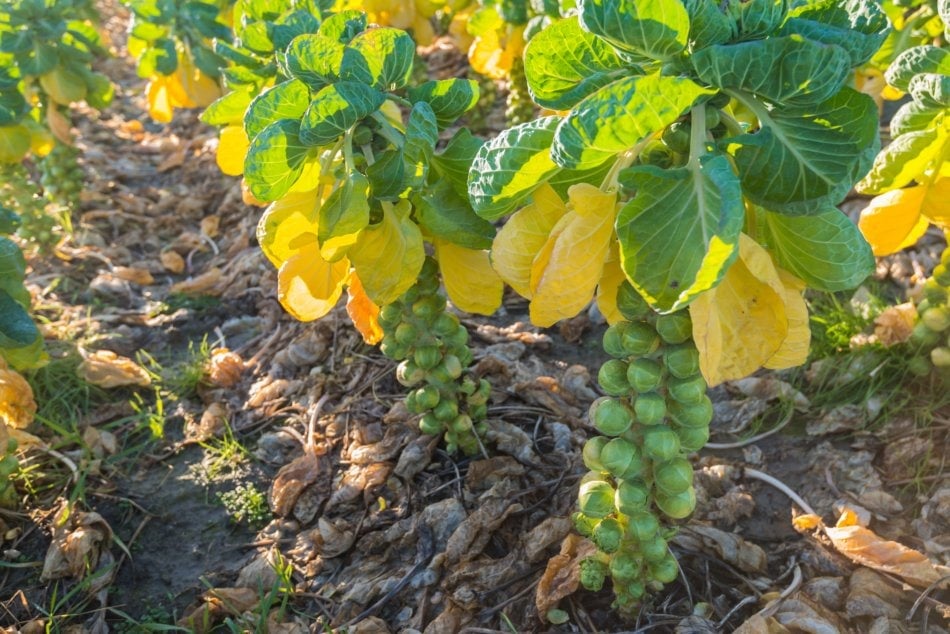
- Brussels sprouts plants can grow as tall as three feet (36 inches). Stakes may be used to support their growth.
- Remove yellow leaves, especially at the bottom of the plants, to let sunlight reach the stalks.
Companion Plants for Brussels Sprouts
Brussels sprouts share a bed well with a few good neighbors. Aromatic herbs like dill and sage, along with onions, beets, and bush beans, are traditional friends that earn their keep. Keep the cabbage family away from strawberries and pole beans, and avoid following one cole crop with another in the same spot two years running. For a fuller pairing chart, see our companion planting guide.
Harvesting
- Brussels sprouts require a fairly long growing season, 80 to 100 days, and are considered a cool-season crop.
- Sprouts are ready to harvest when they are firm to the touch and one to two inches in diameter.
- To remove a sprout from the stalk, snap off the leaf below it and then break off the sprout.
- To encourage earlier growth for sprouts at the top of the stalk, cut the very top of the plant off (called the terminal bud) when the lowest sprouts are near an inch in diameter. This is known as topping. If you leave the top on, harvest the larger sprouts at the bottom of the stalk first while the smaller ones at the top keep developing.
- For the best flavor, harvest sprouts after the first frost. Plants can be left in the garden down to 20 degrees Fahrenheit.
- If the plants are topped, the entire stalk can be cut and stored up to five weeks at around 36 degrees. Just be sure to remove the leaves.
That frost rule is the part old gardeners swear by. A hard cold snap nudges the plant to convert starches to sugars, so the sprouts you pick in late October taste far sweeter than the ones you might have rushed in September.
Regional Planting Windows for Brussels Sprouts
Because the goal is a harvest in cool weather, the calendar date shifts with your region while the rule stays the same: count back from your first fall frost so the sprouts mature in the chill. Use this as a starting point, then confirm against your local frost date.
| Region | Average last spring frost | When to set out plants |
|---|---|---|
| Deep South and Gulf Coast | Late February into March | August into September |
| Mid-South and Southern Plains | Mid to late March | July into August |
| Mid-Atlantic and Ohio Valley | Mid to late April | Late June into July |
| Midwest and Great Lakes | Early to mid May | Mid June into early July |
| Northeast and New England | Mid to late May | June |
| Mountain West and Pacific Northwest | Mid May into early June | Late May into June |
Additional Notes
- Brussels sprouts are best planted in summer and harvested in fall. As a member of the Cole family (similar to the cabbage family), the plant produces a tastier crop in the cool of the autumn.
Have you tried growing Brussels sprouts before? What challenges did you face? Let us know in the comments below.

How to Grow Brussels Sprouts: Frequently Asked Questions
How long do Brussels sprouts take to grow?
Brussels sprouts need a fairly long growing season of 80 to 100 days and are a cool-season crop. To land the harvest in cool fall weather, sow seeds in May or early June and transplant into the garden in late June into early July.
Do Brussels sprouts taste better after a frost?
Yes. For the best flavor, harvest sprouts after the first frost, which sweetens them. The plants are hardy and can be left in the garden down to 20 degrees Fahrenheit, so there is no rush to pull them at the first cold night.
How far apart should I space Brussels sprouts?
Set transplants 15 to 18 inches apart in rows 36 inches apart. If you direct-seed, place three seeds together about a quarter inch deep at 18-inch intervals, then thin to one seedling per 18 inches once they are established.
What does topping a Brussels sprout plant do?
Topping means cutting off the very top of the plant, called the terminal bud, when the lowest sprouts are near an inch in diameter. It pushes the plant to ripen the upper sprouts faster. If you top the plant, you can cut the whole stalk and store it up to five weeks at around 36 degrees, with the leaves removed.
What soil and water do Brussels sprouts need?
Grow them in well-drained, fertile soil with a slightly acidic pH of 6.2 to 6.8, worked with compost a few weeks before planting. Give the plants full sun and at least an inch of water a week. Brussels sprouts are heavy feeders that need extra nitrogen, plus a little boron for good sprout production.
What pests and diseases bother Brussels sprouts?
Common troubles include black rot, alternaria, cabbage worm, cabbage looper, flea beetle, aphids, and cutworms. Summer-weight row covers help protect young seedlings, and rotating where you plant the cabbage family each year keeps soil-borne disease from building up.


Janine Pineo
Janine Pineo has been gardening all her life in Maine and writing about it for more than two decades. More of her writing can be found on her website, GardenMaine.com.
- Janine Pineo

- Janine Pineo
- Janine Pineo
- Janine Pineo


I started mine in an aero garden about 3 weeks ago & they haven’t germinated yet.
I started plants indoors.Transplanted them. Fertilized once but no Brussels appeared until frost. They didn’t form completely.
I’ve tried for 2 years to get my sprouts to develop properly. They start just fine but later lose their compact sprout nature and very quickly develop into a mini plant on the mother plant. What am I doing wrong?
I tried to grow in the early spring…beautiful huge plant the cabbage worms enjoyed them. It’s been a few years and I am trying again for fall sprouts. I’m just sprouting in the cell pack now I hope to add them to my garden in a few weeks?
Good luck! The one thing about gardening is sometimes you’re totally in nature’s good or bad grace! Hope it works!
Wild turkeys love them. Did not get a chance to harvest.
Really? What a bummer!
I love you better than ………..hmm…….Brussels Sprouts. This from an old TV commercial.