How to Grow Cauliflower: Timing, Soil, and Harvest
Quick Reference: How to Grow Cauliflower
- Plant when: spring or fall, when temperatures stay cool. Start seeds indoors four to six weeks before your planting date.
- Germination soil temp: a steady 70 degrees Fahrenheit to sprout, then cooler soil near 60 degrees for the growing stage.
- Spacing: set transplants 18 to 24 inches apart, with rows three feet apart.
- Water: one inch a week, and keep it steady. Dry spells stop a head, or curd, from forming.
- Soil: well-drained and fertile, pH 6 to 7, worked with plenty of nitrogen-rich compost.
- Harvest: usually 50 to 60 days, before the curd starts to loosen and separate.
Cauliflower has a reputation for being fussy, and it earns it. The plant wants cool weather, steady moisture, and rich soil, and it will sulk if any one of those slips. The best way to grow cauliflower is to plant it in the spring or fall, when the temperatures do not get too hot. Get the timing right and the rest falls into place. Here is a plain-English guide to growing a solid, tight, snow-white head in your own garden this 2026 season, whether you set out transplants or sow seed straight in the ground.
Getting Started: Two Methods
1) Starting Seeds Indoors & Transplanting
Note: Transplants work best, but cauliflower can be direct seeded too. (See below.) Starting indoors gives the plant a head start on the season and lets you control soil temperature while the seedlings are small and tender.
- Fall planting (for a winter crop): Start seeds indoors four to six weeks prior to your planned planting date. In areas where temperatures tend to stay above 32 degrees, a winter crop can be transplanted from September to February.
- Early spring planting (for a spring crop): For a spring crop, sow early or midseason varieties four to six weeks prior to your plant date.
- Spring planting (for a fall crop): For fall crops, use midseason and storage varieties, starting seeds in May and planting them out in the garden in June to July.
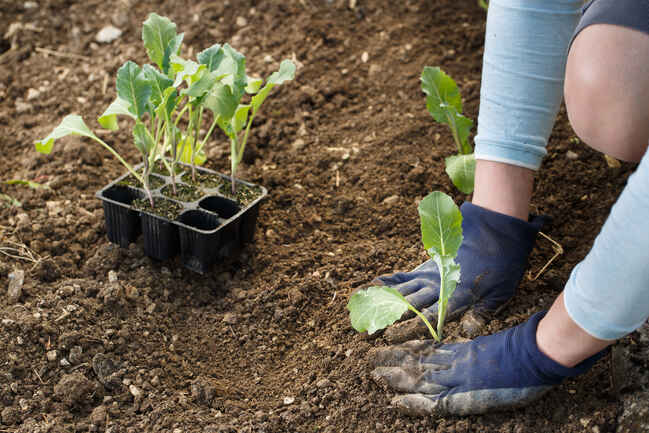
- Cauliflower is a large plant, so place transplants 18 to 24 inches apart.
- Space rows three feet apart.
- Soil temperature for germination matters, with a consistent temperature of at least 70 degrees Fahrenheit, then cooler soil around 60 degrees for the growth stage. Seedlings can be stressed during transplanting if they are more than five weeks old, so begin to harden them off over several days by giving them outside conditions with protection from wind, increasing the time outside gradually.
2) Direct Seeding Outdoors
- Sow three or four cauliflower seeds one half-inch deep every 18 inches in the row.
- Space rows two to three feet apart.
- Once the plants are established, thin them to one plant for every 18 inches of the row.
Because cauliflower runs on soil temperature and frost dates, the calendar shifts with your region. The rule stays the same everywhere: keep it in cool weather and out of summer heat. Check your average frost dates first, then count back to set your start-indoors date. For a plain-English second opinion on timing, the University of Minnesota Extension keeps a guide to growing cauliflower for home gardens.
| Region | Typical Cauliflower Timing |
|---|---|
| Southeast & South Central | Fall through late winter, where nights stay above freezing, for a winter crop transplanted September to February |
| Southwest | Late winter to early spring for a spring crop, and again in fall where summers are mild |
| Northeast & New England | Early spring for a spring crop, or start seeds in May for a fall harvest |
| Great Lakes & Midwest | Spring once soil warms, or midsummer sowing for a fall crop |
| Northwest | Spring through early summer, with cool coastal summers favoring long-season varieties |
| Canada (BC, southern Ontario, Prairies, Maritimes) | Spring after the soil warms for a summer-to-fall harvest; mild coastal areas can also try a fall crop |

Gardening by the Moon for Cauliflower
Cauliflower forms its head above ground, which makes it an above-ground crop. Traditional Gardening by the Moon wisdom says to plant above-ground crops during the light, or waxing, of the Moon, the stretch between the new Moon and the full Moon. Root crops like carrots and potatoes go in during the dark, or waning, of the Moon. It is a planning method rather than a guarantee, but it costs nothing to line your seed-starting up with the calendar and see how your garden does.
Water
Consistent moisture will produce a solid head. Plants should receive an inch of water each week. Inconsistent moisture can stop the plant from forming a head, also called a curd, and can completely halt the growth of a developing head. In the heat of summer, mulch around the base to hold the ground cool and moist, and water in the morning so the leaves dry through the day.
Soil
Cauliflower wants well-drained, fertile soil with a pH of 6 to 7. The soil should be able to hold moisture and not dry rapidly. An addition of compost can add fertility and help maintain that moisture. If your ground is heavy clay or fast-draining sand, work in a few inches of finished compost before you plant to even it out.
Related: How To Check Your Soil pH
Light
Cauliflower plants prefer full sun, which means at least six hours of direct light a day. The leaves need that energy to build a big head, even though the curd itself is often shaded to keep it white. Pick your sunniest bed and let the plant work.
Fertilizer
Aged compost should be added to the soil prior to planting. Side dress the plants by working more compost into the soil several inches away from the roots once plants are established. A good supply of nitrogen helps the plant form the best curd, which makes nitrogen-rich compost a good source for the nutrient. Feed steadily rather than all at once, since a hungry cauliflower will stall and a rushed one will bolt.
Common Diseases & Pests
Cauliflower shares its troubles with the rest of the cabbage family. The usual suspects are black rot, cabbage worm, cabbage looper, flea beetles, and cabbage aphids. Check the undersides of the leaves each week, hand-pick worms and loopers when you spot them, and give the plants room and airflow so black rot does not take hold. Moving your cauliflower to a new bed each year keeps soil-borne trouble from building up.
Harvesting
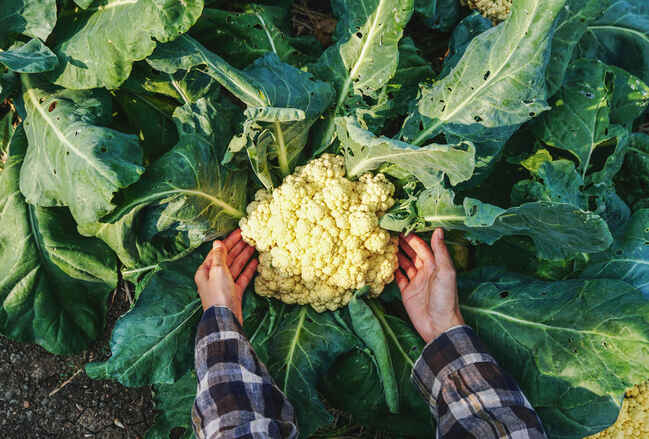
Harvest the head when it reaches the desired size, usually after 50 to 60 days, and most likely longer during the winter months since the growing time is slowed by shorter days, meaning less light, and cooler temperatures. (See additional notes below.) Be sure to harvest before flower formation occurs. When the curds start to separate and loosen, it is a sign that flower formation is about to begin. Cut the head with a sharp knife in the cool of the morning, and leave a few wrapper leaves on to protect it on the way to the kitchen.
Additional Notes
Blanching is a method to protect the growing cauliflower head from sunshine, keeping its white color and its flavor, which can be altered with too much sun. Once the head has reached about baseball size, gather the outer leaves and tie them loosely over the head so it can grow unhindered.
Self-blanching varieties do not need to have their leaves tied, although tying will not harm them. Colored varieties of cauliflower, such as orange and purple, along with Romanesco types, require direct sun to develop their colors and should not be tied for blanching. Cauliflower should be ready to harvest about two weeks after blanching.
Companion Plants for Cauliflower
Cauliflower does well with a few good neighbors. Beans and peas add nitrogen to the soil, celery and onions help mask the plant from cabbage pests, and aromatic herbs like dill and chamomile earn their keep nearby. Keep cauliflower away from strawberries and tomatoes, which compete hard and share pests with the cabbage family. For a fuller pairing chart, see our companion planting guide.
Community Is Important!
Besides our guide, we would like to underscore the importance of community with gardening. Be sure to talk with local growers and have conversations about what to do and when. A neighbor two streets over who has grown cauliflower for years knows your soil and your frost dates better than any national chart.
You can always “wing it” and learn from your mistakes, but when we share and learn from each other we may get better results faster.
Related: Join The Farmhouse! Get 12 months of our famous calendars and extended weather forecasts today.
Join The Discussion
Have you tried growing cauliflower before?
What are some challenges that you faced?
Share with your community here in the comments below!
Do you have any questions about our growing guide?
Related
Here are 9 more plants for a fall harvest

How to Grow Cauliflower: Frequently Asked Questions
What is the best time to plant cauliflower?
Cauliflower grows best in cool weather, so plant it in spring or fall and keep it out of summer heat. Start seeds indoors four to six weeks before your planting date. In mild-winter areas where nights stay above freezing, you can even transplant a winter crop from September to February.
Why won’t my cauliflower form a head?
The most common cause is stress from uneven moisture or heat. Cauliflower needs about an inch of water a week, kept steady, and soil that stays cool, near 60 degrees during the growing stage. A dry spell or a hot stretch can stop a head, or curd, from forming, or halt one that has started. Consistent water, rich soil, and cool timing are the fix.
How do I keep cauliflower heads white?
Blanch them. Once the head reaches about baseball size, gather the outer leaves and tie them loosely over the curd to shade it from the sun, which keeps the color and flavor. Self-blanching varieties do not need tying. Colored types like orange, purple, and Romanesco should not be tied, since they need direct sun to develop their color.
How long does cauliflower take to grow?
Most cauliflower is ready to harvest about 50 to 60 days after transplanting, though winter crops take longer because shorter days and cooler temperatures slow growth. Harvest the head before the curds begin to separate and loosen, which is the sign that flower formation is about to begin.
What are the worst pests for cauliflower?
The common cauliflower troubles are black rot, cabbage worm, cabbage looper, flea beetles, and cabbage aphids, the same pests that bother cabbage and broccoli. Check the undersides of leaves each week, hand-pick worms and loopers, and rotate cauliflower to a new bed each year so soil-borne disease does not build up.
Can I direct seed cauliflower instead of transplanting?
Yes. Transplants work best, but cauliflower can be sown straight in the ground. Plant three or four seeds one half-inch deep every 18 inches in the row, space rows two to three feet apart, and once the plants are established, thin them to one plant every 18 inches.
Does planting cauliflower by the Moon make a difference?
Gardening by the Moon is a traditional planning method, not a guarantee. Cauliflower forms its head above ground, so the old rule is to plant it during the light, or waxing, of the Moon. Direct scientific proof is limited, but generations of gardeners have used the calendar to time their work, and it costs nothing to try it alongside good soil, steady water, and cool-season timing.


Janine Pineo
Janine Pineo has been gardening all her life in Maine and writing about it for more than two decades. More of her writing can be found on her website, GardenMaine.com.
- Janine Pineo

- Janine Pineo
- Janine Pineo
- Janine Pineo