When Is the Next Full Moon? September’s Harvest Moon 2026
The next full Moon is September’s Harvest Moon on Saturday, September 26, 2026. Find the exact time, why it’s called the Harvest Moon, and the best time to see it.

If you’re wondering when is the next full Moon, mark your calendar for Saturday, September 26, 2026.
The next full Moon is the Harvest Moon, which reaches peak illumination on September 26, 2026, at 12:49 p.m. EDT. Although the precise moment of fullness occurs during daylight across North America, the Moon will rise looking beautifully full in the eastern sky shortly after sunset that evening.
2026 Full Moon Calendar, Harvest Moon 2026 guide, Moon Phase Calendar, Fall Equinox 2026 guide, and September 2026 guide.
And this is one full Moon worth watching.
The Harvest Moon is one of the most famous Moons of the entire year—a celestial marker of changing seasons that has helped farmers bring in autumn crops for generations. In 2026, there’s another reason to look up: Saturn will appear near the Harvest Moon, creating a striking pairing in the September sky.
When Is the Next Full Moon?
The next full Moon is Saturday, September 26, 2026, at 12:49 p.m. EDT.
| Time Zone | Full Moon Time |
|---|---|
| Eastern Daylight Time | 12:49 p.m. |
| Central Daylight Time | 11:49 a.m. |
| Mountain Daylight Time | 10:49 a.m. |
| Pacific Daylight Time | 9:49 a.m. |
| Alaska Daylight Time | 8:49 a.m. |
| Hawaii Standard Time | 6:49 a.m. |
| Coordinated Universal Time | 16:49 UTC |
The Moon becomes full at the same instant worldwide; only the local clock time changes. The U.S. Naval Observatory lists the September 2026 full Moon at 16:49 UTC on September 26.
For the complete year, see the Farmers’ Almanac 2026 Full Moon Calendar, with the traditional name, date, and exact time of every full Moon.
What Is September’s Full Moon Called?
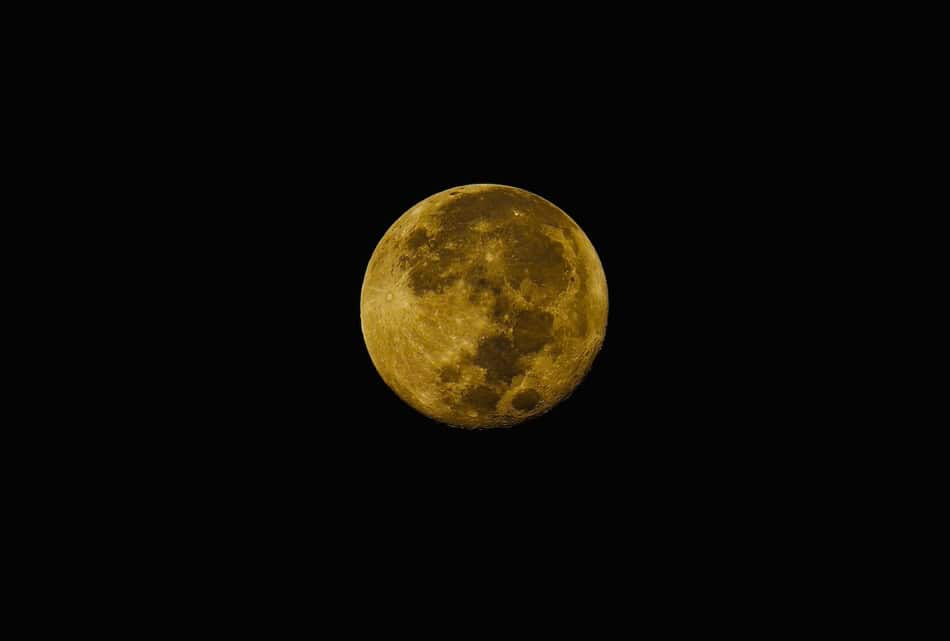
September’s full Moon in 2026 is the Harvest Moon.
Unlike most traditional full-Moon names, the Harvest Moon is not permanently assigned to one month. Instead, it is defined as the full Moon occurring closest to the autumnal equinox.
In 2026, the autumnal equinox occurs on Tuesday, September 22, at 8:05 p.m. EDT—just under four days before the September 26 full Moon. That makes September’s Moon the Harvest Moon this year.
Learn more about the changing seasons in our guide to the Fall Equinox and First Day of Fall 2026.
Why Is It Called the Harvest Moon?
The name goes back to the days when moonlight was considerably more important to everyday life.
Around the autumn equinox, many crops traditionally reached maturity at roughly the same time. Farmers faced a short window in which to gather corn, grains, pumpkins, squash, and other crops before frost and deteriorating weather arrived.
Before tractors had headlights and fields were illuminated by electric lights, the bright Moon rising shortly after sunset provided something extremely valuable: more working light after the Sun went down.
NASA notes that farmers historically relied on this extra evening moonlight to continue harvesting crops after sunset.
That practical connection between the Moon and the harvest is how one of autumn’s most enduring traditions was born.
What Makes the Harvest Moon Different?
There is an unusual astronomical feature behind the Harvest Moon that makes the old name particularly appropriate.
Normally, the Moon rises about 50 minutes later from one evening to the next, on average.
But around the autumn equinox in the Northern Hemisphere, the Moon’s path crosses the eastern horizon at a relatively shallow angle. As a result, the delay between successive moonrises becomes much shorter.
Around the 2026 Harvest Moon, for example, successive moonrises around New York are separated by only about 25 minutes. The exact difference varies significantly depending on latitude.
That means that for several evenings around the Harvest Moon, bright moonlight arrives relatively soon after sunset.
It is this string of moonlit evenings—not simply one especially bright full Moon—that made the Harvest Moon so useful to generations of farmers.
When Is the Best Time to See the Harvest Moon?
You do not need to go outside at exactly 12:49 p.m. EDT.
In fact, you wouldn’t see much of the Moon from most of North America at the precise moment it becomes full because it occurs during the daytime.
Instead, one of the best times to watch will be Saturday evening, September 26, beginning around sunset.
Find a location with an unobstructed view toward the eastern horizon. As evening twilight begins to fade, watch for the Moon climbing above trees, buildings, hills, or distant fields.
The Moon will also look essentially full on the nights immediately surrounding September 26, so cloudy weather on Saturday doesn’t necessarily mean you’ve missed the show.
Check the Farmers’ Almanac Moon Phase Calendar as the date approaches for current lunar information.
Look for Saturn Beside the Harvest Moon
There is an extra attraction in the sky this year.
According to NASA’s September 2026 skywatching guide, the Harvest Moon will rise near Saturn on September 26.
Saturn should be easily visible to the unaided eye as a bright, steady-looking point near the Moon.
Neptune will also be in the vicinity, forming a broad triangle with the Moon and Saturn. Neptune is far too faint to see with the naked eye, however, so binoculars or a telescope—and preferably dark skies—will be necessary.
For casual skywatchers, simply finding Saturn beside the brilliant Harvest Moon should make this year’s event memorable.
Will the Harvest Moon Look Orange?
It certainly can—but the Harvest Moon isn’t naturally orange.
Full Moons often appear yellow, gold, orange, or even reddish when they are close to the horizon. That happens because moonlight must travel through much more of Earth’s atmosphere when the Moon is low in the sky.
The atmosphere scatters more of the shorter blue wavelengths of light, allowing more yellow and red light to reach your eyes.
Dust, smoke, haze, humidity, and other particles in the atmosphere can deepen the color.
That’s one reason photographs of the Harvest Moon rising over fields and barns so often show a spectacular golden-orange Moon.
As the Moon climbs higher, it usually takes on its more familiar pale white appearance.
Is the September 2026 Harvest Moon a Supermoon?
No.
The Harvest Moon and a supermoon are two different things.
“Harvest Moon” describes the full Moon closest to the autumnal equinox.
A supermoon, meanwhile, occurs when a full Moon happens while the Moon is unusually close to Earth in its elliptical orbit.
According to NASA’s current supermoon calendar, the upcoming full supermoons occur later in 2026, on November 24 and December 24.
So September’s Harvest Moon may be spectacular, but its Harvest Moon status has nothing to do with its apparent size.
Do You Need a Telescope to See the Harvest Moon?
Not at all.
A full Moon is one of the easiest astronomical objects to enjoy with the unaided eye.
In fact, the best view of the Moon rising over the horizon may simply be with your own eyes, especially when trees, farm fields, mountains, buildings, or other familiar objects provide a sense of scale.
Binoculars will reveal lunar craters, dark maria, and other surface features. A telescope provides even more detail, although shadows across lunar features are less pronounced at full Moon than during crescent or quarter phases.
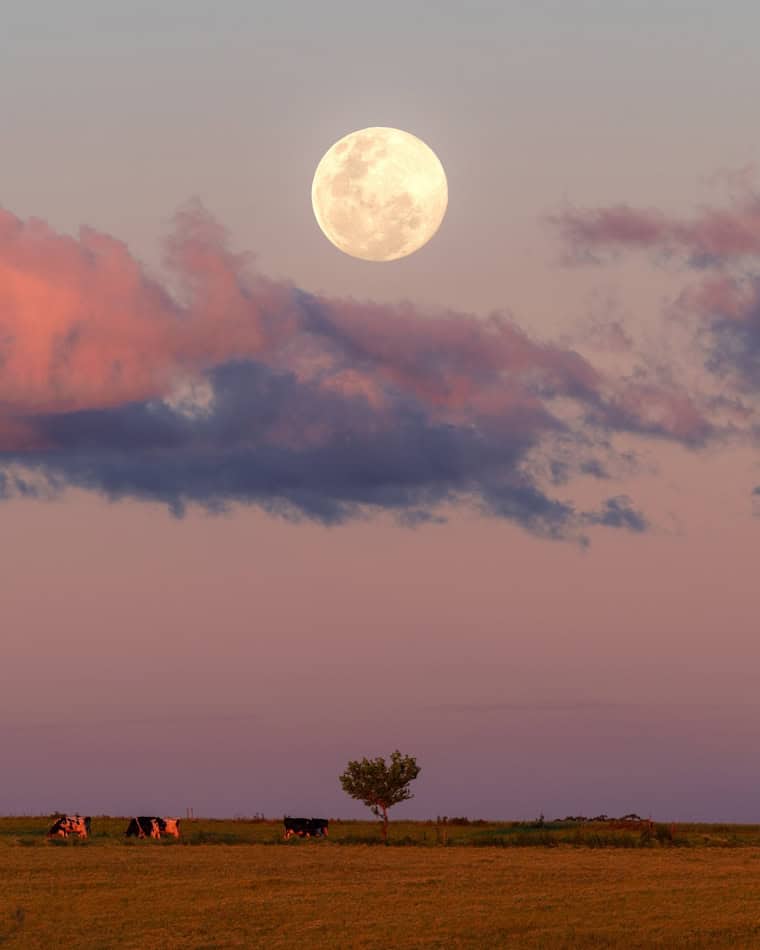
For photography, try capturing the Moon while it is still close to the horizon and including a recognizable foreground object. The result often conveys the enormous-looking appearance of a rising full Moon far better than photographing the Moon alone.
Is the Harvest Moon Really Bigger Than Other Full Moons?
Despite appearances, no.
A rising Harvest Moon can sometimes look enormous, particularly when it appears beside trees, buildings, mountains, or other objects on the horizon.
This is largely the famous Moon illusion—an optical effect that makes the Moon appear much larger near the horizon than when it is high overhead.
The Moon itself has not suddenly expanded.
Still, knowing the explanation rarely makes the sight any less impressive.
When Is the Next Full Moon After the Harvest Moon?
After September’s Harvest Moon, the following full Moon arrives on Monday, October 26, 2026, at 12:12 a.m. EDT.
That will be the Hunter’s Moon, another traditional autumn Moon whose name is closely connected with the seasonal rhythms of harvest and preparation for winter.
See every upcoming date in our Full Moon Calendar for 2026.
September 2026 Harvest Moon: Quick Answer
The next full Moon is the Harvest Moon on Saturday, September 26, 2026. It reaches peak illumination at 12:49 p.m. EDT, but the best opportunity for most North American observers will be after sunset that evening, when the nearly perfectly full Moon rises in the east.
Look nearby for Saturn, which will be visible without a telescope.
And if the Harvest Moon appears unusually orange or enormous as it clears the horizon, enjoy the view. Generations before us watched essentially the same sight while bringing in the year’s crops beneath September moonlight.
That’s a tradition worth stepping outside for.
Frequently Asked Questions
When is the next full Moon?
The next full Moon is Saturday, September 26, 2026, at 12:49 p.m. EDT. It is the Harvest Moon.
What is the September 2026 full Moon called?
The September 26 full Moon is the Harvest Moon because it is the full Moon closest to the autumnal equinox.
What time is the Harvest Moon in 2026?
The Moon reaches its exact full phase at 12:49 p.m. EDT, 11:49 a.m. CDT, 10:49 a.m. MDT, and 9:49 a.m. PDT on September 26.
When should I look for the Harvest Moon?
Look toward the eastern horizon shortly after sunset on Saturday, September 26. Exact moonrise time varies by location.
Will Saturn be visible with the Harvest Moon?
Yes. NASA says Saturn will appear near the Harvest Moon on September 26 and should be visible to the naked eye. Neptune will also be nearby but requires binoculars or a telescope.
Is the Harvest Moon a supermoon in 2026?
No. NASA lists the next full supermoons of 2026 as occurring in November and December.
Why is it called the Harvest Moon?
The full Moon closest to the autumn equinox traditionally provided several evenings of bright moonlight shortly after sunset, helping farmers continue harvesting crops after daylight faded.
What comes after the Harvest Moon?
The next full Moon after the Harvest Moon is the Hunter’s Moon on October 26, 2026, at 12:12 a.m. EDT.
Authority links: U.S. Naval Observatory Moon-phase table for the exact phase time and NASA September 2026 skywatching guide for Saturn/Neptune.
For what the Harvest Moon means for your sign, see the Harvest Moon horoscope.


- Farmers' Almanac Staff

- Farmers' Almanac Staff
- Farmers' Almanac Staff
- Farmers' Almanac Staff