
Why Is Turkey Breast White While the Legs Are Dark? The Answer Is Surprisingly Simple

Every Thanksgiving table seems to have two kinds of turkey lovers. Some reach straight for the slices of white breast meat, while others head for the darker, richer meat from the legs and thighs. A little gravy might settle the argument over which tastes better, but have you ever wondered why the same bird produces two very different kinds of meat?
The answer begins long before the turkey reaches your oven. It has everything to do with how turkeys move, which muscles they use most often, and a protein called myoglobin.
Once you learn the difference, you’ll also know why turkey breast has a reputation for drying out while dark meat tends to stay tender and juicy.
Why Is Turkey Breast White but the Legs Are Dark?
Think about how a turkey spends an ordinary day. Most of its time is spent on its feet, walking around, scratching for food, and exploring its surroundings.
Those legs get quite a workout.
A turkey’s leg and thigh muscles are built for sustained activity. They contain a higher proportion of muscle fibers that can keep working for long periods, using oxygen to produce energy.
To help supply that oxygen, the muscles contain a protein called myoglobin. It holds oxygen inside muscle cells, making it available when the muscles need it. Myoglobin also gives meat much of its reddish color.
The more myoglobin a muscle contains, the darker the meat generally appears.
According to the Library of Congress, this explains why a turkey’s hardworking legs and thighs are dark while its breast meat is much lighter.
The breast muscles have a different job. They’re designed primarily for powerful, short bursts of activity rather than prolonged effort, so they contain less myoglobin.
It’s a clever arrangement, really. Different muscles are built for different kinds of work, and the color of the meat reveals part of that story.
But Don’t Turkeys Fly?
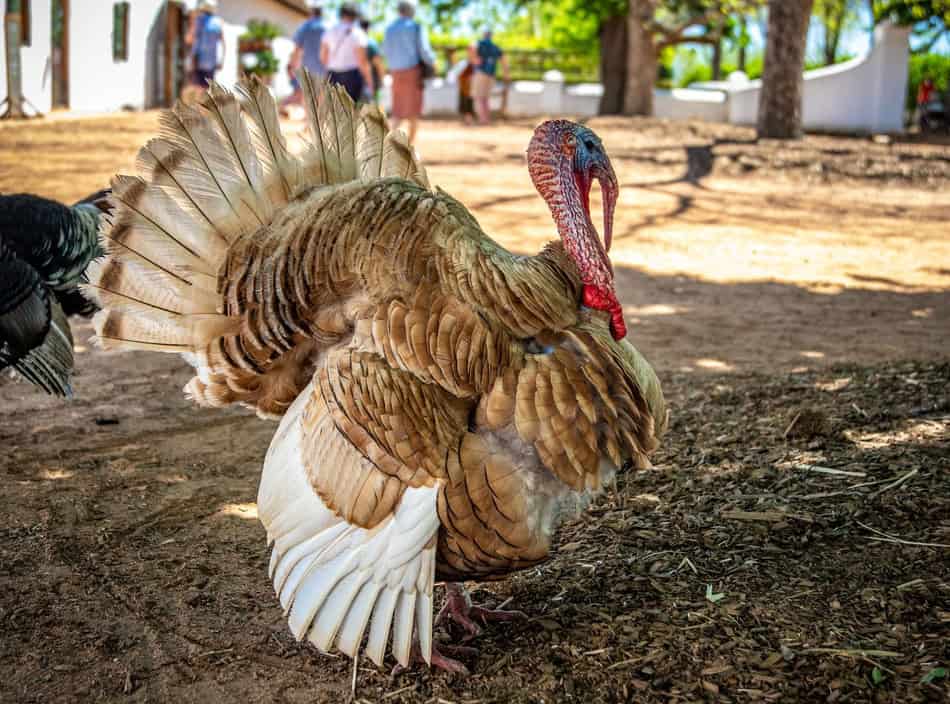
They certainly can, although not all turkeys fly equally well.
Wild turkeys are capable of impressive short flights, often taking off quickly to escape danger or reach a tree where they can roost for the night. But they’re not long-distance fliers like geese or ducks.
Their large breast muscles provide the powerful bursts of energy needed to get airborne. Those muscles contain a relatively high proportion of fast-twitch fibers, which are useful for sudden, forceful movements but tire more quickly than endurance-oriented muscle fibers.
The legs, meanwhile, rely more heavily on fibers suited to repeated, sustained activity.
Domestic turkeys raised for meat have been selectively bred for large bodies and substantial breast muscles. Many commercial breeds are too heavy to fly effectively, making the difference in muscle use especially apparent.
The USDA explains that frequently exercised muscles generally have a greater capacity to store oxygen, which contributes to their darker color.
That’s why a turkey’s legs look so different from its breast, even though both come from the same animal.
Why Does Dark Meat Taste Richer?
Now for the part that matters most at Thanksgiving dinner.
White and dark turkey meat don’t just look different. They also have different textures, fat content, and flavors.
Turkey breast is relatively lean and has a mild flavor. When cooked carefully, it can be wonderfully tender, but it doesn’t have much margin for error. Because breast meat contains less fat and connective tissue, overcooking can leave it dry.
Dark meat generally contains more fat and connective tissue, which contribute to its richer flavor and different texture.
The legs and thighs also contain more collagen, a structural protein found in connective tissue. With sufficient cooking, some of that collagen changes into gelatin, helping create the satisfying texture people associate with well-cooked dark meat.
That doesn’t mean dark meat is automatically juicy or impossible to overcook. It simply behaves differently under heat.
If you’ve ever carved a Thanksgiving turkey and noticed that the legs seem forgiving while the breast needs extra attention, you’re seeing those differences in action.
Why Does Turkey Breast Dry Out So Easily?
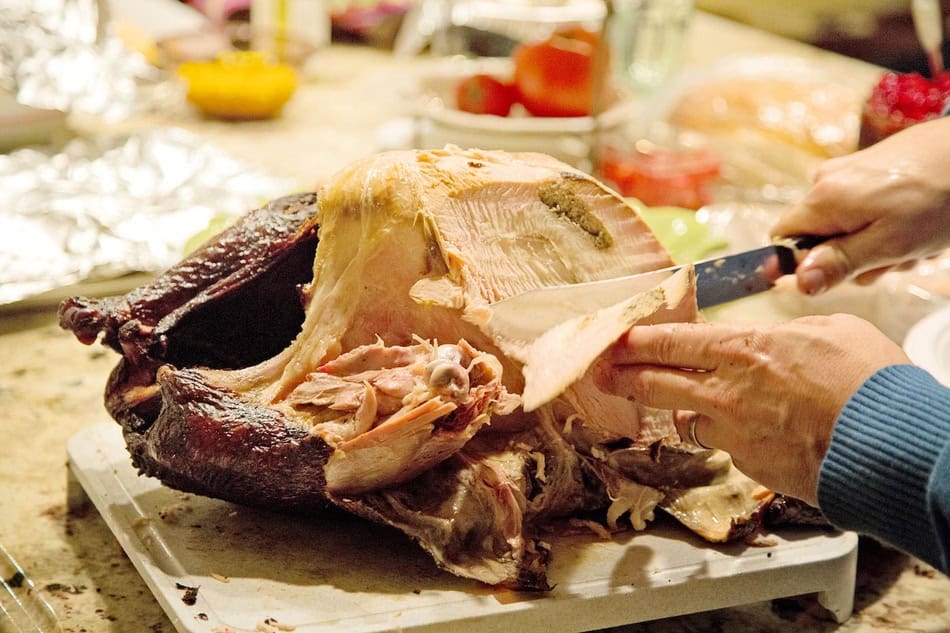
Here’s a familiar Thanksgiving dilemma: The turkey looks beautiful, the skin is golden brown, and the house smells wonderful. But when you slice into the breast, the meat is disappointingly dry.
Part of the problem is that a whole turkey contains muscles with different cooking characteristics.
Breast meat is lean and can lose moisture as its proteins tighten during cooking. The legs and thighs, with their greater amounts of connective tissue, often benefit from additional cooking to achieve a tender texture.
Trying to get every part of the bird to its ideal eating quality at exactly the same moment can be tricky.
That’s why experienced cooks pay close attention to temperature rather than relying entirely on cooking time or the appearance of the skin.
The USDA recommends cooking turkey to a safe minimum internal temperature of 165°F, measured with a food thermometer in the thickest part of the breast, the innermost part of the thigh, and the innermost part of the wing.
A thermometer is especially important because turkey can remain pink in some places even after reaching a safe temperature. Color alone isn’t a reliable guide to doneness.
Cooking the breast and legs separately is another option for people who want greater control over the texture of each cut.
Is White Meat Healthier Than Dark Meat?
White meat often gets the reputation for being the healthier choice, but the answer depends on what you’re looking for.
Skinless turkey breast is generally lower in fat and calories than an equivalent serving of dark meat, making it appealing to people who prefer a lean protein.
Dark meat, however, provides valuable nutrients of its own, including iron, zinc, and B vitamins. Its higher myoglobin content is part of what gives it its distinctive color.
Both types of turkey meat can fit into a balanced diet. The bigger nutritional differences at Thanksgiving may come from whether you eat the skin, how the turkey is prepared, and how much gravy and other rich accompaniments end up on your plate.
There’s no need to declare one type the winner. If you enjoy white meat, have white meat. If the drumstick is your favorite part of Thanksgiving, there’s no reason to feel guilty about choosing it.
What About Ducks and Other Birds?
Here’s one more interesting twist: Not all birds have white breast meat like turkeys.
Ducks, for example, typically have much darker breast meat because their flight muscles are adapted for more sustained activity. Those muscles contain more myoglobin to support their oxygen needs.
A turkey’s breast muscles, on the other hand, are built for brief bursts of power.
It’s another reminder that the color of meat has a lot to do with what an animal’s muscles are designed to do.
So the next time someone asks for white meat or dark meat at Thanksgiving dinner, you can offer more than a serving suggestion.
Those two colors tell a little story about the turkey itself: a bird that spends much of its time walking, can sometimes take to the air in a hurry, and has different muscles for doing each.
As for which meat tastes best, that’s one Thanksgiving debate science probably won’t settle.

- Maggie Konrad

- Maggie Konrad
- Maggie Konrad
- Maggie Konrad