
Seeing More Coyotes Lately? Fall Is When Young Coyotes Start Wandering

You spot one trotting across a field at dusk. A neighbor’s camera catches another slipping through the backyard before sunrise. Then somebody down the street posts a daytime coyote sighting and wonders if the neighborhood suddenly has a problem.
There may not be more coyotes than usual. You may simply be seeing them at a time of year when some young coyotes are beginning to leave home.
October marks the start of an important transition in a coyote’s life. Pups born in spring are nearly grown by fall, and many juveniles begin leaving their family groups to search for territory of their own. The Pennsylvania Game Commission says young coyotes begin dispersing around October at roughly six months old. In Pennsylvania studies, 30 to 50 miles was a more common journey, but some young animals traveled as far as 100 miles.
That wandering can bring a coyote through places where you aren’t used to seeing one.
The Coyotes Born This Spring Are Growing Up
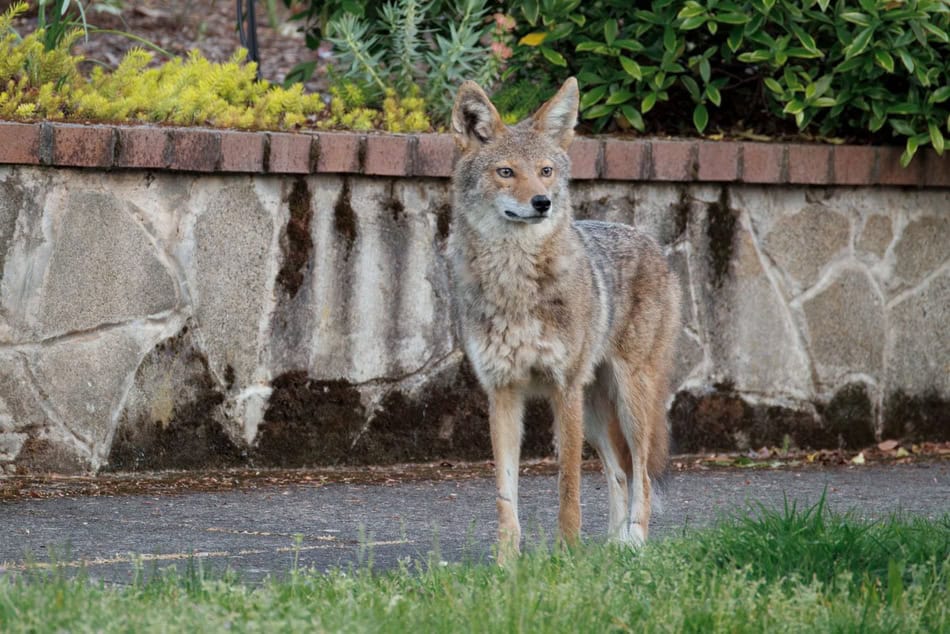
For much of summer, this year’s pups remain part of a family group. By fall, they’re close to adult size, and the family dynamic begins to change.
Some young coyotes stay with their parents longer. Others strike out on their own. The U.S. Forest Service describes juvenile dispersal as generally occurring between October and February, when coyotes are about six to nine months old.
They aren’t migrating south for winter. They’re looking for somewhere to live.
A young coyote may cross woods, farmland, roads, suburban neighborhoods, golf courses, parks, and other unfamiliar territory as it searches for an opening between established coyote territories. New York’s Department of Environmental Conservation notes that dispersing young eastern coyotes may travel 50 to 100 miles while searching for a vacant territory and eventually a mate.
That helps explain why a coyote can suddenly appear somewhere you’ve never noticed one before. It may not be setting up residence behind your shed. It could simply be passing through.
A Daytime Coyote Isn’t Automatically a Bad Sign
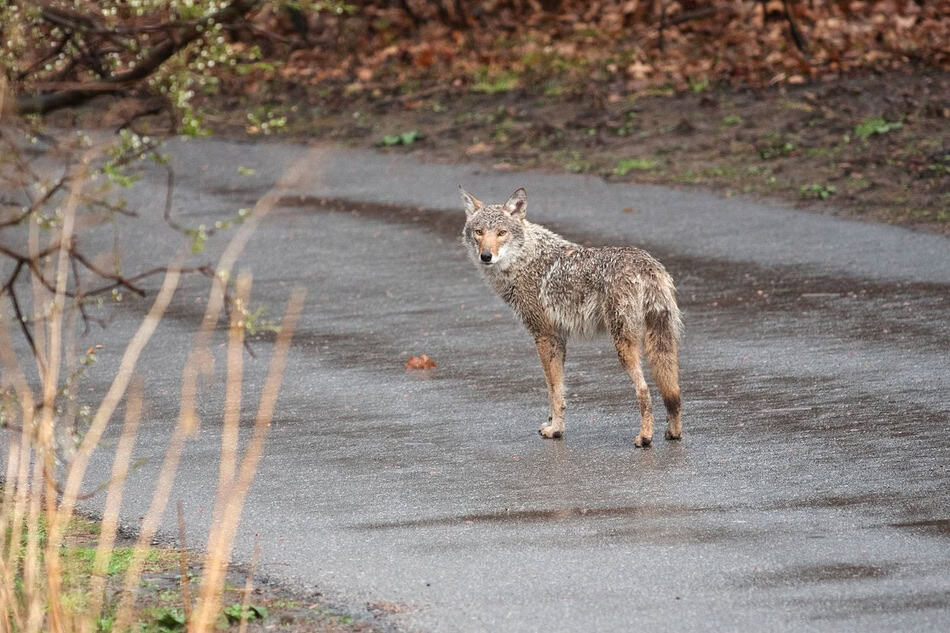
Seeing a coyote in broad daylight can feel more unsettling than spotting one at dusk, but the time of day alone doesn’t tell you much.
Coyotes often concentrate their activity around dusk, night, and early morning, especially where people are common. But they can be active at any hour. The National Park Service notes that seeing a healthy coyote during the day is normal behavior and does not, by itself, mean the animal is sick.
A coyote that sees you, keeps its distance, and continues on its way is behaving very differently from one that repeatedly approaches people, follows them, or refuses to leave when confronted.
Wildlife officials are much more concerned when coyotes lose their natural wariness of people. That often happens because they’ve learned that yards and neighborhoods provide easy food.
The Best Way to Keep Coyotes Moving Is to Give Them Nothing to Find
A young coyote wandering into a neighborhood doesn’t need much encouragement to return if dinner is waiting.
Pet food left outside, unsecured garbage, compost, fallen fruit, and food scraps can all attract wildlife. Bird feeders can also have an indirect effect when spilled seed attracts rodents, which in turn attract predators.
The Michigan Department of Natural Resources recommends securing garbage and compost, feeding pets indoors when possible, cleaning food and grease from grills, and reducing brush or thick vegetation that can shelter rodents.
Deliberately feeding a coyote is especially troublesome. Once coyotes begin associating people and houses with food, they can become less wary and much harder to discourage.
If one walks through the back of your property and keeps going, there’s usually no reason to turn it into an emergency. The goal is to make sure your yard doesn’t give it a reason to stop.
If You Have a Small Dog or Outdoor Cat, Pay More Attention
Coyotes generally want little to do with people. Pets are another matter.
Cats and small dogs can resemble the prey coyotes normally hunt, while larger dogs may be regarded as competitors or threats. That doesn’t mean a coyote sighting should keep your dog indoors all fall, but it does mean this is a good time to tighten up a few habits.
Keep dogs close and leashed on walks rather than allowing them to disappear into brush or run far ahead. Supervise small pets when they’re outside, particularly around dawn, dusk, and at night, and don’t leave pet food outdoors. MassWildlife advises keeping pets under direct supervision rather than simply watching them from a window or across the yard.
An outdoor cat roaming overnight is much harder to protect. Where coyotes are present, bringing cats indoors is the safer option.
This isn’t necessarily the highest-risk time of year for every kind of coyote-pet conflict. Coyotes can become particularly territorial toward dogs during mating and denning season later in winter and spring. Fall is notable for a different reason: young coyotes are on the move.
What Should You Do If a Coyote Doesn’t Leave?
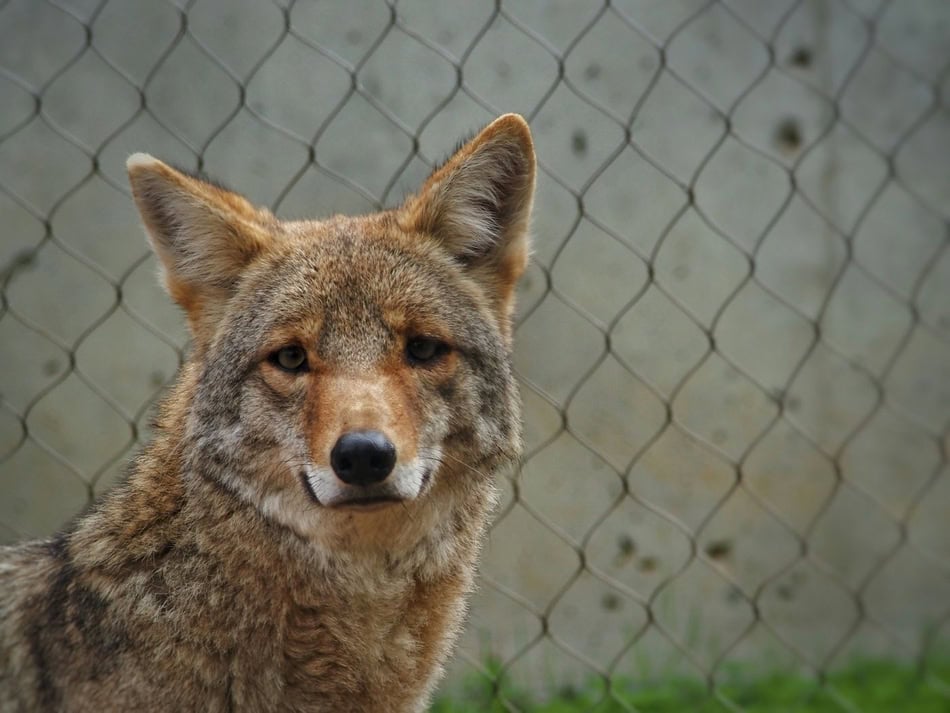
If a coyote is comfortable hanging around your yard, wildlife agencies generally recommend making it clear that your property is not a welcoming place.
Don’t run from it. Stand your ground, make yourself look large, yell, clap, or make other loud noises. If necessary, spray a hose or toss a small object toward the animal rather than trying to hit it. The intent is to frighten the coyote away, not injure it. MassWildlife’s coyote guidance recommends continuing this kind of hazing until the coyote leaves.
If you’re walking a dog, keep it close and under control. Don’t let the dog chase the coyote, which can turn a simple sighting into a confrontation.
A coyote that repeatedly approaches or follows people, acts aggressively without being provoked, appears badly injured or disoriented, or refuses to retreat despite attempts to scare it away deserves more attention. Contact your local animal-control or state wildlife agency for guidance rather than trying to handle the animal yourself.
Hearing More Howling? That Doesn’t Mean the Woods Are Full of Coyotes
Fall can sound busier, too.
Coyotes use yips, barks, and howls to keep track of one another and advertise territory. A small family group can make an impressive amount of noise, especially when several animals join in.
The New York Department of Environmental Conservation notes that hearing a chorus can easily create the impression that there are far more coyotes nearby than there actually are; the group may consist of only an adult pair and their young. Coyotes are also especially vocal from late summer into early fall.
So the eerie chorus you hear after dark isn’t evidence of a giant pack assembling in the neighborhood. It may simply be this year’s family calling back and forth before some of the youngsters go their separate ways.
A Fall Sighting Is Usually Just That
October puts young coyotes in an awkward stage between family life and independence. Some travel only a short distance from where they were born. Others wander for miles through landscapes full of roads, houses, dogs, and people before finding a place of their own.
That can make fall a particularly noticeable time for coyotes, even in neighborhoods where they’ve quietly lived nearby for years.
If one trots across the lawn and disappears, give it space and let it go. Keep pets close, remove anything that could turn your yard into an easy food stop, and make an overly comfortable coyote feel unwelcome.
Most of the time, the coyote you suddenly notice this fall is trying to do exactly what you’d prefer: keep moving.

- Maggie Konrad

- Maggie Konrad
- Maggie Konrad
- Maggie Konrad