Your Evergreen Is Turning Yellow, Here’s When It’s Normal and When to Worry

You expect the maples to turn yellow in October. The pine beside the driveway? Not so much.
So when an evergreen suddenly develops yellow or rusty-brown needles, it’s easy to assume something is wrong. Sometimes there is. But if the color change is happening on the older needles toward the inside of the tree while the branch tips remain green, you may be looking at a perfectly normal part of fall.
Evergreens do shed their leaves. They just don’t shed all of them every year.
First, Look at Where the Yellow Needles Are
Before worrying about disease or reaching for the pruning shears, step back and look at the pattern.
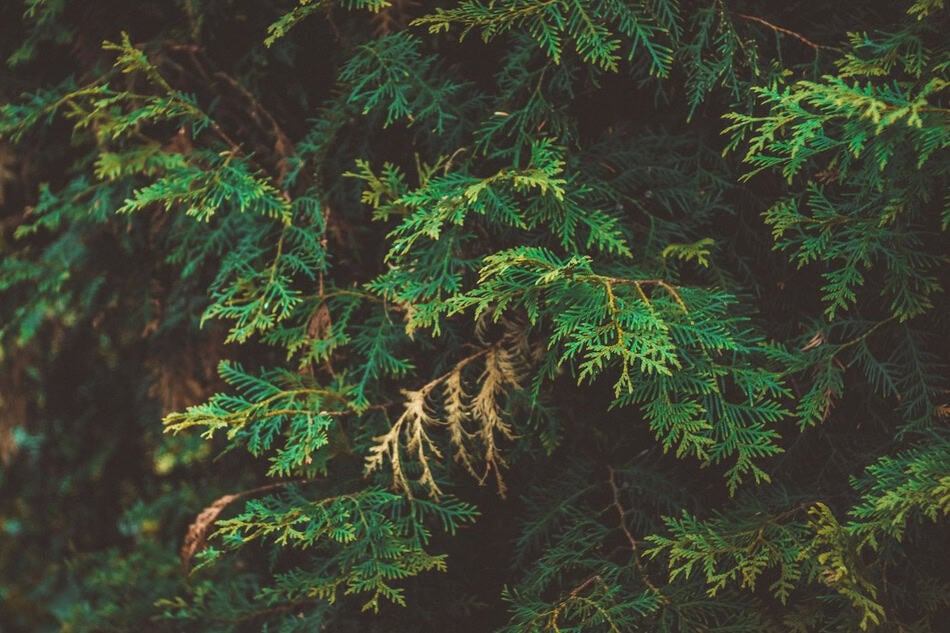
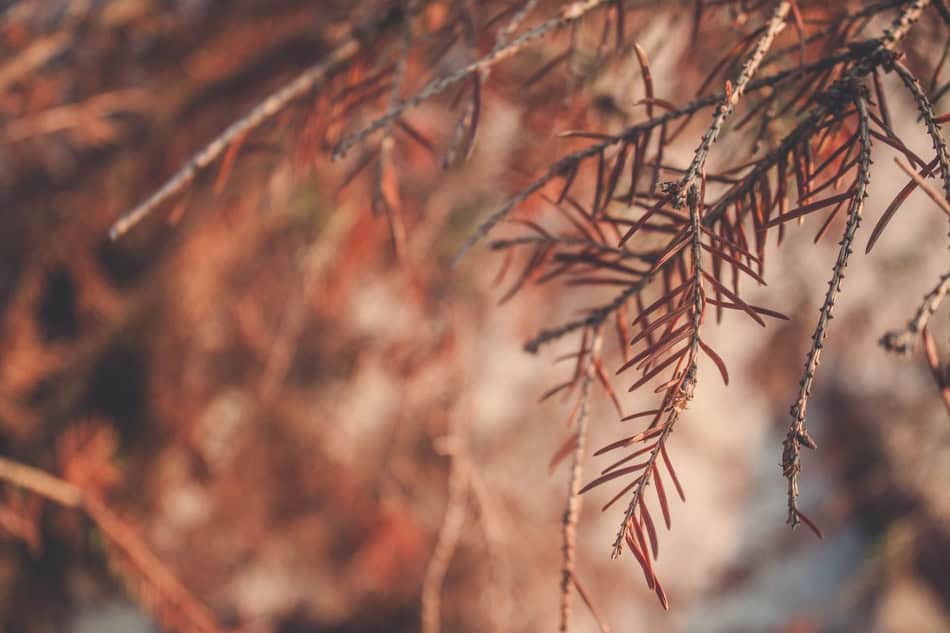
Healthy conifers produce new needles at the ends of their branches while older needles remain farther back, closer to the trunk. Eventually those older needles have done their job. In fall, they may turn yellow, tan, reddish-brown, or rusty before dropping.
That pattern is the big clue: yellowing on the inside, green growth at the tips.
University of Minnesota Extension describes normal seasonal needle drop in pines as older inner needles turning completely yellow, usually without spots, and then falling in autumn. Depending on the species, those needles may already be two or more years old.
It can look surprisingly dramatic on an eastern white pine. White pines commonly hold their needles for only two or three years, so a lot of older foliage can change color at once. According to Illinois Extension, spruces generally hang onto needles longer, which makes their annual drop less conspicuous.
Arborvitae can do something similar. Older foliage inside the plant may turn golden to rusty brown and drop in September or October while the outer growth stays healthy and green.
What Normal Fall Needle Drop Looks Like
The reassuring version usually has a recognizable pattern. The oldest needles, closer to the trunk, change color fairly evenly through the tree. The youngest growth near the branch tips remains green, and you don’t see whole branches dying back.
If that describes your tree, there usually isn’t anything to fix.
In fact, resist the urge to give an otherwise healthy evergreen a major haircut because it suddenly looks untidy. Farmers’ Almanac recently covered why heavy fall pruning can be a mistake for evergreens, especially as the plants head into cold, drying winter weather.
The yellow needles will eventually fall on their own.
When Yellow Needles Deserve a Closer Look
The pattern changes when something is actually wrong.
If the newest needles at the ends of the branches are turning yellow or brown, entire branches are dying, or the discoloration is concentrated on one side of the tree rather than appearing fairly evenly, don’t automatically blame autumn. Illinois Extension specifically notes that dying branch tips, whole branches, or an irregular pattern are not typical seasonal needle drop.
Get closer and look at the needles themselves, too. Spots, bands, black specks, webbing, unusual swellings, or obvious insects point toward something other than normal aging. On spruce, for example, spider mites can produce mottled yellow-to-reddish foliage and fine webbing; some fungal needle diseases cause distinct spots or bands rather than the clean yellowing of old interior needles.
Recent stress matters as well. Drought, poor drainage, root problems, herbicide exposure, winter injury, insects, and disease can all cause evergreen discoloration. The color alone usually isn’t enough to identify the culprit, which is why where the damage begins and how it spreads are more useful clues.
If you’re unsure, take clear pictures of the whole tree, an affected branch, and several individual needles and contact your local Cooperative Extension office or a certified arborist. That will get you much farther than trying to diagnose a tree from “yellow needles” alone.
One Evergreen-Looking Tree Is Supposed to Lose Everything
Here’s an easy one to mistake for a dying tree: larch, also called tamarack.
Larches are conifers, complete with needles and cones, but they aren’t evergreen. According to the University of Minnesota Extension, their needles turn yellow in autumn and then fall off completely. New ones appear in spring. Bald cypress does the same thing.
So if a tamarack suddenly turns golden and then goes bare, don’t call the tree doctor. It’s doing exactly what it is supposed to do.
The Quickest Way to Tell
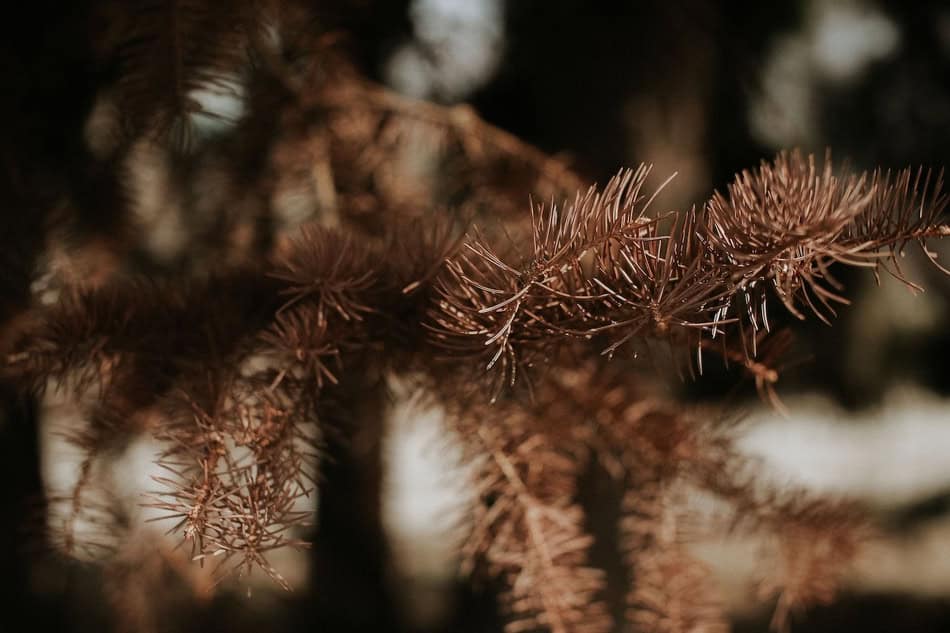
If you walk outside and your pine or arborvitae suddenly looks yellow this fall, start at the branch tips.
Green tips with yellowing farther inside the tree generally point toward normal seasonal needle drop.
Yellow or dying tips, dead branches, patchy discoloration, spots, webbing, or other unusual symptoms are reasons to investigate further.
That simple check can save a lot of unnecessary worry. Even evergreens have old leaves to lose.

- Maggie Konrad

- Maggie Konrad
- Maggie Konrad
- Maggie Konrad