The Headless Horseman: The Legend Behind Sleepy Hollow

A pumpkin lies smashed beside Ichabod Crane’s hat. The rider who chased him through the dark has vanished, and Ichabod is nowhere to be found. That is where Washington Irving leaves readers to decide what happened in The Legend of Sleepy Hollow.
Irving’s story made the Headless Horseman one of America’s best-known ghostly figures. It appeared in The Sketch Book of Geoffrey Crayon, published in installments from 1819 to 1820. The setting was the Hudson Valley, where Irving spent time as a boy and heard stories about the region’s old Dutch settlements. The Washington Irving Society discusses the local legends and literary traditions that may have shaped his tale, though the Horseman’s precise sources remain uncertain.
The ghost Irving placed in the Hudson Valley

In the story, the Headless Horseman is said to be the ghost of a Hessian soldier whose head was carried off by a cannonball during the Revolutionary War. Local people claim he rides out from the churchyard at night, still searching for it.
That is the village’s explanation within Irving’s fiction, not proof of a particular soldier’s ghost. Irving frames the story as something passed along by residents, giving an invented tale the feel of local folklore. You can read the full story in Project Gutenberg’s edition.
Headless riders also appear in folk stories from other parts of Europe. The Washington Irving Society points to possible connections with Dutch American ghost stories and European literature, including a German poem translated by Sir Walter Scott. Those are proposed influences, not a settled answer to where Irving got the idea.
Was the Horseman’s head really a pumpkin?
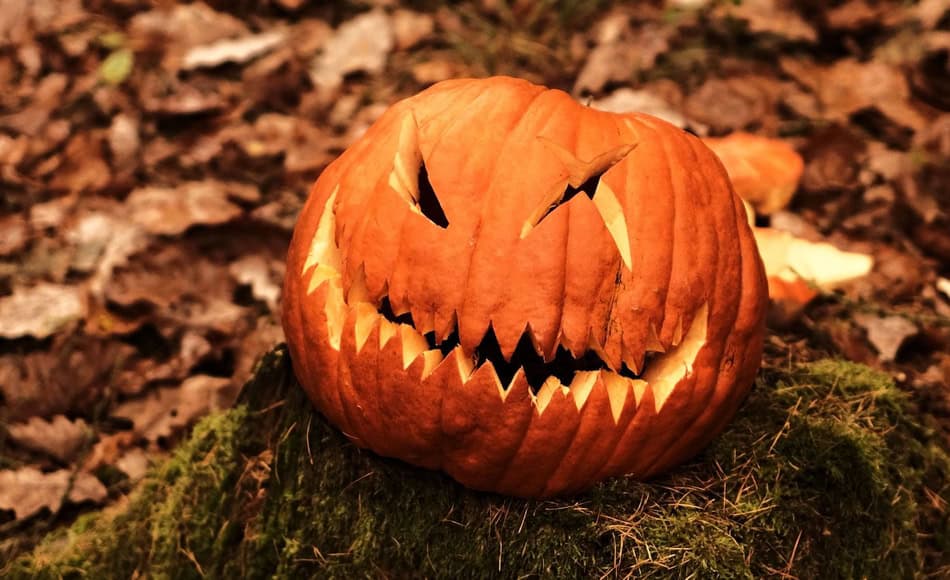
The familiar picture of a pumpkin-headed ghost is not quite what Irving spells out. During the chase, the rider carries something Ichabod takes to be his missing head, then hurls it at him. The next morning, villagers find a shattered pumpkin beside Ichabod’s hat.
Irving leaves the clue open to interpretation. Maybe the Horseman was a ghost. Maybe Brom Bones, Ichabod’s rival, staged the chase with a pumpkin as a weapon. Brom’s knowing laugh whenever the pumpkin is mentioned makes the prank hard to dismiss, but the story never confirms it.
That uncertainty is part of the fun. The people of Sleepy Hollow settle on the supernatural explanation, while readers can see how a practical joke might account for the evidence. Irving gives each version just enough room to survive.
How a local ghost became a Halloween icon
Irving’s story is set during autumn, with a harvest gathering, country roads, and ghost stories told after dark. The pumpkin at the end gave later retellings a memorable image to build on. Over time, the Horseman became closely tied to Halloween, even though Irving’s story is more interested in how a community tells and believes its ghost stories than in explaining the holiday.
For more about the holiday’s history, see the Farmers’ Almanac guide to when Halloween is and how it began. And if the smashed pumpkin makes you want to carve one, our guide to pumpkin facts and lore has more on the fruit’s place in fall traditions.
The Headless Horseman legend still works because Irving never shuts the door on either explanation. By the final page, Ichabod may have escaped, been frightened away, or vanished into the story people keep telling.

- Maggie Konrad

- Maggie Konrad
- Maggie Konrad
- Maggie Konrad