

How to Harvest Saffron: Picking, Drying, Storage
Quick Reference: How to Harvest Saffron
- When: fall, October to November, when the Crocus sativus flowers are fully elongated and just beginning to open.
- Time of day: morning, before the sun turns intense, but wait for dew, rain, or snow to dry off first.
- What to pick: the three red stigmas from each flower, the saffron spice itself. The yellow stamens and purple petals can be dried for dye.
- How: pinch the whole flower off at the base with thumbnail and finger, never pull the leaves.
- After picking: separate the stigmas fast, then dry them so they keep their color and flavor.
Saffron is often called “red gold,” and by the time those crimson threads reach your spice jar you understand why. The flowers do the slow work of growing through the season, but the spice itself is made in the harvest, in the few fall mornings when you pick the blooms and pull the three red stigmas from each one. Get the timing and the handling right and you keep every bit of the color and flavor. Rush it or stack the flowers too deep and the quality slips away. Here is how to harvest your own saffron, step by step, from the open flower to dried threads you can cook with.
This guide picks up where the planting leaves off. If you have not put any corms in the ground yet, start with our companion guide on how to grow saffron, the world’s most expensive spice, then come back here when the flowers open in the fall.
Meet the Saffron Crocus
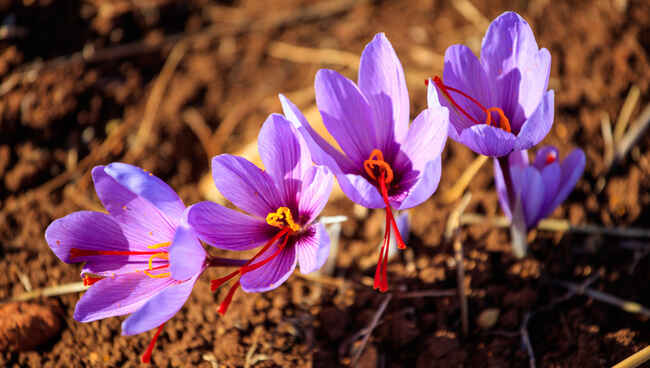
At the heart of every harvest is the saffron crocus (Crocus sativus), a small but striking flower that blooms in the fall, typically from October to November. This unassuming flower holds the coveted saffron within its petals. Each bloom is built from three parts that matter to the harvester: the red threads, or stigma, the yellow center, or stamen, and the purple petals. The red stigmas are the prize, and learning to spot them quickly is half the job.
The Essence of Saffron Parts
Before you start picking, it helps to understand the value of each part of the saffron crocus. The stigmas, the bright red threads, are the saffron spice itself. The stamens and petals are not as precious as the stigmas, but they still have value and can be used as a dye. Depending on your preference and intention, you may choose to dry all three parts or focus only on the stigmas and stamens for their higher value. Knowing which part you are after keeps the separation step quick and tidy later on.
Related: How To Get Started Growing Saffron
Picking the Perfect Moment
Timing is everything when it comes to saffron harvesting. The ideal moment to pick saffron flowers is when they are fully elongated and just beginning to open. This stage means the stigmas have developed to their full length. Pick them too early, while the flowers are still closed, or too late, after they have wilted, and you give up both the quality and the quantity of your saffron threads. The bloom window is short, so plan to check your patch every day once the first flowers show.

Embracing the Morning Harvest
The morning sun is your ally in the saffron harvest. In hot climates, it is best to pick saffron flowers before the sun’s rays turn intense. That keeps you comfortable and preserves the quality of the flowers and the stigmas inside them. In regions that see dew, rain, or even snow during the saffron blooming season, wait a few hours until the flowers are fully dry and thawed before you pick. The sun is essential to the plant, but too much of it degrades both the flower and its stigmas, so the early window is the one you want.

Gentle Handling for a Golden Yield
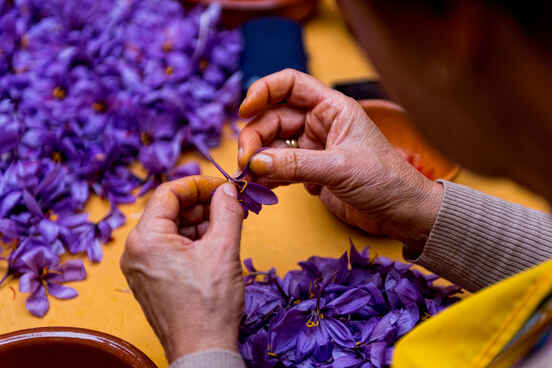
To harvest saffron, use your thumbnail and index finger to pinch the entire flower off at its base, taking the whole bloom with you. Select only clean, fresh flowers, and discard any that are covered with dirt or mold. Handle the flowers with care so you do not crush or bruise them. One rule matters above the rest: do not pick the leaves. They keep growing through the winter and feed next year’s corms, which means this year’s leaves are next year’s harvest.
Preserving the Harvest
After picking, place the saffron flowers on a clean tray or in a wide basket. Do not stack them too deeply, because the weight of the flowers on top can crush the ones beneath. Deep piles also trap condensation, and moisture is no friend to saffron. Keep the flowers covered to spare them prolonged exposure to the sun while you carry the tray indoors. Think of this step as a short holding pen, not storage. The sooner you move on to separating the stigmas, the better your threads will be.
The Swift Separation
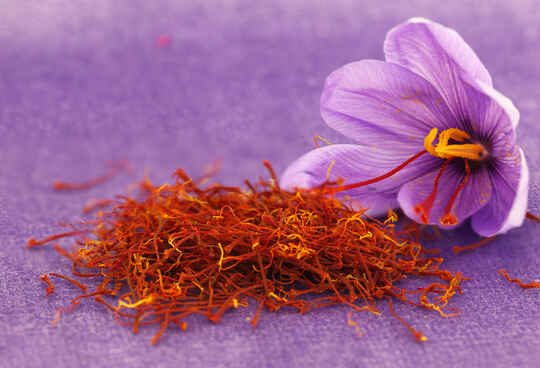
To keep saffron’s quality, separate the stigmas from the petals and stamens as soon as you can after picking. Once the flowers begin to wilt, pulling the stigmas free gets harder. Most people carry the flowers inside for separation, but some pick the stigmas right in the field with tweezers and leave the rest behind. The choice comes down to your own preference and how fast you work. If you cannot process the flowers right away, spread them on a paper towel on a tray and store them in the refrigerator to hold their freshness until you can.
Drying and Storing Your Saffron
Fresh stigmas are not finished saffron yet. Drying is what concentrates the color, aroma, and flavor and lets the threads keep for a year or more. Spread the separated stigmas in a single layer on a paper towel, a fine screen, or a clean tray, somewhere warm, dry, and out of direct sun. Many growers warm them very gently, well under low oven heat, until the threads turn brittle and snap cleanly rather than bend. Do not rush them with high heat, which scorches the delicate threads and drives off the aroma you worked all season to grow. For research-backed drying and processing notes, the University of Vermont’s saffron program publishes a plain-English guide to harvesting and processing saffron that is worth a read.
Once the threads are fully dry and brittle, store them in an airtight container, a small glass jar with a tight lid works well, kept in a cool, dark cupboard away from heat and light. Properly dried and stored saffron holds its strength for a year or more, and many cooks say the flavor settles and deepens after a week or two of rest. A little goes a long way, so even a modest harvest of three stigmas per flower adds up to plenty of pinches over a season of cooking.
A Harvest Worth the Patience
Harvesting saffron is a blend of tradition, patience, and respect for what the garden gives. As you gather your own saffron spice, you join centuries of growers who picked these same crimson threads by hand. Each thread you pluck stands for saffron’s value and for the care you put into capturing the world’s most prized spice. It is slow work, three stigmas at a time, but a steady hand and the right timing turn a few fall mornings into a jar of spice you raised yourself. To keep the patch productive year after year, pair it with the right neighbors using our companion planting guide, and check your plant hardiness zone so you can time both planting and harvest to your region.

How to Harvest Saffron: Frequently Asked Questions
When is the best time to harvest saffron?
Harvest in the fall, October to November, when the Crocus sativus flowers are fully elongated and just beginning to open. Pick in the morning before the sun turns intense, but wait for any dew, rain, or snow to dry off the flowers first. Picking too early or after the flowers wilt costs you both quality and quantity.
How many saffron threads do you get from one flower?
Each saffron crocus flower gives three red stigmas, the threads that are the saffron spice. You pull them from the flower by hand. The yellow stamens and purple petals are not the spice, but they can be dried and used as a dye if you want to save them.
How do you pick saffron flowers without hurting the plant?
Use your thumbnail and index finger to pinch the whole flower off at its base, taking only clean, fresh blooms and discarding any with dirt or mold. Handle them gently to avoid crushing. Never pick the leaves, since they keep growing through winter and feed next year’s corms.
How do you dry saffron after harvesting?
Spread the separated red stigmas in a single layer on a paper towel, screen, or clean tray in a warm, dry spot out of direct sun. Some growers warm them very gently until the threads turn brittle and snap rather than bend. Avoid high heat, which scorches the threads and drives off the aroma.
How should I store dried saffron, and how long does it keep?
Once the threads are fully dry and brittle, store them in an airtight container, such as a small glass jar with a tight lid, in a cool, dark cupboard away from heat and light. Properly dried and stored saffron holds its color and flavor for a year or more.
Why do you have to separate saffron stigmas so quickly?
Separate the stigmas from the petals and stamens as soon as possible, because once the flowers begin to wilt the stigmas are harder to pull free and the quality drops. If you cannot process the flowers right away, spread them on a paper towel on a tray and refrigerate them to hold their freshness until you can.
Can I harvest saffron the same year I plant it?
Yes. Unlike most bulbs, saffron corms planted in late summer or early fall bloom and can be harvested the same autumn rather than the following year. For planting depth, spacing, and timing, see our companion guide on how to grow saffron.
Join the Discussion
Are you growing and harvesting your own saffron spice this year? Shop saffron corms here and share your experience with your community in the comments below. We hope this guide gets you to a jar of your own red gold.
This story contains product affiliate links. We may receive a commission if you make a purchase after clicking on one of these links.

Chad Philipp
Connect with Chad and Tara Philipp of She’s Rooted Home Saffron Farm, located in the Southern California Mojave Desert. She’s Rooted Home is one of the largest saffron farms in the USA.
Recognizing their Southern California desert homestead had a similar climate to Iran, the world's largest producer of saffron, Chad and Tara planted over 55K corms and harvested well over 100 grams of saffron their first year. Saffron corms take up very little space and don’t require much water or nutrition. It’s an easy plant to care for, making it a perfect addition to the kitchen garden. Chad and Tara want to educate homemakers on cooking from scratch, including the uses + benefits of herbs and spices. Helping us regain confidence & understanding of herbs & spices in the home kitchen.
- Chad Philipp

- Chad Philipp

- Chad Philipp

I’ve been growing crocus for years and up until now have been harvesting the stigmas with tweezers and leaving the flower attached. This year I harvested the entire flower and brought them inside to finish the harvest. The flowers smell so good. Is there any reason I could not eat or make a tea with the petals?
It’s important to keep the stamens and stigmas separate, as the yellow stamens really should not be ingested. I’ve been growing saffron crocus for years, and find it easiest to simply pluck the red stigmas out of the flowers, leaving the blossoms attached to the stems. Thoroughly drying the fragile stigmas is essential, then store them in an airtight container away from the light.
Thank you for this tip! It is greatly appreciated!