
Can You Really See the Past When You Look at the Stars?
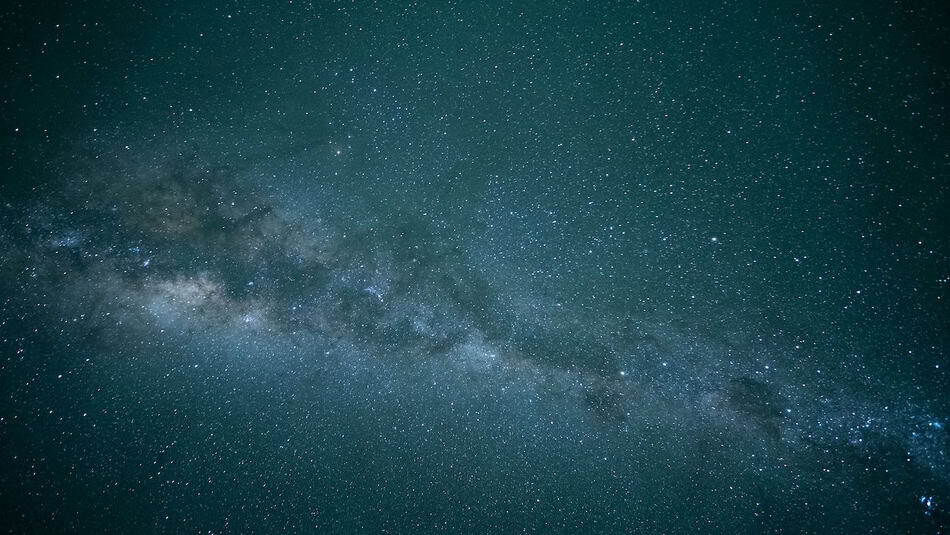
The next time you step outside and look up at the stars, consider this: You’re not seeing the universe exactly as it is right now.
Some of the starlight reaching your eyes tonight began its journey before you were born. Other light set out hundreds or thousands of years ago. And under the right conditions, you can even see something whose light has been traveling toward Earth for roughly 2.5 million years.
It sounds like science fiction, but it’s a fascinating fact of astronomy. Every time you look into the night sky, you’re looking into the past.
Why Looking at Stars Is Like Looking Back in Time

Light travels incredibly fast, about 186,000 miles per second. That’s fast enough to circle Earth more than seven times in a single second.
But space is enormous. Even at that speed, light takes time to travel between distant objects.
When you look at a star, you’re seeing light that left its surface sometime in the past and has only just reached your eyes.
As NASA explains, the farther away something is, the longer its light generally takes to reach us. That’s why astronomers can use powerful telescopes to study galaxies as they appeared billions of years ago.
You don’t need a telescope to experience this phenomenon, though. It happens every time you look at the Moon, the Sun, or the stars.
Even the Moon and Sun Are Showing Us the Past
Let’s start with something familiar: the Moon.
Moonlight takes approximately 1.3 seconds to reach Earth. That means when you look at the Moon tonight, you’re seeing it as it appeared just over a second ago.
Of course, the Moon doesn’t produce its own visible light. Most of what we see is sunlight reflecting from its surface. The 1.3 seconds represents the final leg of that light’s journey, from the Moon to your eyes.
Now consider the Sun.
Sunlight takes about 8 minutes and 20 seconds to travel the roughly 93 million miles between the Sun and Earth. So the sunlight illuminating your yard this afternoon actually left the Sun more than eight minutes earlier. If something changed on the Sun at this very instant, we wouldn’t see that change until its light reached us.
That’s a remarkable delay for the star that feels like such an immediate part of our lives.
And it’s just the beginning.
The Stars You See Tonight May Be Showing You Decades or Centuries Ago
Astronomers use a measurement called a light-year to describe enormous distances in space.
Despite its name, a light-year measures distance, not time. It’s the distance light travels in one year, approximately 5.9 trillion miles.
That also makes it a handy way to understand how far into the past we’re looking.
Take Sirius, the brightest star in Earth’s nighttime sky. It’s about 8.6 light-years away.
When you see Sirius shining on a clear winter evening, the light reaching your eyes began its journey roughly 8.6 years ago.
Other familiar stars are hundreds of light-years away, which means their light started traveling toward Earth centuries before we could see it.
Think about that for a moment. The stars overhead may appear to be shining together in the present, but the light from each one represents a different moment in history.
The constellations are familiar patterns made from stars that can lie at very different distances from Earth.
Can You See Something From 2.5 Million Years Ago Without a Telescope?
You can, and autumn is a wonderful season to try.
The Andromeda Galaxy is our nearest major galactic neighbor, located approximately 2.5 million light-years from Earth.
Under dark, clear skies, away from bright city lights, it’s possible to see Andromeda without a telescope. It appears as a faint, fuzzy patch rather than the spectacular spiral shown in long-exposure photographs.
But that little patch of light holds an extraordinary story.
The light reaching your eyes left Andromeda approximately 2.5 million years ago, long before modern humans existed.
While that light was traveling across space, life on Earth continued through an immense stretch of prehistoric time. Now, after that unimaginably long journey, a tiny portion of it is reaching you.
NASA’s Hubble observations of Andromeda confirm both its distance and its visibility from sufficiently dark locations.
If you have binoculars, they can help you find it, although the galaxy will still look like a hazy glow rather than a colorful spiral.
Does That Mean Some Stars We See Are Already Dead?

You’ve probably heard the claim that some stars in the night sky may have burned out long ago, and we’re only now seeing their final light.
In principle, that’s possible.
If a star 1,000 light-years away underwent a dramatic change today, observers on Earth wouldn’t see that event until roughly 1,000 years from now.
But that doesn’t mean most of the stars you can see are already dead.
Stars can live for millions, billions, or even trillions of years, depending on their mass. Many of the stars visible to the naked eye are relatively nearby on the scale of the universe, and astronomers have no reason to assume they’ve all disappeared since their light began traveling toward us.
The real wonder isn’t that the night sky is filled with dead stars. It’s that the universe is so vast that even light, the fastest thing we know, cannot deliver an instantaneous view of it.
Try a Little Time Travel Tonight
On the next clear evening, head outside and give your eyes time to adjust to the darkness.
Start with the Moon, if it’s visible. You’re seeing reflected light that left its surface about a second ago.
Then find a bright star. Depending on which one you’re looking at, its light may have traveled for years or centuries to reach you.
If you’re away from city lights during autumn, see whether you can spot the faint Andromeda Galaxy. It’s a much more challenging sight, but the reward is worth the effort.
And remember, you don’t need any special equipment to appreciate what’s happening.
Every point of light overhead has traveled through space to reach your eyes. Some began that journey before anyone alive today was born. Others started long before human history was recorded.
The next time you look up at the stars, you’re not just admiring a beautiful night sky.
You’re seeing history arriving, one beam of light at a time.

- Maggie Konrad

- Maggie Konrad
- Maggie Konrad
- Maggie Konrad