

Pumpkin Bird Feeder: 3 No-Waste Ways to Repurpose Your Jack-O-Lantern for Backyard Birds
Try these easy no-waste methods to turn your holiday pumpkins into attractive designs with a purpose!
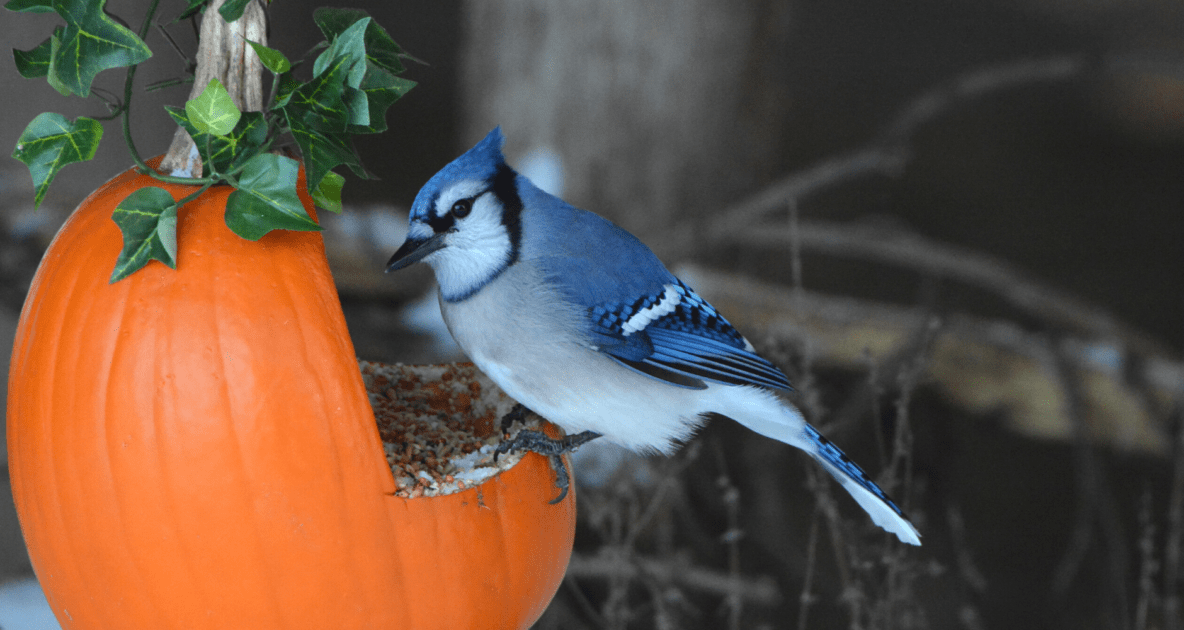
Quick Reference
- Three feeder builds: carved jack-o-lantern, hollow-pumpkin bouquet vase, speckled sunflower-seed design.
- Best time to convert your pumpkin: within 5 to 7 days of Halloween, before the flesh softens.
- Safety wash: 3 tablespoons unscented bleach in 3 gallons of water; dip or spray, then dry completely.
- Do not use petroleum jelly, oils, glitter, or spray paint on any surface birds will touch.
- Best seed: black-oil sunflower and safflower, or a no-mess mix. Audubon lists both as top-attractor winter seeds.
- Where to place it: within 10 feet of cover (shrub, hedge, small tree) and at least 3 feet from a window to reduce collisions.
Whether carved, painted, or artfully arranged, pumpkins are one of the easiest and most popular autumn decorations. They can be much more than decorative, however. In fact, a spent pumpkin can transform into a practical, attractive bird feeder that hungry backyard birds will hit for as long as the shell holds up. And the best part is that it is easier than any hardware-store feeder you have assembled.
The Almanac has recommended pumpkin bird feeders for years, but a few small updates from wildlife groups are worth folding in. The National Audubon Society now advises simple food choices (black-oil sunflower and safflower on top), and the U.S. Fish and Wildlife Service asks that decorators skip glitter, spray paint, and oily coatings on anything birds will land on. The three builds below stay true to the original Almanac project and add those safety updates on top.
Repurpose Your Jack-O-Lantern
You can easily repurpose your Halloween jack-o-lantern by turning it into a bird feeder, provided the pumpkin is not rotted or decorated with unsafe accents. If you used a real candle to illuminate your jack-o-lantern, be sure to scrape away any wax or blackened areas on the flesh first.
Cut the pumpkin in half so it resembles a bowl, or carve around the face so it has a large opening. Fill it with bird seed. Position these feeders around a feeding station, on a deck, in flowerbeds, or throughout the yard for hungry birds to enjoy. You may have raccoons or other hungry critters enjoying this treat too, so feel free to bring it indoors at night.
Skip any pumpkin that was painted with glitter, spray paint, or non-food-safe craft paint. The U.S. Fish and Wildlife Service flags these coatings as a hazard for birds that peck the flesh. If your jack-o-lantern was outside for more than a week, check for slime, mold, or a sour smell before you offer it to birds.
Carved Pumpkin Bird Feeders
If you enjoy carving pumpkins, you will love this simple project to create a bird feeder just by adding birdseed and making a few minor adjustments.
View this post on Instagram: A post shared by Farmers’ Almanac (@farmersalmanac).
Step 1: Carve Bird-Friendly Openings
First, carve the holes and designs slightly larger than you might for decorative purposes, to ensure they are big enough for birds to access the feeder. Every hole does not need to be bird-sized, but there should be at least two or three ways birds can get in and out so they feel secure and comfortable and the feeder can accommodate more birds at once.
Step 2: Wash Down With a Weak Bleach Solution
After carving the pumpkin, submerge it for an hour in a weak bleach solution of 3 tablespoons bleach in 3 gallons of water. Note: this is a very mild solution. You can also put this mixture in a spray bottle and mist the pumpkin. This will hydrate the pumpkin and minimize mold, keeping the carved pumpkin fresh for a longer period.
Do not, however, apply petroleum jelly or other oily products to the cut edges. These products can smear on birds’ feathers, causing problems similar to oil-spill contamination.
Step 3: Dry, Fill, and Sprinkle a Starter Trail
Allow your pumpkin to dry thoroughly, then fill it with seed for birds to discover. Mixed seed or black-oil sunflower seed will attract the most species and will help fuel birds’ autumn migration, as well as provide energy for the year-round guests who may be bulking up or storing seeds for winter.
Sprinkling some seeds on the cut edges of the pumpkin or around where you have placed your carved feeder will help birds discover the bounty. Once one chickadee or sparrow finds the food, the rest of the neighborhood shows up fast.
DIY Pumpkin Bird Feeder Vase
For an even more festive option, turn your pumpkin into a bird-friendly feeder bouquet. Instead of carving a complete pattern in the fruit, only remove the top and hollow out the center. Slip a simple gardening pot into the pumpkin, and use it as a vase for seed-filled blooms.
Ripe sunflower heads, ripened coneflowers, marigolds, and other bird-friendly flowers all work. Adding millet sprigs, wheat stems, acorn sprigs, and ripe berry stems will add more texture and color to the bouquet while also providing a greater variety of food to attract more birds.
For more decorative touches, add ripe pine cones, colorful leaves, or other greenery accents as well. To make a floral feeder vase even more attractive, use non-toxic paint to decorate the pumpkin with lines, swirls, shapes, initials, or a fun autumn message.
Place these feeder vases in window boxes for instant autumn decor, arrange them on steps, use one as a patio-table centerpiece, or add a delicious vase to a ground feeding station as an instant arrangement to attract birds.
Speckled Sunflower Pumpkins
For an elegant decoration both you and the birds will love, you can create a speckled sunflower pumpkin bird feeder, studded with sunflower seeds. Clean the outside of your pumpkin first, then sketch out any design you like. Thin, delicate designs like lace, filigree, swirls, and outlines will work best.
Use an awl or the tip of a knife or scalpel to create starter holes or tracks over the entire design. Then give the pumpkin a quick soak in a weak bleach bath to minimize mold and keep it fresh.
After drying your pumpkin, follow your outlined design by pressing large seeds into the flesh, point-side in for a better grip. Keep the seeds close together to create a uniform appearance, and consider changing seed types (black-oil sunflower, striped sunflower, safflower) for more variation and distinction. You can even use pumpkin seeds for your design, and birds such as jays, thrashers, and mockingbirds will happily munch on them.
Fill in every line, ensuring the seeds are firmly in place and close together for the best appearance. The birds will have no trouble removing them. Like other pumpkin bird feeders, these speckled designs can be arranged in groups on a platform feeder, deck, or ground feeding area. If miniature pumpkins are speckled, they can even be hung individually from tree branches for festive and delicious autumn decorations for birds.
Which Birds Each Design Attracts
The three builds pull in different backyard visitors. Cornell Lab of Ornithology’s Project FeederWatch and Audubon’s regional guides both track winter feeder use; here is a plain reading of what to expect.
- Carved jack-o-lantern with black-oil sunflower: chickadees, titmice, cardinals, nuthatches, and downy woodpeckers.
- Feeder vase with seed heads and berries: finches (goldfinch, house finch), cedar waxwings if you add ripe berry stems, and mourning doves picking up dropped seed at the base.
- Speckled sunflower pumpkins on the ground: jays, thrashers, mockingbirds, juncos, sparrows, and towhees. This is your ground-feeder mix.
Placement and Safety Notes That Extend Your Feeder’s Life
The Almanac’s original build steps assumed a covered porch or a garden. If your yard is more exposed, a few small changes will double the time your pumpkin lasts and cut the risk to birds.
- Place feeders within 10 feet of natural cover. Shrubs, hedges, and small trees give birds a fast escape route from hawks and cats.
- Keep pumpkin feeders 3 feet from windows, or more than 30 feet away. The American Bird Conservancy’s window-strike guidance shows this is the safest split; the danger zone is 3 to 30 feet.
- Refresh seed every 2 to 3 days. Wet seed molds fast inside a pumpkin bowl; toss and refill rather than topping up.
- Bring the feeder in overnight in raccoon country. Raccoons will chew through pumpkin flesh and scatter seed inside 15 minutes.
- Compost the pumpkin once it goes soft. Softened pumpkin ferments and can harm birds and pollinators; a soggy shell is a compost signal, not a top-up moment.
A Two-Week Pumpkin Feeder Timeline
- Day 1 (Nov 1): gut, wash in mild bleach solution, air-dry, carve, fill with black-oil sunflower.
- Days 2 to 4: peak activity, refresh seed daily, spray the shell interior with the bleach solution again if you see any slick spots.
- Days 5 to 10: flesh softens; move to a ground feeding station and mix in safflower to reduce squirrel raiding.
- Days 11 to 14: shell collapses; compost the remains and pin any leftover seed cake to a suet cage.
Frequently Asked Questions
Is a Halloween pumpkin safe for birds if it had a candle inside?
Yes, as long as you scrape away wax and any blackened flesh before you fill it with seed. Beeswax and paraffin residue can smear on feathers if left inside. If the pumpkin was heavily scorched, compost it and start with a fresh one.
Can I use a painted or spray-painted pumpkin as a feeder?
Only if the paint is non-toxic craft paint on the outside and birds are not landing on the painted surface. Skip spray paint, glitter, and glossy sealers entirely. The U.S. Fish and Wildlife Service flags these as hazards to backyard birds.
What is the best seed to use in a pumpkin bird feeder?
Black-oil sunflower attracts the widest range of songbirds. Add safflower to discourage squirrels and grackles. If you want finches too, mix in nyjer or fine chip sunflower. Skip cheap mixes heavy in milo and red millet, which most birds toss on the ground.
How long will a pumpkin bird feeder last outside?
Usually 5 to 14 days. A mild bleach dip extends it by a few days by killing surface mold. Cool, dry weather can push a whole-pumpkin vase to two weeks or more. Once you see mold, sour smell, or a collapsing shell, compost it.
Will pumpkin bird feeders attract rats or raccoons?
They can, especially after dark. Bring the feeder indoors overnight in raccoon or rat country, and never leave loose seed on the ground overnight. Elevated platform feeders and daylight-only feeding stations both cut the risk.
Can birds eat the pumpkin flesh itself?
Yes, in moderation. Blue jays, mockingbirds, thrashers, and chickadees will pick at fresh pumpkin flesh and roasted pumpkin seeds. Skip any pumpkin treated with cinnamon, sugar, or fall-scent oils, which are common in decorative pumpkins.
Is this a good project to do with kids?
Yes. All three builds use tools most families already have (spoon, knife, spray bottle, seed) and the payoff is quick because chickadees usually find the feeder inside 24 hours. Have kids handle the seed and design, and adults handle the carving and bleach wash.


Melissa Mayntz
Melissa Mayntz is a writer who specializes in birds and birding, though her work spans a wide range—from folklore to healthy living. Her first book, Migration: Exploring the Remarkable Journeys of Birds was published in 2020. Mayntz also writes for National Wildlife Magazine and The Spruce. Find her at MelissaMayntz.com.
- Melissa Mayntz

- Melissa Mayntz
- Melissa Mayntz
- Melissa Mayntz



Hello
My pumpkins don’t stay around long enough to get moldy between birds, squirrels and the occasional deer even turkeys.
While it’s true that straight bleach can be highly toxic, the article recommends only a very weak solution (even far weaker than what is often used to clean feeders or bird baths), which will quickly decay and poses no threat to birds. If you are nervous about it, lemon juice and vinegar are good substitutions, but you’ll need a lot of the liquid and it won’t be quite as effective as weak bleach water.
Do NOT use bleach, as it’s toxic to birds.
Instead, use vinegar or lemon juice.
Hi Patricia, hopefully you saw the note from the author on your concerns.