

Pink Moon 2027: April Full Moon Date, Time, and Names
Quick Reference
- Next Pink Moon: Wednesday, April 21, 2027
- Peak illumination: 8:46 a.m. Eastern Time (12:46 UTC)
- Best viewing: Tuesday night, April 20, into Wednesday night, April 21, 2027
- Why “Pink”: Named for moss pink (creeping ground phlox), one of spring’s earliest wildflowers, not the Moon’s color
- Other names: Paschal Moon, Sprouting Grass Moon, Egg Moon, Fish Moon, Planter’s Moon, Peony Moon, and more
- 2026 Pink Moon (past): Wednesday, April 1, 2026, peaked at 3:12 p.m. Eastern Time
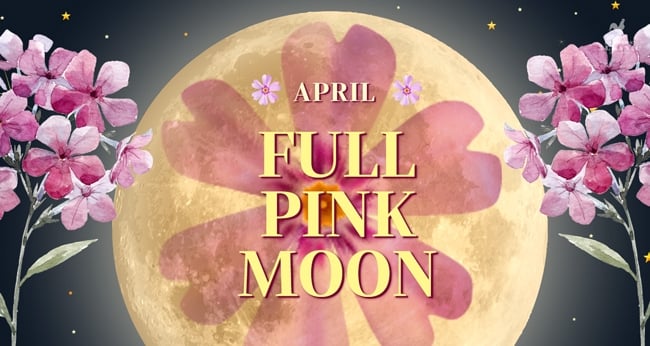
The 2026 Pink Moon has already come and gone, peaking on Wednesday, April 1, 2026 at 3:12 p.m. Eastern Time. The next Pink Moon arrives Wednesday, April 21, 2027, with peak illumination at 8:46 a.m. Eastern Time (12:46 UTC). Despite the name, the Moon itself is not pink. The April full Moon takes its label from moss pink, a low-growing wild phlox that blankets meadows and roadside banks across eastern North America just as the days start to lengthen. Above warming soil, songbirds nest, sap rises, and the first wildflowers push through last year’s leaf litter. The Pink Moon is the calendar’s nod to all of it.
When Is the Pink Moon 2027?
Full Moon April 2027: Wednesday, April 21
Peak Illumination: 8:46 a.m. Eastern Time
The Moon reaches full phase at the same moment everywhere on Earth, so the clock simply shifts by time zone: 7:46 a.m. Central, 6:46 a.m. Mountain, 5:46 a.m. Pacific, and 12:46 UTC abroad. Because peak falls in daylight for North America, the Pink Moon looks full to the naked eye on both Tuesday night, April 20, and Wednesday night, April 21, 2027. Either night gives a strong view, and folks chasing photographs may prefer the Tuesday rise for warmer twilight color.
For exact local moonrise and moonset for your zip code, the U.S. Naval Observatory keeps a free sun and Moon data calculator. Pair it with our Moon Phases Calendar to plan a quiet drive, a porch sit, or a stargazing night with the kids.
2026 Pink Moon (already passed): The 2026 Pink Moon peaked on Wednesday, April 1, 2026 at 3:12 p.m. Eastern Time (19:12 UTC), with the same daylight-peak pattern that made the nights of March 31 and April 1 the best viewing windows. If you missed it, the 2027 date above is your next chance.
Why It’s Called the Pink Moon
The Pink Moon is not pink. The name comes from moss pink, a creeping ground phlox (Phlox subulata) that bursts into bloom across the eastern United States and Canada right around the April full Moon. The plant thrives in sandy or rocky soils and works hard as a low ground cover. Its flowers are most often pink, with shades of purple and white mixed in, and the early blooms are a favorite stop for butterflies returning from winter. Settlers and later writers tied the Moon’s name to the carpet of color that follows it.
According to NASA, “Pink Moon” became the popular American name for the April full Moon because the Moon’s appearance lines up with the early bloom of Phlox subulata across eastern North America. The color belongs to the ground, not the sky.
In Asia, particularly in China, this same Moon is called the “Peony Moon,” because peonies open around the same week. Blush pink is the most common color for peonies, though they also appear in cream and white shades and deeper rose tones, a fitting echo of the Pink Moon name from the other side of the world.
Other April Full Moon Names
Spring is a season of rebirth and new growth, and many names for April’s full Moon mark seasonal plant changes. Across the continent, Indigenous nations watched the same Moon and named it for whatever was waking up around them.
Growth-related names include the “Moon of the Red Grass Appearing” used by the Oglala of the Dakotas, the “Budding Moon of Plants and Shrubs” of the Tlingit in the Pacific Northwest, and the “Sprouting Grass Moon” used by a variety of tribes. The Choctaw of the southeastern United States call the April full Moon the “Moon of Blackberry” when the berries begin to appear in that warmer climate. The Cherokee use the more general but very spring-appropriate “Flower Moon” name. The southwestern Apache often use “Moon of the Big Leaves” to mark how trees are flourishing in April.
Growth-related names show up in European tradition too. The Celts in particular have several names for April’s full Moon, including “Budding Moon,” “New Shoots Moon,” “Seed Moon,” and “Growing Moon.”
When colonists began settling North America, similar though less colorful names appeared. The most common was the “Planter’s Moon,” marking the time when sowing seeds begins to ensure an adequate growing season. The Winnebago of the Great Lakes region use the related name “Planting Corn Moon” for the same reason: it is time to put crops in the ground.
“Sugar Maker Moon” is another colonial name for April’s full Moon, named for the season of collecting sap and boiling maple sugar and syrup. Learn how to make maple sugar in your own backyard.
Other spring-related names for April’s Moon include the “Fish Moon,” used by many tribes in the Pacific Northwest as an indication of fish spawning. Depending on the tribe, this may refer to either salmon or shad. The Anishinaabe refer to the April full Moon as the “Sucker Moon” for the return of suckerfish to the streams.
The name “Egg Moon” is also often used in April for the start of nesting season for birds and waterfowl. The Cheyenne call this Moon “When the Geese Lay Eggs” and other nations have similar names tied to the same sign.
Many northern nations do not use growing terms for the April full Moon, since it is often too early in the season to depend on such signs in colder country. Their names typically mark the breaking of the season and the end of winter. The Arapaho of Colorado and Wyoming, for example, call the April Moon “Ice Breaking in the River,” while the Algonquin of the Northeast and eastern Canada use the similar name “Breaking Ice Moon.” The Dakota tribes often call this Moon the “Moon When the Streams are Navigable Again.”
The Lakota, or Teton Sioux, have a more unique name for the April full Moon. They are principally located in the Dakotas, where spring growth is late and game can be scarce even in April. The name “When Wives Crack Bones for Marrow Fat” honors the scarcity of food at the end of a long winter and the resourcefulness it took to make every bone in the camp count.
Indigenous Names by Nation
| Name | Nation | What it marks |
|---|---|---|
| Maple Sap Boiling Moon (Iskigamizige-giizis) | Ojibwe / Anishinaabe | Sap boiling and maple syrup production (regional variant; Ontario Anishinaabe may use Broken Snowshoe Moon for April) |
| Frog Moon (Omakakiiwi-giizis) | Anishinaabe (Ontario) | Frogs emerging from winter dormancy |
| Breaking Ice Moon | Algonquin | Rivers breaking up and becoming navigable after the winter freeze |
| Moon When Ice Breaks in the River | Arapaho | Rivers thaw and ice breaks apart on the Rocky Mountain front |
| Moon When the Geese Lay Eggs | Dakota (Sioux) | Geese begin nesting; documented via University of Minnesota materials |
| Budding Moon of Plants and Shrubs | Tlingit | Plants and shrubs begin to bud along the Pacific Northwest coast and Southeast Alaska |
| When the Geese Lay Eggs | Cheyenne | Bird nesting season on the Great Plains |
| Moon of the Red Grass Appearing | Oglala Lakota | Red grass greening on the plains signals spring |
| Moon of Blackberry | Choctaw | Blackberries beginning to appear in early spring across the Southeast |
The Pink Moon and Easter
In some cultures, the Moon’s name is tied directly to religious holidays set by the lunar calendar. The April full Moon is called the “Paschal Moon” if it is the first full Moon after the spring equinox in late March. The rule itself dates to the First Council of Nicaea in 325 CE, which set Easter on the first Sunday after the first full Moon on or after the vernal equinox. In Jewish tradition, the same Moon marks Passover, the freedom story of the Exodus. Both holidays anchor their calendars to the same celestial moment, which is why Easter and Passover so often fall in the same week.
The Pink Moon and the Paschal Moon are not always the same Moon. When the first full Moon after the equinox falls in April, the Pink Moon is the Paschal Moon and Easter follows the next Sunday. When the first post-equinox full Moon falls in March (as it did in 2027, on March 22), the Paschal Moon is the March full Moon and Easter falls earlier in the calendar; the April Pink Moon is then just the Pink Moon. In 2026, the spring equinox was March 20 and the April 1 full Moon was the Paschal Moon, which is why Easter Sunday fell on April 5. In 2027, the Paschal Moon falls on March 22, Easter is March 28, and the April 21 Pink Moon arrives nearly a month after the holiday. You can see the full Easter rule on our When Is Easter? page.
Neo-Pagan traditions call the April full Moon the “Awakening Moon,” for the sense of spirits stirring after the calm and quiet of winter, bringing a feeling of clarity, renewal, healing, and rejuvenation to the season.
April Sky Highlights Around the Pink Moon
The Pink Moon is the headliner, but it isn’t the only April event worth watching. The Lyrid meteor shower peaks every year on the night of April 22 into the morning of April 23. The Lyrids produce 15 to 20 meteors per hour at peak under dark skies, with the occasional bright fireball trailing a smoke train that lingers for a few seconds. In 2027, the Pink Moon peaks on April 21 and is still nearly full on the night of the 22nd, which means moonlight will wash out the fainter Lyrid streaks. Plan to look after midnight, when the Moon sits lower in the sky, and face away from the Moon toward Lyra and Vega in the eastern sky.
April also showcases the spring constellations. Leo the Lion rides high in the south after sunset, with the bright star Regulus at its heart. Look east later in the evening for orange Arcturus in Boötes and blue-white Spica in Virgo. Together these two anchor the “Spring Triangle” with Denebola at the tail of Leo. For a clean star chart and naked-eye targets, our Moon Phases Calendar notes the Moon’s brightness night by night so you can pick the darker windows for fainter objects.
Pink Moon Folklore
Long before alarm clocks and almanacs, the full Moon marked the calendar for everyone. Folklore around the Pink Moon clusters around three themes: planting, marriage and luck, and weather. Old English country lore held that crops sown on the night of the April full Moon would grow strong and tall, the way the Moon “pulled” the seedlings upward. Some Appalachian traditions said cutting hair on the night of the Pink Moon would make it grow back faster, the same drawing-up logic applied to the body.
Marriage lore in parts of New England and the British Isles held that a couple who agreed to marry under the light of the April full Moon would have a long and steady marriage. Weather folklore is more mixed: a clear, bright Pink Moon was said to promise a dry growing season, while a Moon ringed by a halo on its April night signaled rain within three days.
A note from our editors: folklore is folklore, not forecast. The Farmers’ Almanac long-range forecasts run on a math-based formula we have used since 1818, not on Moon halos. We share the old sayings because they are part of how generations of farmers and gardeners read the sky, and they are a fine way to teach kids to look up.
Whatever name a household uses, the April full Moon is a chance to mark the change of seasons and the beauty of spring.
Planting by the April Full Moon
April’s full Moon falls in the heart of planting season for most of the country, which is why colonial farmers called it the “Planter’s Moon.” Long tradition says the waxing Moon (new to full) favors above-ground crops, and the waning Moon (full to new) favors root crops. After the April 21, 2027 full Moon, the next two weeks are a strong window for sowing carrots, beets, onions, and radishes outside, where the calendar and the weather allow.
For most of the lower 48, even late April still carries frost risk in higher elevations and northern states. Check your last-frost date before you put tender plants in the ground. Our Gardening by the Moon Calendar lays out Best Days for sowing, transplanting, and harvesting by zip code, so you can stack lunar timing on top of your regional frost window without juggling four tools.
How to See the Pink Moon
The Pink Moon is easy. No telescope, no binoculars, no app required. The full Moon rises in the east near sunset, sits high in the southern sky around midnight, and sets in the west near sunrise. A clear sky and a view of the horizon are all you need. The Moon looks largest near the horizon, an optical illusion that has fooled humans for centuries, so step outside about 20 minutes before sunset for the most dramatic view.
Best Viewing by Region
| Region | What to expect in April | Tip |
|---|---|---|
| Northeast and New England | Humid haze near the horizon reddens the Moon as it rises | Wait an hour after moonrise to get above the worst haze |
| Southeast and Gulf | Afternoon storms usually clear by late evening | Look after 10 p.m. once the convection dies down |
| Midwest and Great Lakes | Often the cleanest horizons of the month | Lake-effect cloud can shut the show down with little warning |
| Great Plains | Wide, low horizons and very little light pollution | Among the best viewing anywhere in North America. Wind is the main nuisance |
| Mountain West and Southwest | Thin, dry air at altitude gives exceptional clarity | Get above any valley inversion for the cleanest view |
| Pacific Northwest | Coastal marine layer forms after dark | Drive inland or uphill to get above the cloud deck |
| California and the Southwest deserts | Reliably clear skies through most of the season | Coastal fog is the only common spoiler; a few miles inland fixes it |
| Southern Canada | Long twilight in summer delays true darkness | Northern latitudes see the Moon lower in summer and higher in winter than the US does |
Practical Tips
- Step outside about 20 minutes before sunset on Tuesday, April 20, or Wednesday, April 21, 2027, to catch moonrise low in the east.
- Let your eyes adjust for 5 to 10 minutes. The contrast between the bright Moon and the still-bare spring landscape is striking.
- For photography, a phone in night mode works for the wide scene. A DSLR at 1/125 second, f/8, ISO 200 holds detail on the disc.
- The Moon looks largest near the horizon. Catch it then for the most dramatic photo.
- Look for blooming creeping phlox along sunny roadsides and rocky banks the same week; the carpet of moss pink is the reason the Moon got its name.
- Stay up past midnight on April 22 to 23 for the Lyrid meteor shower peak, and face away from the still-bright Moon for the best chance at fainter streaks.
- Check local moonrise and moonset for your zip code in our Moon Phases Calendar before heading out.
A full Moon is the easiest piece of astronomy on the calendar. Step outside the night before, the night of, or the night after the peak. Look east. Watch it rise over whatever your horizon is. April is also when April’s birth-month symbols and the April birthstone (the diamond) make a fitting twin to the brightest object in the sky that month.

Pink Moon FAQ
When is the next Pink Moon?
The next Pink Moon peaks on Wednesday, April 21, 2027, at 8:46 a.m. Eastern Time (12:46 UTC). Because peak falls in daylight for North America, the Moon looks full to the naked eye on both Tuesday night, April 20, and Wednesday night, April 21, 2027. Either night gives a strong view. The 2026 Pink Moon already passed on April 1, 2026.
Is the Pink Moon actually pink?
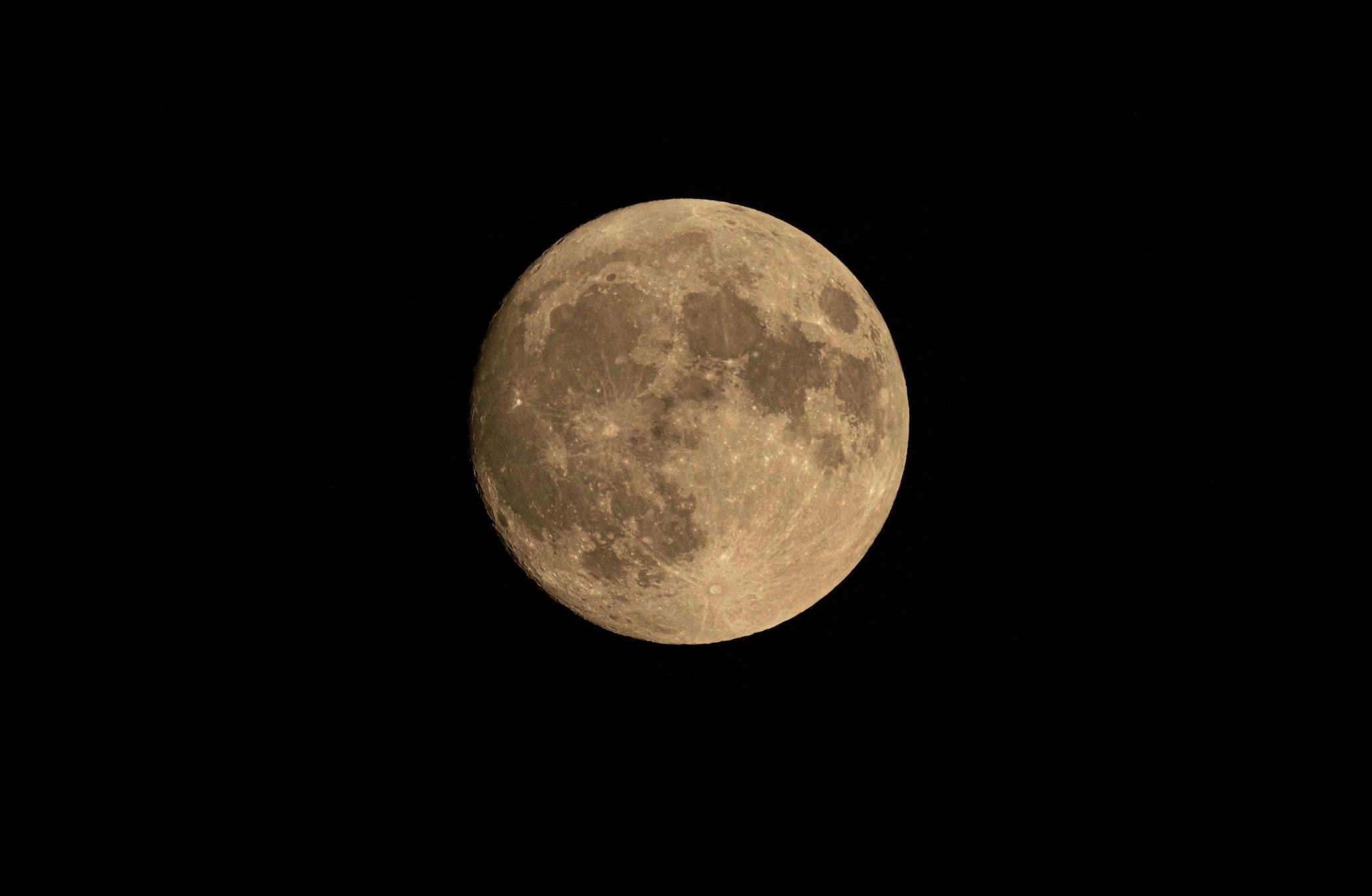
No. The Pink Moon is not pink. The name comes from moss pink, or creeping ground phlox (Phlox subulata), one of the earliest spring wildflowers to bloom across eastern North America. The flower is pink. The Moon looks the same pale gold or silver as any other full Moon, depending on the air and your horizon.
Why is the April full Moon called the Pink Moon?
The April full Moon takes its name from the blanket of moss pink (creeping ground phlox) that blooms across roadsides, meadows, and rocky banks in eastern North America in early April. According to NASA, “Pink Moon” caught on as the popular American name because the Moon’s date lines up with the wildflower’s first burst of color each spring.
What is the Paschal Moon and is it the same as the Pink Moon?
Sometimes. The Paschal Moon is the first full Moon on or after the spring equinox, and Easter is set on the first Sunday after the Paschal Moon under a rule from the First Council of Nicaea in 325 CE. When that first post-equinox full Moon falls in April, the Pink Moon and the Paschal Moon are the same Moon. When it falls in March (as in 2027, when the Paschal Moon is March 22 and Easter is March 28), the April Pink Moon is just the Pink Moon. In 2026, the April 1 full Moon was the Paschal Moon and Easter fell on April 5.
What are other names for the April full Moon?
Plenty. Indigenous nations across the continent named the same Moon for what mattered most where they lived: the Tlingit “Budding Moon of Plants and Shrubs,” the Cherokee “Flower Moon,” the Choctaw “Moon of Blackberry,” the Anishinaabe “Sucker Moon,” the Cheyenne “When the Geese Lay Eggs,” the Arapaho “Ice Breaking in the River,” and the Lakota “When Wives Crack Bones for Marrow Fat.” European tradition adds “Budding Moon,” “Seed Moon,” “Sugar Maker Moon,” “Planter’s Moon,” and “Egg Moon.” In Asia, the same Moon is the “Peony Moon.”
Is the Pink Moon a good time to plant?
Yes, for many crops. Colonial farmers called the April full Moon the “Planter’s Moon” for good reason. The two weeks after a full Moon (the waning phase) are traditionally favored for root crops like carrots, beets, and onions. Check your local last-frost date before you put tender plants in the ground; our Gardening by the Moon Calendar lines lunar timing up with regional frost windows.
What other sky events happen around the Pink Moon?
The Lyrid meteor shower peaks every year on the night of April 22 into the morning of April 23, producing 15 to 20 meteors per hour at peak. In 2027 the still-bright Pink Moon will wash out fainter Lyrid streaks, so look after midnight when the Moon sits lower and face away from it toward Lyra and Vega. April also brings the bright spring constellations Leo, Boötes, and Virgo into easy view.
Do I need a telescope to see the Pink Moon?
No. The full Moon is easily visible to the naked eye. Step outside near moonrise, about 20 minutes before local sunset, on the night before and the night of the peak date, and look east. A clear sky and a low horizon are all you need.
Join The Discussion!
What is your favorite name for April’s full Moon?
What would you name it if you could?
Related Articles
- Full Moon Names And Times
- Moon Phases Calendar
- What Is The Paschal Full Moon?
- When Is Easter?
- Spring Equinox: The First Day of Spring
- April Birth Month Symbols
- April Birthstone
- Subscribe To The Farmhouse, Our Members-only Community!


Melissa Mayntz
Melissa Mayntz is a writer who specializes in birds and birding, though her work spans a wide range—from folklore to healthy living. Her first book, Migration: Exploring the Remarkable Journeys of Birds was published in 2020. Mayntz also writes for National Wildlife Magazine and The Spruce. Find her at MelissaMayntz.com.
- Melissa Mayntz

- Melissa Mayntz
- Melissa Mayntz
- Melissa Mayntz




This is a well-written and insightful article, offering an informative perspective. Looking forward to reading more of your content.NTE Tier List
I definitely intend to go out this evening to view our “Pink” moon. I wasn’t aware of this in the past (and I’m a senior!). Thank you for posting this interesting article. Since I’m in the Midwest, I’ll go out about 10:20 p.m. so I don’t miss it.
It was quite beautiful! You’ll be able to enjoy it for the next couple of days!
When can we have blood in the feet in march
I have been a firm believer of Moon rising & settings that give the best results & I am just now, needing a reminder of those, for when to trim my hair for best rapid growth. Plus, the best time to color my hair for a longer hold in time? I know I followed this decades ago. Any suggestions? Vel B
Hi Vel, you’ve come to the right place! The Farmers’ Almanac takes all that guesswork out for you, and our Best Days charts have all that info for you in one spot. We’ll also email you this link: https://www.farmersalmanac.com/calendar/best-days
RIP Prince. Maybe he will settle for a pink full moon instead of purple.
I hope all of your plants grow in abundance.
Lmbo.. listening to these comments ..
Today’s my Birthday. .I love a full moon.
After reading through some comments, I would say the effects of the full moon are apparent.
Yes, the full moon does seem to cause ‘full moon fever’–but beyond that, isn’t it just the coolest thing to watch it rise above the pines?
The only thing that any full moon does as far as I am concerned is to keep me awake. Solution, block the moon light.
Work with the public, full moon definitely affects people.