

Strawberry Moon 2026: June Full Moon Date, Folklore, and Viewing Guide
Quick Reference
- Strawberry Moon 2026: Monday, June 29, 2026
- Peak illumination: 7:57 a.m. Eastern Daylight Time (11:57 UTC)
- Rule: the first full Moon of June, in any year
- Best viewing: Sunday night, June 28, into Monday morning, June 29
- Why “Strawberry”: Algonquin name marking the wild strawberry harvest in June
- Alternate names: Rose Moon (Europe), Hot Moon, Honey Moon, Mead Moon, Lotus Moon, Moon of Birthing, and more
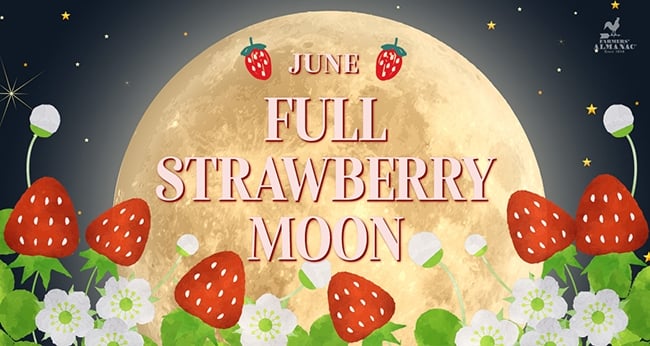
The Strawberry Moon, the June full Moon for 2026, peaks on Monday, June 29, at 7:57 a.m. Eastern Daylight Time. Wild strawberries ripen in the meadows, gardens push their first real growth of the season, and the Sun rides its longest arc of the year. The name comes from the Algonquin and other North American nations who timed the wild berry harvest to this Moon. Around the world the same June full Moon has been called Rose Moon, Honey Moon, Mead Moon, and Hot Moon, every label tied to what mattered most on the land at midsummer.
When Is the Strawberry Moon 2026?
Full Moon June 2026: Monday, June 29
Peak Illumination: 7:57 a.m. Eastern Daylight Time (11:57 UTC)
The Moon reaches full phase at the same moment everywhere on Earth, so the clock simply shifts by time zone. North American readers will see 6:57 a.m. Central, 5:57 a.m. Mountain, and 4:57 a.m. Pacific, with the 11:57 UTC peak landing in late morning across the Atlantic. The Moon looks full to the naked eye for about a day on either side of peak, which means Sunday night, June 28, and Monday night, June 29, both offer a worthwhile view. Because peak falls in morning daylight for most of North America, the best look at the fully lit disc comes either at moonset on Monday morning or at moonrise on Monday evening. Times are confirmed against the U.S. Naval Observatory phase tables.
The next new Moon follows about two weeks later, the natural dark-sky window for stargazers; you can see the running list of dates on our next new Moon page.
Why It’s Called the Strawberry Moon
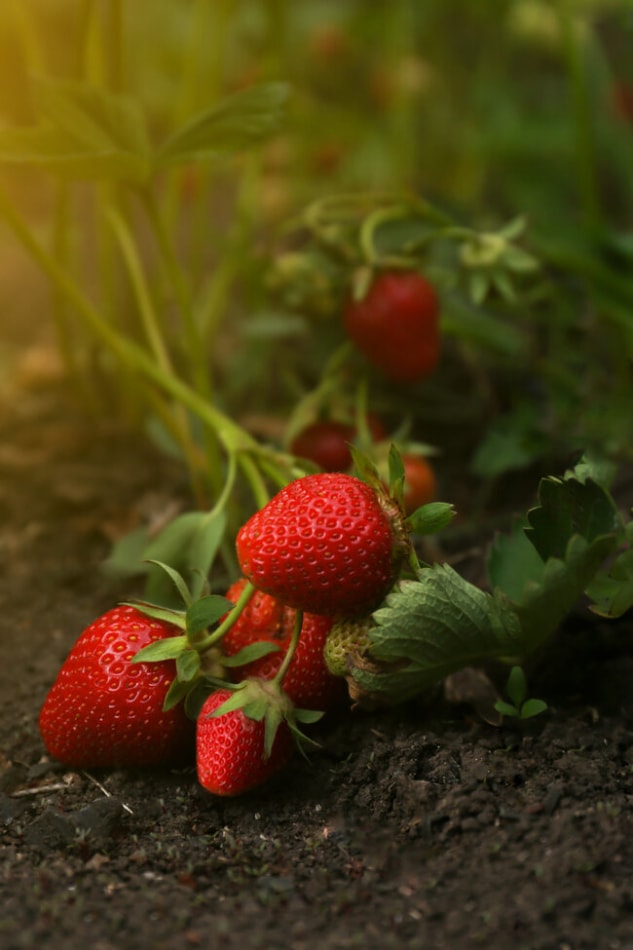
The June full Moon picked up the name “Strawberry Moon” from a number of North American nations because the wild strawberry, Fragaria virginiana, hits peak ripeness in June. The plant is one of the earliest fruits of the year. According to the USDA Plants Database, the Virginia strawberry grows across the lower 48 states, Canada, and Alaska, and for centuries it served as an important early-season food, gathered fast before birds and weather took the crop. The harvest window is short, often only a couple of weeks in early to mid June, which is why the Moon and the berry share a name.
Because of the strawberry’s role as an early-season food, the name traveled across nations. The Algonquin, Ojibwe, Dakota, Lakota, Chippewa, Oneida, and Sioux all called the June full Moon by some form of “Strawberry Moon.” Settlers met the name on arrival and kept it, and it is one of the few Indigenous Moon names that crossed wholesale into mainstream American almanacs and never went out of use.
Other nations tied the Moon to whatever berry came in first on their own land. The Creek of the southeastern United States call it the “Blackberry Moon,” the Shawnee of Ohio and Pennsylvania call it the “Raspberry Moon,” and the Haida of Alaska use the broader “Berries Ripen Moon.” Each name is a tiny calendar of local harvest: when the Moon comes around full, the berry is ready.
Other June Full Moon Names
Beyond the strawberry harvest, the June full Moon picks up a long list of names from weather, wildlife, and the plants people watched most closely on their own ground.
Rose Moon (European)
Across much of Europe the preferred name is “Rose Moon,” marking the full blossoming of garden and wild roses in regions where strawberries are less central to the early-summer table. In England the rose tradition is so strong that “Rose Moon” still shows up alongside “Strawberry Moon” in modern almanac listings, and the flower is a fitting companion to June’s birth-month symbols, the rose and the honeysuckle.
Hot Moon
Some regions call the June full Moon the “Hot Moon,” especially when the full phase falls in the second half of the month and afternoons are already running into summer heat. For the long-range version of that read, check our Summer Forecast. Below the equator, the same June Moon in the same month is the “Cold Moon” instead, because the winter solstice is approaching in the Southern Hemisphere and southern Africa.
Honey Moon and Mead Moon
In Anglo-Saxon tradition, the June full Moon is the “Honey Moon” or “Mead Moon,” a nod to the time of year when honey was ready to take from the hives and meadows (“meads”) were mown for hay. The word “honeymoon” itself traces back to this June timing: a wedding in June was followed by the first full month of married life, sweetened with honey wine, and the calendar caught the name. Worth a measured caveat: folk etymologies for “honeymoon” are tidier than the actual record, and historians read the link as plausible rather than proven.
Lotus Moon and More
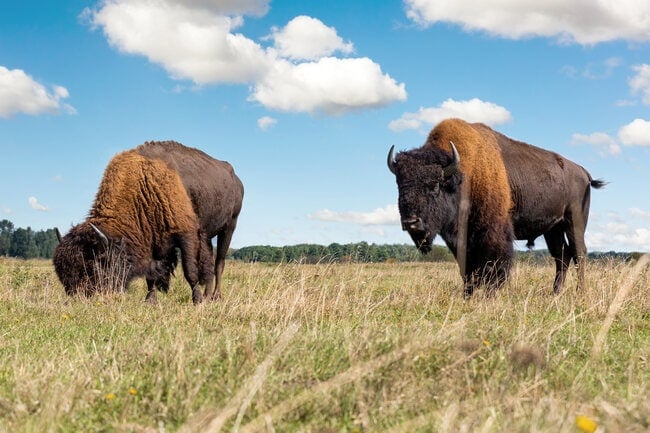
In China, the same Moon is the “Lotus Moon,” named for the flower that opens on the still summer ponds. The Inupiat and Tlingit of Alaska call it the “Moon of Birthing,” because many northern animals deliver their young in June, giving the offspring the longest possible run of warm weather before the next winter. The Arapaho of the Great Plains call it the “Moon When the Buffalo Bellows,” after the mating calls of bison, and the Omaha of Nebraska use the related “Moon When the Buffalo Bulls Hunt the Cows.” In 2024, in honor of the first white buffalo calf born in Yellowstone National Park, the Farmers’ Almanac named June’s full Moon the “White Buffalo Moon.” The Lakota story behind that name is worth its own read in the Legend of the White Buffalo Calf Woman. The Choctaw of the southern Great Plains, from Oklahoma to Mississippi, call it the “Windy Moon” after the season’s spring storms and the breezes that follow.
The Strawberry Moon and the Summer Solstice
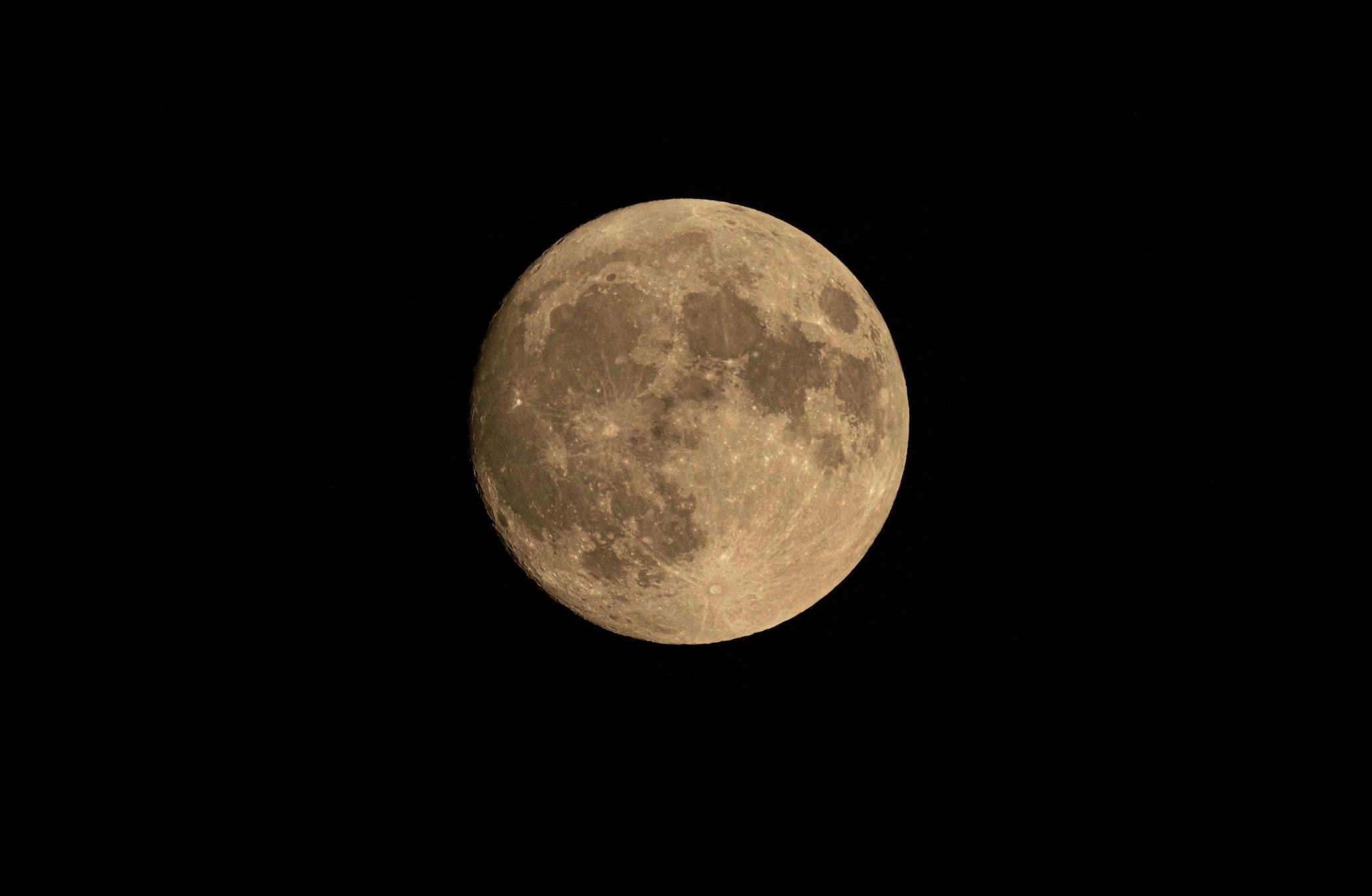
The June solstice falls on Sunday, June 21, 2026, the longest day of the year for the Northern Hemisphere. The 2026 Strawberry Moon comes eight days later, on Monday, June 29, which makes it the first full Moon after the solstice.
That timing matters in the sky. A full Moon always rides opposite the Sun, so a June full Moon that follows the solstice takes the lowest, shortest arc of the year for Northern Hemisphere viewers. The Sun is at its highest point, the Moon hugs the southern horizon, and the disc looks unusually warm because its light passes through more of Earth’s atmosphere. According to NASA, the same physics that paints sunsets in amber and rose pulls those tones out of a low June Moon. Depending on the date, the June full Moon is either the last full Moon of spring or the first full Moon of summer; the 2026 Strawberry Moon falls firmly on the summer side of the line.
June Sky Highlights
A full Moon washes out the dimmer stars, so the nights on either side of June 29 are not the best for deep-sky stargazing. The week before and the week after are the payoff, when the summer constellations finally take over the southern sky.
- Scorpius rising: the curved tail of the Scorpion clears the southeastern horizon by late evening in June, anchored by the red supergiant Antares. The Almanac’s “Heart of the Scorpion” star is one of the easiest summer markers to find with the naked eye.
- Sagittarius and the Teapot: just east of Scorpius, the bright stars of Sagittarius trace an asterism that looks more like a teapot than an archer. Steam from the spout points directly at the dense core of the Milky Way.
- The Milky Way returns: for the first time since winter, the bright band of the galactic center crosses the night sky after dark. Best seen from rural skies on the moonless nights of June 14 to June 22, well before the Strawberry Moon brightens the sky.
- Bright planets: check our Full Moon and sky pages for current planet positions, which shift year to year.
Folklore and the “Honey Moon” Etymology
The folklore around June’s full Moon clusters around weddings, sweetness, and the start of summer. The Anglo-Saxon “Honey Moon” name comes first: it marks the time of year when honey was ready to take from the hives and meadows were mown for hay. The word “honeymoon” almost certainly travels with the Moon’s name. June was the traditional month for weddings in much of medieval Europe, partly because Juno, the Roman goddess of marriage, owned the month, and partly because the weather was finally warm and the harvest had not yet started. A wedding in June was followed by a month of honey wine, and the Moon caught the name.
An honest caveat sits next to that story. Lexicographers point out that “honeymoon” in its modern sense (the post-wedding trip) appears in English long after the older “Honey Moon” Moon name, and the link between the two is read as suggestive rather than airtight. The cultural rhyme is real even where the etymology is fuzzy: June, weddings, sweetness, and the Moon overhead.
Other June folklore points the same direction. June is birth month to the rose and the honeysuckle (see June birth-month symbols), and to the pearl, alexandrite, and moonstone (see June birthstones). The connecting thread is bloom and bounty, the year tipping from spring effort to summer ease.
Indigenous Names for the June Full Moon
Other nations tied the June Moon to whatever growth or weather mattered most on their own ground. In addition to the Strawberry, Blackberry, Raspberry, and Berries Ripen names, the Ojibwe also use “Flowering Moon” or “Garden Moon” to mark the broader push of plants in June. The Cherokee are more specific with “Plants in Garden Are Sprouting Moon.” For settled farming nations, “Green Corn Moon” denotes the first real growth of the staple crop. (That is the Green Corn Moon, distinct from September’s occasional Corn Moon.) Even neo-pagan traditions reach for a gardening name, calling June’s full Moon the “Planting Moon.”
Farther north, June can be too early for berries or garden vegetables, but trees finally leaf out after the long winter. The Cree of the northern Plains and Canada call the June full Moon “Moon When Leaves Come Out,” a quiet marker of the moment when the boreal forest closes its canopy and the year’s growing window finally opens.
The full sweep of Indigenous and traditional names for the June Moon covers berries, gardens, animals, weather, and the season itself. The table below lists the names mentioned across this article in one place.
| Name | Tradition | What it marks |
|---|---|---|
| Strawberry Moon | Algonquin | The wild strawberry harvest |
| Blackberry Moon | Creek, southeastern US | Blackberries ripening |
| Raspberry Moon | Shawnee, Ohio and Pennsylvania | Raspberries ripening |
| Berries Ripen Moon | Haida, Alaska | The broader berry season |
| Flowering Moon / Garden Moon | Ojibwe | The wider push of plant growth |
| Plants in Garden Are Sprouting Moon | Cherokee | First garden growth |
| Green Corn Moon | Settled farming nations | First real growth of the staple crop |
| Moon When Leaves Come Out | Cree, northern Plains and Canada | The boreal canopy closing |
| Moon When the Buffalo Bellows | Arapaho, Great Plains | Bison mating calls |
| Moon When the Buffalo Bulls Hunt the Cows | Omaha, Nebraska | The same season, told differently |
| Windy Moon | Choctaw, Oklahoma to Mississippi | Spring storms and the breezes after |
| Planting Moon | Neo-pagan | The gardening calendar |
| Honey, Mead, Rose, Hot and Lotus Moon | Also recorded | Other traditional names for the June Moon |
Gardening and Best Days for the Strawberry Moon
June is peak growing season across most of the United States and southern Canada. The Strawberry Moon falls right in the middle of the planting and harvest window, which is why so many traditions named the June Moon for what they were growing. The Ojibwe “Flowering Moon” and “Garden Moon,” the Cherokee “Plants in Garden Are Sprouting Moon,” and the neo-pagan “Planting Moon” all point at the same calendar.
For practical planning, the Farmers’ Almanac Best Days calendar lines up garden chores with the Moon’s phase. The week of the Strawberry Moon is a strong window for harvesting above-ground crops at peak flavor, drying herbs, and picking fruit for preserving, while the days right after the full Moon favor weeding, pruning, and cutting back. Match those windows to your local frost-free date in the Gardening Calendar, and time the rest from there.
How to See the Strawberry Moon in 2026
The Strawberry Moon is one of the easiest full Moons of the year to enjoy from a backyard or a country road. It rises near sunset on the night of full phase, sits low in the southern sky overnight, and sets near sunrise. No telescope, no app, no special viewing spot required, just a clear horizon to the east at moonrise.
Best Viewing by Region
| Region | What to expect on the night of full Moon |
|---|---|
| Northeast and New England | Humid haze near the horizon. The Moon reddens as it rises |
| Southeast and Gulf | Afternoon storms usually clear by late evening. Watch after 10 p.m. |
| Midwest and Great Lakes | Often the cleanest horizons of the month. Get away from lake haze |
| Great Plains | Wide, low horizons. Among the best moonrise viewing in the country |
| Desert Southwest | Dry air and sharp detail, though monsoon cloud is possible |
| Pacific Northwest | Coastal marine layer. Drive inland or uphill above it |
Practical Tips
- Step outside about 20 minutes before sunset on Sunday, June 28, and Monday, June 29, to catch moonrise low in the east.
- The low summer Moon often glows amber or rose. The color is real, not a filter, and it lasts only as long as the Moon stays near the horizon.
- For photography, a phone in night mode works for the wide scene; a DSLR at 1/125 second, f/8, ISO 200 will hold detail on the lit disc.
- The Moon looks largest near the horizon, an optical illusion that has fooled humans for centuries. Catch it then for the most dramatic photo.
- Check local moonrise and moonset for your zip code in our Moon Phases Calendar before heading out.
Plan a porch night. Pick the night of June 28 or June 29 that fits your week, set the alarm a little before sunset, and let the year’s lowest, warmest full Moon do the work.

Strawberry Moon FAQ
When is the Strawberry Moon in 2026?
The Strawberry Moon peaks on Monday, June 29, 2026, at 7:57 a.m. Eastern Daylight Time (11:57 UTC). It looks full to the naked eye for about a day on either side of peak, so Sunday night, June 28, and Monday night, June 29, both offer good viewing.
Why is the June full Moon called the Strawberry Moon?
The name comes from the Algonquin and several other North American nations who timed the wild strawberry harvest to June, when Fragaria virginiana ripens across the lower 48, Canada, and Alaska. Because the strawberry was an important early-season food, the name traveled across nations and into mainstream American almanacs.
Is the Strawberry Moon actually pink or red?
The name is about strawberries, not color, but the June full Moon often does look warm. It rides low across the southern sky in summer, so its light passes through more of Earth’s atmosphere; that filtering pulls out amber, gold, and rose tones, the same physics that paints a sunset.
What are other names for the June full Moon?
The June full Moon is also called Rose Moon (European), Hot Moon, Honey Moon and Mead Moon (Anglo-Saxon), Blackberry Moon (Creek), Raspberry Moon (Shawnee), Berries Ripen Moon (Haida), Flowering Moon and Garden Moon (Ojibwe), Plants in Garden Are Sprouting Moon (Cherokee), Green Corn Moon, Moon When Leaves Come Out (Cree), Windy Moon (Choctaw), Moon of Birthing (Inupiat and Tlingit), Moon When the Buffalo Bellows (Arapaho), Lotus Moon (Chinese), and Cold Moon (Southern Hemisphere).
Why does the Strawberry Moon look so low in the sky?
A full Moon rides opposite the Sun. In June, the Sun reaches its highest path of the year, so the Moon takes the lowest path of the year and never climbs far above the southern horizon for Northern Hemisphere viewers. The 2026 Strawberry Moon falls just after the June solstice, which exaggerates the effect. The geometry reverses in December, when the Sun is low and the full Moon rides high.
Is the Strawberry Moon the same as the Honey Moon?
Yes. “Honey Moon” and “Mead Moon” are the Anglo-Saxon names for the June full Moon, used in England long before “honeymoon” took on the modern marriage-trip sense. The Moon name marks the time of year when honey was ready to take from the hives and meadows (“meads”) were mown for hay, and the word “honeymoon” likely travels with it.
Is the 2026 Strawberry Moon before or after the summer solstice?
After. The June solstice falls on Sunday, June 21, 2026, and the Strawberry Moon peaks eight days later on Monday, June 29. That makes it the first full Moon of summer for the Northern Hemisphere and one of the lowest, warmest-looking full Moons of the year.
Do I need a telescope to see the Strawberry Moon?
No. The full Moon is easily visible to the naked eye. Step outside about 20 minutes before local sunset on Sunday, June 28, or Monday, June 29, and look east. A clear sky and a low horizon are all you need.
Join the Discussion
What is your favorite name for June’s full Moon?
What would you name it if you could?
Related Articles
- Full Moon Names and Times
- Moon Phases Calendar
- When Is the Next New Moon?
- Summer Solstice: First Day of Summer
- June Birth Month Symbols
- June Birthstone
- September: Full Harvest Moon
- The White Buffalo Moon: June 2024
- Legend of the White Buffalo Calf Woman
- Subscribe to The Farmhouse, our members-only community.


Melissa Mayntz
Melissa Mayntz is a writer who specializes in birds and birding, though her work spans a wide range—from folklore to healthy living. Her first book, Migration: Exploring the Remarkable Journeys of Birds was published in 2020. Mayntz also writes for National Wildlife Magazine and The Spruce. Find her at MelissaMayntz.com.
- Melissa Mayntz

- Melissa Mayntz
- Melissa Mayntz
- Melissa Mayntz





blushing moon
Happy Full Moon!
Wjwkwkemwemem
LoVe the Strawberry Moon My Husband has Lenape Indian in his blood… So we planted flowers & herbs yesterday, Today I continued in the Garden Thank you SOO much for the info and Beautiful pictures
I LOVE STRAWBERRYS & NOW. WITH NEW KNOWLEDGE I WILL BE LOOKING FOR STRAWBERRY MOON FRIDAY.
thank you.
I feel closed to nature.
Thank you very much. Thoroughly enjoyed this little clip.
Did not know own that! Thank you Farmer’s Almanac for all the great info!
As a young girl, I remember that many truck farmers would plant various vegetables during certain phases of the moon. Plants that produced above the ground were planted during the light of the moon and vegetables that produced below the ground were planted during the dark of the moon.
I have Indian in my blood and did all my garden planting yesterday. Thank you Strawberry Moon.