

The Next Great Daytime Comet: What It Would Take and What to Watch For
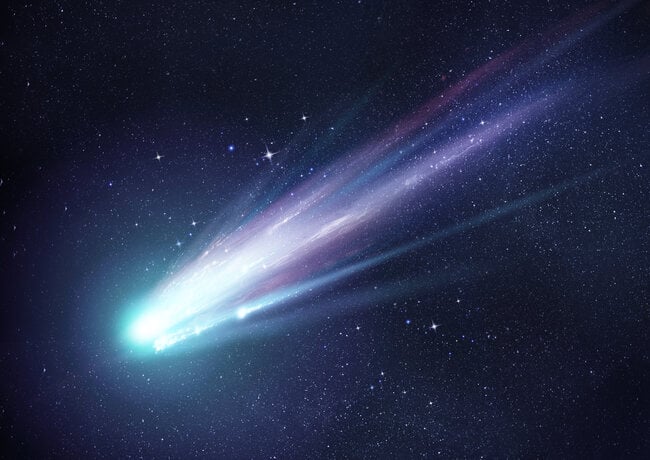
Quick Reference: Daytime Comets
- Definition: a comet bright enough to be seen during the day, brighter than magnitude -3.
- Frequency: 1-2 per century, on average.
- Most recent: Comet McNaught (C/2006 P1), January 2007.
- Brightest in history: the Great Comet of 1882 (estimated magnitude -17).
- Where they come from: usually long-period sungrazers, surviving very close perihelion passes.
A daytime comet is the rarest naked-eye astronomical sight on Earth. Only a handful have appeared per century, each bright enough to be seen with the sun in the sky. The most recent was Comet McNaught in January 2007. Here is what makes a comet bright enough to be daytime-visible, the candidates currently being tracked, and what to watch for over the next decade.
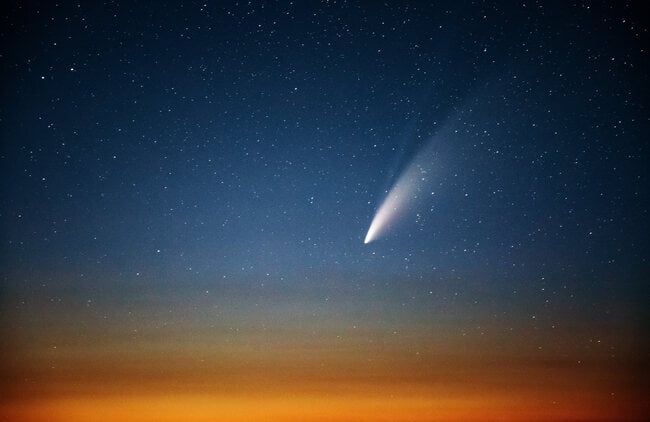
What Makes a Comet a Daytime Comet
For a comet to be visible during daylight, it has to reach a brightness of about magnitude -3 or brighter (Venus is magnitude -4.6; the full moon is -12). That requires either an exceptionally large comet, an exceptionally close perihelion pass, or both.
Most daytime comets are sungrazers, comets that pass within a million miles of the sun’s surface and either get violently vaporized or survive and emerge with enormous brightness.
Historic Daytime Comets
Roughly one daytime comet per century has been recorded.
- Great Comet of 1882: the brightest comet in recorded history. Magnitude -17. Visible next to the sun during the day.
- Great Comet of 1910 (the daylight comet): magnitude -5, visible alongside the sun.
- Comet Ikeya-Seki (1965): magnitude -10 at peak, visible to the naked eye in daytime.
- Comet McNaught (C/2006 P1, January 2007): magnitude -5.5, visible during the day. The most recent.
What to Watch For
Sungrazing comets are discovered frequently, but the vast majority fragment during perihelion or come around the sun too faint to be daytime-visible. Astronomers track each new discovery and predict its peak brightness about a month out.
When a candidate appears, news will spread quickly. The Almanac, NASA, and Sky and Telescope all publish bright-comet alerts.

Frequently Asked Questions
When was the last daytime comet?
Comet McNaught (C/2006 P1) in January 2007. It was visible from the Northern Hemisphere during daylight for about two days at peak.
How would I see a daytime comet?
Stand in a position where a building or tree blocks the direct sun, and look near (but not at) the sun. A daytime comet would appear as a bright tail off the sun’s edge.
Is the next daytime comet predicted?
No specific candidates are confirmed for the near future. Discoveries of bright sungrazers happen suddenly.
Is it safe to look near the sun for a daytime comet?
Only with extreme care. Looking directly at the sun damages the retina. Stand so a building or tree blocks the direct sun, and look at the area near the edge of the sun. Never use binoculars or a telescope to view anything near the sun.



Kelly Kizer Whitt
Kelly Kizer Whitt has been a science writer specializing in astronomy for a quarter of a century. She began her career at Astronomy Magazine and made regular contributions to AstronomyToday and the Sierra Club, among other outlets. She currently writes for EarthSky.org. Kelly has nine published books, including a children’s picture book titled Solar System Forecast and a young adult dystopian novel titled A Different Sky. You can find her on Twitter @Astronomommy.

Well written and full of information. Thanks!
Thank you for your kind comment. We hope our readers find our information useful!
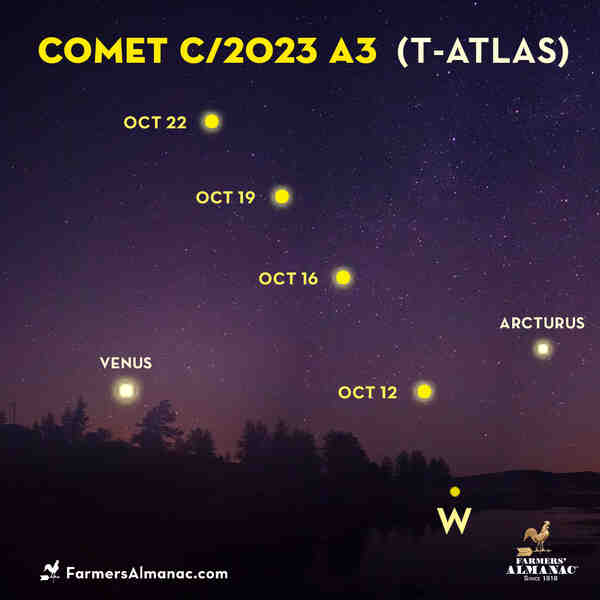
Very interesting and informative article on such a bright comet. Could it be possible to find sky charts with plotted path alogwith approximate magnitude of the comet. I have 8 inch Nexstar Celestron telescope. I want to start observing it right now.
Very interesting article on the Comet C/2023A3 which will dazzle the sky next year. Looking forward to tracking it on my software.
Hi Harry, Yes … something to look forward to! Thanks for stopping by to say hello. ?
I’m old enough to remember the hype around a few comets, including Hale-Bopp, Hyakutake and even Hally’s comet. I’ll believe it when I see it, literally.
Fingers crossed. This could be the big one! ⭐