When Is Indigenous Peoples’ Day 2026? Date, History, and Observance
Quick Reference: Indigenous Peoples’ Day 2026
- Indigenous Peoples’ Day 2026: Monday, October 12, 2026
- Rule: The second Monday of October
- Same calendar date as: Columbus Day (the federal holiday)
- States that officially observe IPD: Alaska, Hawaii, Maine, New Mexico, Oregon, South Dakota (as Native Americans’ Day), Vermont, Wisconsin, and the District of Columbia
- First US city to adopt: Berkeley, California, in 1992
- First presidential proclamation: President Joe Biden, October 8, 2021
- Federal holiday status: Not a federal holiday by statute; Columbus Day remains the federal holiday for the second Monday in October
Indigenous Peoples’ Day 2026 falls on Monday, October 12. The date is set by a simple rule: the second Monday of October, every year. That places it on the same calendar day as Columbus Day, which has been a federal holiday since 1937. Many states and cities now mark one or the other, and some mark both. Below is the date, the dates for the next five years, the history that brought us here, where each state stands, and how the day is observed.
When Is Indigenous Peoples’ Day 2026?
Indigenous Peoples’ Day 2026 is Monday, October 12. The holiday is observed annually on the second Monday in October. That places the 2026 date a week after Canadian Thanksgiving (also October 12 this year) and on the same day as the federal Columbus Day observance. The rule is fixed; the calendar date moves between October 8 and October 14 depending on how the month falls.
If your state, city, or workplace observes Indigenous Peoples’ Day, the date is the same as the federal Columbus Day observance. Federal offices, post offices, and the bond market are closed for Columbus Day. State offices, schools, and private workplaces follow their own jurisdiction. We list the state-by-state picture further down.
Indigenous Peoples’ Day Dates for the Next Five Years
| Year | Indigenous Peoples’ Day | Day of week |
|---|---|---|
| 2026 | October 12 | Monday |
| 2027 | October 11 | Monday |
| 2028 | October 9 | Monday |
| 2029 | October 8 | Monday |
| 2030 | October 14 | Monday |
The earliest the holiday can fall is October 8; the latest is October 14. The date always lands on a Monday, which keeps it inside a long weekend for the jurisdictions that observe it.
What Is Indigenous Peoples’ Day?
Indigenous Peoples’ Day is a holiday observed annually on the second Monday in October. It is currently recognized in more than a dozen US states as well as the District of Columbia, and in more than 130 US cities. The day continues to grow in observance and may one day be made a federal holiday, but as of 2026 it is not one.
The day is unusual in that it does not honor a single culture or a single event. It recognizes the original inhabitants of the Western Hemisphere and, in many observances, indigenous peoples around the world. Different communities mark the day in different ways: ceremonies, education, support for Native-owned businesses, and public reflection. Rather than focusing on one individual the way Columbus Day does, Indigenous Peoples’ Day recognizes traditional native cultures broadly.
The holiday is also not restricted to “Native Americans” with traditional territories inside the United States. Those cultures are recognized on Native American Day, observed on the fourth Friday of September. Indigenous Peoples’ Day, as it has grown since the late 1980s, recognizes sovereign communities with a shared national identity that predates colonial settlement, territorial usurpation, or political divisions drawn by war.
The History of Indigenous Peoples’ Day
The roots of Indigenous Peoples’ Day trace to 1977, when the United Nations hosted the International NGO Conference on Discrimination Against Indigenous Populations in the Americas. Delegates at that Geneva conference proposed that the second Monday of October, then observed in the US as Columbus Day, be reclaimed as a day to honor indigenous peoples. The proposal did not change any laws at the time, but it set the framing every later observance would build on.
South Dakota was the first US state to act. In 1989, the state legislature passed a measure replacing Columbus Day with Native Americans’ Day, first observed in 1990. The name is South Dakota’s own; it remains the official state holiday for the second Monday of October.
Berkeley, California followed in 1992, marking the 500th anniversary of Christopher Columbus’s 1492 voyage. The Berkeley City Council voted to designate the second Monday of October as Indigenous Peoples’ Day. Berkeley is the first US city on record to adopt the holiday by that name.
Through the 1990s and 2000s the holiday spread one city and one state at a time. By the mid-2010s the pace picked up: Seattle, Minneapolis, Albuquerque, Phoenix, Denver, Los Angeles, and many smaller cities adopted Indigenous Peoples’ Day in quick succession. State adoptions followed: Vermont and Maine in 2019, New Mexico the same year, Oregon, Wisconsin, and the District of Columbia in the same period.
The federal-level recognition came in 2021. On October 8, 2021, President Joe Biden issued the first presidential proclamation of Indigenous Peoples’ Day, alongside the standard Columbus Day proclamation. A presidential proclamation is not the same as a federal statute: it does not change the federal holiday calendar, which still lists Columbus Day for the second Monday of October. But it is the first time a sitting US president formally recognized the day by name.
Indigenous Peoples’ Day vs. Columbus Day
The two holidays fall on the same calendar date, the second Monday of October, but they come from different histories and use different framing. Columbus Day was made a federal holiday in 1937 under President Franklin D. Roosevelt, and commemorates the October 12, 1492 landfall of Christopher Columbus in the Bahamas. Indigenous Peoples’ Day, as outlined above, grew out of the 1977 UN conference and was first adopted in 1992 by Berkeley.
Indigenous Peoples’ Day does not replace Columbus Day at the federal level. Different communities choose to mark either holiday, both, or neither. The table below summarizes the practical differences.
| Question | Indigenous Peoples’ Day | Columbus Day |
|---|---|---|
| When | Second Monday of October | Second Monday of October |
| Date in 2026 | October 12 | October 12 |
| First observed | South Dakota (as Native Americans’ Day), 1990; Berkeley, CA (as Indigenous Peoples’ Day), 1992 | Colorado, 1907; federal holiday since 1937 |
| Federal status | Presidential proclamation since 2021; not a federal holiday by statute | Federal holiday since 1937 (5 U.S.C. § 6103) |
| What it honors | The original inhabitants of the Americas and indigenous peoples worldwide | Christopher Columbus’s 1492 voyage and Italian-American heritage |
Where each state stands as of 2026, in plain terms:
- Officially observe Indigenous Peoples’ Day (state-level): Alaska, Hawaii (as Discoverers’ Day, broadened to honor Polynesian voyagers and indigenous peoples), Maine, Michigan (by executive order), New Mexico, Oregon, South Dakota (as Native Americans’ Day), Vermont, Wisconsin, and the District of Columbia.
- Observe both Indigenous Peoples’ Day and Columbus Day on the same date: several states, including Nebraska and others that have added IPD without removing Columbus Day from the calendar.
- Officially observe Columbus Day only: the majority of remaining states retain the federal observance with no formal state-level Indigenous Peoples’ Day, though many cities within these states observe IPD locally.
- Cities that observe Indigenous Peoples’ Day inside Columbus-Day states: more than 130 US cities have adopted the holiday by ordinance, including Seattle, Minneapolis, Denver, Albuquerque, Phoenix, Los Angeles, Boston, and many others.
Status changes year to year as state legislatures and city councils act. If you need to know the current standing for a specific workplace or school district, check the local calendar.
How the Date Is Decided
The rule, in plain English: the second Monday of October, every year. That phrasing is exact. The “second Monday” is whichever Monday is the second one to occur in the month of October. The calendar window is October 8 through October 14, with no exceptions.
The second-Monday rule is shared with the federal Columbus Day, which has been pegged to the second Monday since the Uniform Monday Holiday Act of 1968 moved several federal holidays to fixed Mondays to create long weekends. Indigenous Peoples’ Day was layered onto that same Monday by every jurisdiction that has adopted it, so the date is identical regardless of which name a state or city uses.
Global Recognition
Indigenous Peoples’ Day has spread well beyond the United States. Many countries now mark a national day honoring their own native diversity and the unique cultures of tribes, clans, and peoples within their borders. Depending on how cultures are classified, there are roughly 5,000 or more groups of indigenous peoples around the globe.
Many of these groups are honored by a national Indigenous Peoples’ Day, a Native Day, or a similar observance in a single country. Others are recognized on the International Day of the World’s Indigenous Peoples, observed globally each year on August 9.
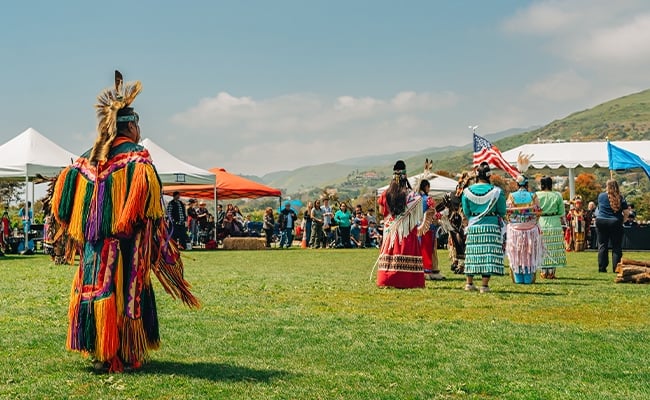
Many North and South American peoples are widely recognized: the Aztec, Inuit, Seminole, Navajo, Sioux, and Ute, among many others. Equally rich indigenous cultures exist on every continent. A short list, from the original article:
- The Bedouin of Arabia and Syria
- The Maasai of Kenya and Tanzania
- The Irula of southern India
- The Komi of northern Russia
- The Sorbs of Germany and Poland
- The Ainu of Japan
- The Lucayans of the Bahamas
- The Pini of Australia
- The Hmong of southern China, Vietnam, and Laos
That list is a small slice of the thousands of indigenous communities that have built distinct cultures, languages, and traditions over generations. The point of the day, in most observances, is to widen the lens past one’s own region and recognize that range.
How Indigenous Peoples’ Day Is Observed
How the day is marked varies by community. The most common forms of observance fall into a few categories: ceremony, community gathering, education, and economic support for Native-owned businesses. Below are the three approaches the Almanac has heard from readers most often.
3 Ways to Celebrate Indigenous Peoples’ Day
There are many ways to mark Indigenous Peoples’ Day, from learning your own ancestry to honoring and supporting local indigenous communities to helping educate others about the importance of the day.
1) Discover Your Ancestral Origins
If Indigenous Peoples’ Day is new to you and you want a personal connection to it, you can look into your own indigenous ancestry through a genetic or DNA test, or by researching your family tree. Some people are surprised to find indigenous connections in fairly recent generations; others work back through earlier ancestors to find them. Both paths are valid starting points.
Related: How To Celebrate The Harvest Moon
Once you have a sense of your ancestry, you can learn more about the native peoples who form your personal history, even if you are generations and continents removed from them. That can mean reading on ancient tribes and clans, reaching out to distant family members who carry pieces of the tradition, learning to cook a family dish, sharing the stories of your family’s history, or organizing a family reunion that centers your indigenous connections.
2) Explore Regional Cultures
Another option is to look into the indigenous cultures of your own local and regional community. Visit a museum, an art gallery, a local reservation, a historical site, or another place with indigenous connections to learn about the peoples who traditionally held the land your home, school, or workplace sits on.
Many local organizations offer performances on or around the holiday: music, dance, storytelling, or tribal ceremonies opened to the public to share culture and history. You can investigate handicrafts, foods, or clothing crafted by indigenous peoples, or make donations to local tribes and community organizations to support the restoration and preservation of their culture.
Reading books by indigenous authors, taking a native-inspired craft, language, or cooking class, or attending lectures from indigenous scholars are other ways to deepen your understanding of the cultures you share a place with.
3) Share Your Indigenous Story
If you already know your own indigenous ancestry, one of the strongest ways to mark Indigenous Peoples’ Day is to share that culture with others, to raise awareness and appreciation for other peoples’ experiences.
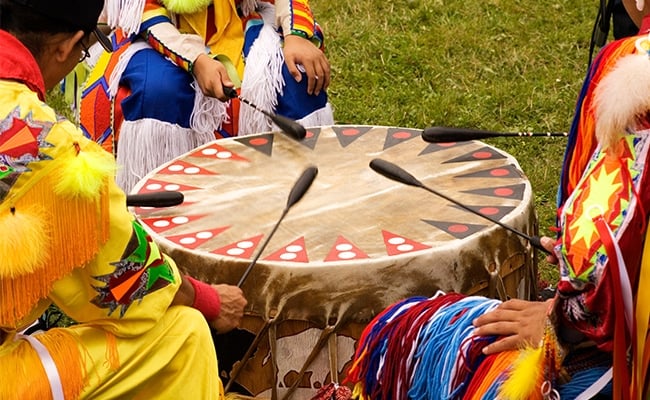
Consider organizing a visit to a school, a lecture at a local library, a meal at a senior center, or an open community event at a local park to showcase your culture and invite others to learn. You might work with other local or regional groups to host a larger, more diverse event, or work on a smaller scale by creating and distributing information sheets to local businesses to raise awareness.
This kind of sharing helps others discover your culture, sparks interest in younger members of your tribe, and lets senior members pass on their knowledge. That continuity is how cultures stay alive for future generations.
What to Avoid
As you plan to observe, acknowledge, mark, and share Indigenous Peoples’ Day, take care to do so respectfully:
- Before marking an indigenous culture, learn about the sacrifices the culture has endured. For many native peoples, Indigenous Peoples’ Day is a chance for solemn reflection and reverence, and it should always be treated that way.
- Do not wear stereotypical clothing or jewelry without fully understanding and honoring its cultural significance. Many such items also have spiritual significance and should not be worn casually or without the proper reverence.
- Before participating in activities such as a “powwow” dance, take time to learn the significance of the movements, music, and attire. Taking part in stereotyped versions dilutes and denigrates the cultures rather than honoring them.
- Do not buy “native-style” items such as dream catchers, themed jewelry, or decorations from large corporate retailers. Instead, support indigenous businesses and choose authentic handcrafted items that carry the real culture behind them.
- Do not treat indigenous peoples only as a historical subject. These tribes and cultures are present today in every aspect of society and business. Get to know the local indigenous community in your area and offer support to their businesses and organizations now, not only by recognizing past tribulations.
With those guardrails in place, the day opens up a lot of ground for connection, shared ancestry, and learning.
Federal Holiday Status
As of 2026, Indigenous Peoples’ Day is not a federal holiday by statute. The federal holiday for the second Monday of October remains Columbus Day, as listed in 5 U.S.C. § 6103, the section of the United States Code that names federal holidays. Federal offices, post offices, and the bond market close for Columbus Day.
Since 2021, every sitting US president has issued an Indigenous Peoples’ Day presidential proclamation alongside the Columbus Day proclamation. A proclamation is a formal recognition; it is not a change to the federal holiday calendar. Making Indigenous Peoples’ Day a federal holiday by statute would require an act of Congress, and as of 2026 no such legislation has passed.
What that means in practice: at the federal level, the second Monday of October is still officially Columbus Day. At the state and city level, observance varies, and that is where the legal recognition of Indigenous Peoples’ Day actually sits.
Plan Your Indigenous Peoples’ Day
Mark Monday, October 12, 2026 on the calendar. From there, the day is yours to shape. A few practical steps to set the day up well, whether you observe it through ceremony, learning, or community support:
- Check whether your state, city, or school district officially observes the day. If your workplace does not, you can still take part outside work hours.
- Look up the local tribal communities whose traditional territory you live on. Many tribal nations have public-facing websites and visitor programs.
- Plan one act of support for a Native-owned business, organization, or artist in your area.
- Pick one book, film, or museum exhibit that teaches you something new about a culture you do not already know.
- If you have indigenous ancestry, plan a small family activity that names and shares it.
The point is not the size of the gesture. The point is that the day gets a little of your attention, the way the calendar intends.

Frequently Asked Questions
When is Indigenous Peoples’ Day 2026?
Indigenous Peoples’ Day 2026 is Monday, October 12. The day is observed annually on the second Monday of October, the same calendar date as the federal Columbus Day observance.
Is Indigenous Peoples’ Day a federal holiday?
No. As of 2026, the federal holiday for the second Monday of October is Columbus Day, listed in 5 U.S.C. § 6103. Indigenous Peoples’ Day has been recognized by presidential proclamation every year since 2021, but a proclamation is not a federal statute. Making it a federal holiday would require an act of Congress.
Does Indigenous Peoples’ Day replace Columbus Day?
Not at the federal level. The two holidays fall on the same calendar date, but different jurisdictions handle them differently. Some states observe only Indigenous Peoples’ Day; some observe both; some observe only Columbus Day. Communities can choose to mark either, both, or neither.
Which states officially observe Indigenous Peoples’ Day?
As of 2026, states that officially observe Indigenous Peoples’ Day at the state level include Alaska, Hawaii (as Discoverers’ Day), Maine, Michigan (by executive order), New Mexico, Oregon, South Dakota (as Native Americans’ Day), Vermont, Wisconsin, and the District of Columbia. More than 130 US cities also observe the day, regardless of their state’s status.
When did Indigenous Peoples’ Day start?
The framing came from the 1977 United Nations International NGO Conference on Discrimination Against Indigenous Populations in the Americas. South Dakota was the first US state to act, replacing Columbus Day with Native Americans’ Day, first observed in 1990 after 1989 legislation. Berkeley, California was the first US city to adopt the holiday by the name Indigenous Peoples’ Day, in 1992, on the 500th anniversary of Columbus’s 1492 voyage.
When was the first presidential proclamation of Indigenous Peoples’ Day?
President Joe Biden issued the first presidential proclamation of Indigenous Peoples’ Day on October 8, 2021, alongside the standard Columbus Day proclamation. Every sitting president since has continued the practice.
What is the difference between Indigenous Peoples’ Day and Native American Day?
Native American Day is observed on the fourth Friday of September and focuses on Native American peoples within the United States. Indigenous Peoples’ Day is observed on the second Monday of October and recognizes all sovereign indigenous communities, in the Americas and worldwide. South Dakota’s state-level observance is named Native Americans’ Day, which uses the IPD date but a different name.
When is Indigenous Peoples’ Day 2027?
Indigenous Peoples’ Day 2027 is Monday, October 11. The earliest date the holiday can fall is October 8; the latest is October 14.
Join The Discussion
How do you plan to observe Indigenous Peoples’ Day this year? A community event, a museum visit, a family conversation, support for a Native-owned business, or something else?
Share with your community here in the comments below.


Melissa Mayntz
Melissa Mayntz is a writer who specializes in birds and birding, though her work spans a wide range—from folklore to healthy living. Her first book, Migration: Exploring the Remarkable Journeys of Birds was published in 2020. Mayntz also writes for National Wildlife Magazine and The Spruce. Find her at MelissaMayntz.com.
- Melissa Mayntz

- Melissa Mayntz
- Melissa Mayntz
- Melissa Mayntz