

What Are the Benefits of Snow in the Garden?
Quick Reference
- Fertilizer: Snow carries trace nitrogen and sulfur from the air into the soil (“poor man’s fertilizer”).
- Insulator: Trapped air pockets between crystals keep soil temperature steady, protecting roots and bulbs.
- Water: Snow melt restores spring soil moisture and replenishes reservoirs.
- Erosion control: Snow cover protects topsoil from winter winds.
- Soil biome: Microbes, earthworms, and overwintering insects survive better under snow.
A lot of snow might seem like trouble for the growing season, but most gardeners read it as a good sign. There is plenty of folklore around the benefits of snow for crops, and unlike many old farm rules, this one holds up under modern science. Snow is not just frozen water. It is fertilizer, insulator, water reserve, and erosion guard all in one. Here is what snow actually does for your garden and how to make the most of it.
Snow as a Natural Fertilizer
Snow is much more than frozen water falling from the sky. Its delicate crystalline structure contains tiny pockets that collect atmospheric molecules as the crystal forms and floats to the ground. Among the molecules captured: nitrogen and sulfur compounds that plants need. As the snow melts in spring, those nutrients release directly into the soil. The result is a slow, gentle natural fertilization. This is why farmers across centuries have said, “snow is a poor man’s fertilizer.”
Snow Means Water Is in the Air
Water is vital to plant growth. When temperatures are extremely cold, the air holds very little water vapor, and as a result, you see less snow. The two driest deserts on Earth are the Antarctic and Arctic Deserts, where the air is so cold it cannot hold meaningful moisture. At warmer winter temperatures closer to freezing, air carries more vapor and snow forms more readily. Heavy, wet flakes carry more moisture per inch than light dry flakes. Folk sayings like “year of snow, crops will grow” and “good winter snow makes all the plants grow” turn out to have a thermodynamic basis.
Snow as an Insulator
An ideal winter for crops has deeper snow cover from slightly warmer (still cold) temperatures. Deep snow cover insulates the ground. The upper soil still freezes, but the deeper ground thaws sooner in spring, allowing earlier planting and a longer growing season. For many generations, farmers have summarized this as, “if the first snowfall lands on unfrozen ground, the winter will be mild.”
Another related saying: “If February brings drifts of snow, there will be good summer crops to hoe.” Late-winter snow ensures soil moisture going into spring planting. Native American moon lore ties to this too: February’s full Moon is called the Snow Moon because that month historically holds the deepest snow cover.

The Full List of Benefits of Snow in the Garden
- Slow-release fertilizer. Snow melt delivers nitrogen and other trace elements into the soil over weeks rather than minutes.
- Spring moisture. Snow melts gradually into the soil profile, hydrating seedlings during unpredictable spring rainfall.
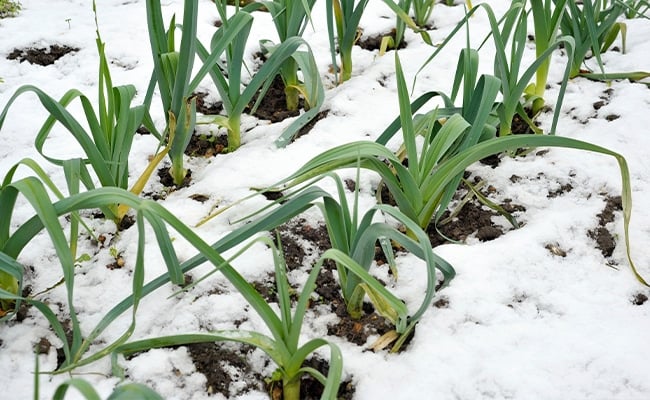
- Root protection. Trapped air pockets in the crystal structure insulate roots, bulbs, and overwintering crops like garlic and winter wheat against radical temperature swings.
- Soil biome shelter. Beneficial bacteria, earthworms, and overwintering pollinator insects survive better under a snow blanket than under bare frozen ground.
- Erosion control. Snow holds topsoil in place against winter winds, especially in open Plains and Prairie fields with no windbreak.
- Compost continues. Microscopic life under snow keeps breaking down organic matter all winter, improving spring soil structure.
- Livestock water. Pastured cattle, sheep, and horses get supplemental water by grazing snow alongside their feed.
- Regional reservoirs. A snowy winter recharges local water supplies for summer irrigation and for waterway transport of harvested crops by barge.
Making the Most of Snow in Your Garden
- Shovel snow onto flowerbeds, raised beds, and around new trees. Move snow from impermeable surfaces (driveway, deck, walkways) onto garden ground so the moisture sinks in instead of evaporating.
- Pile extra snow at the base of fruit trees and saplings. Keep snow a few inches away from the trunk to avoid rodent damage, but bank the surrounding root zone.
- Insulate cut-back perennials. Roses, hydrangeas, and other overwintering perennials benefit from a 6-inch snow blanket over the crown.
- Collect snow in rain barrels. Snow melt becomes free, soft watering water for spring container plants.
- Avoid salting near gardens. Ice melt salt damages soil and root systems. Use sand or kitty litter for traction within 5 feet of garden beds.
- Plow snow into stubble fields. For larger properties, plowing fresh snow into a stubble field maximizes nitrogen and moisture delivery.

Frequently Asked Questions
Is snow really good for the garden?
Yes. Snow acts as a slow-release fertilizer (delivering nitrogen and trace elements), an insulator for roots and bulbs, a moisture reserve for spring, and an erosion guard. Centuries of farm folklore on this point are backed by modern soil science.
Why is snow called the poor man’s fertilizer?
Snow crystals trap small amounts of atmospheric nitrogen and sulfur as they form. When the snow melts, those nutrients release directly into the soil, providing free, gentle fertilization. The phrase has appeared in American farm publications since at least the early 1800s.
Does snow insulate plants from cold?
Yes. The air trapped between snow crystals is an excellent insulator. A 6-inch snow blanket can keep soil 20 degrees warmer than the surrounding air. This protects shallow roots, bulbs, garlic, winter wheat, and other overwintering crops from temperature swings.
Should I shovel snow off my garden?
No. Leave snow on garden beds. If anything, shovel additional snow from impermeable surfaces (driveways, decks) onto the beds so the moisture soaks into the soil rather than evaporating from concrete.
Does a bare winter hurt the garden?
Often, yes. Soil that goes through a winter without snow cover sees deeper freezing, more frost heave damage to roots and bulbs, more erosion, and less spring moisture. Many overwintering crops suffer more in a snowless winter than in a heavy-snow one.
Can I water plants with melted snow?
Yes. Melted snow is soft water, similar to rainwater, and excellent for indoor plants, seedlings, and acid-loving species like blueberries and rhododendrons. Collect clean snow (not from areas treated with salt or chemical de-icers) in buckets and let it melt at room temperature.


Melissa Mayntz
Melissa Mayntz is a writer who specializes in birds and birding, though her work spans a wide range—from folklore to healthy living. Her first book, Migration: Exploring the Remarkable Journeys of Birds was published in 2020. Mayntz also writes for National Wildlife Magazine and The Spruce. Find her at MelissaMayntz.com.
- Melissa Mayntz

- Melissa Mayntz
- Melissa Mayntz
- Melissa Mayntz





Cool! My mom, 91 years old from Japan, said her parents liked it when it snowed. They always said crops would be better. She even sang a song to me which she and her siblings would sing when it snowed. I didn’t really believe her until I read your article. Really cool, and I get to tell her she is right!