That Brilliant “Star” After Sunset Is Actually Venus — And It’s Dazzling Right Now
Look west shortly after sunset and you may see an extraordinarily bright “star.” It’s actually Venus, still dazzling just days after reaching peak brilliance for its 2026 evening appearance.

If you notice an extraordinarily bright “star” glowing low in the western sky after sunset, take another look. It isn’t a star at all. It’s Venus — and right now is one of the best times of the year to see it.
Venus reached peak brilliance for its current evening appearance on September 18, 2026, according to NASA, and it remains a spectacular sight in the days immediately afterward. Shortly after sunset, look toward a clear western horizon and you should be able to pick it out easily.
In fact, Venus is so bright that people often mistake it for an airplane, a distant light — or an unusually brilliant star.
See That Bright “Star” in the West? It’s Venus
Step outside shortly after sunset on a clear September evening and face west.
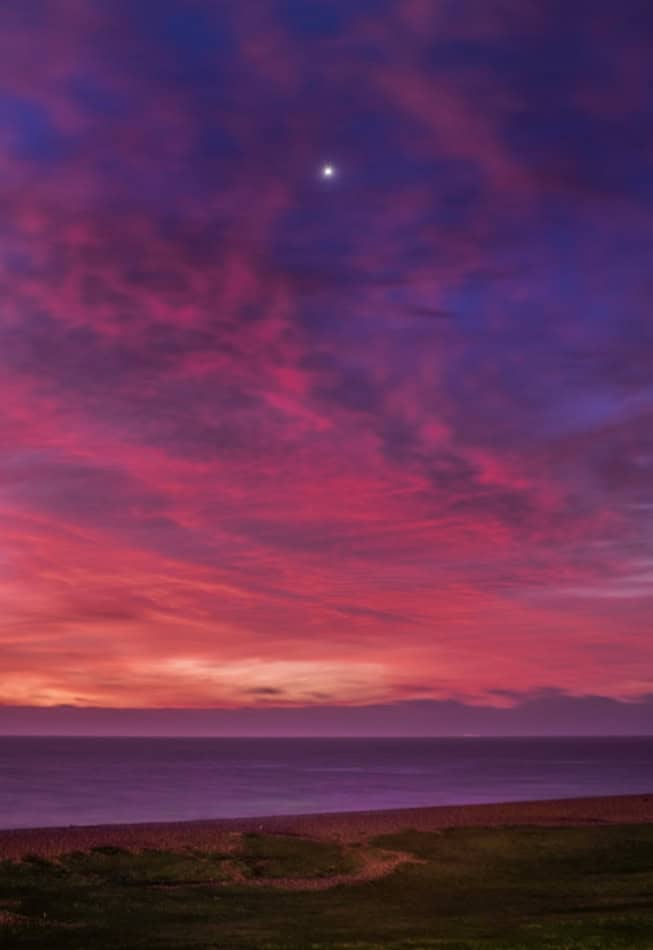
Before most of the stars have even appeared, you may notice a brilliant white point of light shining through the fading twilight.
That’s Venus.
NASA’s September 2026 Skywatching Guide specifically highlights Venus this month, noting that it reached the brightest point of this evening appearance on September 18.
You won’t need a telescope.
You won’t even need binoculars.
Venus should stand out to the naked eye because it outshines every true star in the night sky. NASA describes Venus as the brightest planet seen from Earth and the brightest nighttime object after the Moon.
For more help identifying the planets overhead, bookmark the Farmers’ Almanac Visible Planets Guide.
When Should You Look for Venus?
Your best bet is to head outside shortly after local sunset.
Look:
- Direction: West to southwest
- When: Shortly after sunset
- What to look for: An exceptionally bright, steady white point
- Equipment: None required
- Best location: Somewhere with an unobstructed western horizon
Venus is relatively low in the sky, so trees, hills, houses, and tall buildings can block it. A wide-open field, hilltop, beach, or west-facing overlook can provide a particularly good view.
NASA recommends finding a location with a clear western horizon because Venus will eventually sink below the horizon as evening progresses.
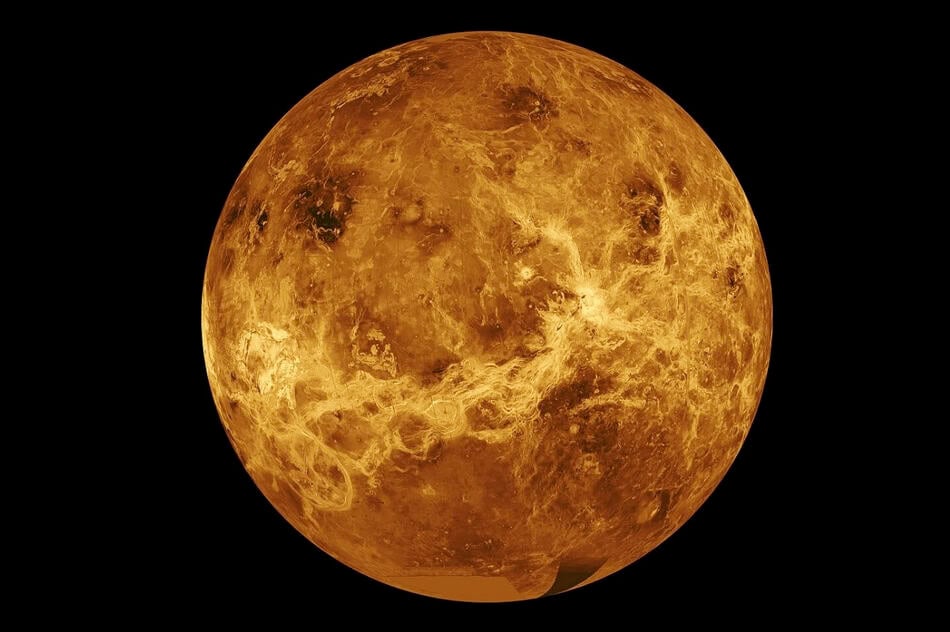
Why Is Venus So Bright?
Venus has several things working in its favor.
First, it is relatively close to Earth. It is also similar to Earth in size.
But one of the biggest reasons it appears so brilliant is its atmosphere.
Venus is permanently covered by thick clouds, which are highly reflective. Those clouds bounce a tremendous amount of sunlight back toward space — including toward observers here on Earth. NASA notes that Venus is the third-brightest object in our sky after the Sun and Moon.
There’s another interesting twist.
Venus doesn’t necessarily appear brightest when it is closest to Earth. Its apparent brightness depends on a combination of distance and phase — much like the phases of the Moon. Near peak brilliance, Venus can appear as a large crescent through a telescope while still reflecting enough sunlight to look extraordinarily bright from Earth.
Why Is Venus Called the “Evening Star”?
For thousands of years, people have watched Venus appear near sunrise or sunset.
Because Venus orbits closer to the Sun than Earth does, from our perspective it never travels very far from the Sun in the sky. That means we generally see it either shortly before sunrise or shortly after sunset.
When Venus appears after sunset, it has traditionally been called the Evening Star.
When it appears before sunrise, it becomes the Morning Star.
But in both cases, you’re looking at the same planet.
Ancient observers did not always realize that. Some early cultures regarded the morning and evening appearances as separate celestial objects before astronomers eventually understood they were both Venus. NASA explains how Venus’s position inside Earth’s orbit produces these alternating morning and evening appearances.
Can You See Venus From a City?
Yes.
That’s one of the best things about watching Venus.
You don’t need pristine dark skies. Because the planet is so bright, it can often be spotted even from cities and suburbs with significant light pollution. NASA notes that Venus can be visible with the naked eye even in areas with high levels of ambient light when skies are clear.
The bigger issue this week is likely to be your horizon, rather than light pollution.
Find someplace where buildings or trees aren’t blocking your western view.
Tonight Is an Especially Good Night to Look Up
The timing couldn’t be better.
September is already packed with skywatching events. Venus’s brilliant evening appearance comes alongside the arrival of the 2026 Autumn Equinox and just days before the Full Harvest Moon on September 26.
Our complete September 2026 guide includes the month’s Moon phases, seasonal changes, astronomical events, and other reasons to keep watching the sky.
And if you’re just getting interested in stargazing, Farmers’ Almanac also has a monthly night-sky guide covering constellations, planets, and the best nights to head outside.
Try This Tonight
About 15 to 30 minutes after sunset, step outside and find the clearest western horizon you can.
Watch the twilight slowly darken.
Before long, one extraordinarily bright point should begin dominating that part of the sky.
That’s not the first star of the evening.
That’s Venus.
And after reaching peak brilliance only days ago, the Evening Star is putting on one of its finest shows of 2026.
Quick Facts: Venus Tonight
What is the bright “star” after sunset?
Most likely Venus if you’re looking low toward the western or southwestern horizon shortly after sunset.
Is Venus really a star?
No. Venus is the second planet from the Sun.
Do I need a telescope?
No. Venus is easily visible to the naked eye.
When was Venus brightest in September 2026?
NASA says Venus reached peak brilliance for this evening appearance on September 18, 2026.
Where should I look?
Toward the west shortly after sunset, ideally from a location with a clear horizon.

- Tim Konrad

- Tim Konrad
- Tim Konrad

- Tim Konrad