
November 2026 Night Sky: A Beaver Supermoon, Shooting Stars, and Two Planets Together
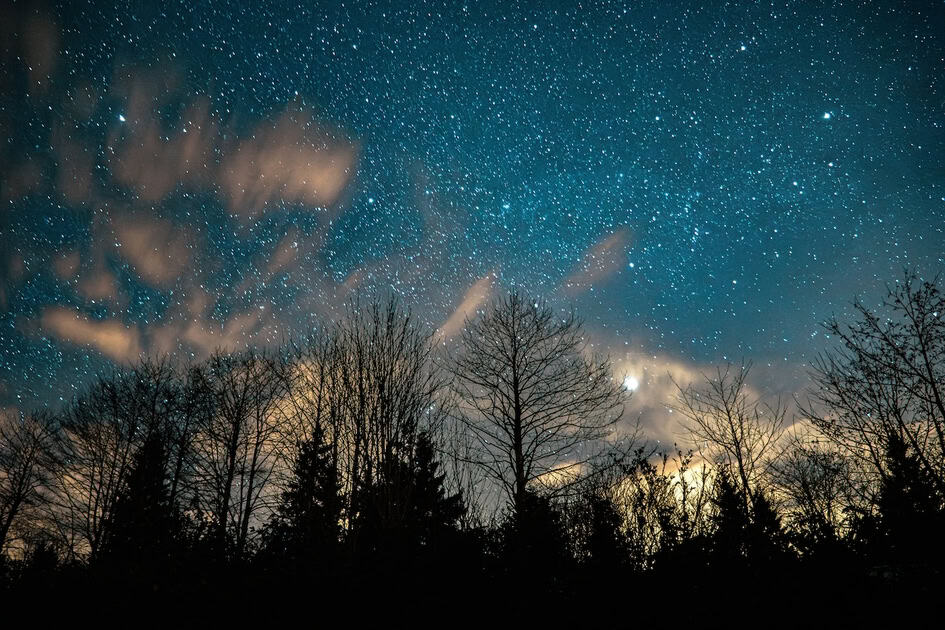
November’s night sky offers a reason to step outside before Thanksgiving—and a reason to set an early alarm. The full Beaver Moon arrives November 24, the Leonid meteor shower returns in midmonth, and reddish Mars draws close to brilliant Jupiter before dawn.
You can enjoy the month’s brightest sights without a telescope. Choose a clear evening for Saturn or the Moon, or bundle up before sunrise for the morning planets. For shooting stars and faint star clusters, save your outing for darker, moonless hours.
At a glance: The Beaver Moon reaches full phase Tuesday, November 24, at 9:53 a.m. EST. Watch Mars and Jupiter around November 15–16, and try for Leonids before dawn November 17 and 18.
This guide is written for observers in the United States and southern Canada. Moon-phase times are Eastern Standard Time unless stated otherwise. Viewing windows use your local time; horizons, latitude, clouds, and moonset affect the view.
November 2026 Night Sky Calendar
| Date or window | What to watch | Best viewing window |
|---|---|---|
| Around November 5 | Southern Taurid meteors | Late evening into the early morning |
| Around November 9 | New Moon and darker skies | After twilight, while the Moon is below the horizon |
| Around November 12 | Northern Taurid meteors | Late evening into the early morning |
| November 15–16 | Mars and Jupiter close together | Before dawn |
| Mornings of November 17–18 | Leonid meteor watching | After moonset, especially the last dark hours before dawn |
| Around November 20 | Mercury’s morning appearance | About 45–60 minutes before sunrise |
| Evenings of November 23–24 | Nearly full and full Beaver Moon | Local moonrise and the following evening hours |
Meteor maxima are forecasts, not appointment times. The Taurids have broad activity periods. Sources: IMO 2026 Meteor Shower Calendar, U.S. Naval Observatory, and The Planetary Society’s November guide.FARMERS’ ALMANAC 1818November 2026 Night SkyFour windows to plan around • United States and southern CanadaAROUND NOVEMBER 9NOVEMBER 15–16MORNINGS OF NOVEMBER 17–18EVENINGS OF NOVEMBER 23–24Darker skiesMars meets JupiterWatch for LeonidsBeaver MoonNew Moon • look after twilightLook before dawnBefore dawn • after moonsetLook east around local moonriseFull Moon: November 24 at 9:53 a.m. EST / 14:53 UTCPlanning chart, not a map of sky positions. Sources: USNO, IMO, The Planetary Society.November’s viewing windows at a glance. This planning chart shows dates and observing windows, not the positions or apparent sizes of celestial objects.
When Is the Full Beaver Moon in November 2026?
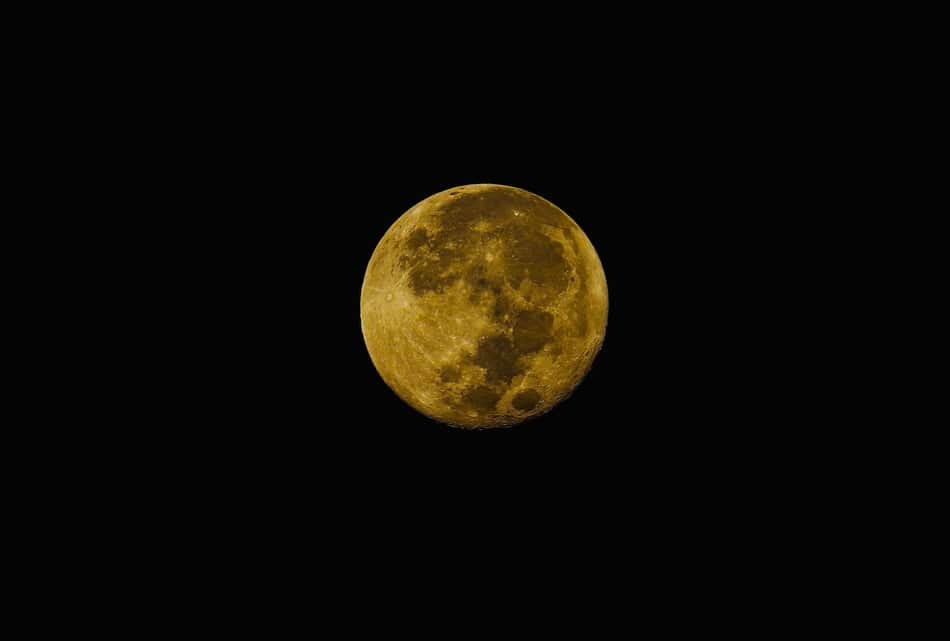
The full Beaver Moon occurs Tuesday, November 24, 2026, at 9:53 a.m. EST, according to the U.S. Naval Observatory. That is 8:53 a.m. CST, 7:53 a.m. MST, 6:53 a.m. PST, or 14:53 UTC.
Full phase happens at the same instant worldwide, but that instant is not necessarily the best time to look. For an easy North American view, try the evenings of November 23 and 24, when the Moon will look full or nearly full. Check the moonrise time for your town and find an open eastern horizon.
The name Beaver Moon connects this part of the year with beavers’ winter preparations and the historical trapping season. Other names include Frost Moon and Freezing Moon. Moon names come from different cultural and regional traditions; there is no single universal naming calendar. Read more in our Beaver Moon guide.
Is November’s Full Moon a Supermoon?
Yes. NASA lists November 24 among the 2026 supermoons. The term describes a full Moon occurring near the closer part of its orbit around Earth. Definitions vary, and the difference from an ordinary full Moon is subtle. The enormous-looking Moon near the horizon also involves the familiar Moon illusion.
The full Moon arrives two days before Thanksgiving, November 26. If you head outside after the holiday meal, the Moon will already be waning and will rise later than it did at full phase.
November 2026 Moon Phases
| Phase | Date | Time EST |
|---|---|---|
| Last quarter | November 1 | 3:28 p.m. |
| New Moon | November 9 | 2:02 a.m. |
| First quarter | November 17 | 6:48 a.m. |
| Full Beaver Moon | November 24 | 9:53 a.m. |
Source: U.S. Naval Observatory. The November 9 new Moon occurs late November 8 in Pacific time: 11:02 p.m. PST.
For faint stars and star clusters, aim for the evenings around the new Moon. For lunar craters, try the days near first quarter: the boundary between lunar daylight and darkness brings surface relief into view.
November Meteor Showers: Taurids and Leonids
Taurids: Patient Watching in Early November
The Southern Taurids reach their forecast maximum around November 5, followed by the Northern Taurids around November 12. Both are modest showers with broad peaks. Watch late in the evening into the early morning, when Taurus is well up. These are outings for patient observers, rather than a steady stream of shooting stars.
Leonids: Try Before Dawn November 17 and 18
Plan to watch during the last dark hours before dawn on November 17 and 18, after the Moon has set. The Moon reaches first quarter November 17, so its light affects the evening more than the predawn sky.
Why two mornings? NASA’s public calendar lists November 16–17 as peak night, while the IMO’s detailed forecast places the regular maximum at 23:45 UTC November 17 and discusses other possible weak activity. Watching on either side gives North American observers a practical weather backup.
Keep expectations modest. The IMO’s idealized peak rate is about 15 per hour, while NASA’s observing guide cautions that actual counts can be only a few an hour. Light pollution, clouds, and the radiant’s height reduce what you see. A major meteor storm is not forecast.
Leonids come from debris shed by Comet 55P/Tempel-Tuttle. They appear to trace back toward Leo, but can streak across other parts of the sky. Leave the telescope inside, recline in a chair, and give your eyes about 30 minutes away from bright lights. Our Leonid meteor shower guide has more background.
Which Planets Are Visible in November 2026?
Saturn anchors the evening sky. Jupiter, Mars, Venus, and—later in the month—Mercury reward early risers.
| Planet | When to look | Where and what to notice |
|---|---|---|
| Saturn | After dark and through the evening | Look generally southeast to south as the evening progresses; a steady, yellowish point. |
| Jupiter | Late night through predawn | Bright and white, near Mars in Leo; well placed before dawn. |
| Mars | Late night through predawn | Look near Jupiter for its warmer, reddish color. |
| Venus | Before sunrise | Brilliant in the eastern morning sky; an open horizon helps. |
| Mercury | Second half of November, before sunrise | Low in the east; try around November 20, near greatest western elongation. |
General visibility based on The Planetary Society’s November guide; exact rise times and directions depend on location. Finish binocular or telescope observing near the eastern horizon before sunrise.
Mars and Jupiter Make a Close Morning Pair
Circle November 15–16 for a look before dawn. Mars and Jupiter appear roughly a degree apart around this encounter—close enough to share the view in ordinary binoculars. Jupiter is the much brighter object; Mars supplies the reddish contrast. The bright star Regulus is nearby.
The pairing is an apparent meeting along our line of sight. The planets remain far apart in space. You can follow their changing arrangement across several clear mornings.
A Challenge for Binoculars: Uranus
Uranus reaches opposition November 25, when it lies opposite the Sun in our sky. It is in Taurus, but the nearby bright Moon makes faint-object viewing difficult around that date. Try an earlier moonless night with a current finder chart. Neptune is also an optical-aid target, rather than an easy naked-eye planet.
Conjunction separation and Uranus details: Astronomy’s November observing guide.
Look for the Pleiades and the Return of Orion
November’s eastern sky starts to look like winter. Find the Pleiades, a compact sprinkle of stars in Taurus, on an evening when the Moon is out of the way. Binoculars open up the cluster beautifully. Our guide to how people used the stars to mark the seasons explores its place in the seasonal calendar.
Later in the evening, look for Orion rising in the east. His three Belt stars make a helpful starting point for learning the cold-season sky. Try the same view at the same time on several nights and notice how the stars climb a little farther into view.
Coming Next: The Geminid Meteor Shower in December
Save the night of December 13 into the morning of December 14, 2026, for the Geminids. This is one of the most dependable annual showers, and 2026 offers favorable lunar conditions: a waxing crescent leaves the later night dark after moonset.
Unlike showers that demand an overnight vigil, Geminids can offer worthwhile activity by about 9–10 p.m. from northern latitudes, with the radiant climbing higher toward the early morning. NASA suggests observers under dark skies may see around 40–50 an hour; actual counts vary. The shower’s parent body is the asteroid 3200 Phaethon.
Bookmark our 2026 Geminid meteor shower guide now, and choose a viewing spot before December’s colder nights arrive.
Make the Most of a Clear November Night
- Pick one target. Moonrise, Saturn after dinner, or a predawn planet watch can make a satisfying short outing.
- Check clouds and local times. A national guide cannot supply one moonrise or sunrise time for every town.
- Dress for standing still. Bring a hat, warm footwear, and a blanket for meteor watching.
- Keep the phone dim. Read your chart first, then let your eyes settle into the dark.
What will you watch first—the Beaver Moon, the morning planets, or November’s shooting stars?

- Tim Konrad

- Tim Konrad
- Tim Konrad
- Tim Konrad