Why Your Car Windows Fog Up and How to Clear Them

You get into the car on a chilly morning, close the door, and watch the windshield turn cloudy. The wipers don’t help because the moisture is inside. On a warm, muggy day, you might have the opposite problem: condensation keeps forming outside the glass while the air conditioner runs.
Both happen when moist air meets cold glass. The trick to clearing your windows is knowing which side is wet. Here’s how to restore your view and help keep the fog from coming back.
Why Car Windows Fog Up

Your windows fog up when moisture in the air settles on cold glass, forming tiny water droplets. It’s the same thing that happens on the outside of a glass of ice water.
On a chilly morning, your car’s windows are cold from sitting overnight. Once you get in, your breath adds moisture to the air. Wet shoes, damp coats, and soggy floor mats add more. As that moist air touches the cold windows, some of the water vapor turns into droplets on the inside.
Fog can form outside, too. On a warm, humid day, the air conditioner may cool the windshield enough for moisture in the outdoor air to collect on it.
The temperature at which that moisture begins to condense is called the dew point. It also explains why grass can be wet on a clear September morning, even when there hasn’t been any rain.
How to Clear Fog Inside Your Car Windows
While parked, try the windshield wipers. If they clear the cloudy patch, the moisture is outside. If they make no difference, the problem is probably on the inside of the glass.
For condensation inside the car, start with the front windshield defroster or defogger. If your vehicle has a MAX defrost setting, use it and let the system make the adjustments.
If your car has manual controls, use these settings:
- Direct airflow toward the windshield. Look for the curved windshield symbol with arrows pointing upward.
- Set the temperature to warm and increase the fan speed. Warm airflow helps heat the glass and clear the moisture.
- Turn on the A/C. Air conditioning removes moisture from the air. You can use it with a warm temperature setting.
- Turn recirculation off. Select outside or fresh air to help replace humid cabin air.
Some vehicles handle several of these steps automatically. Ford’s climate-control instructions, for example, describe defrost settings that bring in outside air and engage air conditioning to reduce moisture. Check your owner’s manual for your vehicle’s controls.
If needed, open a side window slightly to help humid air escape, weather permitting. Use the rear-window defogger for condensation on the rear glass.
Use the A/C Even When It’s Cold Outside
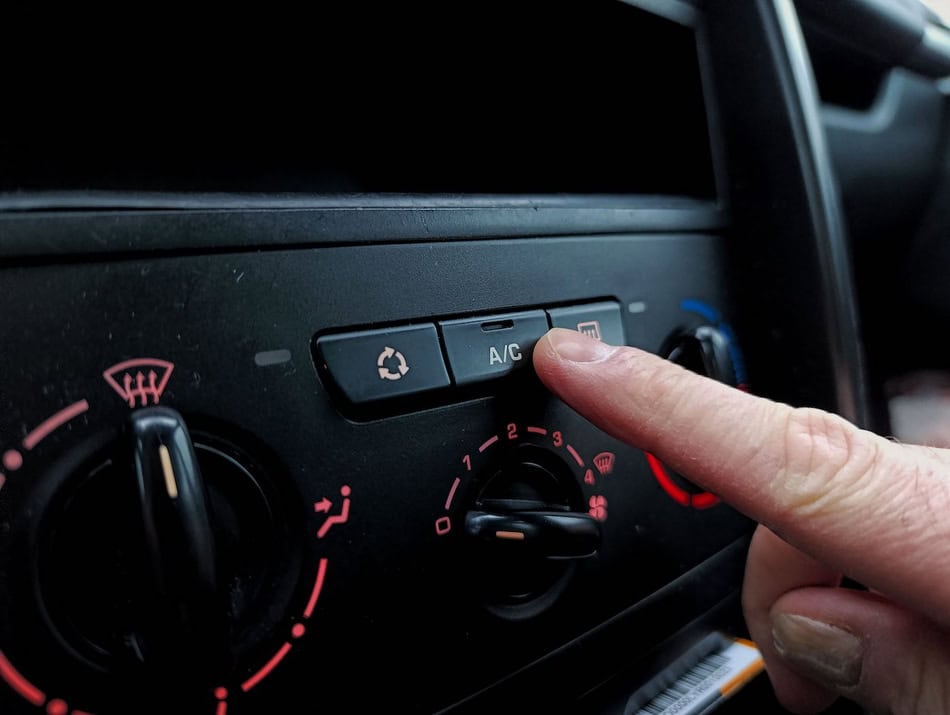
The A/C button doesn’t mean you have to sit in a cold car. With the temperature set to warm, the system can deliver warm, dry air to the windshield.
AAA’s guide to clearing car windows recommends air conditioning along with outside air to help control interior condensation. Once the windows clear, adjust the temperature and fan for comfort while keeping enough airflow to prevent fog from returning.
Clear Fog Outside the Windshield
Use your wipers to remove exterior condensation. If it keeps returning while the A/C runs, raise the cabin temperature setting so the windshield isn’t being chilled as much.
On a warm, humid day, directing very cold air at the windshield can keep the outer glass cold enough for fresh droplets to form. Reducing that cooling helps address the cause, while the wipers clear the water already there. Wipe exterior side windows and mirrors before setting off if they’re wet enough to obstruct your view.
How to Reduce Foggy Windows In the Future

A little care between trips can help:
- Clean the glass inside and out. Use an automotive glass cleaner suitable for any window tint, following its directions, and a clean microfiber cloth.
- Dry wet floor mats and carpets. Damp materials keep adding moisture to the cabin.
- Remove wet belongings after your trip. Don’t leave soaked umbrellas, towels, or clothing in the car overnight.
- Keep a clean microfiber cloth handy. While parked, it can help clear an interior patch. Wiping with your hand transfers oils to the glass and can leave smears.
AAA’s defogging guide highlights damp carpets, wet belongings, and dirty glass as things worth addressing. Cleaning and drying help, but you’ll still need the right ventilation when conditions favor condensation.

- Maggie Konrad

- Maggie Konrad
- Maggie Konrad
- Maggie Konrad