Before You Jump in That Leaf Pile, Remember Tick Season Isn’t Over

The first frost changes how the yard feels. Mosquitoes are mostly gone. The grass has slowed down. You’re outside in a sweatshirt, raking leaves and clearing the edges before winter.
It feels like bug season is over. But when it comes to ticks, that can be a bad assumption.
Adult blacklegged ticks, commonly called deer ticks, are active in fall and can keep searching for a host whenever temperatures rise above freezing. That means an October afternoon spent raking leaves, clearing brush, stacking firewood, or cleaning up along the woods can still put you in tick habitat, even after you’ve scraped frost off the windshield that morning.
Where Ticks Are Most Likely to Be in Your Yard

Not every part of the yard carries the same tick risk. Blacklegged ticks are much more likely to turn up where the ground stays shaded and damp: under fallen leaves, along brushy fence lines, beneath shrubs, and especially where the lawn meets woods. Leaf litter helps hold moisture close to the ground, giving ticks protection from the dry conditions they don’t tolerate well. The CDC specifically points to grassy, brushy, and wooded areas as places where people are more likely to encounter ticks.
That makes where the leaves come from more important than the leaf pile itself. Dry leaves raked from the middle of an open lawn are generally lower risk than damp leaves pulled from under shrubs, along stone walls, or from the edge of the woods. Those shadier, brushier areas are where you’re more likely to brush against ticks while gathering leaves.
So go ahead and rake a pile for the kids or the dog to enjoy. Just be more careful when you’re collecting leaves from wooded borders and other damp, sheltered spots, and do a quick tick check afterward.
And don’t assume a frosty morning has made those areas safe for the season. Adult blacklegged ticks remain active well into fall, and they can resume searching for hosts on milder days when temperatures climb above freezing. Penn State Extension notes that this activity can continue through fall and winter during suitable weather. So instead of using the first frost as your cutoff, use the conditions and the habitat as your guide: if you’re working in damp leaves, brush, or along the woods on a mild fall day, it’s still worth taking tick precautions.
But Aren’t We Supposed to Leave the Leaves?
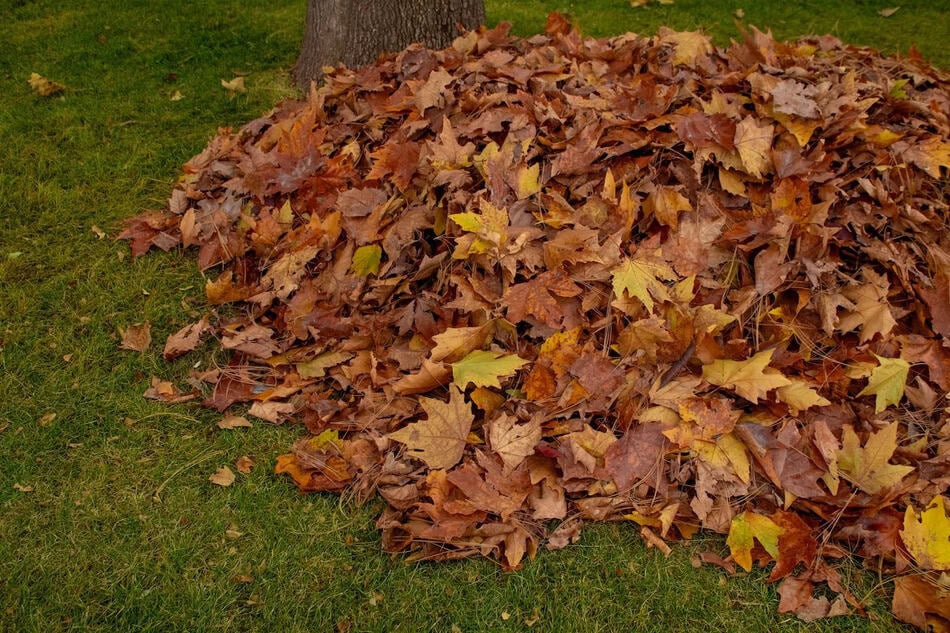
You don’t have to choose between helping wildlife and reducing tick habitat. The goal is to be selective about where leaves stay.
A layer of fallen leaves can provide winter shelter for moths, butterflies, beetles, and other beneficial insects, which is why Farmers’ Almanac recommends leaving some leaves in lower-traffic parts of the yard. But the damp, shaded conditions that make leaf litter useful for wildlife can also make it more inviting to ticks.
That’s why it makes sense to keep the areas you use most relatively clear. Rake leaves away from patios, walkways, play areas, and other places where people and pets spend a lot of time. Along wooded edges, the CDC recommends creating a roughly 3-foot-wide barrier of wood chips or gravel between the lawn and the woods to help separate frequently used areas from better tick habitat.
Then leave some leaves where they’re less likely to put people in regular contact with ticks: beneath shrubs, in garden beds, or in quieter corners of the yard. You still provide winter cover for wildlife without letting damp leaf piles build up right beside the places your family walks, plays, or sits.
Dress Like Tick Season Isn’t Over
You don’t need to turn fall cleanup or a romp in a leaf pile into an expedition.
Long pants, socks, and closed shoes are a good start if you’ll be working or playing in heavy leaves, brush, or tall grass. Light-colored clothing also makes a dark tick easier to spot before it disappears underneath something.
The CDC recommends EPA-registered repellents for exposed skin and 0.5% permethrin for clothing and gear. Permethrin should be used on clothing and equipment according to the product label, not applied directly to skin.
Pay extra attention when you’re working along the shaded edges of the property. That transition between open lawn and woods is often a much better place for ticks than the dry, sunny lawn itself.
And don’t forget the dog. Pets can pick up ticks outside and carry them indoors.
The Five-Minute Check After Yard Work Matters
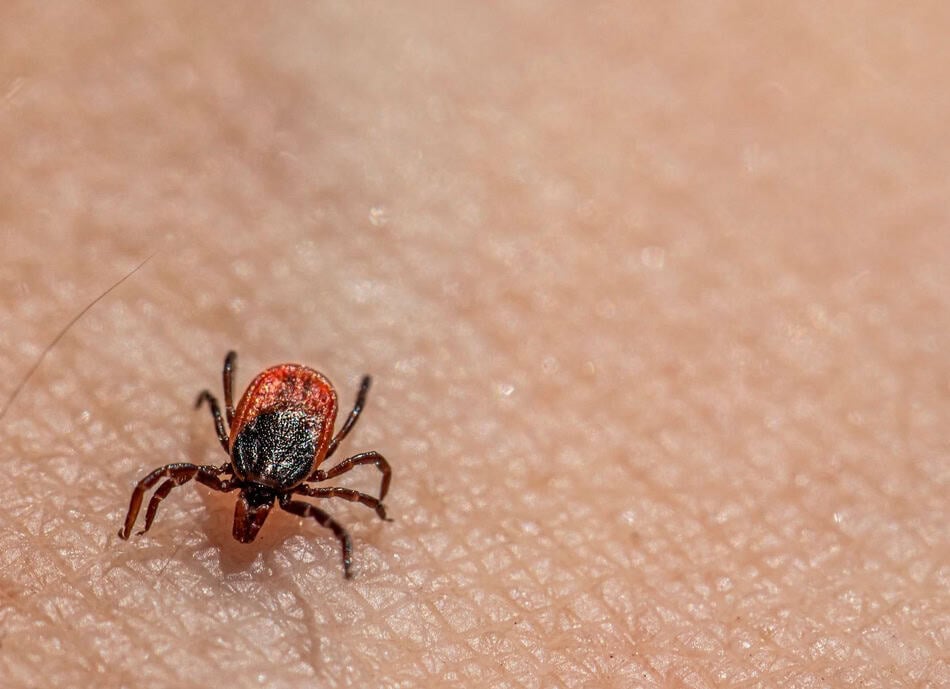
Once your leaf chores are complete, check your clothes, gloves, boots, and gear. Then check yourself.
Ticks are easy to miss when they’re small, so pay attention around the hairline and ears, under the arms, behind the knees, around the waist, between the legs, and anywhere clothing fits closely.
The CDC recommends showering within two hours of coming indoors after potential tick exposure. Besides washing off ticks that haven’t attached, it gives you a good excuse to do a more careful check.
Dry clothing can also go into a dryer on high heat. CDC tick-prevention guidance recommends high heat for dry clothing; damp clothes need more time.
If you find an attached tick, remove it promptly with clean, fine-tipped tweezers. Grasp it as close to the skin as possible and pull upward with steady pressure rather than twisting, burning, or covering it with petroleum jelly. The CDC has step-by-step tick-removal guidance.
Don’t Let Tick Season Spoil the Fun, Just Be Mindful

A pile of leaves is still a pile of leaves. Kids should be able to jump in it, toss handfuls into the air, and come inside with bits of maple stuck to their sweaters. The point isn’t to make fall yard fun feel risky. It’s to be a little more aware of where those leaves came from.
Leaves raked from an open, sunny lawn are generally a different situation from damp leaf litter pulled out of brush, from under shrubs, or along the edge of the woods, where ticks are more likely to be found. If you’re making a leaf pile for play, use leaves from the more open parts of the yard when you can, and avoid scooping up brushy, shaded material from those higher-risk edges.
Afterward, do what you’d do after any time spent outdoors in tick habitat: give kids and pets a quick tick check, especially around the hairline, behind the ears, under arms, and behind knees. Then let fall be fall. A little awareness goes a long way without taking the joy out of one of the season’s simplest pleasures.

- Maggie Konrad

- Maggie Konrad
- Maggie Konrad
- Maggie Konrad