
Why Are Your Potatoes Turning Green? Here’s When to Throw Them Away

You reach into the pantry for a few potatoes and notice something strange. One has developed a greenish tint, while another has a bright green patch just beneath the skin. They were perfectly normal when you bought them, so what happened?
Potatoes can turn green when they’re exposed to light, even while sitting in your kitchen. And although the color itself is harmless, it can be a warning sign that the potato contains higher levels of naturally occurring toxins.
The good news is that a tiny green spot doesn’t always mean you have to throw the entire potato away. But there are times when keeping it isn’t worth the risk.
Why Do Potatoes Turn Green?
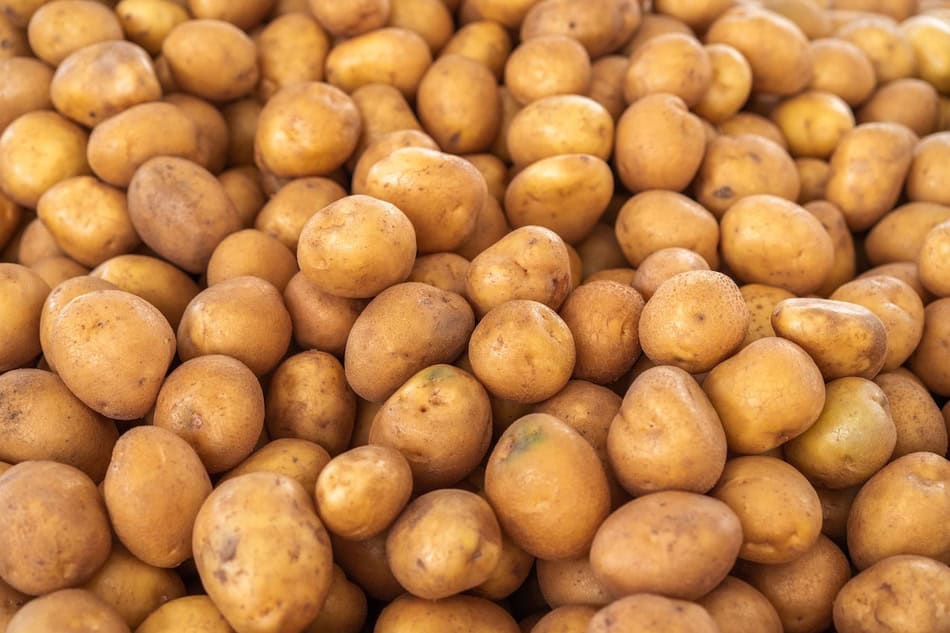
Potatoes are underground stems, and they’re supposed to grow in darkness. When exposed to sunlight or artificial light, they begin producing chlorophyll, the same green pigment found in leaves.
That’s what gives the skin its green color.
According to Iowa State University Extension, chlorophyll itself isn’t harmful. The concern is that potatoes exposed to light can also develop increased concentrations of compounds called glycoalkaloids.
The two main glycoalkaloids found in potatoes are solanine and chaconine. These substances occur naturally in potato plants and help defend them against pests and other threats.
In ordinary potatoes, glycoalkaloid levels are generally low. But concentrations can increase in green, damaged, or sprouting potatoes, particularly around the skin and eyes.
Eating too much can cause nausea, stomach pain, vomiting, and diarrhea. Serious poisoning is uncommon, but it can occur.
Here’s the tricky part: Green color isn’t a precise measurement of toxin levels. You can’t tell exactly how much solanine or chaconine a potato contains just by looking at it.
That’s why visible greening deserves attention, even though the green pigment isn’t the dangerous substance.
Can You Just Cut Away the Green Parts?
Sometimes, yes.
If a potato is firm and otherwise in good condition, with only a small green patch near the surface, you can generously cut away the affected skin and flesh before cooking it.
Iowa State University Extension advises that potatoes with small green areas may be eaten after those portions are completely removed.
But the situation changes when the green color covers a substantial portion of the potato or extends beneath the skin.
In those cases, throw the potato away.
The German Federal Institute for Risk Assessment recommends avoiding green, shriveled, and strongly sprouting potatoes. It also advises removing green portions and potato eyes generously.
If you’re unsure how much of the potato is affected, discarding it is the safer choice.
And don’t try tasting a questionable raw potato to decide whether it’s safe. A bitter taste or burning sensation can indicate elevated glycoalkaloids, but tasting isn’t a reliable safety test.
Does Cooking Make Green Potatoes Safe?
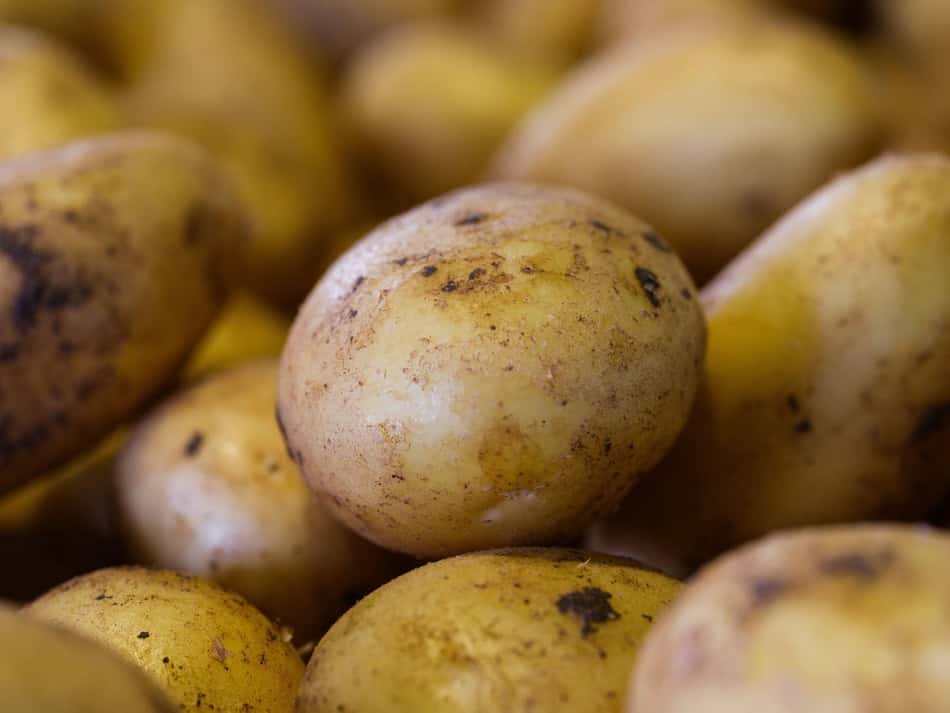
Unfortunately, cooking isn’t a dependable solution.
You might assume boiling, baking, or frying would destroy anything harmful in a potato. But glycoalkaloids are relatively heat-stable.
Health Canada explains that ordinary cooking methods don’t significantly reduce their levels.
Peeling and removing affected portions can reduce exposure because these compounds are often concentrated in and near the skin.
However, cooking a potato that’s extensively green doesn’t make it safe simply because it reaches a high temperature.
If a potato has turned substantially green, developed extensive sprouts, or become badly shriveled, it’s better to replace it than try to salvage it.
Why Are Your Potatoes Sprouting, Too?
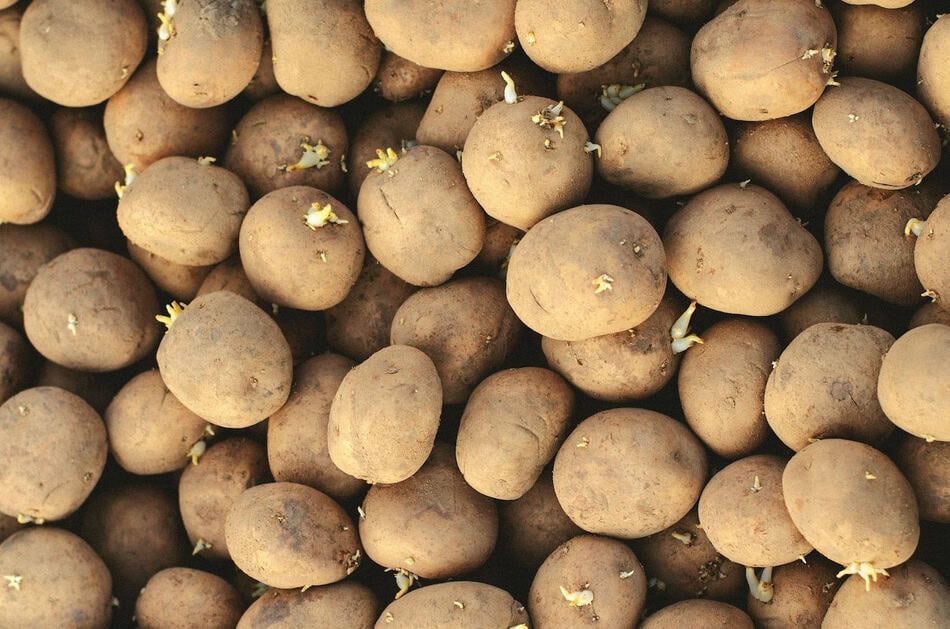
Green skin and sprouts are different changes, but both deserve attention.
Potatoes naturally develop sprouts from their eyes under suitable conditions. The sprouts themselves contain high concentrations of glycoalkaloids and shouldn’t be eaten.
A firm potato with only a few tiny sprouts may still be usable after the sprouts, surrounding eyes, and any green areas are generously removed.
But if the potato has long sprouts, extensive greening, or a soft, shriveled appearance, discard it.
And remember that a potato doesn’t have to look green to contain elevated glycoalkaloids. That’s another reason proper storage matters.
How to Keep Potatoes From Turning Green
The simplest prevention is to keep light away from your potatoes.
Store them in a cool, dark, dry, well-ventilated place, such as a suitable pantry or cellar. Avoid leaving them on a sunny countertop or in a bright kitchen window.
A ventilated storage container or paper bag can help block light without trapping excessive moisture. Don’t seal potatoes in an airtight plastic bag, which can encourage moisture buildup and spoilage.
If you grow your own potatoes, keep developing tubers covered with soil as they grow. Potatoes exposed to sunlight near the soil surface can turn green before they’re even harvested.
It’s also worth checking your stored potatoes occasionally. Remove any that are rotting or deteriorating, and use potatoes while they’re still firm and in good condition.
One last thing: Moving a green potato into darkness won’t necessarily reverse the safety concern. Even if its color fades, you shouldn’t assume the glycoalkaloid levels have fallen.
So the next time you discover a green patch while preparing dinner, take a closer look before reaching for the peeler.
A small surface spot may be easy to remove. But when a potato has turned extensively green, throwing it away is the smarter choice.
There are better ways to save a few cents on dinner.

- Maggie Konrad

- Maggie Konrad

- Maggie Konrad
- Maggie Konrad