
Why Does a Lake Look Like It’s Smoking on a Cold Morning?

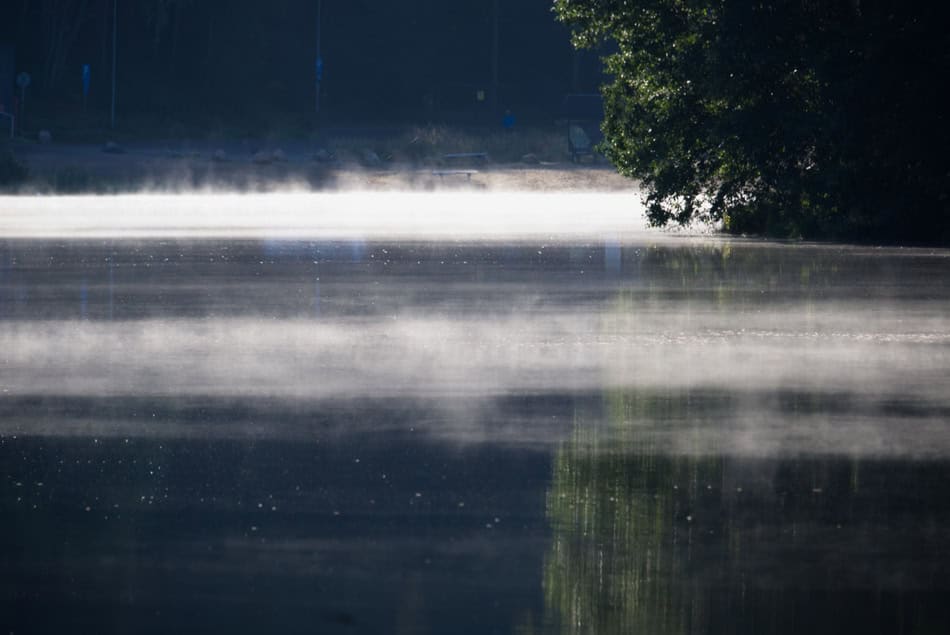
Picture an early November morning beside a quiet lake. The air is cold enough to see your breath, the trees are nearly bare, and wisps of what looks like smoke are curling upward from the water. The lake seems to be giving off steam, almost as though someone has turned on an enormous kettle beneath the surface.
It’s a beautiful sight, but what’s actually happening? Surely the lake isn’t hot enough to boil.
What you’re seeing may be a weather phenomenon called steam fog, sometimes known as sea smoke. It happens when cold air moves across water that’s still relatively warm, creating delicate clouds of tiny water droplets just above the surface.
And late autumn can provide some of the best conditions to see it.
Why Does Steam Rise From a Lake?
The explanation begins with the difference between the temperature of the air and the water.
Lakes don’t cool down as quickly as the air around them. Water stores a considerable amount of heat, so after a stretch of mild weather, a lake may remain relatively warm even when a cold air mass arrives.
When that cold air moves across the water, moisture evaporates from the lake into the air immediately above it. The warmer, moisture-rich air near the surface then mixes with the colder air overhead.
As the mixture cools and becomes saturated, some of its water vapor condenses into countless tiny liquid droplets. Those droplets are what you see drifting above the lake.
The National Weather Service explains that steam fog forms when cold air passes over warmer water, producing the distinctive appearance of smoke rising from the surface.
The lake isn’t boiling, and the white wisps aren’t actually smoke. They’re made of tiny droplets of water suspended in the air.
It’s similar to the visible cloud that forms when you breathe into cold air. Your warm, moisture-rich breath mixes with the surrounding air, and some of that moisture condenses into tiny droplets.
On a lake, the same basic process happens on a much larger scale.
Why Is Steam Fog Common in Fall and Early Winter?
Think about how quickly the weather can change in November. One afternoon might be mild enough for a walk without a jacket, while the following morning brings frost to the lawn and ice to the windshield.
The lake, however, doesn’t respond to those temperature changes nearly as quickly.
That creates an opportunity for the water to remain considerably warmer than the air above it. When a sufficiently cold air mass moves across the surface, the temperature difference can produce steam fog.
You’ll often notice the effect on chilly mornings, when temperatures have dropped overnight and the water hasn’t yet lost much of its stored warmth.
A light breeze can help by moving cold air over the warmer surface and allowing the moisture-rich air to mix with it. The resulting fog may curl and drift in ever-changing patterns, sometimes rising in thin, ghostly streamers.
As conditions change, the wisps may gradually fade, thicken, or move away from where they first formed.
The spectacle isn’t limited to lakes. Steam fog can appear over rivers, ponds, reservoirs, and even the ocean when the right combination of temperatures and moisture occurs.
Is Steam Fog the Same as Ordinary Lake Fog?
Not always, and here’s where things get interesting.
We tend to call almost any low cloud near the ground fog, but meteorologists distinguish several types based on how they form.
Steam fog develops when cold air passes over warmer water, allowing added moisture to condense. It often appears as wisps rising from the surface, which explains its unusual name.
Other types of lake fog can form under nearly opposite conditions. For example, when warm, moist air flows over colder water, the air may cool enough for fog to develop. This is commonly called advection fog.
According to the National Weather Service’s explanation of fog over water, this type of fog can sometimes spread inland and affect visibility well beyond the shoreline.
There’s also radiation fog, which commonly develops overnight when the ground cools and the nearby air reaches saturation. In valleys and low-lying places, it can create broad blankets of fog that extend over nearby water.
So if you see a lake covered in mist, you can’t automatically assume it’s steam fog. The temperature conditions and the way the fog is forming matter.
Does a Smoking Lake Mean Snow Is Coming?
Not necessarily. Steam fog tells you something about the air and water temperatures, but it isn’t a reliable sign that snow is on the way.
It can accompany a strong push of cold air, particularly when that air moves across water that hasn’t yet cooled to match it. But fog forming over a lake doesn’t mean a snowstorm is developing.
Sometimes the result is nothing more than a beautiful, fleeting display on an otherwise clear morning.
The phenomenon also shouldn’t be confused with lake-effect snow. Although both can involve cold air moving over relatively warmer water, lake-effect snow requires additional atmospheric conditions that allow clouds and precipitation to develop.
A lake can produce wisps of steam fog without producing a single snowflake.
Where and When Can You See Steam Fog?
Your best opportunity is often during a chilly morning after colder air has arrived over a lake or another body of water that remains relatively warm.
Lakes in northern states and other regions that experience sharp autumn temperature changes can provide especially good viewing opportunities, although the phenomenon isn’t limited to one part of the country.
Look for wisps that seem to originate near the water and drift upward. Sometimes they resemble delicate ribbons of smoke. Other times, the entire lake appears to be breathing into the cold air.
If you enjoy photography, early morning light can make the scene especially striking. The low Sun may illuminate the mist from behind, giving it an almost glowing appearance.
Just be mindful of conditions near the water. Fog can obscure shorelines, boats, and other hazards, while cold water presents its own dangers. A safe viewpoint on shore is the best place to enjoy the display.
And don’t be disappointed if you head out one morning and find nothing but clear water. Steam fog requires the right conditions, and the most memorable displays can be brief.
That’s part of what makes them special.
The next time you’re passing a lake on a chilly morning and notice ghostly wisps curling above the surface, take a moment to appreciate the view. You’re watching warm water and cold air meet in a way that turns an ordinary body of water into one of autumn’s loveliest natural spectacles.

- Maggie Konrad

- Maggie Konrad
- Maggie Konrad
- Maggie Konrad