
Found a Leaf That Looks Like a Skeleton? Here’s What Happened

While walking through the yard on a crisp autumn afternoon, you might notice a fallen leaf that looks a little different from the others. Instead of the usual broad, colorful surface, there’s almost nothing left but a delicate web of veins. Hold it up to the light, and it resembles a tiny piece of lace.
It’s an oddly beautiful discovery, especially around Halloween, when nature seems to have supplied its own miniature skeletons.
These fragile remains are commonly called skeletonized leaves, or simply leaf skeletons. Sometimes they’re the work of hungry insects. Other times, they’re the result of a leaf slowly decomposing on the ground.
Either way, they reveal something that’s usually hidden in plain sight: the intricate framework that supports every leaf.
What Is a Skeletonized Leaf?
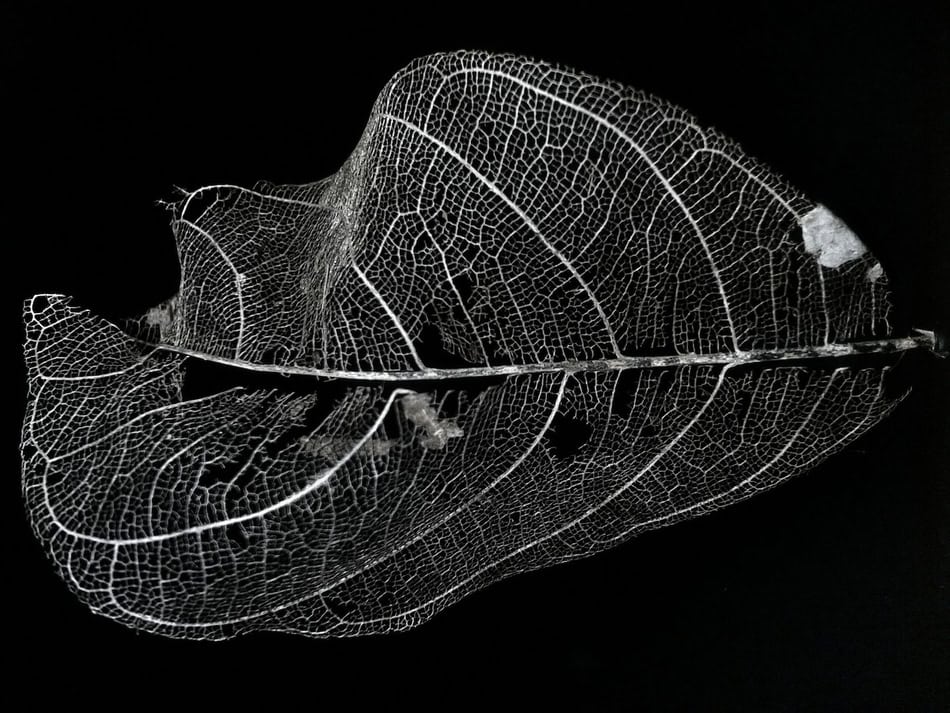
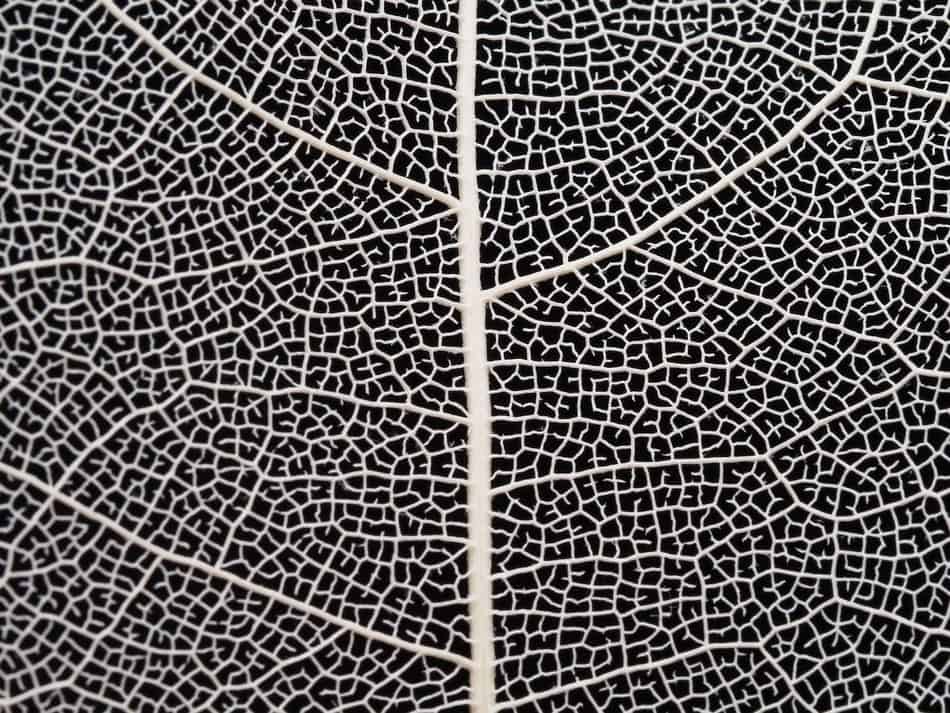
Look closely at an ordinary leaf, and you’ll notice a network of lines running through it. The largest vein usually extends from the stem toward the tip, while smaller veins branch outward to form an elaborate pattern.
Those veins do more than give the leaf its shape. They contain tissues that transport water, minerals, and sugars throughout the plant, helping the leaf carry out its job of producing food through photosynthesis.
The softer green material between the veins is called the leaf blade, or lamina. It’s where much of the leaf’s photosynthetic activity takes place.
When that softer material disappears but the tougher veins remain, you’re left with the leaf’s skeleton.
Sometimes the result is a coarse framework of large veins. Other times, an astonishingly fine network survives, looking almost like something woven by hand.
But what removes the rest of the leaf?
Sometimes Hungry Insects Are Responsible
If you’ve ever discovered leaves on a rosebush or tree that look as though someone has carefully eaten around the veins, insects may be the culprits.
Japanese beetles are among the best-known leaf skeletonizers. These metallic green-and-copper beetles feed on the softer tissues between leaf veins, often leaving behind an unmistakable lace-like pattern.
According to University of Georgia Cooperative Extension, Japanese beetles feed on hundreds of plant species, including roses, grapevines, birches, and maples. When large numbers gather, they can cause substantial damage to foliage.
But Japanese beetles aren’t the only insects capable of creating leaf skeletons. Certain sawfly larvae and caterpillars also feed on leaf tissue in ways that leave the veins behind.
Sometimes you’ll find a leaf that’s only partly skeletonized, with little windows or translucent patches surrounded by green tissue. In other cases, most of the soft material has disappeared.
An insect feeding on a living leaf isn’t necessarily trying to create a beautiful pattern. It’s simply eating the parts of the leaf it can consume most easily.
The delicate skeleton is what’s left after dinner.
Other Leaf Skeletons Are Made by Decay
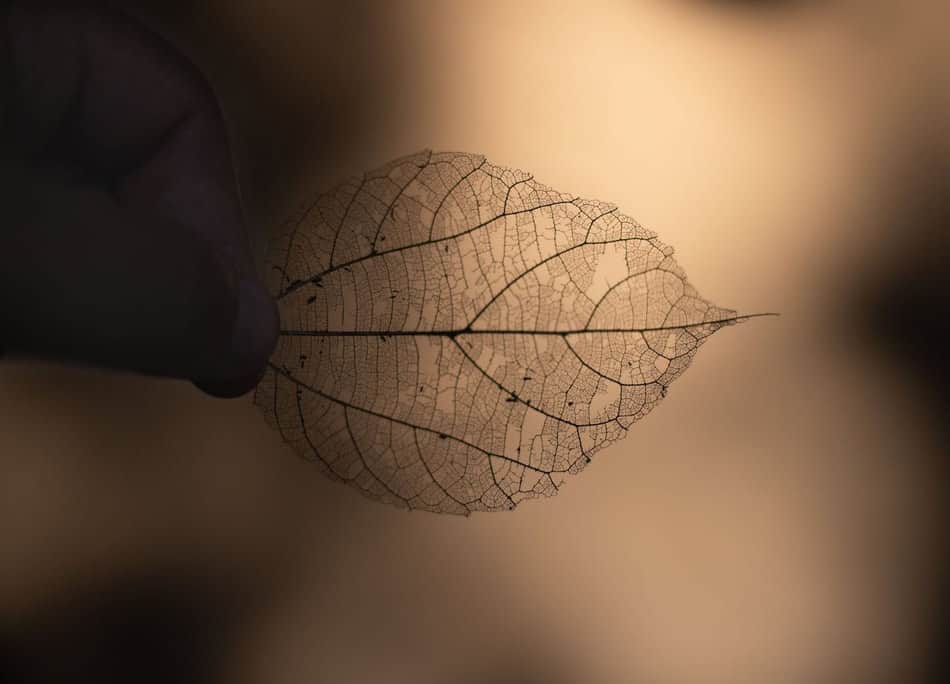
Not every skeletal leaf has been eaten by a beetle or caterpillar.
When leaves fall to the ground, they begin a gradual process of decomposition. Fungi, bacteria, and small organisms help break down the plant material, recycling nutrients back into the soil.
But different parts of a leaf don’t necessarily disappear at the same rate.
The veins contain structural materials that help make them stronger and more resistant to breakdown than much of the softer surrounding tissue. One of those materials is lignin, a compound also found in wood.
As Stanley Park Ecology explains, lignin-rich leaf veins can remain intact longer because they are more resistant to decomposition.
That means the softer parts may gradually vanish while an intricate network of veins survives for a while longer.
It’s a wonderful little reminder that decomposition doesn’t happen all at once. A leaf may spend months slowly changing on the forest floor, with its final delicate framework revealing a structure that was present all along.
Given enough time, even those remaining veins will break down.
Why Are Leaf Skeletons Especially Noticeable in Fall?
Autumn is the season when leaves become impossible to ignore. They’re scattered across lawns, sidewalks, garden beds, and woodland trails, often gathering in damp patches beneath trees.
As you rake, walk, or turn over fallen leaves, you may uncover skeletons that formed through earlier insect feeding or decomposition.
Some leaves were damaged while still attached to their plants during summer. As the season changes, the damaged tissue dries, browns, and becomes more noticeable.
Others may have been lying on the ground long enough for decay to expose their veins.
Fall’s damp conditions can support decomposition where temperatures remain suitable, although the process continues at different rates depending on moisture, temperature, and the kind of leaf involved.
So the skeletons you find in October aren’t necessarily being created at that moment. Some are remnants of activity that began weeks or months earlier.
And despite their eerie appearance, they’re perfectly ordinary parts of the natural world.
Are Skeletonized Leaves Bad for Your Trees or Garden?
That depends on how the skeletons formed and how widespread the damage is.
A few lacy leaves on an otherwise healthy tree are usually nothing to worry about. Trees routinely lose leaves to insects, weather, and other natural causes.
If you’re finding delicate leaf skeletons among the fallen leaves on the ground, they may simply be part of the normal decomposition process.
But extensive skeletonization on leaves that are still growing can be a different matter.
When insects remove large amounts of leaf tissue, they reduce the area available for photosynthesis. Repeated or severe damage can weaken plants, especially young trees or those already struggling with drought or other stress.
The University of Minnesota Extension recommends monitoring susceptible plants for Japanese beetles and taking action when feeding becomes significant.
If you notice active damage, inspect the leaves, including their undersides, for insects or larvae. Identifying the cause is important because different pests require different responses.
For small numbers of Japanese beetles, hand-removing them and dropping them into soapy water can help. Pesticides aren’t automatically necessary for every damaged leaf, and unnecessary spraying can harm beneficial insects.
By late fall, however, many insect pests have finished their active feeding season. Treating a tree because of old damage generally won’t repair the leaves that have already been eaten.
The better approach is to observe the plant’s overall condition and look for fresh damage when the next growing season begins.
Can You Keep a Leaf Skeleton You Find?
Absolutely, although you’ll want to handle it gently.
A well-preserved leaf skeleton can make a lovely natural keepsake, and there’s something fascinating about studying its tiny branching veins.
If you find one on the ground, lift it carefully. Once the softer material has disappeared, the remaining structure can be extremely fragile.
Let it dry naturally on a piece of paper, away from strong drafts and curious pets. You can also place it between sheets of paper to protect it while it dries, taking care not to crush the finer veins.
Leaf skeletons are sometimes used in botanical displays, pressed-leaf collections, and nature-inspired art.
Just be mindful of where you’re collecting. Some parks and protected natural areas restrict the removal of plants and other natural materials, even when they’re already on the ground.
And if you find a particularly beautiful specimen, a photograph may be the easiest way to preserve it without breaking it.
A Tiny Skeleton Hidden in Every Leaf
It’s easy to admire autumn leaves for their brilliant reds, oranges, and yellows. But their beauty doesn’t necessarily end when the color fades.
Sometimes, as the softer tissues disappear, a different kind of beauty emerges.
Those delicate veins once carried water and nutrients through the leaf, supporting its growth throughout the warmer months. Long after the green tissue has vanished, the framework may remain, at least for a little while.
So the next time you spot a leaf that looks like a miniature skeleton, take a closer look.
You might be seeing the leftovers of an insect’s summer meal, the slow handiwork of decomposition, or simply one of nature’s most intricate designs finally revealed.

- Maggie Konrad

- Maggie Konrad
- Maggie Konrad
- Maggie Konrad