
Grocery Store Pears Are Too Hard. Here’s How to Ripen Them.

Stop squeezing pears in the grocery store. It won’t necessarily tell you whether they’re ready to eat, and you could end up bruising them. There’s a much better way to check for ripeness, and it involves a spot most people overlook.
Unlike many other fruits, pears are deliberately picked while they’re still firm and allowed to ripen afterward. That’s why a Bartlett, Bosc, or Anjou pear can look beautiful in the produce aisle but still need several days on your kitchen counter.
The key is knowing when to stop waiting. Some pears change color as they ripen, while others barely change at all. Here’s how to get them sweet and juicy without letting them turn to mush.
Quick Reference
- Where to ripen: On the kitchen counter at room temperature.
- How long: Usually several days, sometimes a week or longer depending on the variety.
- Ripen faster: Place pears in a paper bag with a ripe apple or banana.
- Check for ripeness: Gently press near the stem. A little give means the pear is ready.
- Once ripe: Refrigerate to slow further ripening, generally for another 3–5 days.
Why Are Pears Picked Before They’re Ripe?
Most of us associate ripe fruit with something ready to eat straight from the tree. Pears are a little different.
European varieties such as Bartlett, Anjou, Bosc, and Comice are generally harvested while still firm. If they’re left on the tree until they become soft, they can develop unpleasant textures or flavors.
According to Utah State University Extension, European pears are best harvested when mature but not fully softened, then allowed to ripen after picking.
There’s another wrinkle. Some late-season varieties, including Bosc and Anjou, need a period of cold storage before they’ll ripen properly. Commercial growers and distributors generally handle this process before the pears reach supermarket shelves.
That means your job at home is usually much simpler: Leave the pears on the counter and give them time.
If you’re harvesting pears from your own tree, however, the cold-storage requirements can be important. Our guide to harvesting common fruits explains how to recognize pears that are mature enough to pick.
The Easiest Way to Ripen Pears at Home
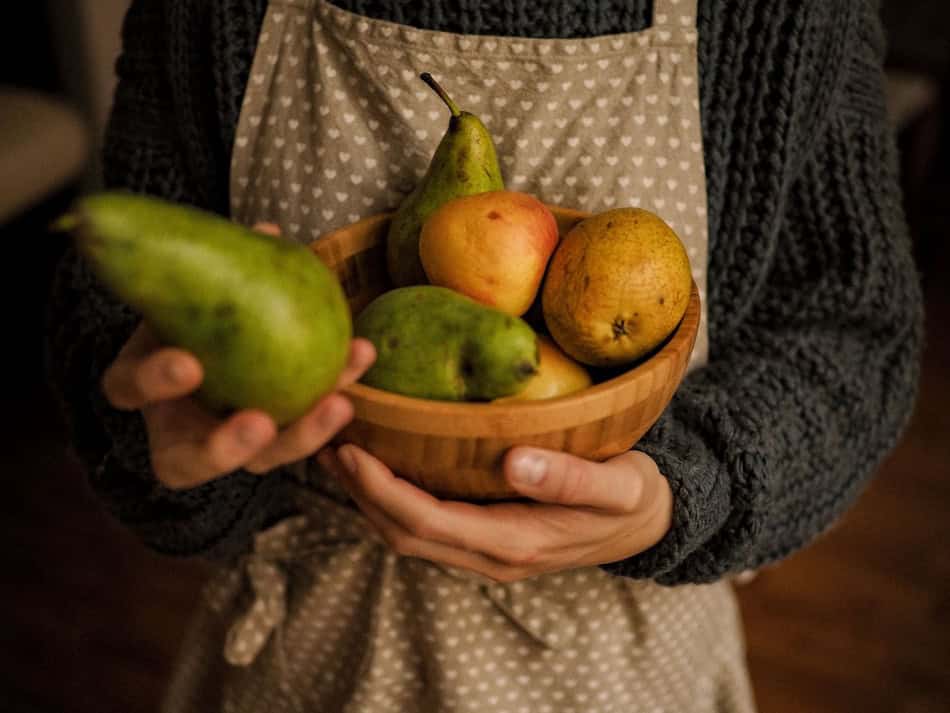
You don’t need a special gadget or a sunny windowsill. A bowl on the kitchen counter will usually do the job.
Keep your pears at room temperature, ideally somewhere around 65–75°F. Check them daily, especially once they begin to soften.
Want to speed things up? Place the pears in a paper bag, loosely fold the top closed, and add a ripe apple or banana.
Apples, bananas, and pears produce ethylene, a natural plant hormone that promotes ripening. The bag helps concentrate that gas around the fruit.
The USA Pears growers’ association recommends this method for ripening pears more quickly.
Just don’t forget about the bag. Check the fruit every day and remove pears as soon as they’re ripe. Otherwise, your clever shortcut can leave you with a bag of overly soft fruit.
How to Tell When a Pear Is Ripe
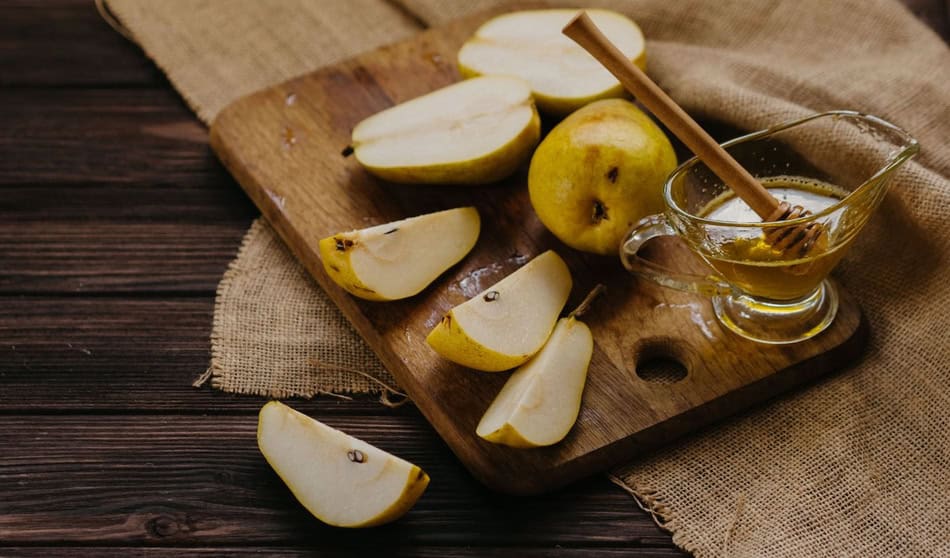
Forget squeezing the widest part of the pear. There’s a better place to check.
Gently press your thumb against the narrow area just below the stem, often called the neck. If it yields slightly to pressure, the pear is generally ripe and ready to enjoy.
Why not squeeze the middle? Pears ripen from the inside outward, and by the time the middle feels noticeably soft, the fruit may already be overripe. Pressing too firmly can also bruise the delicate flesh.
Color can help with certain varieties, but it isn’t a reliable test for every pear.
Pear Ripeness Guide: Which Varieties Change Color?
| Pear variety | How to tell it’s ripe | Best uses |
|---|---|---|
| Bartlett | Green skin gradually turns yellow; neck yields slightly | Fresh eating, smoothies |
| Anjou | Little noticeable color change; check for softness near the stem | Snacking, salads, baking |
| Bosc | Brown skin changes very little; neck gives slightly, though it may stay relatively firm | Baking, poaching, fresh eating |
| Comice | Color isn’t a reliable guide; check the neck for gentle softness | Fresh eating, cheese boards |
The USA Pears variety guide confirms that Bartlett pears noticeably change color as they ripen, while Anjou, Bosc, and Comice generally do not.
This is especially useful if you’ve been waiting for a green Anjou pear to turn yellow. You could wait until it’s overripe without ever seeing that dramatic color change.
And don’t mistake the cinnamon-brown skin of a Bosc pear for spoilage. That natural brown covering, called russeting, is part of the variety’s normal appearance.
Should You Refrigerate Pears?
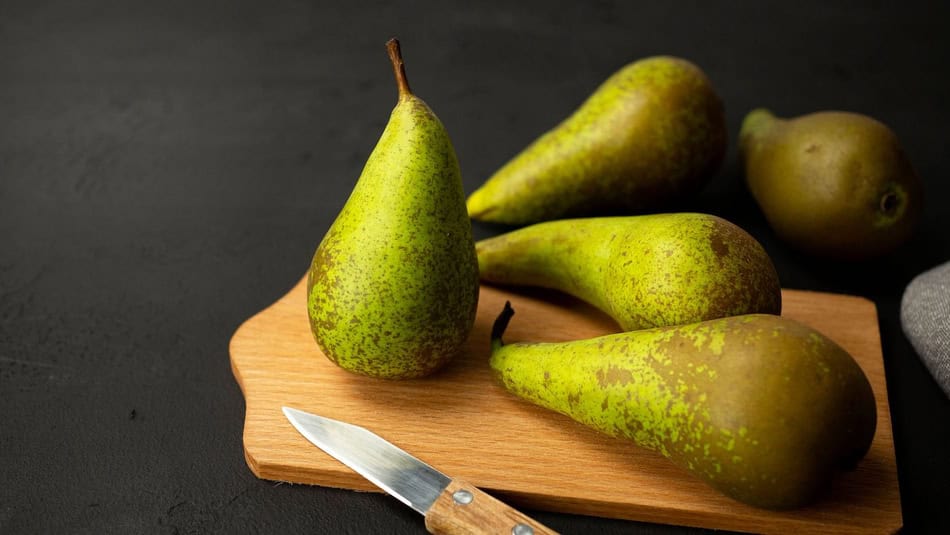
Yes, but timing matters.
If you want a firm grocery store pear to become soft and juicy, let it ripen at room temperature first. Refrigerating it too early can delay that process.
Once the pear is ripe, move it to the refrigerator to slow further softening. According to USA Pears, ripe pears will generally keep for another three to five days in the fridge.
If a pear has become too soft for slicing, you may still be able to use it. Overripe but otherwise sound pears work well in smoothies, purées, sauces, and baked dishes.
Discard fruit showing mold, rot, or other signs of spoilage.
One final distinction is worth remembering: Asian pears are different. These round, crisp pears generally ripen on the tree and are meant to be eaten crunchy, more like apples. Don’t wait for an Asian pear to soften the way a Bartlett or Comice would.
A Little Patience Makes a Better Pear
It’s easy to assume that a hard pear needs replacing with a softer one from the produce aisle. But that firmness is often exactly what you should expect when buying pears.
Give it some time on the counter, check near the stem, and refrigerate it when it’s ready.
You may find that the pear you nearly gave up on turns into one of the sweetest, juiciest fruits of the season.

- Maggie Konrad

- Maggie Konrad
- Maggie Konrad
- Maggie Konrad