
Squirrels Sometimes Pretend to Bury Nuts. Scientists Found Out Why.

If you’ve spent any time watching squirrels in the fall, you’ve probably seen one racing across the lawn with an acorn in its mouth. It stops, digs a little hole, carefully covers it with dirt and leaves, then hurries away.
Nothing unusual there. Squirrels are famous for burying nuts to eat later.
But here’s something you might not know: Sometimes a squirrel goes through all that trouble without burying anything at all.
It digs the hole, acts as though it’s hiding a valuable snack, covers the spot, and leaves. Meanwhile, the nut is still safely tucked in its mouth.
Why put on such an elaborate performance? Researchers have discovered that squirrels may be trying to fool the neighbors.
Why Do Squirrels Pretend to Bury Nuts?
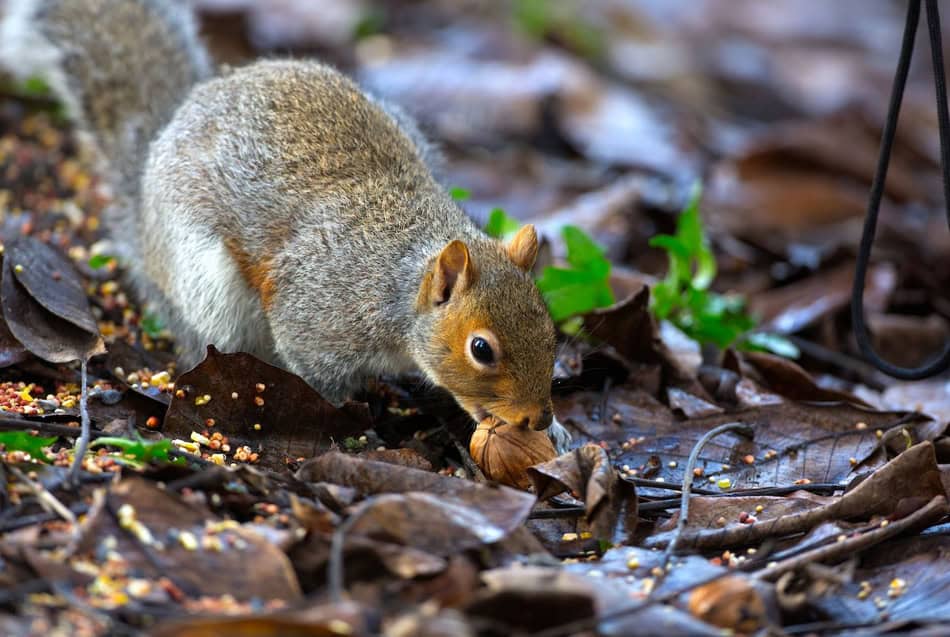
The behavior is called deceptive caching, and it’s a clever way for some squirrels to protect their winter food supplies from thieves.
Eastern gray squirrels are known as scatter-hoarders. Rather than storing all their food in one place, they bury individual nuts and seeds in many different locations. This spreads the risk. If another animal discovers one hiding place, the squirrel hasn’t lost its entire supply.
But there’s a problem with storing food outdoors: Other squirrels are watching.
A squirrel that sees its neighbor bury an acorn may return later and steal it. To make matters worse, the thief doesn’t have to do much work. It simply waits until the owner leaves, then digs up the prize.
Some squirrels appear to have developed a trick to make that strategy less successful.
They occasionally dig and cover an empty spot, creating the appearance of a buried nut. A watching squirrel may waste time investigating a hiding place that contains nothing at all.
It’s the wildlife equivalent of hiding an empty cookie jar while keeping the cookies somewhere else.
Scientists Actually Watched Squirrels Do This
This isn’t just a funny interpretation of backyard behavior. Researchers have studied it in wild squirrels.
In a 2008 study published in Animal Behaviour, scientists observed eastern gray squirrels storing food in Pennsylvania, Connecticut, and Massachusetts.
They discovered that the squirrels sometimes covered empty hiding places where no food had been deposited. These fake caches were more common when other squirrels were nearby.
In two study populations, deceptive caching occurred in roughly 13% to 14% of the observed caching events.
That means most of the squirrels’ burying behavior was genuine. The fake hiding places were an occasional tactic rather than their usual method of storing food.
The researchers also tested whether the trick actually worked. When people acted as would-be thieves and tried to locate buried food, deceptive caching made successful theft less likely.
The findings suggested that squirrels weren’t simply digging randomly. They were changing their behavior in ways that could help protect their food.
A separate University of Exeter study found that gray squirrels spent more time disguising their caches when other squirrels were present. They were also more watchful while hiding food.
For an animal that depends on stored meals to get through leaner times, a little extra caution can pay off.
How Do Squirrels Remember Where They Buried Everything?
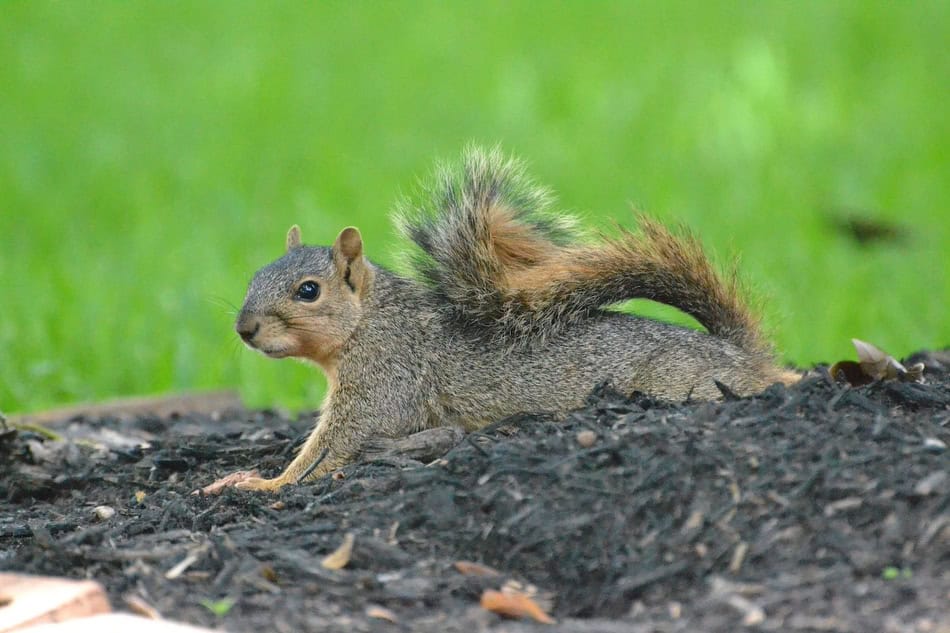
All this raises another question. If a squirrel buries nuts in dozens or even hundreds of places, how does it remember which holes contain food?
And how does it avoid being fooled by its own fake hiding spots?
Squirrels have impressive spatial memories. They use information about their surroundings, including the positions of trees and other landmarks, to help locate stored food.
In a study published in Animal Behaviour, researchers found that gray squirrels retrieved significantly more nuts from their own hiding places than from locations used by other squirrels. The results showed that squirrels could remember individual cache locations rather than relying entirely on smell.
You can read the study on squirrel memory.
Squirrels can also use their sense of smell to locate buried food. Their success comes from a combination of memory, environmental cues, and other senses.
Of course, they don’t recover every nut they bury. Some are stolen, others are never retrieved, and a few may eventually sprout.
Those forgotten acorns can play a small but important role in spreading oak trees and helping forests regenerate.
That connection between squirrels and the plants around them is explored in our Farmers’ Almanac article about animals that help plants grow.
Why Is This Behavior So Noticeable in Fall?
Autumn is a busy season for squirrels. Oaks, hickories, and other nut-bearing trees are producing food, and squirrels take advantage of the abundance by collecting and storing as much as they can.
You may see them darting across lawns, inspecting acorns, and digging small holes in garden beds, flowerpots, and patches of soft earth.
Their activity is especially noticeable when trees produce heavy crops of nuts.
And despite an old weather saying, frantic squirrel activity doesn’t necessarily mean a severe winter is coming. Their behavior is much more closely connected to available food and the normal need to prepare for colder months than to any ability to predict future weather.
Deceptive caching is one more part of that annual scramble.
When several squirrels are collecting nuts in the same area, competition can be intense. A valuable food supply is worth protecting, and a well-placed fake hiding spot may give one squirrel an advantage over another.
How Can You Tell If a Squirrel Is Faking It?
The next time you notice a squirrel burying an acorn in your yard, watch what happens before and after it digs.
Does it carefully cover the spot and then leave with something still in its mouth? Does it seem particularly watchful when another squirrel approaches?
Those behaviors may be clues, but they’re not proof. Squirrels dig for different reasons, and it can be difficult to see whether a nut has actually been deposited.
The clearest way to confirm a fake cache would be to know that the squirrel never left any food behind, something that’s difficult to establish from an ordinary backyard observation.
Still, watching squirrels closely can reveal just how much is happening during what looks like a routine fall chore.
They’re selecting food, remembering locations, keeping an eye on competitors, and sometimes taking steps to make their valuable hiding places harder to discover.
So the next time you see a squirrel busily digging in the yard, don’t assume it’s putting away another winter meal.
It might just be sending a would-be thief on a wild-goose chase.

- Maggie Konrad

- Maggie Konrad
- Maggie Konrad
- Maggie Konrad