
Are Your Tires Ready for Thanksgiving Travel? 5 Things to Check

Before you load the car with overnight bags, Thanksgiving dishes, and loved ones, give your tires a few minutes of attention. Low air pressure, uneven wear, or worn-down treads can make driving more dangerous, especially on the wet, icy, or snowy roads you might encounter over the holiday weekend.
A quick inspection before you leave can help you spot problems that could otherwise lead to a breakdown or an accident. Here are five things worth checking before you hit the road.
You don’t need to be a mechanic to spot some of the most common problems. These five checks are a good place to start.
1. Check Tire Pressure Before Driving
Cold weather can lower tire pressure, sometimes enough to trigger the warning light on your dashboard.
Check all four tires before leaving, ideally when the car has been parked for at least three hours. If you don’t own a tire-pressure gauge, stop at a gas station with an air pump that has a built-in pressure gauge. Some tire shops will also check and adjust your tire pressure for free.
You’ll find the correct tire pressure, measured in PSI (pounds per square inch), on a sticker inside the driver’s door or in your owner’s manual. Check the recommended pressures for the front and rear tires, as they may be different.
If the air pump has a digital screen: Enter the recommended PSI using the + and – buttons. Remove the tire’s valve cap and press the air hose nozzle firmly onto the valve stem. Most digital machines automatically inflate or release air until the tire reaches the selected pressure, then beep or display a message when finished. Follow the instructions on the machine.
If the pump has a built-in pressure gauge: Remove the valve cap and press the nozzle firmly onto the valve stem. Read the current PSI on the gauge, then squeeze the handle or press the air button to add air. Stop periodically to check the pressure. Some gauges display the pressure only when you’re not actively inflating.
If the pump has no gauge: You’ll need a separate tire-pressure gauge. Press it onto the valve stem to check the PSI, add a little air, and measure again. Repeat until the tire reaches the recommended pressure.
If you accidentally add too much air, release small amounts using the pump’s deflation control or a tire-pressure gauge equipped with a release button. Check the pressure again afterward.
Replace the valve cap when finished and repeat with the remaining tires.
Important: Tire pressure should be checked when the tires are cold, ideally before driving or after the vehicle has been parked for at least three hours. If you’ve driven to the gas station and the tires are warm, don’t release air simply because the reading is higher than the recommended cold PSI. Check them again when they’re cold.
For more on how cold weather affects tire pressure, read our guide to why your tire-pressure warning light comes on when temperatures drop
2. Check Tread Depth With a Penny
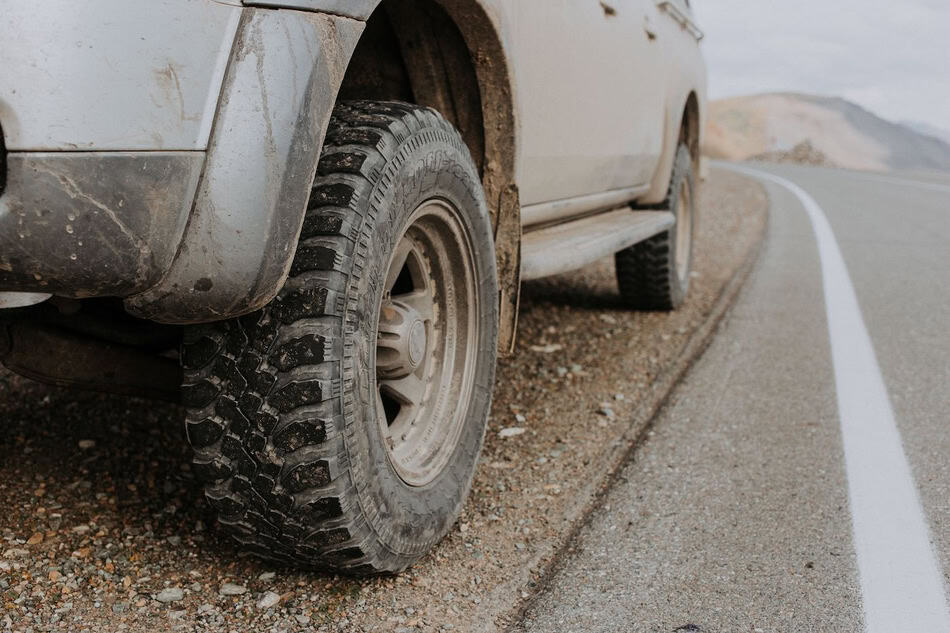
Your tires need enough tread to grip wet pavement and move water out from beneath them.
Here’s a quick test: Place a penny upside down in one of the tire’s tread grooves, with Lincoln’s head pointing toward the tire. If you can see the top of his head, the tread is down to approximately 2/32 of an inch or less, and the tire needs replacing.
Check several spots on each tire. A tread-depth gauge provides a more precise measurement.
Don’t assume passing the penny test means a tire is ready for snow. Wet and winter traction can deteriorate well before tread reaches the legal minimum. If your Thanksgiving route could involve snow or ice, have a tire professional assess whether your tires are safe enough for a road trip.
3. Look for Cracks, Bulges, and Uneven Wear
Walk around your vehicle and examine each tire’s tread and sidewalls.
Bulges, deep cuts, exposed cords, or pronounced cracks can indicate damage that needs professional attention. Don’t set off on a long trip with a visibly damaged tire.
Also look for tread wearing faster on one edge or in isolated patches. Uneven wear can indicate inflation, alignment, or suspension problems.
If the steering wheel vibrates or the car pulls to one side, have it inspected before traveling.
4. Don’t Forget the Spare Tire
A spare tire won’t help much if it’s flat when you need it.
If your car has one, check its pressure and condition. Temporary spare tires may require a different inflation pressure from your regular tires, so consult the owner’s manual.
Make sure the jack and necessary tools are in the vehicle, too.
Some newer cars don’t include a spare tire. Instead, they may come with a tire-repair kit or inflator. Know what your vehicle has and whether the kit is complete before leaving.
5. Check How Much Weight You’re Carrying
Thanksgiving travel can mean a full car, especially if you’re bringing luggage, coolers, or supplies for a large family gathering.
Every vehicle has a maximum recommended load. You’ll find it on the tire-information label near the driver’s door or in the owner’s manual.
Remember that the limit includes passengers and cargo. Overloading puts additional stress on tires and can affect vehicle handling.
If you’re towing a trailer, account for its tongue weight as well.
The National Highway Traffic Safety Administration’s tire safety guide covers these checks and explains when tires need professional attention.
If you find a bulge, severely worn tread, or a tire that won’t hold pressure, address it before making the drive. A tire shop visit is considerably easier to arrange at home than on the shoulder of a highway during Thanksgiving traffic.

- Maggie Konrad

- Maggie Konrad
- Maggie Konrad
- Maggie Konrad