Birth Plant Calendar 2026: What Is Your Birth Plant?
What plant matches your birthday? Farmers’ Almanac has assigned a unique Birth Plant to every day of the year. Find yours—and look up the Birth Plants of your family and friends.
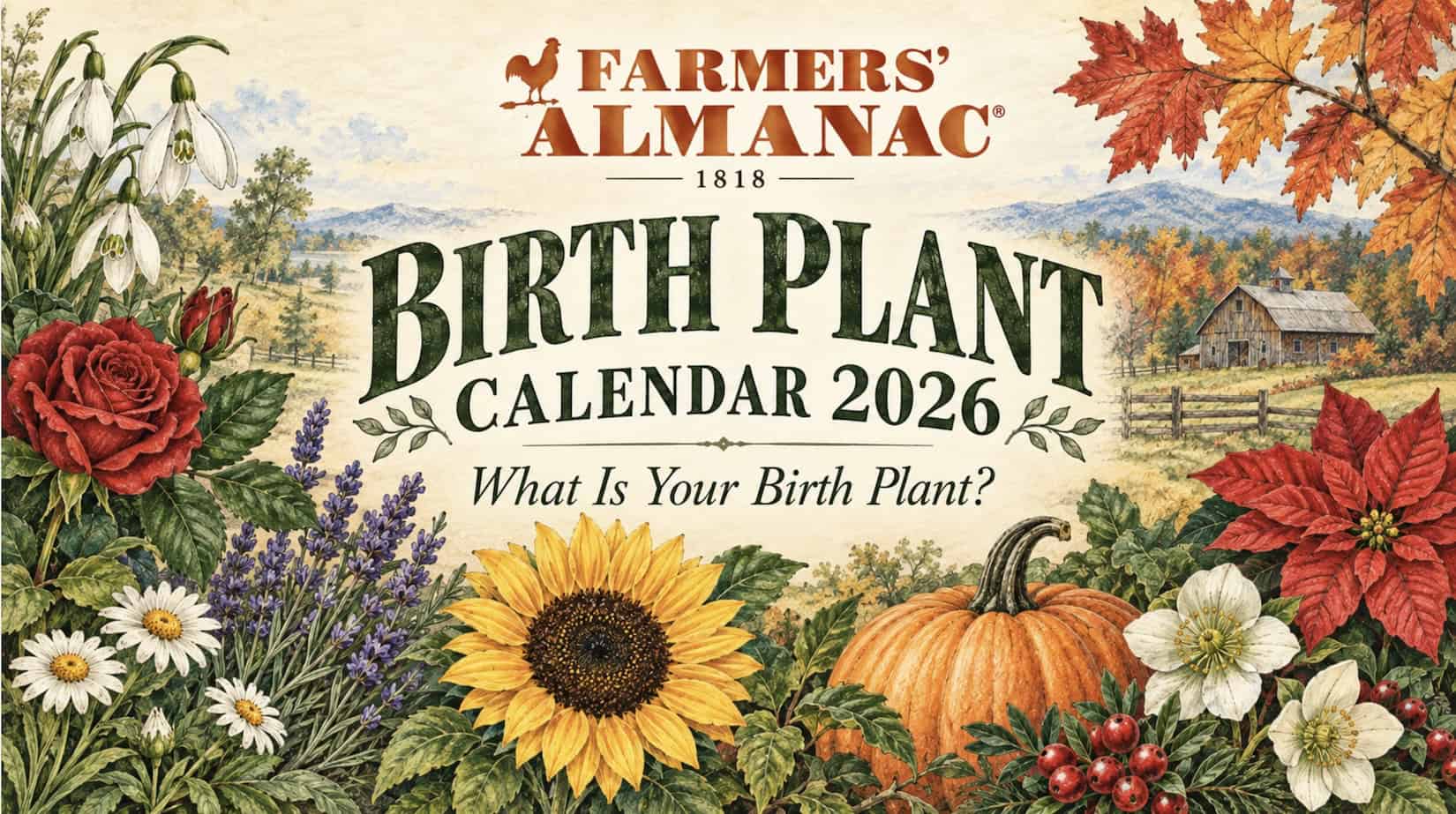
What plant falls on your birthday? Farmers’ Almanac has assigned a Birth Plant to every day of 2026. Find your birthday, discover your plant, and compare Birth Plants with family and friends.
You may already know your birthstone, birth flower, or zodiac sign. But what about your Birth Plant?
Farmers’ Almanac has created a 2026 Birth Plant Calendar, giving every day of the year its own flower, tree, herb, vegetable, fruit, houseplant, or other remarkable member of the plant kingdom.
Simply find your birthday below to discover your Birth Plant.
Then look up your spouse. Your children. Your parents. Your grandparents. Your best friend.
You might discover that you’re a Sugar Maple married to a Dahlia—or that your family includes a Sunflower, Pumpkin, Giant Sequoia, Red Rose, Apple Tree, and Poinsettia.
365 days. 365 Birth Plants. Which one is yours?
What Is a Birth Plant?
A Birth Plant is the plant associated with the calendar date of your birthday in the Farmers’ Almanac Birth Plant Calendar.
Rather than assigning only one flower to an entire month, we’ve given each day of the year its own plant.
The calendar includes flowers, trees, shrubs, fruits, vegetables, herbs, wildflowers, grasses, evergreens, vines, houseplants, and garden favorites.
The plants follow the natural rhythm of the year.
Winter dates feature evergreens, houseplants, and cold-weather bloomers. Spring brings bulbs, flowering trees, vegetables, and woodland wildflowers. Summer is filled with garden flowers, pollinator plants, fruits, vegetables, and herbs. Autumn belongs to asters, grasses, apples, pumpkins, brilliant foliage, berries, and plants associated with the harvest.
We also couldn’t resist matching a few dates with plants that seem made for them:
- February 14: Red Rose
- March 17: Shamrock
- April 22: Giant Sequoia
- May 1: Lily of the Valley
- July 4: American Elm
- September 22: Sugar Maple
- October 31: Pumpkin
- November 26: Cranberry
- December 25: Poinsettia
The Farmers’ Almanac Birth Plant Calendar is meant for fun, gardening inspiration, and appreciation of the natural world. It isn’t an astrological system or a scientific way to determine someone’s personality.
And it is different from the traditional birth flowers associated with each month.
How Do I Find My Birth Plant?
It’s easy.
Find your birth month below, locate the day you were born, and the plant beside that date is your Farmers’ Almanac Birth Plant.
For example:
Born February 14? You’re a Red Rose.
Born March 17? You’re a Shamrock.
Born July 4? You’re an American Elm.
Born October 31? You’re a Pumpkin.
Born December 25? You’re a Poinsettia.
Ready?
Find your birthday below.
2026 Birth Plant Calendar
January 2026 Birth Plants
| Date | Birth Plant |
|---|---|
| January 1 | White Pine |
| January 2 | Paperwhite Narcissus |
| January 3 | Amaryllis |
| January 4 | Christmas Cactus |
| January 5 | Cyclamen |
| January 6 | Rosemary |
| January 7 | Aloe Vera |
| January 8 | Snake Plant |
| January 9 | ZZ Plant |
| January 10 | Jade Plant |
| January 11 | African Violet |
| January 12 | Moth Orchid |
| January 13 | Peace Lily |
| January 14 | Chinese Evergreen |
| January 15 | Rubber Plant |
| January 16 | Parlor Palm |
| January 17 | Boston Fern |
| January 18 | Spider Plant |
| January 19 | Cast-Iron Plant |
| January 20 | Monstera |
| January 21 | Heartleaf Philodendron |
| January 22 | Pilea |
| January 23 | Prayer Plant |
| January 24 | Polka Dot Plant |
| January 25 | String of Pearls |
| January 26 | Ponytail Palm |
| January 27 | Norfolk Island Pine |
| January 28 | Calathea |
| January 29 | Peperomia |
| January 30 | Kalanchoe |
| January 31 | Lemon Cypress |
February 2026 Birth Plants
| Date | Birth Plant |
|---|---|
| February 1 | Snowdrop |
| February 2 | Winter Aconite |
| February 3 | Hellebore |
| February 4 | Witch Hazel |
| February 5 | Camellia |
| February 6 | Crocus |
| February 7 | Primrose |
| February 8 | Sweet Violet |
| February 9 | Pussy Willow |
| February 10 | Forsythia |
| February 11 | Daffodil |
| February 12 | Tulip |
| February 13 | Hyacinth |
| February 14 | Red Rose |
| February 15 | Grape Hyacinth |
| February 16 | Reticulated Iris |
| February 17 | Bleeding Heart |
| February 18 | Forget-Me-Not |
| February 19 | English Daisy |
| February 20 | Pansy |
| February 21 | Viola |
| February 22 | Sweet Pea |
| February 23 | Stock |
| February 24 | Calendula |
| February 25 | Snapdragon |
| February 26 | Larkspur |
| February 27 | Foxglove |
| February 28 | Ranunculus |
March 2026 Birth Plants
| Date | Birth Plant |
|---|---|
| March 1 | Pea |
| March 2 | Spinach |
| March 3 | Lettuce |
| March 4 | Arugula |
| March 5 | Radish |
| March 6 | Carrot |
| March 7 | Beet |
| March 8 | Swiss Chard |
| March 9 | Kale |
| March 10 | Collard Greens |
| March 11 | Broccoli |
| March 12 | Cauliflower |
| March 13 | Cabbage |
| March 14 | Brussels Sprouts |
| March 15 | Leek |
| March 16 | Onion |
| March 17 | Shamrock |
| March 18 | Chives |
| March 19 | Parsley |
| March 20 | Cilantro |
| March 21 | Dill |
| March 22 | Thyme |
| March 23 | Sage |
| March 24 | Oregano |
| March 25 | Lavender |
| March 26 | Mint |
| March 27 | Lemon Balm |
| March 28 | Chamomile |
| March 29 | Borage |
| March 30 | Nasturtium |
| March 31 | Bachelor’s Button |
April 2026 Birth Plants
| Date | Birth Plant |
|---|---|
| April 1 | Asparagus |
| April 2 | Rhubarb |
| April 3 | Potato |
| April 4 | Turnip |
| April 5 | Parsnip |
| April 6 | Kohlrabi |
| April 7 | Mustard Greens |
| April 8 | Bok Choy |
| April 9 | Fava Bean |
| April 10 | Sorrel |
| April 11 | Watercress |
| April 12 | Strawberry |
| April 13 | Blueberry |
| April 14 | Raspberry |
| April 15 | Blackberry |
| April 16 | Currant |
| April 17 | Gooseberry |
| April 18 | Serviceberry |
| April 19 | Eastern Redbud |
| April 20 | Flowering Dogwood |
| April 21 | Magnolia |
| April 22 | Giant Sequoia |
| April 23 | Crabapple |
| April 24 | Flowering Cherry |
| April 25 | Lilac |
| April 26 | Azalea |
| April 27 | Rhododendron |
| April 28 | Virginia Bluebells |
| April 29 | Trillium |
| April 30 | Wild Columbine |
May 2026 Birth Plants
| Date | Birth Plant |
|---|---|
| May 1 | Lily of the Valley |
| May 2 | Tomato |
| May 3 | Bell Pepper |
| May 4 | Jalapeño Pepper |
| May 5 | Eggplant |
| May 6 | Cucumber |
| May 7 | Zucchini |
| May 8 | Yellow Squash |
| May 9 | Butternut Squash |
| May 10 | Watermelon |
| May 11 | Cantaloupe |
| May 12 | Sweet Corn |
| May 13 | Bush Bean |
| May 14 | Pole Bean |
| May 15 | Basil |
| May 16 | Marigold |
| May 17 | Zinnia |
| May 18 | Cosmos |
| May 19 | Sunflower |
| May 20 | Petunia |
| May 21 | Geranium |
| May 22 | Impatiens |
| May 23 | Coleus |
| May 24 | Wax Begonia |
| May 25 | Calibrachoa |
| May 26 | Sweet Alyssum |
| May 27 | Celosia |
| May 28 | Scarlet Sage |
| May 29 | Verbena |
| May 30 | Lantana |
| May 31 | Heliotrope |
June 2026 Birth Plants
| Date | Birth Plant |
|---|---|
| June 1 | Peony |
| June 2 | Bearded Iris |
| June 3 | Catmint |
| June 4 | Coreopsis |
| June 5 | Yarrow |
| June 6 | Bee Balm |
| June 7 | Purple Coneflower |
| June 8 | Black-Eyed Susan |
| June 9 | Shasta Daisy |
| June 10 | Garden Phlox |
| June 11 | Delphinium |
| June 12 | Lupine |
| June 13 | Hollyhock |
| June 14 | Dianthus |
| June 15 | Blanket Flower |
| June 16 | Penstemon |
| June 17 | Common Milkweed |
| June 18 | Butterfly Weed |
| June 19 | Anise Hyssop |
| June 20 | Mountain Mint |
| June 21 | Oakleaf Hydrangea |
| June 22 | Joe-Pye Weed |
| June 23 | Culver’s Root |
| June 24 | Blazing Star |
| June 25 | Golden Alexanders |
| June 26 | New Jersey Tea |
| June 27 | Buttonbush |
| June 28 | Elderberry |
| June 29 | Ninebark |
| June 30 | Smooth Hydrangea |
July 2026 Birth Plants
| Date | Birth Plant |
|---|---|
| July 1 | Daylily |
| July 2 | Oriental Lily |
| July 3 | Asiatic Lily |
| July 4 | American Elm |
| July 5 | Bigleaf Hydrangea |
| July 6 | Russian Sage |
| July 7 | Sea Holly |
| July 8 | Globe Thistle |
| July 9 | Agastache |
| July 10 | Cardinal Flower |
| July 11 | Great Blue Lobelia |
| July 12 | Swamp Milkweed |
| July 13 | Ironweed |
| July 14 | Boneset |
| July 15 | Canna |
| July 16 | Elephant Ear |
| July 17 | Caladium |
| July 18 | Dahlia |
| July 19 | Gladiolus |
| July 20 | Crocosmia |
| July 21 | Tuberous Begonia |
| July 22 | Angel’s Trumpet |
| July 23 | Mandevilla |
| July 24 | Bougainvillea |
| July 25 | Passionflower |
| July 26 | Moonflower |
| July 27 | Morning Glory |
| July 28 | Cypress Vine |
| July 29 | Scarlet Runner Bean |
| July 30 | Malabar Spinach |
| July 31 | Okra |
August 2026 Birth Plants
| Date | Birth Plant |
|---|---|
| August 1 | Goldenrod |
| August 2 | New England Aster |
| August 3 | New York Aster |
| August 4 | Heliopsis |
| August 5 | Sneezeweed |
| August 6 | Turtlehead |
| August 7 | Obedient Plant |
| August 8 | Mexican Sunflower |
| August 9 | Cleome |
| August 10 | Amaranth |
| August 11 | Love-Lies-Bleeding |
| August 12 | Cockscomb |
| August 13 | Globe Amaranth |
| August 14 | Strawflower |
| August 15 | Statice |
| August 16 | Dusty Miller |
| August 17 | Fennel |
| August 18 | Lemon Verbena |
| August 19 | Stevia |
| August 20 | Shiso |
| August 21 | Lemongrass |
| August 22 | Thai Basil |
| August 23 | Pineapple Sage |
| August 24 | Bay Laurel |
| August 25 | Fig |
| August 26 | Grape |
| August 27 | Peach |
| August 28 | Plum |
| August 29 | Pear |
| August 30 | Apple |
| August 31 | Pawpaw |
September 2026 Birth Plants
| Date | Birth Plant |
|---|---|
| September 1 | Autumn Joy Sedum |
| September 2 | Japanese Anemone |
| September 3 | Toad Lily |
| September 4 | Autumn Crocus |
| September 5 | Colchicum |
| September 6 | Hardy Chrysanthemum |
| September 7 | Aromatic Aster |
| September 8 | Beautyberry |
| September 9 | Winterberry |
| September 10 | American Cranberrybush |
| September 11 | Arrowwood Viburnum |
| September 12 | Spicebush |
| September 13 | Sumac |
| September 14 | Virginia Creeper |
| September 15 | Boston Ivy |
| September 16 | Sweet Autumn Clematis |
| September 17 | Switchgrass |
| September 18 | Little Bluestem |
| September 19 | Pink Muhly Grass |
| September 20 | Fountain Grass |
| September 21 | Northern Sea Oats |
| September 22 | Sugar Maple |
| September 23 | Japanese Forest Grass |
| September 24 | Coral Bells |
| September 25 | Hosta |
| September 26 | Foamflower |
| September 27 | Wild Ginger |
| September 28 | Ajuga |
| September 29 | Pachysandra |
| September 30 | Periwinkle |
October 2026 Birth Plants
| Date | Birth Plant |
|---|---|
| October 1 | Red Maple |
| October 2 | Japanese Maple |
| October 3 | Ginkgo |
| October 4 | Sassafras |
| October 5 | Black Gum |
| October 6 | White Oak |
| October 7 | Scarlet Oak |
| October 8 | Pin Oak |
| October 9 | River Birch |
| October 10 | Paper Birch |
| October 11 | American Beech |
| October 12 | Sweetgum |
| October 13 | Tulip Poplar |
| October 14 | Bald Cypress |
| October 15 | Dawn Redwood |
| October 16 | American Hornbeam |
| October 17 | Katsura Tree |
| October 18 | Stewartia |
| October 19 | Fothergilla |
| October 20 | Virginia Sweetspire |
| October 21 | Smokebush |
| October 22 | Aronia |
| October 23 | American Hazelnut |
| October 24 | Persimmon |
| October 25 | Quince |
| October 26 | Medlar |
| October 27 | American Chestnut |
| October 28 | Black Walnut |
| October 29 | Osage Orange |
| October 30 | Sourwood |
| October 31 | Pumpkin |
November 2026 Birth Plants
| Date | Birth Plant |
|---|---|
| November 1 | Garlic |
| November 2 | Shallot |
| November 3 | Egyptian Walking Onion |
| November 4 | Horseradish |
| November 5 | Jerusalem Artichoke |
| November 6 | Salsify |
| November 7 | Celeriac |
| November 8 | Mâche |
| November 9 | Miner’s Lettuce |
| November 10 | Escarole |
| November 11 | Endive |
| November 12 | Radicchio |
| November 13 | Savoy Cabbage |
| November 14 | Lacinato Kale |
| November 15 | Purple Sprouting Broccoli |
| November 16 | Winter Rye |
| November 17 | Oats |
| November 18 | Crimson Clover |
| November 19 | Hairy Vetch |
| November 20 | Field Pea |
| November 21 | Comfrey |
| November 22 | Mullein |
| November 23 | Lamb’s Ear |
| November 24 | Sagebrush |
| November 25 | Bayberry |
| November 26 | Cranberry |
| November 27 | Inkberry Holly |
| November 28 | American Holly |
| November 29 | Eastern Red Cedar |
| November 30 | Juniper |
December 2026 Birth Plants
| Date | Birth Plant |
|---|---|
| December 1 | Balsam Fir |
| December 2 | Fraser Fir |
| December 3 | Douglas Fir |
| December 4 | Blue Spruce |
| December 5 | Norway Spruce |
| December 6 | Arborvitae |
| December 7 | Yew |
| December 8 | Boxwood |
| December 9 | Mistletoe |
| December 10 | English Ivy |
| December 11 | Wintergreen |
| December 12 | Partridgeberry |
| December 13 | Bearberry |
| December 14 | Skimmia |
| December 15 | Pieris |
| December 16 | Mahonia |
| December 17 | Red-Twig Dogwood |
| December 18 | Yellow-Twig Dogwood |
| December 19 | Paperbark Maple |
| December 20 | Harry Lauder’s Walking Stick |
| December 21 | Winter Jasmine |
| December 22 | Daphne |
| December 23 | Sweet Box |
| December 24 | Christmas Rose |
| December 25 | Poinsettia |
| December 26 | Contorted Willow |
| December 27 | Deodar Cedar |
| December 28 | Hinoki Cypress |
| December 29 | Firethorn |
| December 30 | Cotoneaster |
| December 31 | Meyer Lemon |

What Is Your Birth Plant?
Now you’ve found your Birth Plant—but that’s only half the fun.
Look up everyone else.
What’s your spouse’s Birth Plant?
What did your children get?
What about your parents, grandparents, siblings, or best friends?
Does your family have a towering Giant Sequoia? A delicate Snowdrop? A stubborn Horseradish? A cheerful Sunflower? A spicy Jalapeño? Or perhaps somebody was lucky enough to land the Pumpkin on Halloween.
And here’s the question that may start a family debate:
Who has the best Birth Plant?
Share this calendar with your friends and family and ask:
What’s your Birth Plant?
Birth Plant Frequently Asked Questions
What is my Birth Plant?
Your Farmers’ Almanac Birth Plant is determined by the month and day of your birthday.
Find your birthday in the calendar above and the plant beside that date is your Birth Plant.
For example, February 14 is the Red Rose, March 17 is the Shamrock, July 4 is the American Elm, October 31 is the Pumpkin, and December 25 is the Poinsettia.
Is a Birth Plant the Same as a Birth Flower?
Not quite.
Traditional birth-flower lists generally associate one or more flowers with an entire month.
The Farmers’ Almanac Birth Plant Calendar goes much further by assigning a different plant to each individual day of the year.
And they’re not all flowers.
Your Birth Plant might be an oak, herb, vegetable, fruit tree, houseplant, evergreen, wildflower, vine, shrub, or garden favorite.
What Does My Birth Plant Mean?
The Farmers’ Almanac Birth Plant Calendar celebrates plants, gardening, folklore, agriculture, and the changing seasons.
It isn’t intended to predict your personality or future.
That said, we won’t stop you from deciding that the person born under the mighty Giant Sequoia is unusually strong—or that the person who got the Jalapeño tends to make life a little more interesting.
That’s part of the fun.
Does Everyone Born on the Same Date Have the Same Birth Plant?
Yes.
Everyone who shares the same month and day shares the same Farmers’ Almanac Birth Plant.
So someone born on October 31 is a Pumpkin regardless of whether they were born in 1960, 1990, or 2026.
Why Is It Called the 2026 Birth Plant Calendar?
There are 365 days in 2026, so the 2026 calendar contains 365 Birth Plants.
The month-and-day assignments can also be used to look up birthdays from other years.
Leap years have one extra birthday to consider.
What Is the February 29 Birth Plant?
We couldn’t leave Leap Day babies out.
February 29’s special Birth Plant is the Four-Leaf Clover.
Rare date. Rare clover.
That seems appropriate.
How Were the Birth Plants Chosen?
We followed the seasons.
Many plants appear near the time of year when Americans associate them with blooming, planting, harvesting, fall color, winter greenery, or other seasonal changes.
Spring brings bulbs, blossoms, garden vegetables, and flowering trees.
Summer is filled with flowers, herbs, pollinator plants, fruits, and heat-loving vegetables.
September begins the transition toward grasses, berries, and fall foliage.
October celebrates America’s spectacular deciduous trees before ending, naturally, with the Pumpkin.
November turns toward the harvest, hardy vegetables, cover crops, cranberries, and evergreens.
December belongs to firs, winter berries, holiday greenery, and plants that brighten the darkest days of the year.
A handful of calendar dates inspired especially fitting matches, too.
Valentine’s Day gets the Red Rose.
St. Patrick’s Day gets the Shamrock.
Earth Day gets the Giant Sequoia.
Halloween gets the Pumpkin.
Thanksgiving Day 2026 gets the Cranberry.
Christmas Day gets the Poinsettia.
Can I Grow My Birth Plant?
Maybe!
Some Birth Plants are among the easiest plants you can grow. Others need very specific climates or growing conditions.
A Basil, Tomato, Marigold, Radish, or Sunflower has plenty of options.
A Giant Sequoia is going to require considerably more planning.
Before planting, check whether your Birth Plant is suitable for your climate, soil, available sunlight, and USDA Plant Hardiness Zone.
If it isn’t practical to grow outside where you live, you can always grow an appropriate relative, find it at a botanical garden, or simply learn more about the plant attached to your birthday.
365 Days. 365 Plants.
Plants have marked the seasons for as long as people have planted gardens, gathered harvests, watched trees change color, and waited for the first flowers of spring.
Some feed us.
Some shade us.
Some fill our gardens with fragrance.
Some attract bees, butterflies, and birds.
Some have been connected with holidays and folklore for generations.
And some simply make the world more beautiful.
Now one of them belongs to your birthday.
365 days. 365 Birth Plants.
Find your birthday. Look up your family. Discover your Birth Plant.


- Farmers' Almanac Staff

- Farmers' Almanac Staff

- Farmers' Almanac Staff
- Farmers' Almanac Staff