


Quick Reference: Daylight Saving Time 2026
- DST 2026 status: In effect right now. Clocks sprang forward Sunday, March 8, 2026 at 2:00 a.m.
- Next time change (Fall Back): Sunday, November 1, 2026 at 2:00 a.m. (2:00 a.m. becomes 1:00 a.m.)
- Congress: The House passed the Sunshine Protection Act (H.R. 139) on July 14, 2026, 308 to 117. It is with the Senate Commerce Committee and is not law. Clocks fall back on November 1 unless that changes.
- Spring Forward 2027: Sunday, March 14, 2027 at 2:00 a.m.
- US rule: Second Sunday in March to first Sunday in November
- Set by: Uniform Time Act of 1966, as amended by the Energy Policy Act of 2005
- Not observed in: Arizona (except the Navajo Nation), Hawaii, American Samoa, Guam, the Northern Mariana Islands, Puerto Rico, and the US Virgin Islands
- Correct spelling: Daylight Saving Time (no “s”)
Daylight Saving Time is currently in effect across most of the United States. Clocks sprang forward on Sunday, March 8, 2026, and they will stay one hour ahead of standard time until Sunday, November 1, 2026, when we fall back at 2:00 a.m. The rule is the same one Congress wrote into the Uniform Time Act of 1966 and extended in 2005: second Sunday in March to first Sunday in November. The House of Representatives voted in July to end the clock changes; the Senate has not acted, so the November change stands. Here is what to expect at the November change, where the legislation sits, the full schedule through 2030, and the history behind why we still move the clocks at all.
When Does Daylight Saving Time End in 2026?
Daylight Saving Time 2026 ends on the first Sunday in November. The exact moment is Sunday, November 1, 2026 at 2:00 a.m. local time. At 2:00 a.m. on that date, the clock falls back one hour to 1:00 a.m., and we return to standard time for the winter. Set your clocks back one hour before bed on Saturday night, October 31, and you will wake up Sunday morning on the correct time.
The return of standard time means the Sun will rise a little earlier by the clock. If you are an early riser, you will see more natural light with your breakfast, and you will pick up one extra hour of sleep on the night of the change. The trade-off is that it will be dark by the time most of us get out of work. Sunset in the northern United States drops back to between 4:30 p.m. and 5:00 p.m. inside the first two weeks of November.
Could the November 1 Time Change Be Canceled?
Not as things stand. On July 14, 2026, the US House of Representatives passed the Sunshine Protection Act of 2025 (H.R. 139) by 308 votes to 117. The bill would end the twice-yearly clock change and keep most of the country on the later clock setting all year. It went to the Senate the next day and was referred to the Senate Committee on Commerce, Science, and Transportation, where it remains. One chamber passing a bill does not change the clocks.
The House text has no delayed start date, so if the Senate passed it unchanged and the President signed it before November 1, the fall-back could in principle be canceled. Until that happens, federal law is unchanged and clocks go back one hour on Sunday, November 1, 2026. We will update this page if Congress acts. What the bill would do, and what happened the last time the country tried year-round DST, is in the permanent DST debate below.
When Will We “Spring Forward” Again?
Daylight Saving Time 2027 begins on Sunday, March 14, 2027 at 2:00 a.m., in most areas of the United States. At 2:00 a.m. on that date the clock springs forward to 3:00 a.m., and the evening light stretches by an hour. The “second Sunday in March” rule has been the law since the Energy Policy Act of 2005 took effect in March 2007.
Daylight Saving Time Dates for the Next Five Years
| Year | Spring Forward (DST begins) | Fall Back (DST ends) |
|---|---|---|
| 2026 | Sunday, March 8 | Sunday, November 1 |
| 2027 | Sunday, March 14 | Sunday, November 7 |
| 2028 | Sunday, March 12 | Sunday, November 5 |
| 2029 | Sunday, March 11 | Sunday, November 4 |
| 2030 | Sunday, March 10 | Sunday, November 3 |
The clock change always lands at 2:00 a.m. local time on a Sunday. The 2:00 a.m. timing is deliberate: it is late enough that most bars and restaurants are closed, and early enough that the change is finished before the Sunday morning commute and church services begin. For the long arc of the season, see our companion piece on how much daylight we are really saving across the year.
What Is Daylight Saving Time?
Daylight Saving Time, abbreviated DST, is the practice of moving the clock one hour ahead of standard time for the warmer half of the year. The idea is to shift an hour of daylight from the early morning, when most people are still asleep, to the early evening, when most people are awake and outdoors. We do not actually create or save any daylight; we move the clock so a larger share of waking hours overlaps with the Sun.
In the United States, DST runs from the second Sunday of March through the first Sunday of November. That is roughly 34 weeks of every year, or about two-thirds of the calendar. The remaining four months we spend on standard time, when noon by the clock is closer to the Sun’s actual noon overhead.
The History of Daylight Saving Time
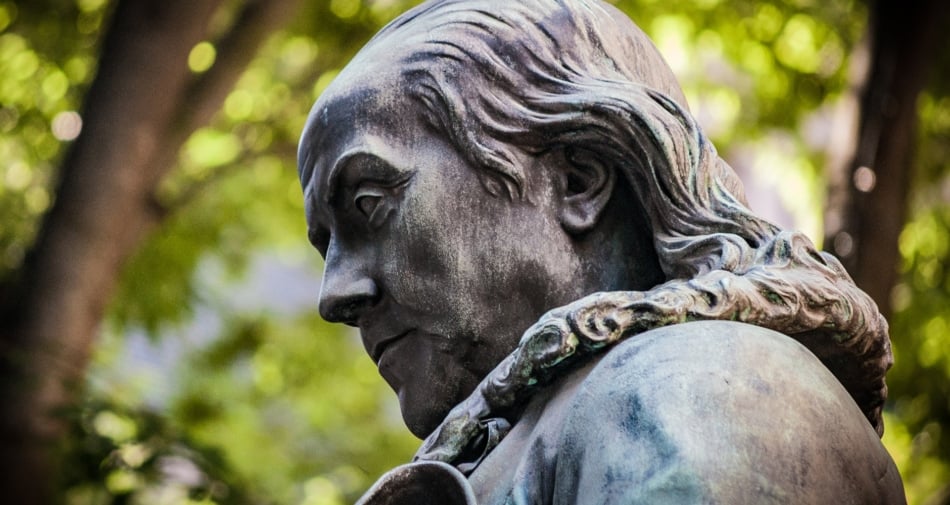
The first written suggestion to shift waking hours toward daylight came from Benjamin Franklin. In a satirical 1784 letter to the editor of the Journal de Paris, Franklin proposed that Parisians could save candle wax by rising with the Sun. He suggested taxes on shuttered windows, rationing of candles, and firing cannons at sunrise to wake the city. The letter was a joke. Franklin never proposed changing the clock; he proposed changing the schedule. Read the original letter via the Franklin Institute.
The modern idea of moving the clock came from a New Zealand entomologist named George Hudson. In an 1895 paper to the Wellington Philosophical Society, Hudson proposed a two-hour shift forward in summer so he could collect insects after his post office shift ended. A British builder named William Willett picked up the same idea independently in 1907 and lobbied Parliament for a “Daylight Saving Bill.” Willett died in 1915 without seeing his proposal become law.
Germany was the first country to adopt DST nationally, on April 30, 1916, as a wartime fuel-saving measure during World War I. Britain followed three weeks later. The United States adopted its first Daylight Saving Time on March 19, 1918, under the Standard Time Act. That law also created the country’s first official time zones. DST was so unpopular in 1918 and 1919 that Congress repealed the federal observance in 1919 over President Wilson’s veto, leaving DST to individual states and cities.
The Second World War brought it back. From February 9, 1942 to September 30, 1945, the United States observed year-round DST under the name “War Time.” After the war, the patchwork returned: each state and many cities set their own DST rules, and a traveler crossing the country in summer could pass through dozens of time changes on a single bus route.
Congress ended the patchwork with the Uniform Time Act of 1966, which set a single national start and end for DST (last Sunday in April to last Sunday in October) and left states the option to exempt themselves entirely. The 1970s oil crisis prompted a brief experiment with year-round DST from January 6, 1974 to October 27, 1975, which proved unpopular and was scaled back. The current schedule, second Sunday in March to first Sunday in November, comes from the Energy Policy Act of 2005, which took effect in March 2007.
How the Date Is Decided
The current rule is set by federal statute:
- DST begins: Second Sunday in March, 2:00 a.m. local time. Clocks spring forward to 3:00 a.m.
- DST ends: First Sunday in November, 2:00 a.m. local time. Clocks fall back to 1:00 a.m.
- Statute: Uniform Time Act of 1966 (15 U.S.C. 260a), as amended by the Energy Policy Act of 2005.
- Enforcement: The US Department of Transportation, which also draws the lines for the country’s time zones.
States may opt out of DST and stay on standard time year-round, but they cannot independently adopt permanent DST without an act of Congress. That is the legal sticking point behind the “permanent DST” debate, and it is the reason Arizona and Hawaii stay on standard time while no state has yet moved to year-round DST.
Who Doesn’t Observe Daylight Saving Time?
Under United States law, states can choose whether to observe DST. The two states that have opted out are Arizona (with the exception of the Navajo Nation, which does observe DST) and Hawaii. The US territories also do not observe DST. That list covers American Samoa, Guam, the Northern Mariana Islands, Puerto Rico, and the US Virgin Islands. Inside those places, the clock stays on standard time all year long.
Indiana is the late entrant. The state did not vote to observe DST statewide until April 2006. Before that, some counties observed it and others did not, which caused a lot of confusion, particularly since Indiana is split into two time zones already.
At least 40 countries worldwide observe Daylight Saving Time, including most of Canada. The majority of Saskatchewan and parts of northeastern British Columbia do not participate. Most of the equatorial world, including most of Africa and most of South Asia, never adopted DST because the day length there does not change enough across the year for the shift to matter.
European Daylight Saving Time
Ireland, the United Kingdom, and the European Union observe DST on a slightly different schedule, known as British Summer Time (BST). British Summer Time begins on the last Sunday in March and ends on the last Sunday in October. That offset of one to two weeks at each end of the season means that for a short window in March and again in October, the time difference between the United States and Europe is one hour different from the rest of the year.
The European Parliament voted in 2019 to abolish the seasonal clock change across the EU, but the law has not been implemented and remains stalled at the member-state level. As of 2026, every EU country still changes its clocks twice a year on the BST schedule.
Southern Hemisphere Daylight Saving Time
Most countries near the equator do not deviate from standard time. Countries in the Southern Hemisphere, including parts of Australia and all of New Zealand, turn their clocks in the opposite direction from the United States to reflect their opposite seasons. When it is summer in the Northern Hemisphere, it is winter in the Southern Hemisphere. Southern Hemisphere DST generally starts in early October and ends in early April, the mirror image of the North American schedule.
Any questions? Contact [email protected]
Are You Saying It Correctly?
The correct phrasing is “Daylight Saving Time,” not “Daylight Savings Time” with an “s.” The word is singular because the policy is about saving daylight, in the sense of using it. Most newspapers, government statutes, and the US Department of Transportation use the singular form. The plural slips into casual speech the same way “March Madness” becomes “March Madnesses” if you stop watching what you say.
Does Daylight Saving Time Actually Save Energy?
The original case for DST was electricity. Move an hour of light into the evening, the argument went, and you cut the demand for indoor lighting after work. Studies from the 1970s found a small effect, on the order of one percent of national electricity use during the spring and fall transition months.
Modern studies are mixed at best. A 2008 report to Congress on the 2005 extension found a 0.5 percent reduction in daily electricity use during the four added weeks. Other studies, including one of Indiana counties after the 2006 statewide adoption, found that DST raised residential electricity use because of increased air conditioning in the evening and increased heating in the dark mornings. Air conditioning was not common in homes when the original 1970s studies were run.
Health effects are clearer than energy effects. Peer-reviewed studies have found a roughly 24 percent jump in heart attacks on the Monday after the spring-forward change, a corresponding dip the Monday after the fall-back, increased rates of stroke and atrial fibrillation in the first three days after the spring change, and a measurable spike in traffic accidents and workplace injuries on the morning of and the days following the spring-forward shift. The American Academy of Sleep Medicine has called for the United States to abolish DST and adopt permanent standard time on health grounds.
Is There a Benefit to DST?
The idea behind moving the clocks twice a year is to take advantage of the Sun’s natural light. When we spring forward, we are not really “saving” time; we are giving up a little Sun in the morning and adding it to the evening. How you feel about that trade depends on whether you are an early riser or a night owl. Changing the number on a clock does not actually add any time to the day. That point was made well in this old joke.
When told the reason for Daylight Saving Time, the old Native American man said:
“Only the government would believe that you could cut a foot off the top of a blanket, sew it to the bottom, and have a longer blanket.“
The benefit, when it shows up, is on the evening side. Adding an hour of daylight onto the end of the workday, after most of us have finished, can feel like a gift after a long winter of dark evenings. As the warmer spring weather arrives, more time on a porch or in a garden after dinner is the practical case for the clock change. The Almanac’s view is that the schedule is what it is. Plan with it.
The “Permanent DST” Debate
Lawmakers have fiddled with the schedule on occasion since DST was introduced. The change in 2007 extended DST by about four weeks, moving the start from April to March and the end from October to November. The most recent push is to stop changing the clocks at all.
On March 15, 2022, the US Senate passed an earlier Sunshine Protection Act by unanimous consent. The House never took it up and the bill died with that Congress. It was reintroduced in January 2025 as H.R. 139 in the House and S. 29 in the Senate, and on July 14, 2026 the House passed H.R. 139 by 308 votes to 117. The Senate received it on July 15 and referred it to the Committee on Commerce, Science, and Transportation. As of October 2026 it has not become law. The clocks still change. Follow the bill at the Government Publishing Office, or read the state-by-state status via the National Conference of State Legislatures.
The House-passed text repeals the part of the Uniform Time Act that sets the seasonal DST period and rewrites the legal offsets for the US time zones, so most places now on Daylight Saving Time would stay on that clock setting through the winter. It does not create any extra daylight. A winter sunset at 4:45 p.m. standard time would read 5:45 p.m.; a 7:15 a.m. sunrise would read 8:15 a.m. Arizona and Hawaii, which stay on standard time now, could carry on. If the bill were signed into law before November 1, 2026, that fall-back could be the last one; signed after, the following spring forward would lock in for good. Until then, the rule is the rule. The trade-off bites hardest in the darkest weeks, so it is worth seeing how much daylight your state loses before winter.
Worth remembering: the country has tried year-round DST before. The January 6, 1974 emergency adoption during the oil crisis lasted less than a year: Congress restored standard time from October 1974, well short of the planned two years, in part because of complaints about children walking to school in the dark at 8:00 a.m. Standard-time advocates, including the American Academy of Sleep Medicine, point to that experiment when they argue for permanent standard time instead of permanent DST.
What Would Permanent DST Mean for Health and Well-Being?
On the bright side, the Sun would not set so early on winter evenings. But the Sun would also rise later in the morning, around 8:00 a.m. for most northern states during the winter months, and as late as 9:00 a.m. in the upper Midwest and northern New England in late December.
Some people are concerned that dark mornings would make commutes to work and school more difficult, especially for children being picked up by buses. Others say that permanent Daylight Saving Time may make it harder to fall asleep at night and hinder our ability to function during the day.
When the Sun rises, its light activates the hormones that help us stay active, calm, and focused. When the Sun sets, darkness releases a different hormone, melatonin, which helps us go to sleep. Sleep medicine practitioner Dr. Kin Yuen suggests that permanent Daylight Saving Time may cause increased metabolic issues such as diabetes, hypoglycemia, and weight gain, as well as greater fatalities on the road. Learn more in the video below.
Is Benjamin Franklin to Blame for Daylight Saving Time?
Ben Franklin is often credited with inventing the idea of Daylight Saving Time, on the strength of his partially tongue-in-cheek 1784 letter to a Paris newspaper. He suggested Parisians could save candle wax by waking with the Sun rather than sleeping late and burning candles after dark.
Franklin understood the point of view of the Native American man in the joke above, though. Rather than changing the clocks, he advised changing our personal schedules to align better with nature. The modern clock-shifting idea actually came more than a century later, from George Hudson in 1895 and William Willett in 1907. Franklin’s contribution was the principle, not the policy.
How to Prepare for the Time Change
Fall-back is the easier of the two changes, but it still throws schedules off for a few days. A handful of small habits make the transition easier.
- Shift sleep gradually. Move bedtime fifteen minutes later each night for the three or four nights before November 1. Children and early risers benefit most.
- Keep livestock and pets on their old schedule. Animals do not read the clock. If the cows are used to a 6:00 a.m. milking, keep it at 6:00 a.m. by the new clock and let the routine settle over a few days.
- Let technology handle the easy ones. Phones, computers, smart speakers, and most modern thermostats and ovens update automatically at 2:00 a.m. on Sunday.
- Reset the manual clocks before bed Saturday. Wall clocks, the microwave, the oven, the wristwatch, and the car dashboard usually need a hand. Set them back one hour Saturday night so you do not wake up confused.
- Use the date as a reminder. Many fire departments suggest replacing smoke detector batteries on the spring and fall time changes; the Almanac suggests checking smoke and carbon monoxide detectors on the same weekend.
- Plan for early dark. Headlights at 5:00 p.m. on the Monday after fall-back is a real change for a lot of commuters. Driving conditions are also more dangerous for the first week.
The clock change cuts across the autumn calendar in the same week the first hard frosts arrive in most of the country. See our guide to the fall equinox for the seasonal anchor, and our guide to the spring equinox for the matching moment in March. Authoritative reference on the rules themselves, including current and historical legislation, sits with the US Department of Transportation.

Frequently Asked Questions
When does Daylight Saving Time end in 2026?
Daylight Saving Time 2026 ends on Sunday, November 1, 2026 at 2:00 a.m. local time. At that moment the clock falls back one hour to 1:00 a.m. and we return to standard time for the winter.
When does Daylight Saving Time begin in 2027?
DST 2027 begins on Sunday, March 14, 2027 at 2:00 a.m. local time. At that moment the clock springs forward to 3:00 a.m. The rule is the second Sunday in March, set by the Energy Policy Act of 2005.
Is Daylight Saving Time ending in the US?
No. Federal law still sets Daylight Saving Time from the second Sunday in March to the first Sunday in November. The House passed the Sunshine Protection Act (H.R. 139) on July 14, 2026, but the Senate has not, so it is not law and the clocks change on November 1, 2026 as scheduled.
Did Congress pass permanent Daylight Saving Time?
Only one chamber has. The House passed H.R. 139 on July 14, 2026 by 308 to 117. The Senate passed a different version by unanimous consent in March 2022, in an earlier Congress, and that bill died. Both chambers must pass identical text and the President must sign it before anything changes.
Will we still fall back on November 1, 2026?
Yes, unless a new federal law is enacted first. As of October 2026 no such law exists, so clocks go back one hour at 2:00 a.m. on Sunday, November 1, 2026. Phones and computers change on their own; ovens, cars and wall clocks need a hand.
Who invented Daylight Saving Time?
The credit usually goes to Benjamin Franklin, on the strength of his satirical 1784 letter to the Journal de Paris, but Franklin proposed waking earlier rather than changing the clock. The modern idea came from George Hudson, a New Zealand entomologist, in an 1895 paper, and was independently proposed by British builder William Willett in 1907. Germany was the first country to adopt it nationally, on April 30, 1916.
Which US states do not observe DST?
Arizona (with the exception of the Navajo Nation) and Hawaii do not observe DST and stay on standard time year-round. The US territories of American Samoa, Guam, the Northern Mariana Islands, Puerto Rico, and the US Virgin Islands also do not observe DST.
Does Daylight Saving Time actually save energy?
The evidence is mixed. A 2008 report on the 2005 extension found a roughly 0.5 percent reduction in daily electricity use during the added weeks. Studies of Indiana after its 2006 adoption found DST raised residential electricity use because of additional air conditioning in the evening. The health-cost evidence, including a 24 percent jump in heart attacks on the Monday after spring forward, is clearer than the energy evidence.
Why is it 2:00 a.m. and not midnight?
The 2:00 a.m. timing is deliberate. Most bars and restaurants are closed by then, the long-haul rail and freight schedules are quiet, and the change is finished before the Sunday morning commute and church services begin. Changing the clock at midnight would push the new date into the previous calendar day, which would complicate legal records.
Is it “Daylight Saving” or “Daylight Savings”?
The correct phrase is “Daylight Saving Time,” singular. The word is “saving” because the policy is for the purpose of saving daylight. The US Department of Transportation, most newspapers, and the underlying federal statute all use the singular form.
Join the Discussion
What do you think about Daylight Saving Time? If it were up to you, would you get rid of it? Keep permanent standard time, or lock in permanent DST? Tell us in the comments below, and tell us what you would like added to this page next year.

I remember turning back the clock at Nana’s house as a kid. She used to tell me. Ain’t nothing you can do about it!
As the sleep studies indicate, Standard time is best for good sleep hygiene. More light in the morning helps us get up and get going. Earlier dusk gets us ready to rest for the night.
Longer daylight hours in the summer still happen (naturally) when Standard time is observed. We have no need to artificially increase those hours —- especially not after the most recent studies show INCREASED energy use (evening air conditioning and morning heating) during Daylight Saving Time.
“Sunshine Protection Act” is ludicrously named. Taking light hours from our mornings and adding them to our evenings protects nothing.
Daylight saving time is ridiculous
personally, I like the switches in March and November. If we had permanent STANDARD time, it WOULD be a waste of daylight in the morning. If we had permanent DAYLIGHT time, the mornings especially in the Northern United States would be ridiculously late. Maybe the 30 minute compromise might work, but that would mess us up with the rest of the world. So, the only option is to leave it just right where it is, in my opinion. I enjoy the 8/4 month schedule of daylight versus standard time that we have right now. I really do. Just my two cents. 🙂
I actually feel better on Standard time. I vote for doing away with DST.
I am so tired of hearing that the sun will not come up at such and such a time and will set at such and such a time. It doesn’t matter what your clock says. The sun comes up as it should and sets as it should all year round. Its that man has chosen to set their clocks at certain time to suit their own life. It is ridiculous. If you are not happy about it being dark when you get up then get up later. If you are not happy with the dark coming during something you want to do then by all mean do that thing earlier. Leave the rest of us to enjoy the rising and setting of the sun as God made it to do. Personally I would like Standard time. But pick one and stop this back and forth. It messes with babies eating/sleeping, the elderly, and it makes people feel jetlagged for a couple of weeks. Its not a healthy thing to change back and forth. I’m glad I had this opportunity to voice my complaint.
I have wanted to get rid of the twice yearly time change for many years now. It is a documented fact that the practice screws with our metabolism to such an extent that more heart attacks occur on the Monday after the time change than at any other time. I think we all feel jet-lagged by the time change every year, and yet we persist in this madness. Personally, I would prefer standard time (seriously, mankind has survived on standard time for the thousands of years of our history), but if DST is what is chosen, that’s fine. Just pick one and stick with it. It’s the swapping back and forth that gets on my last nerve.
Keep standard time, get rid of DST. I like light in the morning, the extra hour doesn’t make a big difference
Get rid of this silliness! Arizona does not subscribe to “daylight saving time” and yet the state thrives just fine.
Time to do away with daylight SAVING time – where is the daylight we have saved? Many children have to walk to their bus stop and/or school in the dark.. SAFETY should be the main concern for doing away with daylight saving time. Many doctors say it is NOT healthy for us to be juggling our sleep habits back and forth.
Hi Edna, Thank you for leaving a comment with your opinion about Daylight Saving Time. Your voice matters. 🙏