

The Halloween Comet 2024: C/2023 A3 Tsuchinshan-ATLAS, Explained
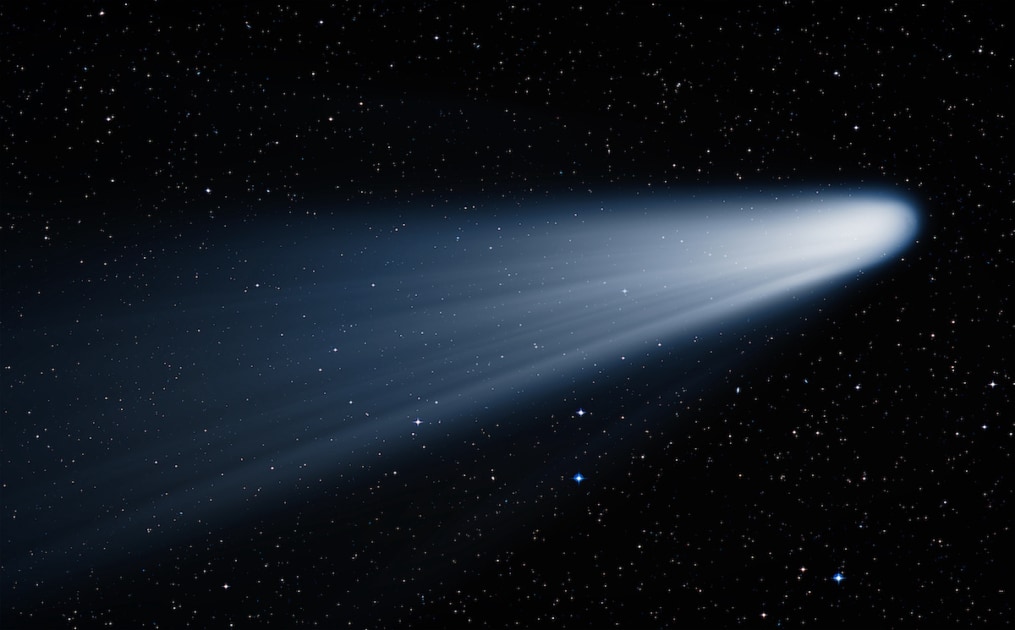
Quick Reference: The 2024 Halloween Comet
- Official name: C/2023 A3 (Tsuchinshan-ATLAS).
- Discovered: January 2023 by China’s Tsuchinshan Observatory and South Africa’s ATLAS survey.
- Peak brightness: mid-October 2024 (around Halloween).
- Maximum naked-eye magnitude: +0.5 to +1.0 (brighter than most stars).
- Orbit: roughly 80,000-year cycle around the sun.
- Visible again: not in our lifetimes; next perihelion is in the year 82000+.
In October 2024, the comet officially named C/2023 A3 (Tsuchinshan-ATLAS) became one of the brightest comets visible from the Northern Hemisphere in 25 years. Stargazers nicknamed it the Halloween Comet because its peak coincided with late October evenings. Here’s where the comet came from, why it was so bright, and what you saw if you caught it.
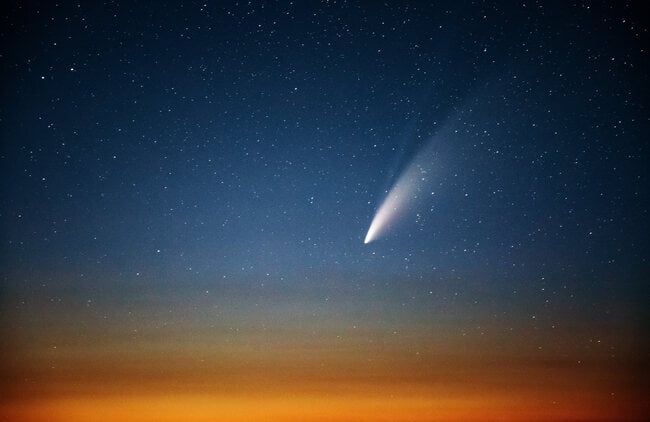
Where the Comet Came From
C/2023 A3 was discovered independently by two observatories in January 2023: China’s Tsuchinshan (Purple Mountain) Observatory and the South African Astronomical Observatory’s ATLAS survey. The hyphenated name credits both. The comet’s orbit is roughly 80,000 years long, meaning it had not visited the inner solar system since approximately 78000 BC.
Long-period comets like this one originate in the Oort Cloud, a roughly spherical reservoir of icy bodies at the edge of the solar system. Gravitational perturbations occasionally nudge one inward toward the sun. Each pass through the inner solar system melts off a fresh tail of ice and dust.
Why It Was So Bright
Comets are unpredictable. Most that are forecast to be bright underperform; a few overperform. C/2023 A3 overperformed because it survived perihelion (its closest approach to the sun, September 27, 2024) without breaking apart, and then made a close pass to Earth on October 12, 2024 at 0.47 AU (about 44 million miles).
Peak brightness was magnitude +0.5 to +1.0, which is roughly as bright as the brightest stars in the sky. The comet was visible to the naked eye for about three weeks in October 2024.
Where to See It Now
By June 2026, C/2023 A3 has faded back to telescope-only brightness as it heads back out toward the Oort Cloud. Telescopes can still track it; the naked-eye window is closed.
The next bright comet visible from the Northern Hemisphere is not yet predicted. New discoveries happen roughly once a year, but most don’t reach naked-eye brightness.

Frequently Asked Questions
Is the Halloween Comet still visible?
Only with a telescope as of 2026. The naked-eye window was October-November 2024.
When will the comet return?
Roughly 80,000 years from now. Long-period comets like this one don’t repeat within human time scales.
Was the comet really that bright?
Yes, briefly. Magnitude +0.5 to +1.0 makes a comet as bright as the brightest stars. Its long tail was visible from dark rural sites.
Are there other comets to watch for?
New discoveries happen frequently. Most don’t reach naked-eye brightness. The Almanac publishes alerts when one does, and the Sky and Telescope and NASA pages track the brightest current comets.



Joe Rao
Joe Rao is an esteemed astronomer who writes for Space.com, Sky & Telescope, and Natural History Magazine. Mr. Rao is a regular contributor to the Farmers' Almanacand serves as an associate lecturer for the Hayden Planetarium in New York City.
- Joe Rao

- Joe Rao
- Joe Rao
- Joe Rao





I remember as a kid looking for and to see it, woooow. Eclipse of the sun and seeing it while using Kodak negatives to do so. I should check in to see if our Big telescope might have a night time viewing on what’s happening in space. Aloha from Honolulu HI
I hope they have viewings for you!