How to Tell If the Moon Is Getting Bigger or Smaller

Have you ever looked up at the Moon and wondered whether it is getting bigger or smaller?
The Moon does not actually change size from night to night. What changes is how much of its sunlit side we can see from Earth. When the illuminated portion is growing, the Moon is waxing. When the illuminated portion is shrinking, it is waning.
Here is the easiest way to tell which direction the Moon is heading.
The Simple Rule: Right Is Growing, Left Is Leaving
For viewers in the Northern Hemisphere, including the United States:
- If the right side of the Moon is illuminated, the Moon is waxing, or getting brighter.
- If the left side is illuminated, the Moon is waning, or getting dimmer.
A helpful way to remember it is:
Right side lit: the Moon is growing toward full.
Left side lit: the Moon is leaving full.
This rule works for both crescent and gibbous Moons.
How to Recognize a Waxing Moon
A waxing Moon is becoming more illuminated each night. It appears after the New Moon and continues growing until it reaches the Full Moon.
The main waxing phases are:
- Waxing Crescent: A thin sliver appears on the right side.
- First Quarter: The right half of the Moon is illuminated.
- Waxing Gibbous: More than half is lit, and the bright portion continues increasing.
A waxing crescent is usually easiest to see low in the western sky shortly after sunset. As the Moon grows, it remains visible later into the evening.
You can find the exact phase and viewing information on the Farmers’ Almanac Moon Phases Calendar.
How to Recognize a Waning Moon
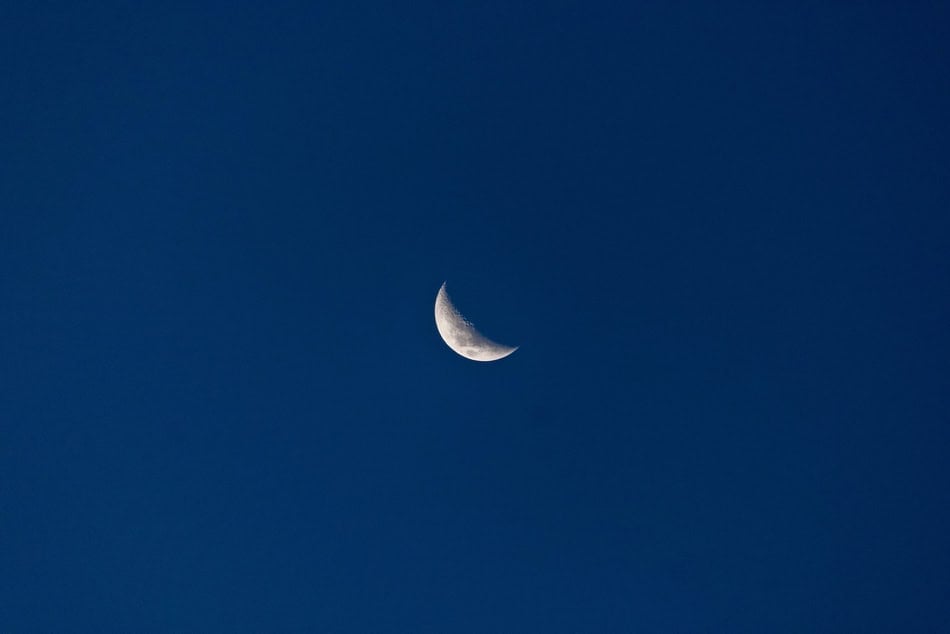
A waning Moon is becoming less illuminated each night. It appears after the Full Moon and continues shrinking until the next New Moon.
The main waning phases are:
- Waning Gibbous: More than half remains illuminated, but the bright portion is decreasing.
- Last Quarter: The left half is illuminated.
- Waning Crescent: Only a thin sliver remains on the left side.
A waning crescent is usually visible low in the eastern sky before sunrise. Each morning, it becomes thinner until the Moon disappears during the New Moon phase.
Crescent Moon: Use the “D” and “C” Trick
A thin crescent can provide an especially easy clue.
In the Northern Hemisphere:
- A crescent shaped roughly like a D is waxing.
- A crescent shaped roughly like a C is waning.
The “D” shape means the Moon is developing toward fullness. The “C” shape means it is closing down toward the New Moon.
This is only a Northern Hemisphere guide. South of the equator, the Moon’s appearance is reversed because observers are viewing it from a different angle.
Learn more in our guide to the Crescent Moon and what its two phases mean.
What About a Gibbous Moon?
A gibbous Moon is more than half illuminated but not yet full. The word “gibbous” simply describes its shape.
To tell whether a gibbous Moon is waxing or waning, look at which side is brighter:
- Brightness on the right means it is a waxing gibbous Moon.
- Brightness on the left means it is a waning gibbous Moon.
A waxing gibbous Moon is visible in the afternoon and evening. A waning gibbous Moon usually rises later at night and is often visible in the morning.
The Moon’s Eight Phases
The Moon passes through eight commonly recognized phases during a cycle lasting about 29.5 days.
| Phase | What You See | Is It Growing or Shrinking? |
|---|---|---|
| New Moon | Little or none of the lit side is visible | Beginning of the cycle |
| Waxing Crescent | Thin crescent on the right | Growing |
| First Quarter | Right half illuminated | Growing |
| Waxing Gibbous | More than half illuminated | Growing |
| Full Moon | Nearly the entire face is lit | Maximum illumination |
| Waning Gibbous | More than half illuminated on the left | Shrinking |
| Last Quarter | Left half illuminated | Shrinking |
| Waning Crescent | Thin crescent on the left | Shrinking |
NASA explains that the Moon does not produce its own light. Sunlight illuminates half of the Moon at all times, but our view of that sunlit portion changes as the Moon orbits Earth. Read NASA’s full Moon Phases guide.
Watch the Moon for Several Nights
If you are unsure, observe the Moon at approximately the same time for two or three nights.
- If the bright portion looks larger each night, the Moon is waxing.
- If the bright portion looks smaller each night, the Moon is waning.
You can make a simple Moon journal by sketching the shape you see each evening. This is a good activity for children and helps make the pattern easier to recognize.
The Moon also rises about 50 minutes later each day on average, so its position in the sky will gradually change as its phase changes.
Does the Moon Actually Get Bigger?
No. The Moon’s physical size does not change as it moves through its phases. The changing appearance is caused by the angle between the Sun, Earth, and Moon.
The Moon can sometimes appear larger when it is near the horizon. This is called the Moon illusion, and it happens because our brains compare the Moon with nearby trees, buildings, and other objects. It is separate from the Moon’s waxing and waning phases.
Can You See the Moon During the Day?
Yes. The Moon is often visible during daylight, especially during the quarter and gibbous phases.
A waxing gibbous Moon may be visible in the afternoon and early evening. A waning gibbous Moon may appear in the morning sky. Our guide on why you can see the Moon during the day explains when to look.
The Easiest Way to Remember
If you only remember one thing, remember this:
In the Northern Hemisphere, light on the right means the Moon is waxing. Light on the left means it is waning.
Look up for a few nights in a row, and the Moon’s monthly rhythm becomes easy to follow. Before long, you will be able to tell at a glance whether it is growing toward full or fading back toward New Moon.

- Tim Konrad

- Tim Konrad
- Tim Konrad
- Tim Konrad