Lunar Eclipse August 2026: What Time Is It & Where Can You See It?
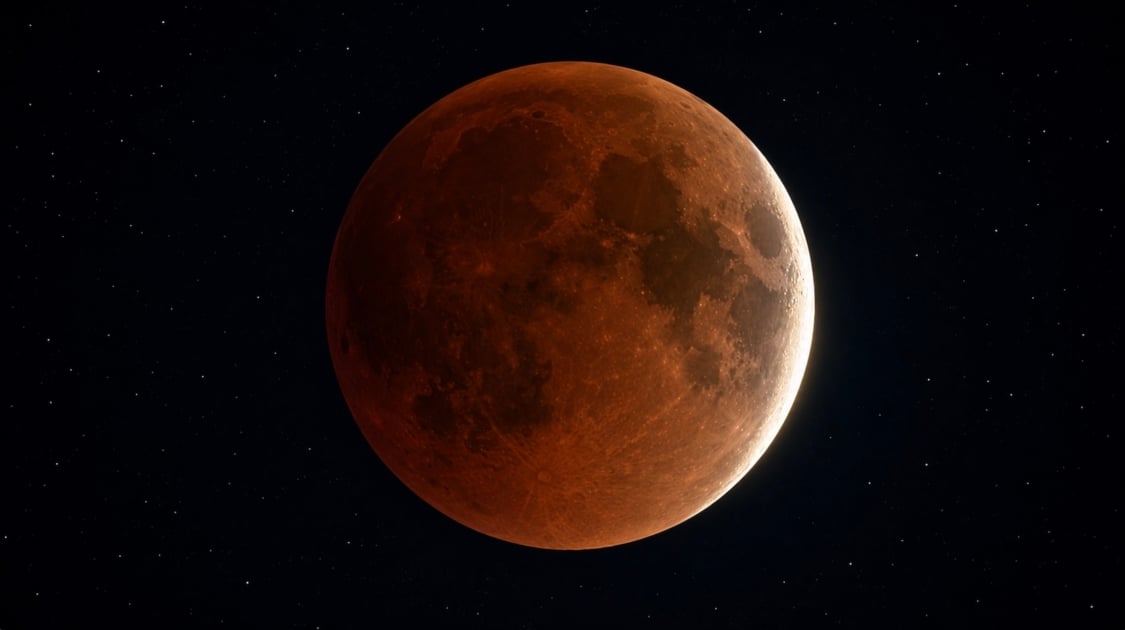
One of the most impressive sky events of 2026 arrives tomorrow night.
On the night of Thursday, August 27, into Friday, August 28, 2026, the Full Sturgeon Moon will pass deep into Earth’s shadow, producing a 96% partial lunar eclipse visible across most of North America.
And this is no ordinary partial eclipse.
At maximum eclipse, roughly 96.2% of the Moon’s visible surface will be covered by Earth’s dark inner shadow, leaving only a thin bright sliver along one edge. Much of the eclipsed Moon could take on shades of copper, rust, orange, or deep red, making it look remarkably similar to a total “Blood Moon.”
Best of all, you don’t need a telescope, binoculars, or eclipse glasses.
Just step outside and look up.

When Is the Lunar Eclipse?
The eclipse begins Thursday evening, August 27, and continues into the early morning hours of Friday, August 28.
The most dramatic portion begins when the Moon enters Earth’s dark umbra. That is when you will notice what looks like a dark “bite” beginning to move across the Moon.
2026 Lunar Eclipse Times
| Eclipse Stage | Eastern | Central | Mountain | Pacific |
|---|---|---|---|---|
| Penumbral eclipse begins | 9:23 p.m. | 8:23 p.m. | 7:23 p.m. | 6:23 p.m. |
| Partial eclipse begins | 10:33 p.m. | 9:33 p.m. | 8:33 p.m. | 7:33 p.m. |
| Maximum eclipse | 12:12 a.m. Aug. 28 | 11:12 p.m. | 10:12 p.m. | 9:12 p.m. |
| Partial eclipse ends | 1:51 a.m. | 12:51 a.m. | 11:51 p.m. | 10:51 p.m. |
| Penumbral eclipse ends | 3:01 a.m. | 2:01 a.m. | 1:01 a.m. | 12:01 a.m. |
The partial portion of the eclipse lasts approximately 3 hours and 18 minutes, giving skywatchers plenty of time to watch Earth’s shadow slowly cross the Moon.
Farmers’ Almanac tip: If you only want to go outside for the best part, aim for roughly 30 minutes before and after maximum eclipse.
For East Coast observers, that means approximately 11:40 p.m. to 12:40 a.m. EDT.
Where Will the Lunar Eclipse Be Visible?
North America is in an excellent position for this eclipse.
The eclipse will be visible across most of the United States, Canada, Mexico, Central America, and South America, with much of the Americas able to see the deepest portion of the eclipse.
Eastern United States
The Northeast, Mid-Atlantic, Southeast, and much of the Midwest should have an excellent view.
The Moon will already be well above the horizon when the partial eclipse begins, and maximum eclipse occurs shortly after midnight Eastern Time.
Cities including:
- New York
- Boston
- Philadelphia
- Washington, D.C.
- Atlanta
- Miami
should be able to see the eclipse well, assuming the weather cooperates.
Central United States
The Central Time Zone gets one of the most convenient viewing windows.
Maximum eclipse occurs at about 11:12 p.m. CDT Thursday night, making this a particularly family-friendly celestial event compared with eclipses that peak during the early morning hours.
Mountain Time Zone
Maximum eclipse arrives around 10:12 p.m. MDT, another excellent evening viewing time.
The wide-open skies of the Plains and Mountain West could provide spectacular views where skies remain clear.
West Coast
Observers in California, Oregon, and Washington will see the eclipse earlier in the evening.
Maximum eclipse occurs at approximately 9:12 p.m. PDT.
In some western locations, the Moon rises after the earliest stages of the eclipse have begun, but the dramatic partial phase and maximum eclipse should still be visible.
Hawaii
Hawaii will see the Moon rise with the eclipse already underway, so observers will miss some of the beginning but can still catch portions of the event. The official 2026 Farmers’ Almanac astronomy tables note that parts of the far western viewing area see the Moon rise already within Earth’s umbral shadow.
Will the Moon Turn Red?
Possibly—and that may be the most beautiful part of the night.
During a lunar eclipse, Earth sits between the Sun and the Moon.
Earth blocks most direct sunlight from reaching the lunar surface. But some sunlight passes through Earth’s atmosphere before being bent toward the Moon.
Our atmosphere scatters shorter blue wavelengths of light more efficiently while allowing more red and orange light to continue through.
That is the same basic reason sunsets often appear red or orange.
As a result, the portion of the Moon inside Earth’s shadow can glow:
Copper. Rust. Burnt orange. Brick red.
The exact color depends partly on conditions in Earth’s atmosphere at the time.
Learn more about lunar colors in our guide to why the Moon sometimes looks red, orange, yellow, or blue.
Is This a Blood Moon?
Technically, no.
The term “Blood Moon” is normally associated with a total lunar eclipse, when the entire Moon enters Earth’s umbral shadow.
Tomorrow night’s eclipse is a partial lunar eclipse.
But it is about as close to total as a partial eclipse can get.
At maximum, approximately 96% of the visible lunar disk will be covered, potentially leaving just a narrow bright edge while nearly the entire rest of the Moon glows dim red or copper.
That is why you may hear this event described informally as an “almost Blood Moon.”
How to Watch the Lunar Eclipse
Watching a lunar eclipse is wonderfully simple.
Unlike a solar eclipse, you do not need eclipse glasses or any special eye protection.
It is completely safe to watch the Moon with your naked eyes.
For the best view:
Find a dark location.
Getting away from bright streetlights will improve the contrast and make the Moon’s changing colors easier to appreciate.
Give yourself a wide view of the sky.
A backyard, field, beach, lakefront, park, or hilltop can all work well.
Let your eyes adjust.
Spend 10 to 15 minutes away from bright lights or your phone screen.
Bring binoculars if you have them.
They are not necessary, but binoculars make the advancing edge of Earth’s shadow especially dramatic.
Use a telescope for an even closer look.
You will be able to watch the shadow creep across lunar craters and maria.
And bring a chair. This is a slow-moving celestial event meant to be watched rather than rushed.
What Will the Eclipse Look Like?
At first, very little will seem to happen.
The Moon initially enters Earth’s faint outer shadow, called the penumbra.
This stage can be difficult to notice.
Then, at approximately 10:33 p.m. EDT, the Moon begins entering Earth’s darker inner shadow, called the umbra.
That is when the eclipse becomes unmistakable.
A dark curved edge will slowly spread across the lunar surface.
Over the next hour and 39 minutes, the shadow will cover almost the entire Moon.
At maximum eclipse around 12:12 a.m. EDT, only a small portion of the Moon will remain brightly illuminated.
Then the entire process reverses.
Earth’s shadow slowly retreats until the partial eclipse ends around 1:52 a.m. EDT.
Why Isn’t It a Total Lunar Eclipse?
It comes incredibly close.
The Moon does not pass directly through the center of Earth’s shadow tomorrow night.
Instead, it travels slightly north of the shadow’s center.
At greatest eclipse, the umbral magnitude will be approximately 0.932, meaning more than nine-tenths of the Moon’s diameter will be immersed in Earth’s dark shadow.
A tiny portion of the northern edge remains outside the umbra.
That narrow miss is the only thing preventing this from becoming a total lunar eclipse.
The Eclipse Happens During the Full Sturgeon Moon
There is another reason this eclipse is special.
It occurs almost exactly when August’s Full Sturgeon Moon reaches peak illumination.
The Full Sturgeon Moon officially peaks at approximately 12:18 a.m. EDT Friday, August 28—just six minutes after maximum eclipse.
The name Sturgeon Moon traditionally refers to the abundance of lake sturgeon historically caught in the Great Lakes during late summer.
Read our complete guide to the 2026 Full Sturgeon Moon, including its traditional names, history, and folklore.
You can also check our 2026 Full Moon calendar for every Full Moon date and time this year.
Why Do Lunar Eclipses Happen?
A lunar eclipse occurs when three objects line up:
Sun → Earth → Moon
Earth passes directly between the Sun and the Full Moon, causing Earth’s shadow to fall across the Moon.
There are actually two parts of Earth’s shadow.
Penumbra
The penumbra is the lighter outer portion of Earth’s shadow.
When the Moon enters it, the lunar surface may appear slightly dimmer.
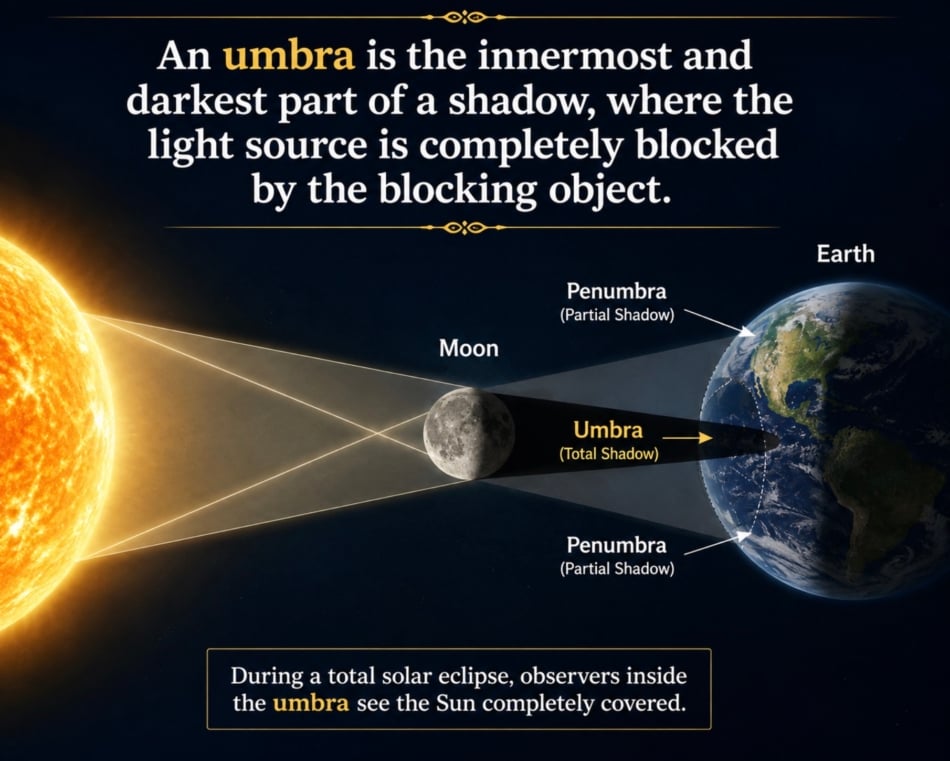
Umbra
The umbra is Earth’s dark central shadow.
When the Moon enters the umbra, the dramatic portion of a lunar eclipse begins.
Tomorrow night, nearly the entire Moon will enter this dark shadow.
For more eclipse dates and explanations, visit our Farmers’ Almanac eclipse calendar.
Can You Photograph the Lunar Eclipse?
Absolutely.
Even smartphones can capture the eclipse, although a real camera with a telephoto lens will produce much better results.
For smartphone photography:
- Use a tripod or brace the phone against something solid.
- Avoid excessive digital zoom.
- Tap on the Moon and reduce exposure if the Moon appears as a bright white blob.
- Try including trees, barns, mountains, church steeples, or other foreground objects for scale.
For DSLR or mirrorless cameras:
- Use a tripod.
- Use a telephoto lens if available.
- Shoot in manual exposure.
- Take many photos throughout the eclipse because the Moon’s brightness will change dramatically.
The Moon can become surprisingly dark near maximum eclipse, so expect to increase exposure as more of the lunar surface enters Earth’s shadow.
What If It’s Cloudy?
Unfortunately, clouds are the one thing no telescope can fix.
Check your local weather forecast Thursday afternoon and again around sunset.
If your area is near the edge of a clearing weather system, even driving 20 or 30 miles could make the difference between an overcast sky and an unforgettable view.
Remember that the eclipse lasts for hours. A cloudy sky at 10 p.m. does not necessarily mean the night is lost.
Clouds may break in time for maximum eclipse around midnight.
Do You Need Eclipse Glasses?
No.
This is extremely important because solar and lunar eclipses have very different viewing rules.
Looking at a solar eclipse requires certified solar eye protection.
Looking at a lunar eclipse does not.
A lunar eclipse is simply the Full Moon moving through Earth’s shadow and is completely safe to view with:
- Your naked eyes
- Binoculars
- Telescopes
- Cameras
No filter is required.
Don’t Miss Tomorrow Night’s Eclipse
If skies are clear where you live, this is one celestial event worth staying up for.
Beginning Thursday evening, Earth’s shadow will slowly creep across August’s Full Sturgeon Moon until nearly the entire lunar surface is darkened.
By 12:12 a.m. EDT Friday, roughly 96% of the Moon will be eclipsed, potentially glowing copper-red while only a thin bright sliver remains.
Set a reminder.
Step outside.
And look up.
Some of the finest sights in the night sky require expensive telescopes or travel to remote places.
Tomorrow night’s lunar eclipse requires neither.
Just a clear sky and a few minutes under the stars.
Lunar Eclipse 2026 FAQ
What time is the lunar eclipse tomorrow night?
The partial lunar eclipse begins at approximately 10:33 p.m. EDT Thursday, August 27, and reaches maximum at 12:12 a.m. EDT Friday, August 28.
What time is the lunar eclipse in Central Time?
Maximum eclipse occurs at approximately 11:12 p.m. CDT Thursday, August 27.
What time is the lunar eclipse in Mountain Time?
Maximum eclipse occurs at approximately 10:12 p.m. MDT Thursday, August 27.
What time is the lunar eclipse on the West Coast?
Maximum eclipse occurs at approximately 9:12 p.m. PDT Thursday, August 27.
How much of the Moon will be eclipsed?
Approximately 96.2% of the Moon’s visible disk will be inside Earth’s umbral shadow at maximum eclipse.
Will the lunar eclipse be visible in the United States?
Yes. Most of the United States will have an excellent view, although some western areas will see the Moon rise after the earliest stages have begun.
Will the Moon turn red?
Much of the shadowed Moon may appear orange, copper, rust-colored, or red because sunlight passing through Earth’s atmosphere is refracted toward the lunar surface.
Is it a total lunar eclipse?
No. It is an exceptionally deep partial lunar eclipse, with about 96% of the visible Moon covered at maximum.
Do I need eclipse glasses?
No. Lunar eclipses are completely safe to watch with the naked eye.
When is the Full Sturgeon Moon?
The Full Sturgeon Moon reaches peak illumination at approximately 12:18 a.m. EDT Friday, August 28, 2026, only minutes after maximum eclipse.
Where can I find future eclipse dates?
See the Farmers’ Almanac solar and lunar eclipse calendar and our Moon phase calendar.


- Farmers' Almanac Staff

- Farmers' Almanac Staff
- Farmers' Almanac Staff
- Farmers' Almanac Staff