10 Old-Time November Weather Sayings and the Stories Behind Them

From thunder over bare fields to ice on the duck pond, discover 10 November weather sayings and the seasonal observations behind them.
Earlier generations watched the weather closely. Their livelihoods depended on the weather, and memorable sayings helped them pass observations from one household to the next.
These November weather sayings preserve that tradition. Many appear in Richard Inwards’ Weather Lore, published in 1893. They are pieces of cultural history rather than dependable forecasts, but the skies, plants, and seasonal changes behind them are still worth a closer look.
1. Thunder in November
“Thunder in November, a fertile year to come.”
A November thunderstorm once carried a hopeful message: next year’s fields would be productive.
Where was it recorded?
Inwards included this saying in the November section of his 1893 collection. “Fertile” points to the agricultural concern at its heart: whether the coming growing season would provide a good harvest.
What is behind the observation?
NOAA explains that thunderstorms need moisture, unstable air, and a lifting mechanism. A passing front can provide that lift.
That explains how thunder can interrupt an autumn day. The leap from a November storm to next year’s harvest, however, belongs to folklore. The saying captures a farmer’s hope that a dramatic change overhead might promise something good in the fields.
2. November ice and the duck pond
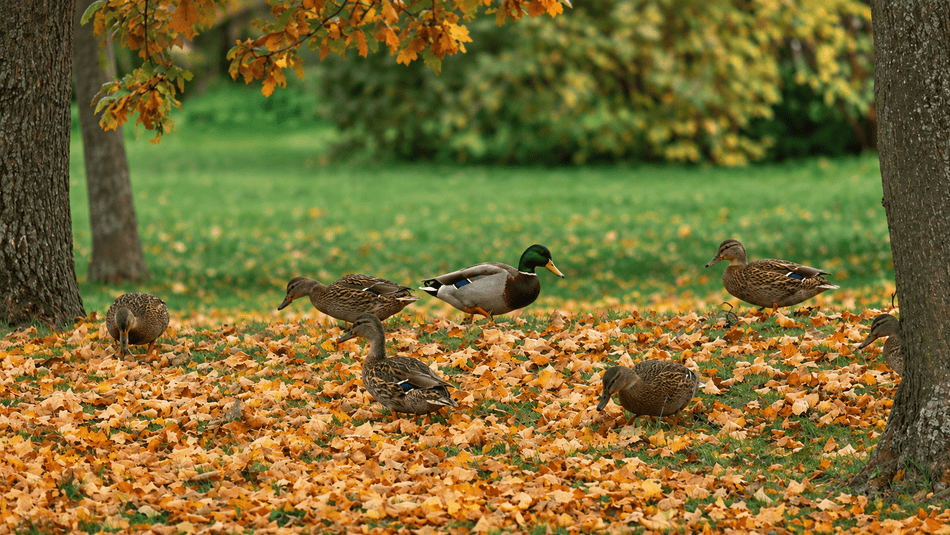
“If there’s ice in November that will bear a duck,
There’ll be nothing after but sludge and muck.”
According to this rhyme, an early freeze meant a muddy winter would follow.
Where was it recorded?
Inwards preserved this version. M. E. S. Wright’s 1913 A Medley of Weather Lore includes a related rhyme tied to Martinmas, November 11:
“If Martinmas ice can bear a duck,
The winter will be all mire and muck.”
Why a duck?
The image makes the observation easy to remember: a pond has frozen firmly enough for a bird to stand on it.
The forecast rests on a familiar theme in weather lore: an early taste of one kind of weather will be followed by its opposite. A November freeze certainly makes an impression, but it does not decide whether the months ahead will bring frozen ground or muddy boots.
3. November and the following March
“As November, so the following March.”
Will March resemble November? This old saying invites you to compare the two.
Where was it recorded?
It appears in Inwards’ November collection, linking the weather before winter with the weather near its end.
Why pair these months?
For much of the northern United States, November and March sit on opposite sides of winter. Both can bring a mixture of mild afternoons, cold winds, rain, and snow.
That makes the comparison an appealing one, even though the rhyme itself does not establish a forecasting relationship. Try keeping a simple weather journal: record November’s temperatures, precipitation, and notable storms, then see how March compares.
Related: Explore the Farmers’ Almanac Long-Range Weather Forecast.
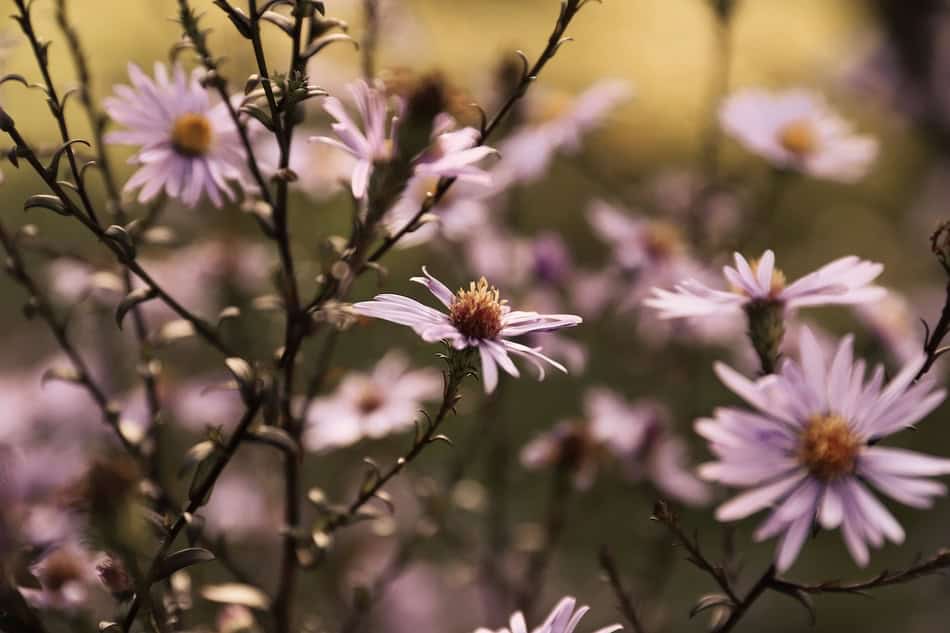
4. Flowers blooming late in autumn
“Flowers in bloom late in autumn indicate a bad winter.”
A blossom in November may feel like a gift. In this piece of folklore, it came with a warning.
Where was it recorded?
Inwards listed this among his November sayings. Its wording applies to late autumn generally, rather than to one particular date.
Why do some plants bloom out of season?
First, consider the plant. A flower blooming during its normal autumn season is different from a spring-flowering shrub producing an unexpected second show.
UConn’s Home & Garden Education Center explains that stress and changing weather can trigger fall reblooming in some spring-flowering woody plants.
Those unexpected flowers tell a story about conditions the plant has experienced. They do not establish how severe the coming winter will be.
5. Heavy November snow
“A heavy November snow will last till April.”
For anyone who has watched an early snowfall cover the yard, this saying may sound either wonderful or alarming.
Where was it recorded?
Inwards identified it as a New England saying, an important clue to its regional setting.
Could November snow really linger that long?
An early snowfall can become the beginning of a lasting winter snowpack in a sufficiently cold location. But the weather afterward matters.
The National Snow and Ice Data Center explains that snow persistence depends on temperature, sunshine, and weather such as wind and rain.
The proverb is best read as a warning that winter may settle in early, rather than a promise that every November snowflake will still be there in April.
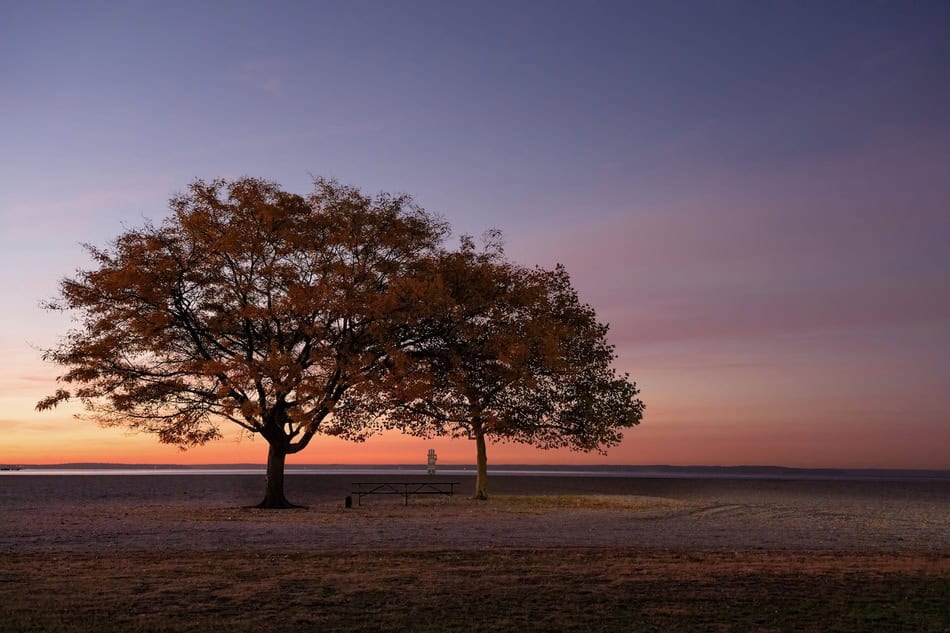
6. Leaves lingering past Martinmas
“If the leaves of the trees and grape vines do not fall before Martin’s Day, a cold winter may be expected.”
Still waiting for the last leaves to drop? Earlier weather watchers might have seen a winter warning in those stubborn branches.
Where was it recorded?
Inwards included this saying under St. Martin’s Day, or Martinmas, observed on November 11.
Why do some leaves hang on?
Brown leaves remaining on certain deciduous trees have a name: marcescence.
University of Illinois Extension notes that oaks and beeches can retain leaves through winter, particularly when young.
Before treating a leafy November tree as a forecast, consider its species and whether the leaves are still green or already dry and brown. What looks unusual on one tree may be perfectly ordinary on another.
7. Geese on ice at Martinmas
“If the geese at Martin’s Day stand on ice, they will walk in mud at Christmas.”
Here is another old promise that an early freeze will give way to a thaw.
Where was it recorded?
This saying appears in Inwards’ collection, linking November 11 with December 25.
What were people watching?
Despite the starring role given to geese, the sign is really the condition of the water beneath their feet.
A frozen pond represented an early arrival of winter. Mud at Christmas represented a later reversal. The birds turn that contrast into a scene anyone can picture.
Read alongside the duck-pond rhyme, it also shows how similar ideas appeared in different forms: change the bird or the calendar date, and the same hope for a milder spell survives.
8. November and the threshing flail
“November take flail,
Let ships no more sail.”
Some November sayings offered a seasonal instruction instead of a prediction.
Where was it recorded?
Inwards attributed this rhyme to Tusser, the agricultural writer.
What does it mean?
A flail was a hand tool used for threshing harvested grain. The first line turns attention to work associated with bringing in and processing the harvest; the second urges sailors to heed the season.
Rather than telling us whether February would be cold, the rhyme tells us how November was understood: a time to turn toward winter work and prepare for rough weather.
Its practical spirit remains familiar. Finish the outdoor jobs, check the supplies, and get ready for the season ahead.
9. November 21 and the winter ahead
“As November 21st, so is the winter.”
One November day, according to this saying, offered a preview of an entire season.
Where was it recorded?
Inwards included the proverb in his November calendar, although the entry does not identify its original author or explain why that particular date was chosen.
How was it meant to be read?
A cold or stormy November 21 suggested a similar winter; a mild or settled day suggested the opposite.
The date gives modern readers an easy occasion to join the old tradition of watching and recording. Note the day’s temperature, sky, wind, and precipitation, then compare those observations with the winter that actually follows.
Related: Read the Farmers’ Almanac Winter Weather Forecast.
10. St Catherine and February weather
“As at Catherine foul or fair, so will be the next February.”
This late-November saying looked past Christmas and January to the weather of February.
Where was it recorded?
Inwards placed it at November 25, St. Catherine’s Day.
What did foul or fair mean?
The rhyme asks observers to compare unsettled or pleasant weather on that date with conditions in the following February. It does not specify a temperature or snowfall total.
Along with Martinmas, St. Catherine’s Day shows how named dates supplied memorable hooks for weather sayings. A familiar day and a short rhyme made a prediction easy to remember—and easy to repeat when the weather seemed to fit.
Why November weather sayings still interest us
A frozen pond, a late flower, or a tree full of rattling leaves can turn an ordinary November walk into a small investigation.
That is part of the enduring appeal of weather folklore. The predictions may not hold up, but the habit of paying attention still has value. Notice which trees lose their leaves first. Write down the first snowfall. Watch how often a cold spell gives way to a thaw.
You may discover something about your own local seasons—and remember a saying your grandparents used along the way.
Which November weather saying did you grow up hearing? Share it in the comments, along with where you grew up.
Keep reading
- November Weather Lore from the Farmers’ Almanac Archives
- October Weather Sayings and the Stories Behind Them
- More Weather Lore
Sources
Historical sayings: Richard Inwards, Weather Lore (1893), November entries, printed pages 36–37; M. E. S. Wright, A Medley of Weather Lore (1913), November section.
Modern scientific context: NOAA, UConn Home & Garden Education Center, University of Illinois Extension, and the National Snow and Ice Data Center, linked in the relevant sections.


- Farmers' Almanac Staff

- Farmers' Almanac Staff
- Farmers' Almanac Staff
- Farmers' Almanac Staff