

Sturgeon Moon 2026: August Full Moon Date, Names, and Viewing Guide
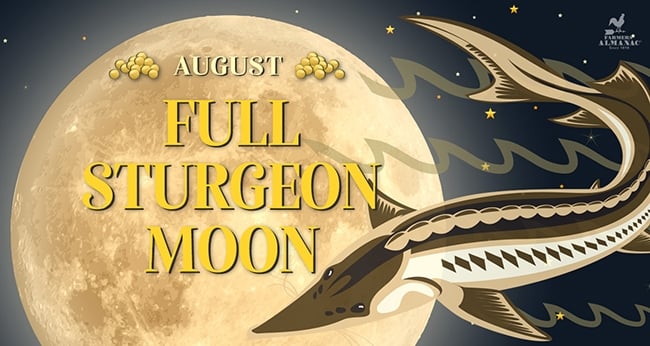
Quick Reference
- Sturgeon Moon 2026: Friday, August 28, 2026
- Peak illumination: 12:18 a.m. Eastern Daylight Time (04:18 UTC)
- Deep partial lunar eclipse: the same night, 96% of the Moon slides into Earth’s shadow, greatest at 12:12 a.m. EDT on August 28 (04:12 UTC)
- Rule: the August full Moon is the Sturgeon Moon
- Other names: Grain Moon, Green Corn Moon, Red Moon, Lightning Moon, Wyrt Moon, Black Cherries Moon
- Best viewing: Thursday night, August 27, into the small hours of Friday, August 28
- Why “Sturgeon”: August is when lake sturgeon in the Great Lakes were caught in greatest numbers by Algonquian-speaking nations
- Bonus: the Perseid meteor shower peaks earlier in the month (August 12 to 13)
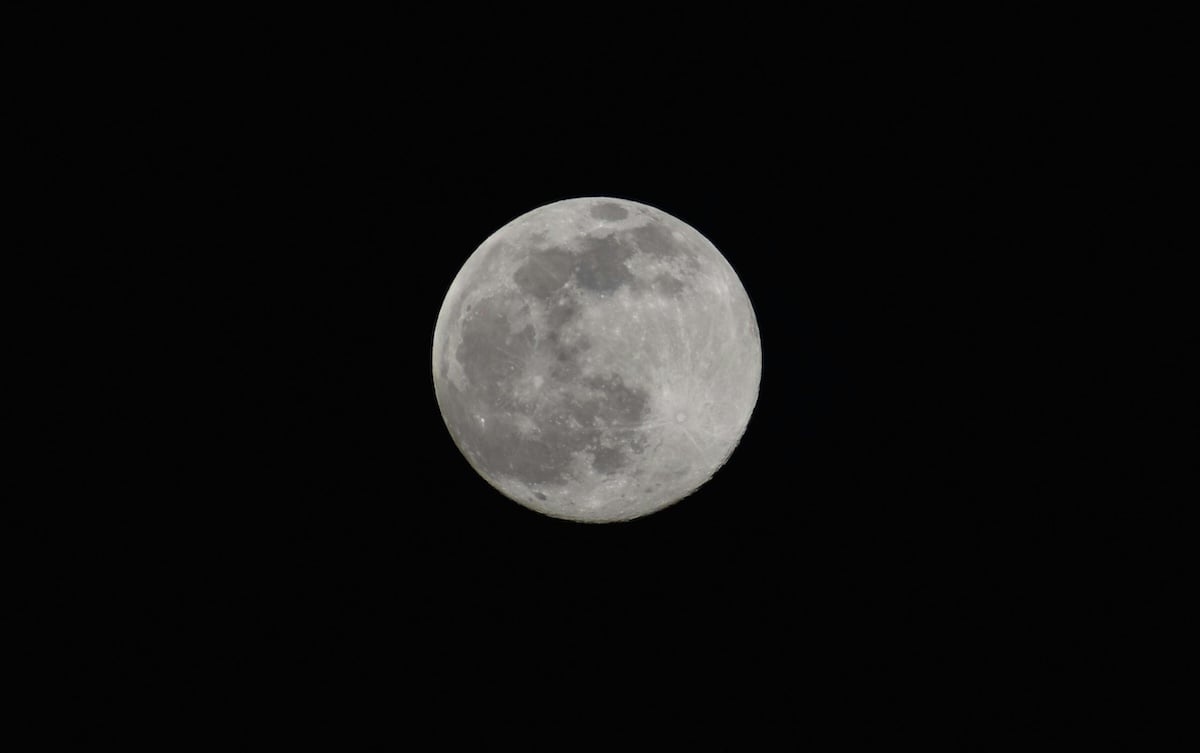
The Sturgeon Moon, August’s full Moon, peaks on Friday, August 28, 2026, at 12:18 a.m. Eastern Daylight Time (04:18 UTC). It is named for the lake sturgeon, the giant freshwater fish of the Great Lakes, which Algonquian-speaking nations caught in greatest numbers under this Moon. Older almanacs also call it the Grain Moon, the Green Corn Moon, the Red Moon, the Lightning Moon, and the Anglo-Saxon Wyrt Moon. This guide gives you the exact date and time, the folklore behind every name, what else is happening in the August sky (Perseid meteors included), and how to step outside and see it for yourself. In 2026 there is a bonus: the Sturgeon Moon rises straight into Earth’s shadow, producing a deep partial lunar eclipse the night of August 27 into August 28, with 96 percent of the disc in shadow at greatest eclipse and the whole event visible across the Americas.
When Is the Sturgeon Moon 2026?
Full Sturgeon Moon, August 2026: Friday, August 28
Peak illumination: 12:18 a.m. Eastern Daylight Time (04:18 UTC)
Last full Moon of summer (Northern Hemisphere)
The Moon reaches full phase at the same instant everywhere on Earth, so the clock shifts by time zone. For North American readers the peak lands at 12:18 a.m. Eastern, 11:18 p.m. Central on Thursday night, 10:18 p.m. Mountain on Thursday, and 9:18 p.m. Pacific on Thursday, with the 04:18 UTC peak falling in pre-dawn hours across the Atlantic. That means most of the United States and Canada will see the Sturgeon Moon look fullest the night of Thursday, August 27, with the actual instant of peak slipping into the small hours of Friday for the East Coast. The disc reads as full to the naked eye for about a day on either side of peak.
The rule is simple: the August full Moon is the Sturgeon Moon. We confirmed the 2026 date and time against the U.S. Naval Observatory’s 2026 lunar phase tables, which list every full Moon, new Moon, and quarter for the year to the minute. For the full list of 2026 Full Moon names, dates, and times, see our calendar.
A Deep Partial Lunar Eclipse the Same Night
The 2026 Sturgeon Moon does not just rise full. It rises into Earth’s shadow. On the night of August 27 into August 28, 2026, the full Moon passes through the umbra, the dark inner cone of Earth’s shadow, producing a deep partial lunar eclipse. At maximum, nearly the entire disc sits inside the umbra, leaving only a narrow bright rim along one edge.
North and South America get the best of it, and unlike a solar eclipse this one needs no filters, no glasses and no equipment. Step outside, look up, and give your eyes a few minutes. The shadowed portion often takes on a coppery cast, the same effect that earns total lunar eclipses the “blood moon” nickname.
That makes August 2026 an unusually full month overhead: a total solar eclipse on August 12 (partial from the United States), the Perseid meteor shower peaking that same moonless night, and a deep partial lunar eclipse to close the month. Two eclipses in one lunar cycle is normal enough astronomically, but it is not something you get to watch every year.
Eclipse Timing, Night of August 27 into August 28, 2026
| Stage | UTC | Eastern | Central | Mountain | Pacific |
|---|---|---|---|---|---|
| Penumbral shadow first touches | 01:24, Aug 28 | 9:23 p.m. Aug 27 | 8:23 p.m. Aug 27 | 7:23 p.m. Aug 27 | 6:23 p.m. Aug 27 |
| Partial eclipse begins (dark bite appears) | 02:34, Aug 28 | 10:33 p.m. Aug 27 | 9:33 p.m. Aug 27 | 8:33 p.m. Aug 27 | 7:33 p.m. Aug 27 |
| Greatest eclipse, 96% of the disc in shadow | 04:13, Aug 28 | 12:12 a.m. Aug 28 | 11:12 p.m. Aug 27 | 10:12 p.m. Aug 27 | 9:12 p.m. Aug 27 |
| Partial eclipse ends | 05:52, Aug 28 | 1:51 a.m. Aug 28 | 12:51 a.m. Aug 28 | 11:51 p.m. Aug 27 | 10:51 p.m. Aug 27 |
| Penumbral shadow leaves | 07:02, Aug 28 | 3:01 a.m. Aug 28 | 2:01 a.m. Aug 28 | 1:01 a.m. Aug 28 | 12:01 a.m. Aug 28 |
The partial phase runs 3 hours and 18 minutes end to end, so there is no need to catch a single fleeting moment. The umbral magnitude is 0.9319, meaning 93 percent of the Moon’s diameter and roughly 96 percent of the visible disc slides into the dark inner shadow. That is about as close to a total lunar eclipse as a partial one gets.
Where You Can See It
The whole eclipse is visible across North and South America. From the central and eastern United States the Moon is well up in the sky for every stage, start to finish. Farther west the Moon rises with the eclipse already under way in some locations, but greatest eclipse and the long recovery afterwards are still comfortably visible from the West Coast. The event sets over Europe, Africa and the Middle East, and rises over the central Pacific.
One quiet detail for the sky watchers: this full Moon arrives about six days after apogee, its farthest point from Earth, so the disc will look slightly smaller than an average full Moon. It is the opposite of a supermoon, and most people will never notice, but it is the reason the Moon takes its time crossing the shadow.
Why It’s Called the Sturgeon Moon
August is when the lake sturgeon, the largest freshwater fish in North America, was caught in greatest numbers in the Great Lakes. Lake sturgeon (Acipenser fulvescens) can live more than a hundred years, top six feet in length, and exceed 200 pounds, with a long armored body that looks closer to a small dinosaur than a modern fish. They were a staple food for Algonquian-speaking nations across the Great Lakes basin, and August was the month when warm shallow waters made them most accessible. The August full Moon set the schedule for fishing trips and feasts, so the Moon and the fish share a name.
That sturgeon-and-summer connection has a quiet modern coda. Lake sturgeon were nearly wiped out by 1900, the victims of overfishing, dam-building, and habitat loss, and the species spent most of the twentieth century on the brink. Today the U.S. Fish and Wildlife Service lists lake sturgeon as a species of conservation concern, and biologists in Maine, Wisconsin, Michigan, and Ontario are running long-term restoration programs to bring the populations back. When you read “Sturgeon Moon” on the August page of an almanac, you are reading a calendar entry that is older than the country and a reminder that the fish itself is still here, just barely. The Almanac likes that kind of folklore: a real animal, a real season, a name worth keeping.
And these are no ordinary fish. Lake sturgeon are living relics whose ancestors date back well over 100 million years. Some grow more than seven feet long, weigh hundreds of pounds, and live for a century or more.
Other August Full Moon Names
The Sturgeon Moon is the most common American name for August’s full Moon, but it is not the only one. August was a busy month across cultures: grain coming in, corn ripening, storms rolling through warm afternoons, and the year tipping toward harvest. Every region named the Moon for what mattered most.
- Grain Moon. The traditional European name. August was the month for cutting wheat, barley, oats, and rye across much of England and continental Europe, and the full Moon marked the height of the small-grain harvest. The name still appears in modern British almanac listings alongside Sturgeon Moon.
- Green Corn Moon. Used by several Eastern Woodland nations to mark the moment when corn was filling its kernels but had not yet hardened to its final dry state. Green Corn ceremonies, including those of the Cherokee and Creek, traditionally fell near this Moon and marked the first taste of the new crop.
- Red Moon. An old name for the rich coppery cast the rising August Moon can take. Late-summer haze, smoke, and humidity all scatter blue light and let the warmer red and orange wavelengths through, the same physics that paints sunsets. On a still August evening near the horizon, the Sturgeon Moon often looks more amber than silver.
- Lightning Moon. A name credited to the dry-lightning storms that roll across the Great Plains and the Mountain West in late summer. August thunderstorms come without the early-season rain of June and July, which makes the lightning more visible from a distance and more dangerous to dry fields and forests.
- Wyrt Moon. An Anglo-Saxon name (sometimes spelled Wort Moon) meaning roughly “plant Moon” or “herb Moon.” August was the month for gathering medicinal herbs at peak potency, drying them for winter, and laying in the home apothecary. The Old English root wyrt survives in modern words like “mugwort” and “St. John’s wort.”
- Black Cherries Moon. Used by the Assiniboine of the northern Great Plains to mark the late-summer ripening of wild black cherries (Prunus serotina), one of the last fruits of the year before the autumn berries. The name is a calendar entry: when the Moon comes around full, the cherries are ready.
Different cultures, same Moon, same week. The Almanac has used all of these names interchangeably across two centuries of full Moon coverage; we lead with Sturgeon Moon because it is the one most American readers recognize.
August Sky Highlights
The Sturgeon Moon is the headline, but August’s sky has more on offer. With the full Moon falling late in the month, the first three weeks of August give you long, dark, summer nights that are some of the best for stargazing all year.
- Perseid meteor shower. The Perseids peak the night of August 12 into August 13, 2026, three full weeks before the Sturgeon Moon. That timing is unusually kind. The Moon is new on August 12, so there is no moonlight at all at the Perseid peak, and viewing conditions are about as good as the year offers. According to NASA, the Perseids typically produce 50 to 100 meteors per hour at peak from a dark site, often with bright fireballs. Plan an after-midnight watch on August 12 or 13, lying back on a blanket, looking generally up and away from city light.
- The Milky Way arch. August is the last big month for the summer Milky Way. From a dark site, the bright galactic core arcs across the southern sky after dark, anchored by the teapot of Sagittarius. The early August nights, before the Sturgeon Moon brightens the sky, are the strongest viewing window.
- Saturn rises in the early evening and is well placed for viewing all August. A small backyard telescope shows the rings clearly; binoculars show a notable bright point near the eastern horizon after sunset.
- Jupiter climbs higher in the morning sky through August, dominating the pre-dawn east. A pair of binoculars resolves four moons in a line across its disc, the same view Galileo recorded in 1610.
- Venus and Mars sit low in the west after sunset early in the month, fading and shifting position through August. Catch them in the first half of the month while the twilight window is still generous.
A note on the Perseids and the Sturgeon Moon. In many years the two compete, with a bright full Moon washing out the fainter meteors. In 2026, the calendar is kind: Perseid peak comes weeks before the full Moon, so the dark-sky window is wide open. If you only plan one night of August sky-watching this year, the night of August 12 to 13 is the one to circle.
One more note for the night of the Sturgeon Moon itself. The Moon is bright enough to read by, which makes August 28 a poor night for chasing meteors or faint nebulae but a great night for a porch chair, a moonlit walk, or a long late-summer drive on a country road. Use the bright Moon for what it is good for.
Sturgeon Moon Folklore
Old almanac folklore for August leans on two themes: harvest timing and weather watching. The Sturgeon Moon sits at the year’s quiet turning point, the last full Moon of Northern Hemisphere summer, with the first hints of autumn already running through the morning air. The sayings collected below come from American, English, and Anglo-Saxon farming traditions, and they all carry the same honest caveat: this is the working memory of two centuries of farmers, not a forecast.
- “If the Sturgeon Moon rises red, look for a hot week to follow.” Red coloring on a rising August Moon means atmospheric haze, often heat haze. The reading is folk physics, not a guarantee, but it tracks often enough to repeat.
- “A ring around the August Moon means rain by morning.” Reliable enough to be common. The ring is moonlight bent through high cirrus clouds, which often arrive ahead of a frontal system. Modern meteorology backs this one up about as well as folk weather lore gets.
- “When the corn shows silk under the Sturgeon Moon, the harvest is six weeks away.” A planning saying from settled farming nations. Corn silks emerge a few weeks before the ears are ready to pick, and August is the silk window for most American varieties. The math holds up surprisingly well.
- “As the August Moon, so the September weather.” An old balancing rule. If August is dry and hot under the Sturgeon Moon, September often arrives wet and cool; if August is mild, September can turn dry. Modern climate data only weakly supports the swap, but the saying still surfaces because it nudges farmers to plan ahead for both ends.
The honest caveat: direct scientific support for these rules is uneven. We keep them because they are the working memory of two centuries of farmers, and because they pair well with the dated, math-based long-range forecast the brand has published since 1818.
Late-Summer Gardening and Best Days
August is a turning month in the garden. The summer harvest is hitting full stride, the spring planting is winding down, and the first fall greens go in the ground for autumn picking. The Almanac’s Best Days Calendar and Gardening by the Moon tools both lean on the Sun-and-Moon framework the brand has used since 1818. Here is how the Sturgeon Moon fits in.
- Harvest above-ground crops on the waxing Moon (the two weeks leading up to August 28). Tomatoes, peppers, summer squash, beans, cucumbers, and basil hold peak moisture and flavor when picked through this window.
- Sow fall greens on the waxing Moon (early to mid August). Kale, spinach, lettuce, arugula, and cilantro all establish well in late-summer soil warmth and head up properly as day length drops.
- Plant root crops and bulbs on the waning Moon (the two weeks after August 28, roughly August 29 through September 11). Carrots, beets, turnips, garlic, and fall onions go in.
- Harvest for storage in the last quarter, after the Sturgeon Moon, when sap has pulled back and produce keeps longer in the root cellar or pantry.
- Prune to discourage growth on the waning Moon. Prune to encourage growth on the waxing Moon. Tomato suckering and basil pinching both pay off when timed this way.
- Can and preserve on Best Days listed in the full Almanac. The framework is the same one editors have refined across thirty years of work, now in the hands of editor Tim Konrad.
For planting windows tied to your zip code and zone, the Gardening by the Moon calendar gives the specific dates. For non-garden Best Days (haircuts, fence-setting, weaning livestock, painting), the Best Days Calendar lists the right windows by activity.
How to See the Sturgeon Moon
The Sturgeon Moon is easy to find. Peak phase falls just after midnight Eastern on Friday, August 28, which means most North Americans will see the brightest, fullest disc late Thursday evening, August 27, into the small hours of Friday. The Moon rises in the east-southeast around sunset, climbs through the southern sky overnight, and sets in the west-southwest near sunrise. No telescope, no binoculars, no app required. A clear view of the eastern horizon and a porch or a field will do.
Best Viewing by Region
| Region | What to expect |
|---|---|
| Northeast and Great Lakes | Warm humid air, often a coppery rising Moon over the lakes. Maine, Vermont, and the Adirondacks get particularly clear viewing once any afternoon haze settles out. |
| Southeast and Gulf | Sticky nights and frequent cloud cover. Check the forecast a day ahead; if a clear window opens around moonrise, take it. |
| Mountain West and Plains | Dry air, open horizons, and clear southern views give some of the best Sturgeon Moon nights in the country. Watch for late-evening dry lightning on the high plains. |
| Pacific Northwest | Late-summer wildfire smoke can color the Moon deep amber or even red, the Red Moon name made literal. Air quality matters more than cloud cover this time of year. |
| Canadian Prairies and North | Long twilight and cool overnight air. The Sturgeon Moon rides higher in the southern sky from northern latitudes than the lower June and July full Moons did. |
Practical Tips
- Step outside 20 to 30 minutes before sunset on Thursday, August 27, to watch moonrise low in the east-southeast.
- Let your eyes adjust for 5 to 10 minutes; the rising Sturgeon Moon often shows a warm amber or copper tint at the horizon before lifting to silver-white.
- For photography, a phone in night mode handles the wide scene; a DSLR at 1/125 second, f/8, ISO 200 will hold detail on the disc itself.
- The Moon looks largest near the horizon, an optical illusion that has fooled people for centuries. Catch it then for the most dramatic photo.
- Check local moonrise and moonset for your zip code in our Moon Phases Calendar before heading out.
- If you missed the Perseid peak on August 12 to 13, the shower keeps producing meteors at a lower rate through August 24. The late-August nights before the Sturgeon Moon are the last good dark-sky window for catching a few strays.
Plan a porch night. Pick the night of August 27 that fits your week, set the alarm a little before sunset, and let the last full Moon of summer do the work. If clouds roll in, the night of August 28 still shows a Moon that reads as full to the naked eye. Either way, look up.

August Around the Almanac
The Sturgeon Moon is the headline, but August carries plenty more of its own. Read about August’s birthstone (peridot), the August birth-month symbols and fun facts (the gladiolus and poppy among them), and the summer solstice that opened the season back in June. For sign-by-sign zodiac planning under this same full Moon, see our full Moon horoscopes companion guide.
Sturgeon Moon 2026 FAQ
When is the Sturgeon Moon in 2026?
The Sturgeon Moon peaks on Friday, August 28, 2026, at 12:18 a.m. Eastern Daylight Time (04:18 UTC). Peak falls just after midnight on the East Coast, which means most of North America will see the fullest disc the night of Thursday, August 27, into the small hours of Friday.
Is there a lunar eclipse with the Sturgeon Moon in 2026?
Yes. The 2026 Sturgeon Moon passes through Earth’s shadow on the night of August 27 into August 28, producing a deep partial lunar eclipse. At greatest eclipse, 12:12 a.m. Eastern Daylight Time on August 28 (04:12 UTC), about 96 percent of the visible disc sits inside the dark umbral shadow, leaving a bright sliver along the northern edge. The partial phase lasts 3 hours and 18 minutes, and the whole eclipse is visible from North and South America.
Do I need special glasses to watch the lunar eclipse?
No. Unlike a solar eclipse, a lunar eclipse is completely safe to look at with your bare eyes. You need no filters, no eclipse glasses, and no telescope. Step outside, let your eyes adjust for 15 or 20 minutes, and look up. Binoculars will deepen the colour if you have a pair, but they are a luxury rather than a requirement.
Will the Sturgeon Moon turn red in 2026?
Partly. The shadowed portion of the disc usually takes on a coppery or rust-red cast, the same sunset-light effect that gives total lunar eclipses the “blood moon” nickname. Because this is a deep partial rather than a total eclipse, a narrow rim of the Moon stays brilliantly white throughout, so the contrast between the bright edge and the red shadow is unusually striking.
Why is the August full Moon called the Sturgeon Moon?
Algonquian-speaking nations of the Great Lakes named the August full Moon for the lake sturgeon, which was caught in greatest numbers in late summer in Lakes Huron, Erie, Michigan, and Ontario. The fish was a primary food source, and the full Moon set the schedule for fishing trips and feasts.
What are other names for the August full Moon?
The August full Moon is also called the Grain Moon (European, for the small-grain harvest), the Green Corn Moon (Eastern Woodland nations, for corn filling its kernels), the Red Moon (for the coppery haze of late summer), the Lightning Moon (for late-summer dry-lightning storms), the Wyrt Moon or Wort Moon (Anglo-Saxon, “plant Moon”), and the Black Cherries Moon (Assiniboine).
Can I see the Perseid meteor shower with the Sturgeon Moon?
Not at peak, but the timing in 2026 is unusually kind. The Perseids peak the night of August 12 into August 13, three full weeks before the Sturgeon Moon, and the Moon is new that same afternoon, so there is effectively no moonlight at all. That means dark skies and 50 to 100 meteors per hour from a dark site. The Sturgeon Moon itself is too bright for serious meteor watching on August 28.
Is the Sturgeon Moon the last full Moon of summer?
Yes, for the Northern Hemisphere. The autumnal equinox falls on Tuesday, September 22, 2026, and the next full Moon, the Harvest Moon, peaks Sunday, September 26, on the autumn side of the line. The Sturgeon Moon is the last full Moon of Northern Hemisphere summer.
Why does the August full Moon sometimes look red?
Late-summer haze, humidity, dust, and (in some western regions) wildfire smoke all scatter the cooler blue wavelengths of moonlight and let warmer red and orange light through, the same physics that paints a sunset red. A rising August Moon near the horizon often shows a coppery or amber tint that fades to silver-white as the Moon climbs higher.
Is the lake sturgeon still around?
Yes, but barely. Lake sturgeon were nearly wiped out by 1900 due to overfishing, dam construction, and habitat loss, and they spent most of the twentieth century on the brink. The U.S. Fish and Wildlife Service today lists lake sturgeon as a species of conservation concern, and long-term restoration programs in Maine, the Great Lakes states, and Ontario are slowly bringing populations back. The Sturgeon Moon name is a reminder that the fish itself is still here.
What full Moon comes after the Sturgeon Moon?
The Harvest Moon, September’s full Moon, peaks on Saturday, September 26, 2026. The Harvest Moon is the full Moon nearest the autumnal equinox, and in 2026 the September full Moon takes that name. See our Full Moon Calendar for every 2026 date and time.
Join the Discussion
What is your favorite name for August’s full Moon?
Share your Sturgeon Moon plans, photos, and questions in the comments.
Curious where the name actually comes from, and what else this Moon has been called across different traditions? We keep a companion piece on the Sturgeon Moon name origin and alternative names.


Melissa Mayntz
Melissa Mayntz is a writer who specializes in birds and birding, though her work spans a wide range—from folklore to healthy living. Her first book, Migration: Exploring the Remarkable Journeys of Birds was published in 2020. Mayntz also writes for National Wildlife Magazine and The Spruce. Find her at MelissaMayntz.com.
- Melissa Mayntz

- Melissa Mayntz
- Melissa Mayntz
- Melissa Mayntz





This information is not correct for 2026. The August full moon peaks on Friday, August 28 at 12:18 AM (Eastern). Sun is in Virgo, moon is in Pisces.
737
Sturgeon season opens in Michigans Upper Peninsula usually the first Saturday after Lanor Day. A yearly trek from Florida to fish for the elusive Sturgeon. Needs to be 60” to keep. But we are Catch and Release folk!!
I like to make important decisions based on moon phases
Hello
I have a question. New at this. Is there anyone that could tell me the best way to use a full moon to charge my crystals?
Sit them outside when the sun sets. Let the moon charge them. Get them the next morning around 9 or 10 am so that the sunlight can also hit them. I only charge mine by moonlight but there are several ways to charge them. Tomorrow is the full moon so get ready 🙂
I’ve 20 surgeries. Most with complications…My neighbor looked up the dates and time of my previous surgeries and told me in no uncertain terms I had done more than half of those on the wrong time of the moon. And I mean I’ve had complications that should’ve not even happened including problems with Dr. that saw no reason I should be dealing with those problems and acted as if I just wanted to complain, until I made them take my the cast of my leg, and it was literally rotting. Reason pain killers, shots wouldn’t help…
I agree, my surgeon wouldn’t listen to me when I told him June 4th 2022 was a bad day for my operation as it was a hive moon and my lymphatic system was extra sensitive why don’t they listen!
LoVe the Farmers Almanac. My husband & and I rely on it for our Garden & our other plants, our dog, canning, baking, etc…. ❤️ Thank you ❤️
Hey everyone!
As a food farmer, I plant, harvest, cultivate, and tend to my crops using Farmers Almanac as much as possible. Having Great Results!
The rotation of the moon and stars plays in very heavily!
In drought, you plant with a robust moon, when wet, plant when the moon is small!
My Grandmother swore by the Farmers Almanac that we de-horn cattle on a certain day and they wouldn’t bleed. Even attending Veterinarians thought she was kooky. None of the 50 head cattle bled on that day.