When to Plant Tulip and Daffodil Bulbs in Your State

Quick Reference: Planting Spring Bulbs
- Plant when the soil at 6 inches has cooled below 55F, usually about two weeks before the first frost
- Bulbs need roughly six weeks in the ground before it freezes solid, so the first hard freeze is not the deadline
- North: mid September to late October. Midwest and Northeast: October to mid November. South: late November into December
- Zones 8 and warmer: pre-chill tulips and hyacinths for 10 to 12 weeks in the refrigerator, plant in December or January
- Depth: three times the height of the bulb. Tulips 6 to 8 inches, daffodils 6 inches, crocus 3 to 4 inches
- Pointed end up, then water once and leave them alone
Tulips and daffodils want a cold winter in the ground and a cool, moist autumn to grow roots first. That gives a planting window with a soft opening and a firm close: open once the soil cools below about 55F, close when the ground freezes solid. In most of the country that window runs four to eight weeks, and it opens later than most people think. Planting into warm September soil invites rot and early sprouting. Here is the window for every state.
Soil Temperature, Not the Calendar
The trigger is soil temperature at planting depth, about 6 inches down. Below 55F the bulb grows roots without pushing a shoot. Above it, especially with autumn rain, tulips in particular are prone to fungal rot. The soil at that depth cools about two weeks behind the air, which is why the first light frost is a handy signal: by then the ground is usually ready. Our soil temperature chart has the readings for vegetable crops if you keep a probe thermometer.
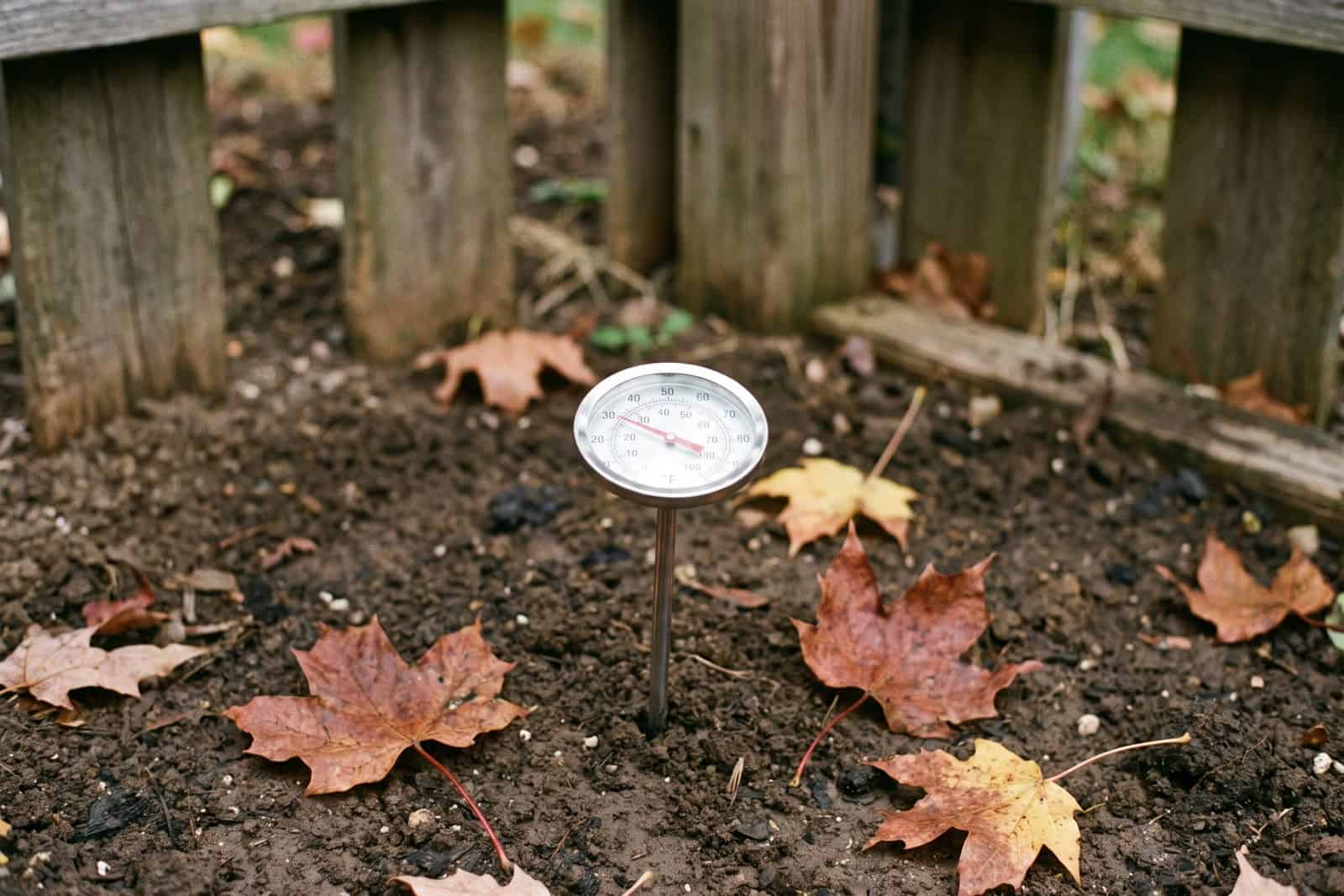
The deadline is the ground freezing solid, which comes weeks after the first hard freeze of the air. Bulbs need about six weeks of root growth before that. If you are late, plant anyway: a bulb in cold ground beats a bulb in a paper bag every time.
Bulb Planting Windows by State
Windows run from the typical point the soil has cooled to the point the ground usually freezes, for the state’s main population centers. Mountain gardens open and close earlier. The note covers the states where tulips need help.
| State | Planting window | Note |
|---|---|---|
| Alabama | Mid November to mid December | Pre-chill tulips and hyacinths 10 to 12 weeks; daffodils need no chill |
| Alaska | Late August to mid September | Plant deep and mulch heavily; choose early, hardy daffodils |
| Arizona | October (Flagstaff); December to early January (Phoenix, Tucson, pre-chilled) | Low deserts: refrigerate bulbs from October |
| Arkansas | Late October to late November | Pre-chill tulips in the south of the state |
| California | October (mountains); December to January (valleys and coast, pre-chilled) | Daffodils and paperwhites do well without chilling |
| Colorado | Mid September to late October | Front Range soils cool fast; get them in before Halloween |
| Connecticut | Late September to early November | Shoreline gardens have until mid November |
| Delaware | Mid October to late November | |
| Florida | December to January, pre-chilled | Treat tulips as annuals; daffodils only in the Panhandle |
| Georgia | Mid November to mid December | Pre-chill tulips 10 to 12 weeks; daffodils and alliums without |
| Hawaii | Not recommended outdoors | Spring bulbs need a cold winter the islands do not provide |
| Idaho | Late September to late October | |
| Illinois | Early October to mid November | Chicago lakefront has until late November |
| Indiana | Early October to early November | |
| Iowa | Late September to late October | |
| Kansas | Mid October to mid November | |
| Kentucky | Mid October to mid November | |
| Louisiana | Late December to January, pre-chilled | Daffodils (especially tazettas) naturalise; tulips are one season |
| Maine | Mid September to mid October | Coastal gardens have until late October |
| Maryland | Late October to late November | |
| Massachusetts | Early October to mid November | Berkshires by late October |
| Michigan | Late September to early November | Upper Peninsula by mid October |
| Minnesota | Mid September to late October | Mulch after the ground crusts, not before |
| Mississippi | Mid November to mid December | Pre-chill tulips; daffodils without |
| Missouri | Mid October to mid November | |
| Montana | Early September to mid October | Plant deep, 8 inches for tulips |
| Nebraska | Late September to early November | |
| Nevada | Late September to late October (Reno); December, pre-chilled (Las Vegas) | |
| New Hampshire | Mid September to mid October | |
| New Jersey | Mid October to late November | |
| New Mexico | Late September to late October (Santa Fe); mid October to mid November (Albuquerque) | |
| New York | Late September to late October (upstate); late October to late November (NYC, Long Island) | |
| North Carolina | Late October to early December | Mountains by mid November |
| North Dakota | Early September to mid October | Plant deep and mulch |
| Ohio | Early October to mid November | |
| Oklahoma | Late October to late November | |
| Oregon | Late September to late October (east); November to mid December (west) | |
| Pennsylvania | Early October to mid November | Philadelphia suburbs have until late November |
| Rhode Island | Early October to mid November | |
| South Carolina | Mid November to mid December | Pre-chill tulips on the coast |
| South Dakota | Mid September to late October | |
| Tennessee | Mid October to late November | |
| Texas | Late October to November (Panhandle); December to January, pre-chilled (Dallas south) | Daffodils and Dutch iris are the reliable perennials |
| Utah | Late September to early November | |
| Vermont | Mid September to mid October | |
| Virginia | Mid October to late November | |
| Washington | Late September to late October (east); November to early December (west) | |
| West Virginia | Early October to mid November | |
| Wisconsin | Mid September to late October | |
| Wyoming | Early September to mid October |
Warm Winter States: The Refrigerator Trick
Tulips, hyacinths and most crocus need 10 to 14 weeks below about 45F to flower properly. From roughly Dallas, Atlanta and Charleston southward, and across the low deserts and coastal California, the ground never gets that cold for that long. The fix is the crisper drawer: bulbs in a paper bag for 10 to 12 weeks, then planted in December or January into the coolest soil of the year. Keep them away from fruit, because ripening apples give off ethylene, which kills the flower bud inside the bulb. Treat them as one season’s display.
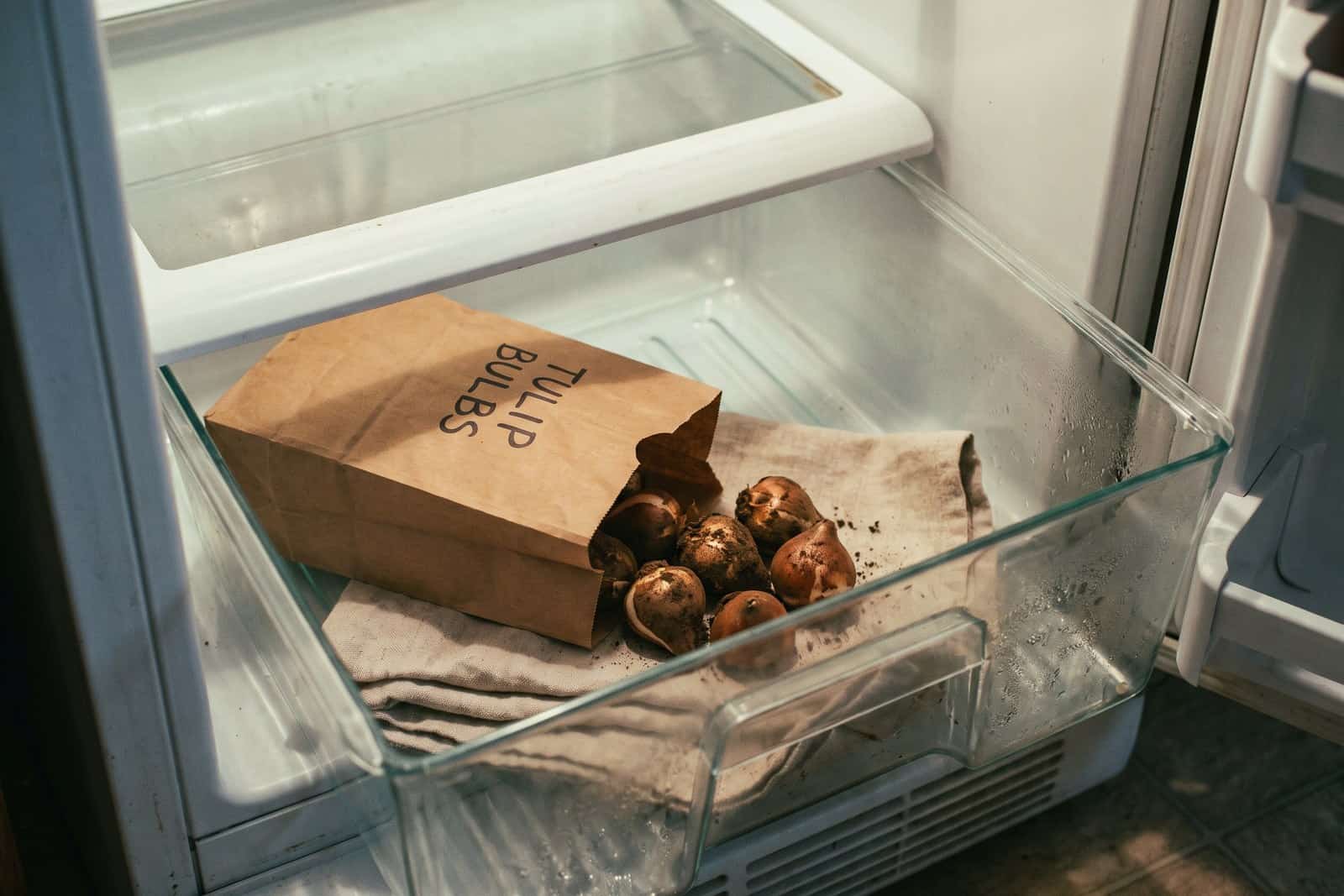
Daffodils are the exception and the reason southern gardens still have spring bulbs. Most varieties, and the tazetta and jonquil types especially, need little or no chilling and come back for decades. Dutch iris, alliums, snowflakes (Leucojum) and Spanish bluebells behave the same way.
How to Plant Them
- Depth: three times the height of the bulb, measured to the base. Tulips and daffodils go 6 to 8 inches deep, small bulbs such as crocus and grape hyacinth 3 to 4 inches. Deeper is safer in cold states and in gardens with squirrels.
- Spacing: 4 to 6 inches apart for tulips and daffodils, closer for small bulbs. Odd-numbered groups of seven or more read better than rows.
- Drainage first: bulbs rot in waterlogged soil. On heavy clay, plant on a slight mound or work in grit.
- Pointed end up. If you cannot tell, plant on the side; the shoot will find its way.
- Water once after planting to settle the soil, then leave them. Autumn rain does the rest.
- Fertilizer: a little bone meal or bulb food in the planting hole is traditional and does no harm. The bulb already carries next spring’s flower; feeding matters more after flowering.
- Squirrels and voles: they dig tulips and crocus, not daffodils. A sheet of chicken wire laid over the bed and removed in late winter is the old remedy that still works.
Best Days for Planting Bulbs
The Almanac’s planting tradition favors setting bulbs and root crops when the Moon is waning and in a fruitful sign, on the long-held reasoning that a waning Moon favors growth below ground. The Best Days calendar lists the dates for planting below-ground crops each month, and plenty of gardeners plan their bulb weekend around them.
Get the sky and season ahead, every week
The Farmers’ Almanac newsletter carries the dates worth circling, the Best Days, and the long range outlook for your region. Sign up free.
Frequently Asked Questions
When is it too late to plant tulip bulbs?
When the ground is frozen solid and you cannot dig. Until then, plant. Bulbs set out late, even in December in the Midwest, usually flower on time, if a little shorter. They need about six weeks of root growth before the soil freezes, so the earlier within the window the better.
Can I plant bulbs before the first frost?
Yes, as long as the soil has cooled below about 55F at 6 inches. In the North that is often mid to late September, before any frost. In the South, waiting for the first frost is a safer signal because warm, wet autumn soil rots tulips.
Do daffodils need to be chilled in warm climates?
Most do not, which is why they are the reliable spring bulb from Georgia to Texas. Tazetta and jonquil types need the least cold. Tulips and hyacinths do need 10 to 14 weeks below about 45F, so pre-chill them in a refrigerator in warm winter states.
How deep should tulip and daffodil bulbs be planted?
About three times the height of the bulb, so 6 to 8 inches for a full-size tulip or daffodil. Plant toward the deeper end in cold states and where squirrels dig.
Should I water bulbs after planting?
Once, to settle the soil around them. After that autumn rain is enough. Overwatering in warm soil is the quickest way to rot a tulip.
Will tulips come back every year?
Species tulips and Darwin hybrids often return for several seasons in cold states with dry summers. Most other tulips weaken after the first year. Daffodils, by contrast, multiply and can outlive the gardener.
Read Next
- Fall Bulb Planting: 6 Timing, Soil, and Storage Rules for a Big Spring
- When Is the First Hard Freeze in Your State?
- Soil Temperature Chart: Best Soil Temps for Planting
- What to Plant in October: A Region-by-Region Garden Guide

Josh Morley grew up in Liverpool, where checking the sky before you leave the house is less a habit than a survival skill. He has spent his working life with data, and he came to the Farmers' Almanac by way of the thing the two have in common: the weather is the largest dataset any of us live inside, and most of us read it every day without noticing.
- Josh Morley

- Josh Morley
- Josh Morley
- Josh Morley