Woolly Bear Caterpillars 2026: What the Bands Say

Quick Reference: Reading a Woolly Bear
- What it is: the larva of the Isabella tiger moth
- Segments: 13, always, on every woolly bear
- The folklore: a wide brown band means a mild winter, a narrow one means a hard winter
- When to look: warm afternoons in October, usually crossing a road or path
- What the band is: the rust band widens each time the caterpillar moults
Sometime in October you will nearly step on one: a fat, bristly caterpillar in black and rust, hurrying across the pavement with real purpose. That is a woolly bear, and tradition says it has an opinion about the winter ahead.
How the Tradition Works
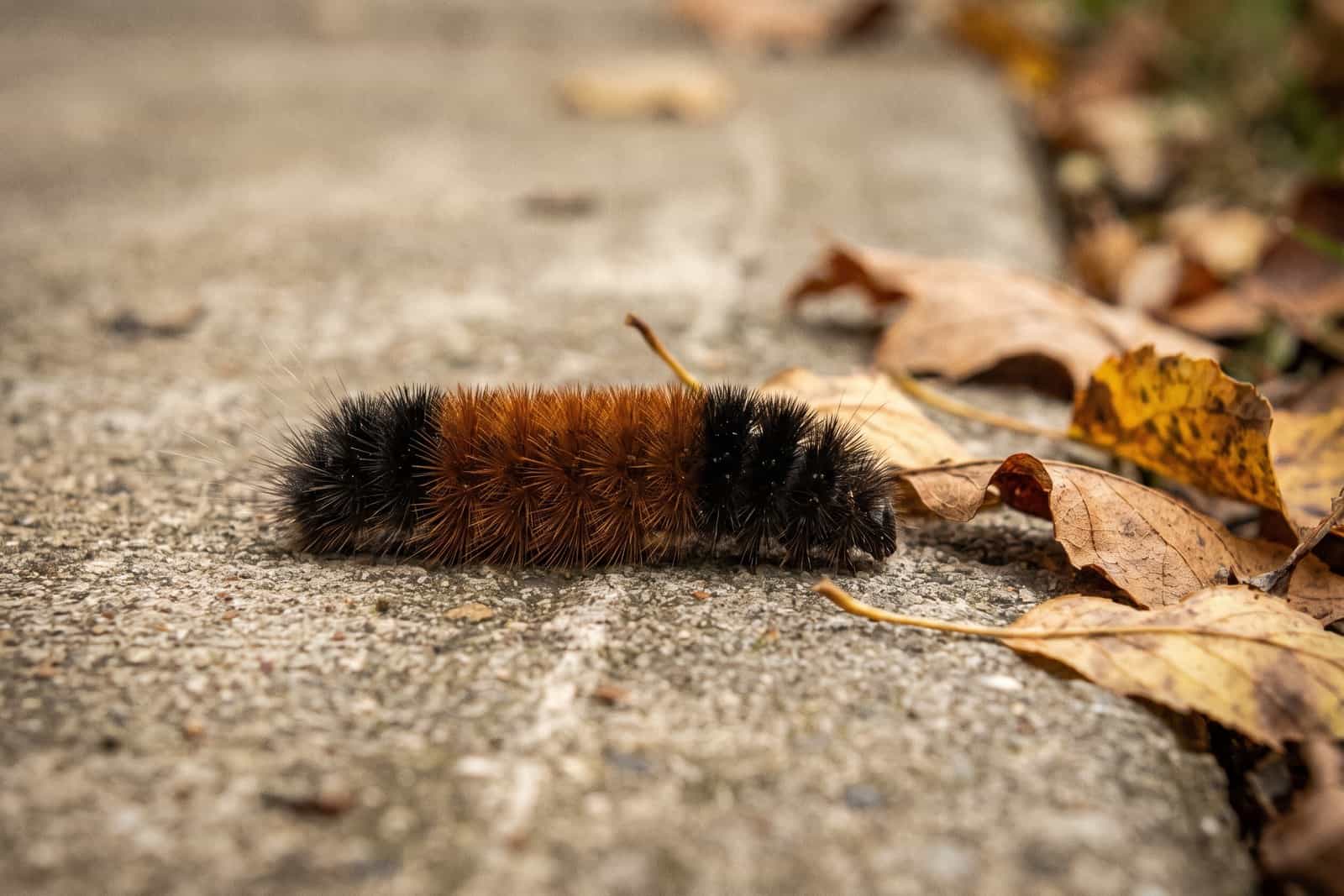
Every woolly bear has thirteen segments. The rule of thumb is that the wider the rust coloured band in the middle, the milder the winter to come, and the more black at either end, the harder it will be. Some versions read the front of the caterpillar as early winter and the back as late winter, so a caterpillar black at the head is said to promise a rough start and a gentler February.
| What you see | The traditional reading |
|---|---|
| A wide rust band across the middle | A mild winter |
| A narrow rust band, mostly black | A long, hard winter |
| Black at the head, rust behind | A rough start, an easier end |
| Rust at the head, black behind | A gentle start, a hard finish |
| All black | In folklore, a severe winter. In fact, often a different species |
Where the Story Came From
This one has a date and a name. On 27 October 1948, Dr C. H. Curran, curator of insects at the American Museum of Natural History, drove about forty miles north of New York City to Bear Mountain State Park with the entomologist Mont Cazier and their wives. They collected fifteen woolly bears and measured the black end bands against the rust coloured middle. More than half had wide rust bands, so Curran told a reporter friend at the New York Herald Tribune that the winter would be mild. The story ran, the public loved it, and the tradition went national.
He kept going for eight autumns. Between 1948 and 1956 his average came out between 5.3 and 5.6 rust coloured segments out of thirteen, so the band took up a little over a third of the caterpillar each year, and each of those winters was milder than average. It is a tidy run of results, from fifteen caterpillars a year at one park, and Curran described the trips as an excuse for a day out with friends.
How the Rust Band Grows
The rust coloured band widens each time the caterpillar moults. An older, better fed caterpillar has a wider band, so the band is a record of how well the growing season went and how far along this particular caterpillar is. A wet spring or a long warm autumn produces wider bands across a whole neighbourhood.
Band width also varies between individuals of the same age, which is why two woolly bears found on the same path can disagree completely.

What They Are Doing in October
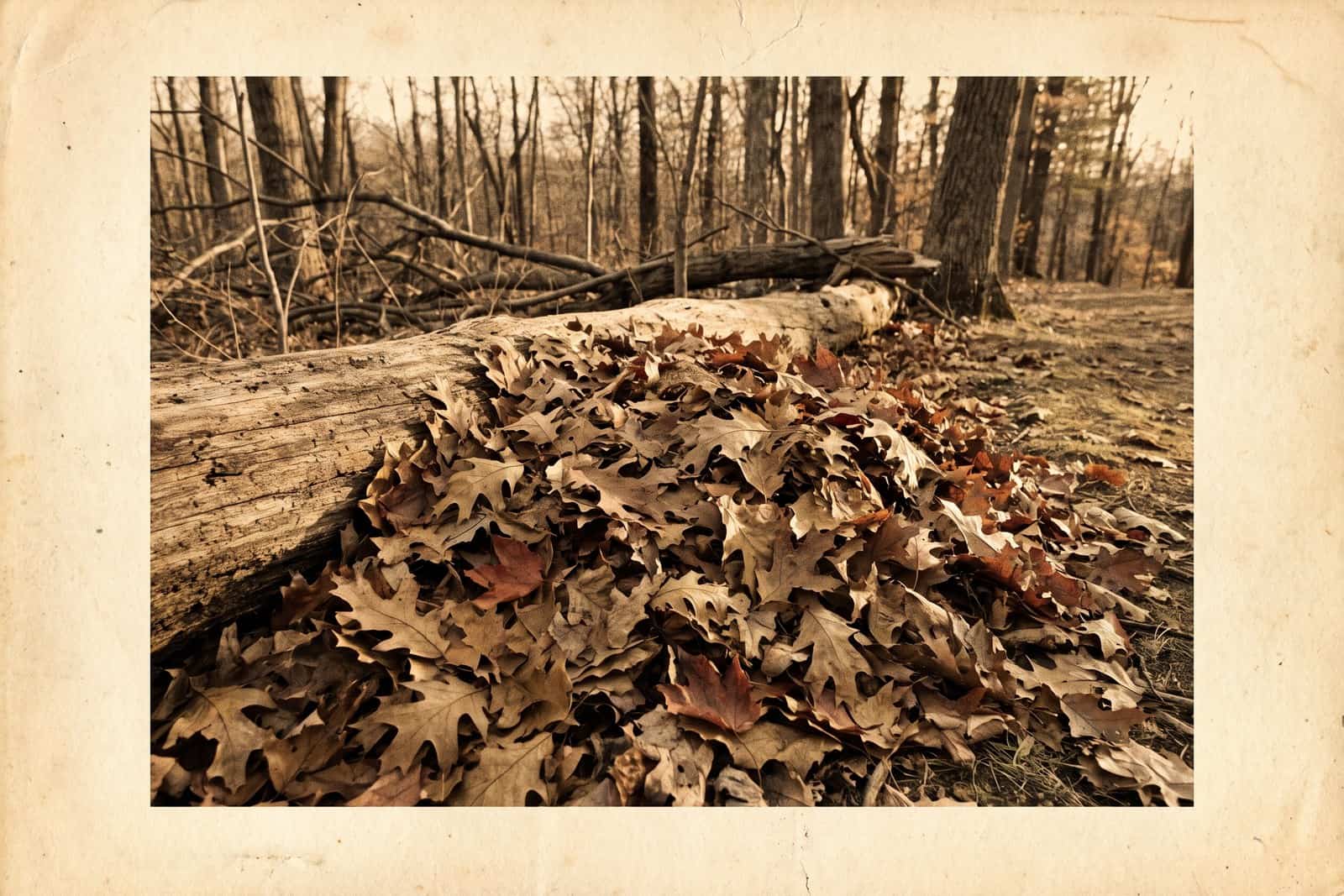
The hurrying is the interesting part. The woolly bear is not migrating, it is looking for somewhere to spend the winter, usually under bark, a log or a pile of leaves. It then does something remarkable: it freezes almost solid. Its body produces a cryoprotectant that lets ice form safely between its cells, and it thaws out in spring, feeds briefly, pupates, and emerges as an Isabella tiger moth, a plain yellow brown moth most people never connect with the caterpillar.
- If you pick one up, be gentle and put it back on the same side of the path it was heading for.
- The bristles are not stinging hairs, though they can irritate sensitive skin.
- Leaving a corner of leaf litter undisturbed gives them somewhere to overwinter.
Frequently Asked Questions
What does a woolly bear caterpillar predict?
Tradition says a wide rust coloured band means a mild winter and a narrow band means a hard one. The band itself widens each time the caterpillar moults, so a wide band belongs to an older, well fed caterpillar.
How many segments does a woolly bear have?
Thirteen, always. The traditional reading treats the thirteen segments as the thirteen weeks of winter.
Who started the woolly bear tradition?
The modern version dates to 1948, when Dr C. H. Curran of the American Museum of Natural History measured woolly bear bands at Bear Mountain State Park in New York for eight consecutive autumns.
What does a woolly bear turn into?
An Isabella tiger moth, a modest yellow brown moth that most people never link to the striking caterpillar.
Why are woolly bears crossing the road in October?
They are looking for a place to overwinter, usually under bark, a log or leaf litter. They survive the winter by freezing almost solid and thawing in spring.
Read Next
- Woolly Bear Caterpillar Facts and Folklore
- 20 Signs of a Hard Winter Ahead
- Persimmon Seed Weather Prediction

Josh Morley grew up in Liverpool, where checking the sky before you leave the house is less a habit than a survival skill. He has spent his working life with data, and he came to the Farmers' Almanac by way of the thing the two have in common: the weather is the largest dataset any of us live inside, and most of us read it every day without noticing.
- Josh Morley

- Josh Morley
- Josh Morley
- Josh Morley