Cranberries Don’t Grow Underwater, So Why Are the Bogs Flooded Every Fall?

If you’ve ever seen a cranberry harvest, you might assume the berries spend their whole lives floating in water.
They don’t.
Cranberry vines grow on dry beds most of the year. The flooding comes later, when it’s time to harvest. The reason is simple: ripe cranberries float.
Inside each berry are tiny air pockets. Once the fruit is knocked loose from the vines, those pockets carry it to the surface. That’s what creates the familiar sight of a bog covered in a bright red layer of berries.
In Massachusetts, harvest usually runs from mid-September into early November, with much of the activity happening in October. When a bed is ready for a wet harvest, growers flood it, then move a machine called a water reel through the vines. The reel loosens the berries, which rise to the surface and are gathered with floating booms. From there, they’re pumped or carried by conveyor into trucks for cleaning and processing. Massachusetts Cranberries explains the process here.
So the water isn’t there to grow the fruit. It’s there to make harvest easier.
Why Most Cranberries Are Wet Harvested
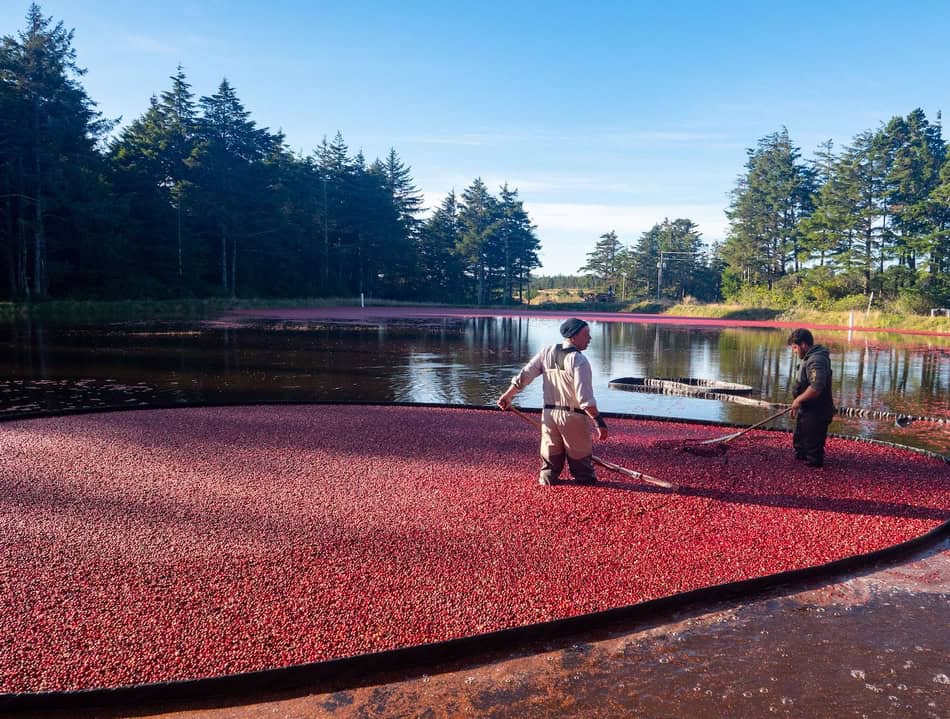
Wet harvesting is efficient, which is why it’s used for most of the crop. In Massachusetts, more than 90% of cranberries are harvested this way.
Those berries usually go into products such as juice, sauce, sweetened dried cranberries, and other processed foods.
The fresh cranberries you see in produce departments are typically harvested another way. Instead of flooding the bed, growers use a machine that combs the berries from the vines while the field remains dry. That method is slower and more careful, but it’s better suited to fruit that needs to arrive at the store looking intact. Massachusetts Cranberries has a separate look at dry harvesting.
That’s why the flooded-bog harvest looks so different from what most of us imagine when we think of fruit picking. The berries are being collected for a different market.
Where You Can Watch a Cranberry Harvest
If you want to see a wet harvest in person, October is the time to go.
Cranberry farms are working agricultural sites, so don’t enter a bog unless visitors are specifically invited. Some growers, though, offer harvest tours and even let guests put on waders and step into the flooded beds.
At Benson’s Pond Cranberries in Middleborough, Massachusetts, Berry Bog Adventures are scheduled for October 10–12 and October 17–18. The roughly two-hour experience includes waders, time in an active flooded bog, and a look at the harvest process. Reservations are required, and availability can change. Check current Benson’s Pond harvest events.
Red Meadow Farm in Carver, Massachusetts, also offers seasonal bog tours and wade-in harvest experiences. Since the exact timing of a harvest depends on weather and crop conditions, it’s worth checking directly with the farm before making plans. See Red Meadow Farm’s current tour information.
For other options, Massachusetts Cranberries keeps a directory of farms that welcome visitors. Not every farm offers public access, and growers set their own harvest schedules, so call or check online before heading out.
Wisconsin has its own cranberry country, too. The Wisconsin State Cranberry Growers Association lists public marsh tours and seasonal events. In Wisconsin, you’ll often hear the term cranberry marsh instead of cranberry bog, but the harvest process is much the same.
What You’re Really Seeing in Those Famous Red Bogs
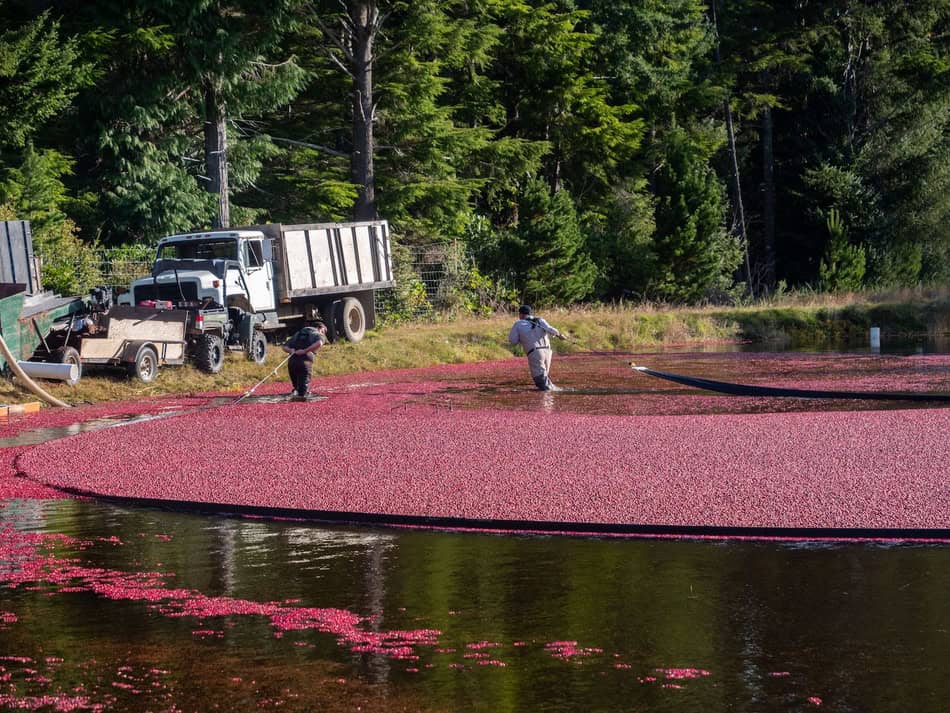
The flooded cranberry harvest is striking because the landscape changes so quickly.
Most of the year, the beds are low, dry, and green. Then harvest arrives, the water goes in, the berries are loosened, and suddenly the surface turns red.
That’s the part people remember.
But the clever bit is much simpler: cranberries float, and growers have learned to use that to bring in the crop.

- Maggie Konrad

- Maggie Konrad
- Maggie Konrad
- Maggie Konrad