2026 Fall Foliage Outlook: Where Autumn Color Should Shine — And Where It May Struggle
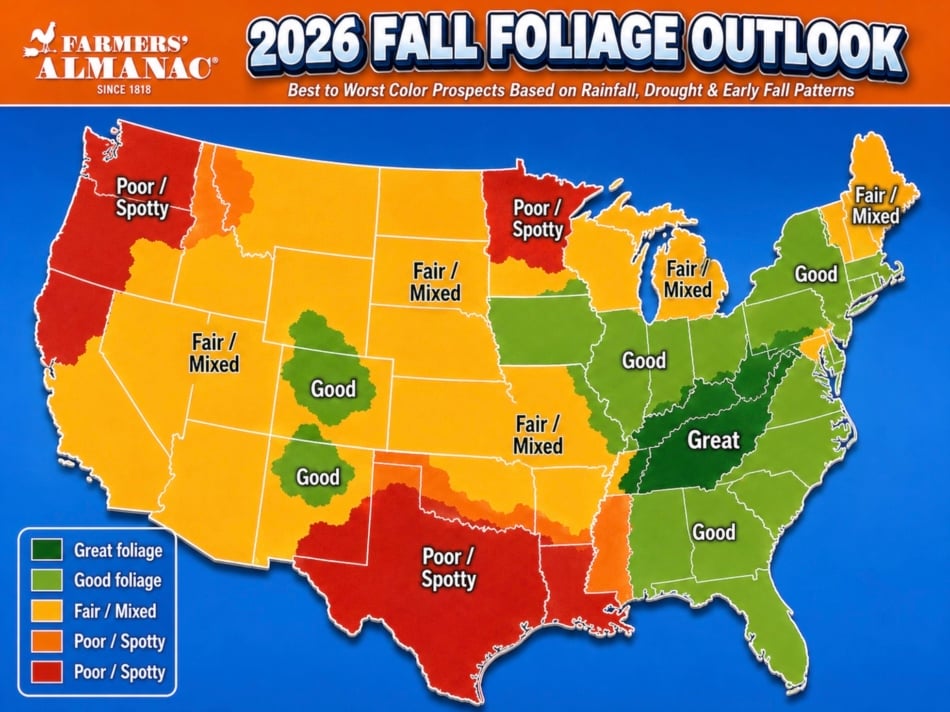
Where will fall color be best in 2026? Our Farmers’ Almanac Fall Foliage Outlook points to the central Appalachians for the strongest display, with generally good prospects across much of the East and Southeast, and more mixed or spotty conditions in parts of the West, Upper Midwest, and southern tier.

Every year, leaf peepers ask the same question: Where will fall color be best this season? For our Farmers’ Almanac 2026 Fall Foliage Outlook, we looked at the big drivers behind autumn color—rainfall, drought, summer stress, and expected early-fall weather patterns—to better understand which regions are likely to deliver a brilliant display and which may be more uneven.
The short version? The central Appalachians look especially strong this year, much of the East and Southeast should see generally good color, while parts of the Pacific Northwest, Upper Midwest, and southern tier may struggle with more spotty foliage.
Here’s a closer look at what we’re expecting—and why.
What Makes a Great Fall Foliage Season?
Beautiful autumn color does not happen by accident. The best foliage seasons usually depend on a few key ingredients:
- Healthy trees going into fall
- Adequate moisture through summer
- Cool nights and sunny days in early autumn
- A lack of prolonged drought or extreme weather stress
When trees have enough moisture during the growing season, they are better able to hold their leaves and produce strong color later on. But when drought, excessive heat, or other stressors take hold, leaves may turn early, brown at the edges, or drop before peak color ever arrives.
That is why our foliage outlook is not just about temperature—it is also about the condition of the landscape leading into fall.
Our 2026 Fall Foliage Outlook at a Glance
According to our map, the country breaks down into four broad foliage categories:
- Great foliage – best prospects for vivid, widespread color
- Good foliage – generally strong color in many areas
- Fair / Mixed – some good viewing, but less consistent overall
- Poor / Spotty – color likely to be uneven, muted, or short-lived
Best Bet for Peak Color: The Central Appalachians
The standout region on our 2026 map is the central Appalachian corridor, where we expect great foliage.
This zone includes much of West Virginia, eastern Kentucky, eastern Tennessee, western Virginia, and surrounding higher terrain. These areas often perform well in autumn thanks to their elevation, dense hardwood forests, and the ability to cool down earlier than lower-elevation regions.

Why we like this region this year:
- A healthier moisture balance than many drought-stricken areas
- Terrain and elevation that favor cooler nights
- Large, continuous forests with a wide mix of color-producing tree species
- Less summer stress overall compared to harder-hit regions farther west and south
If early fall brings the classic pattern of warm, sunny days and cool, crisp nights, this region could put on one of the most vivid shows in the country.
Good Prospects Across Much of the East
A large part of the Midwest, Mid-Atlantic, Northeast, and Southeast falls into our good foliage category.
This does not mean every hilltop and back road will be equally spectacular, but it does suggest that many areas should see a satisfying and relatively dependable fall color season.
Areas in the “Good” category include:
- Much of the Ohio Valley
- Large parts of the Mid-Atlantic
- Broad sections of the Southeast
- Much of upstate New York and New England outside northern Maine
Why we feel good about these areas:
- Enough growing-season moisture in many places to support tree health
- A landscape less dominated by the prolonged, severe drought seen in some other regions
- A decent setup for seasonal cooling as fall advances
- Many of these regions have a strong mix of maples, oaks, birches, and hickories, which can create layered and lasting color
Some areas may not reach “storybook peak” from border to border, but the overall setup favors a solid, enjoyable foliage season.
Fair / Mixed Outlook in the Interior West, Northern Plains, and Parts of the Northeast
The Fair / Mixed designation covers a broad swath of the country, including much of the interior West, the Northern Plains, parts of the central U.S., the Great Lakes, and northern New England, including Maine.
This category suggests that the season may be hit or miss. Some locations may still have beautiful color, especially at higher elevations or in pockets that received better summer moisture, but the show may not be as widespread or as long-lasting.
Why these regions are more mixed:
- Inconsistent rainfall patterns
- Localized drought stress
- Heat during the growing season
- The possibility of early leaf drop in more stressed areas
In the interior West especially, a lot depends on elevation and local moisture. One mountain valley may perform well while a nearby dry basin struggles.
Pockets of Good Color in the Rockies and Southwest
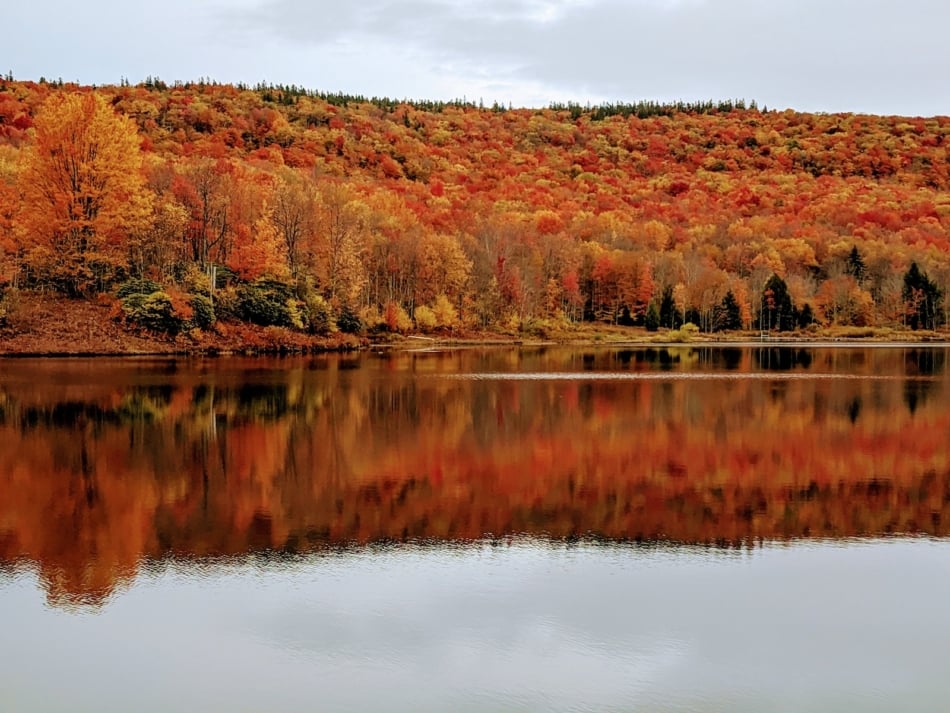
One of the more interesting features on our map is the presence of localized “good” zones in the Rockies and nearby interior terrain, including parts of Colorado and New Mexico.
This reflects the fact that not all western foliage behaves the same way. In these areas, higher elevations, cooler nights, and localized moisture can still produce pleasing displays, especially among aspens.
Why these pockets stand out:
- Elevation helps offset summer heat
- Some areas benefited from more favorable moisture
- Aspen country can still shine even when broader regional conditions are mixed
So while the West overall is not our top foliage bet this year, there are still places worth watching.
Poor / Spotty in the Pacific Northwest
The Pacific Northwest stands out as one of the more challenged regions in our 2026 outlook, with poor / spotty foliage prospects.
This does not mean there will be no color at all. There always will be some autumn beauty. But compared to the best years, we expect the display to be less dependable and more uneven.
Why the Northwest may struggle:
- Dry conditions and drought stress in key areas
- Trees under summer stress may shut down early
- Leaves may show more browning, fading, or premature drop
- Color may be brief and inconsistent, especially in lower-elevation areas
Where moisture has been better and temperatures moderate, some local improvement is possible. But as a region, the outlook remains less favorable.
Poor / Spotty in the Upper Midwest
Parts of the Upper Midwest, especially around Minnesota and nearby areas, also come in as poor / spotty on our map.
This is a region that can produce wonderful color in a good year, but in 2026 we are concerned about summer stress and uneven moisture.
Why we are cautious:
- Trees that have endured dry spells or heat stress often fail to color evenly
- Foliage may turn duller or drop faster than usual
- Strong early color may not translate into a long-lasting peak
This is one of those regions where local conditions will matter a great deal—but overall, we do not expect the broad, reliable color show many travelers hope for.
Southern Tier Outlook: Poor / Spotty from Parts of Texas into the Gulf Region
Much of Texas and the western Gulf region is also marked poor / spotty this year.
In southern climates, fall color is often more variable to begin with. Add in heat and moisture stress, and the display can become even more limited.
Why this region ranks lower:
- Heat stress during the growing season
- Dryness and drought concerns
- Leaves more likely to brown, fade, or fall quickly
- Less ideal setup for the prolonged cool-down that helps produce stronger autumn color
That does not rule out some localized color, especially in river valleys or better-watered spots, but the broader regional outlook is not especially strong.
Northern New England: A More Mixed Story
While much of the Northeast lands in the good category, northern New England—especially Maine—looks more mixed this year.
That reflects how sensitive foliage can be to changes in rainfall and late-summer stress. Some locations may still produce lovely color, but we are not expecting the kind of universally strong, headline-making season that foliage lovers always hope for.
Why We Feel This Will Be the Outlook for 2026
In plain terms, this year’s outlook comes down to tree health and moisture balance.
Where trees went into late summer with better moisture and less stress, we are expecting better color and better leaf retention. Where drought or prolonged heat have taken a greater toll, we are expecting more uneven color, quicker fading, and earlier leaf drop.
That is why:
- The central Appalachians rise to the top
- Much of the East and Southeast looks broadly favorable
- The interior West and northern tier look more mixed
- The Pacific Northwest, Upper Midwest, and southern tier appear more vulnerable to a disappointing or inconsistent season
As always, the final few weeks before peak color matter a lot. A stretch of cool nights, sunny days, and calm weather can improve the show. On the other hand, heavy wind, soaking storms, or a sudden freeze can shorten it.
Final Thoughts
Our Farmers’ Almanac 2026 Fall Foliage Outlook suggests that this year’s best color may be found in the central Appalachians, with good viewing across much of the East and Southeast, and more mixed or spotty conditions farther west, north, and south.
No seasonal outlook can predict every ridgeline, back road, or forest hollow. But by looking at the major factors that shape autumn color—rainfall, drought, and early-fall patterns—we can identify the regions most likely to shine.
If you are planning a leaf-peeping getaway in 2026, keep watching local conditions as the season draws closer. But for now, the map points to an especially promising year in the Appalachians and much of the eastern half of the country.
Forecast based on conditions and outlooks through August 20, 2026.
Peak Foliage Timing by Region: When to Book Your Trip
Fall foliage does not peak everywhere at once. A gap of six to eight weeks separates peak color in the northern highlands from peak color in the Deep South. Use this regional timing guide to plan around actual peak windows, not just a calendar date.
| Region | Typical Peak Window | 2026 Outlook | Key Species | Best Viewing Spots |
|---|---|---|---|---|
| Northern Maine, VT, NH highlands | Sep 22 – Oct 5 | Good to Excellent (Central Appalachian weather pattern extends) | Sugar maple, birch, beech | Route 2 (Rte 2, NH), Kancamagus Highway (NH), Smugglers Notch (VT) |
| Southern VT, NH, western MA | Oct 5 – Oct 18 | Good | Red maple, oak, hickory | Mohawk Trail (MA), Route 9 (VT), Green Mountain Byway |
| Catskills and Hudson Valley, NY | Oct 8 – Oct 22 | Good | Sugar maple, red oak, sweetgum | Route 23A (Kaaterskill), Catskill Center trails, Storm King |
| Pennsylvania and NJ Highlands | Oct 10 – Oct 24 | Good | Sugar maple, tulip poplar, sassafras | Delaware Water Gap, Pine Creek Gorge, Route 6 (PA) |
| Central Appalachians (VA, WV, NC highlands) | Oct 12 – Oct 28 | Excellent — Best Bet 2026 | Red maple, sourwood, blackgum, dogwood | Skyline Drive (VA), Blue Ridge Parkway (MP 0–300), Highland Scenic Highway (WV) |
| Southern Appalachians (TN, NC, GA mountains) | Oct 18 – Nov 2 | Good to Excellent | Sourwood, sassafras, hickory, scarlet oak | Blue Ridge Parkway (MP 300–469), Smokies Clingmans Dome Road, Cherohala Skyway |
| Upper Midwest (MN, WI, MI UP) | Sep 28 – Oct 12 | Fair–Mixed (drought stress in some areas) | Sugar maple, tamarack, aspen, birch | Pictured Rocks (MI), Brule River (WI), Gunflint Trail (MN) |
| Great Lakes (lower MI, northern IN, OH) | Oct 8 – Oct 22 | Good | Oak, hickory, maple | Pierce Stocking Drive (MI), Leelanau Peninsula (MI) |
| Colorado Rockies | Sep 22 – Oct 10 | Good in spots; mixed at lower elevations | Quaking aspen (golden) | San Juan Skyway (CO), Last Dollar Road (near Telluride), Independence Pass |
| Utah Canyon Country | Oct 1 – Oct 20 | Good in higher canyons | Quaking aspen, cottonwood, Gambel oak | Guardsman Pass (UT), Alpine Loop (UT), Logan Canyon |
| Pacific Northwest | Oct 10 – Nov 5 | Poor–Mixed (early wet season disrupts) | Big-leaf maple, vine maple, cottonwood | Columbia River Gorge, Mt. Hood Loop, Leavenworth (WA) |
| Deep South lowlands (GA, AL, MS) | Oct 28 – Nov 20 | Poor–Spotty | Sweetgum, tupelo, cypress | Natchez Trace Parkway (MS–TN), Congaree NP (SC) |
Why 2026 Favors the Central Appalachians
The Central Appalachians from Virginia through western North Carolina are rated Best Bet for 2026 for two reinforcing reasons. First, the region received adequate summer rainfall without the extended drought that can suppress fall color. Second, the weather pattern that produced good conditions in the region during summer tends to deliver the cool nights and sunny days that produce the most vivid red and purple pigments. Sourwood trees in particular — a species that produces spectacular scarlet color unique to the Appalachians — have shown strong growth this season.
How to Track Peak Color Week by Week
Foliage timing shifts by roughly one to two weeks depending on how the specific fall shapes up. The Farmers’ Almanac fall foliage map updates weekly as the season progresses. To follow peak color as it moves south through the season:
- Bookmark our Fall Foliage Dates Map and check it weekly from late September through November
- A good rule of thumb: color moves south and downhill at roughly 50–100 miles per week
- A warm, dry October extends the season; a cold, wet October with wind strips leaves faster than peak color can develop
- Color at elevation (above 3,000 feet) peaks 10–14 days ahead of nearby valleys
For the week-by-week tracking map and the complete 2026 fall weather forecast, see our 2026 Fall Extended Forecast.
For the timing by region, see when fall colors peak.

- Farmers' Almanac Staff

- Farmers' Almanac Staff
- Farmers' Almanac Staff
- Farmers' Almanac Staff