Why Fall Foliage Really Changes Color — And What Makes One Year Better Than Another
Why are fall colors brighter some years? Learn how sunshine, cool nights, rain, drought, frost, and temperature determine how brilliant autumn foliage becomes.

Why are some autumns ablaze with brilliant red, orange, and gold while others seem to fade straight from green to brown? The answer has a lot to do with the weather that comes before—and during—the fall foliage season.
There’s something magical about the first maple that flashes crimson in late summer. Within weeks, entire hillsides can turn shades of scarlet, gold, orange, and purple.
But not every fall puts on the same show.
One year, the trees seem almost impossibly bright. The next, colors may appear muted, arrive late, or disappear after a single windy storm.
So what makes fall foliage colorful—and what kind of weather produces the best fall colors?
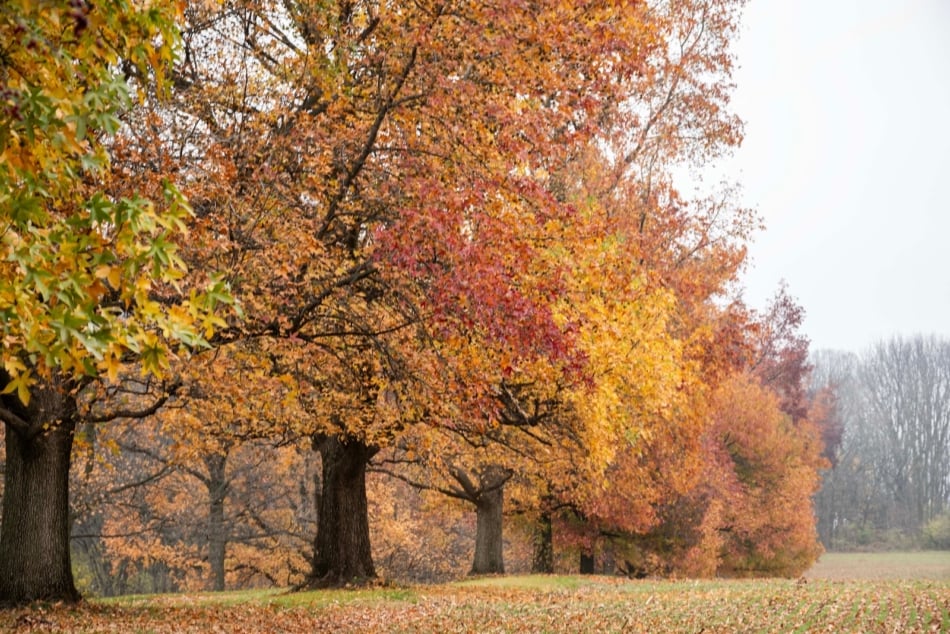
The recipe is surprisingly specific: healthy trees, adequate moisture, sunny autumn days, cool nights, and no early hard freeze.
Quick Answer: What Weather Makes the Best Fall Foliage?
For especially vivid fall color, Mother Nature ideally serves up:
- Healthy rainfall during the growing season
- Warm, sunny days in early fall
- Cool, crisp nights
- Nighttime temperatures above freezing
- No prolonged late-summer drought
- No early hard freeze
- No major windstorm just as the leaves reach peak color
Get that combination at the right time, and autumn can be spectacular.
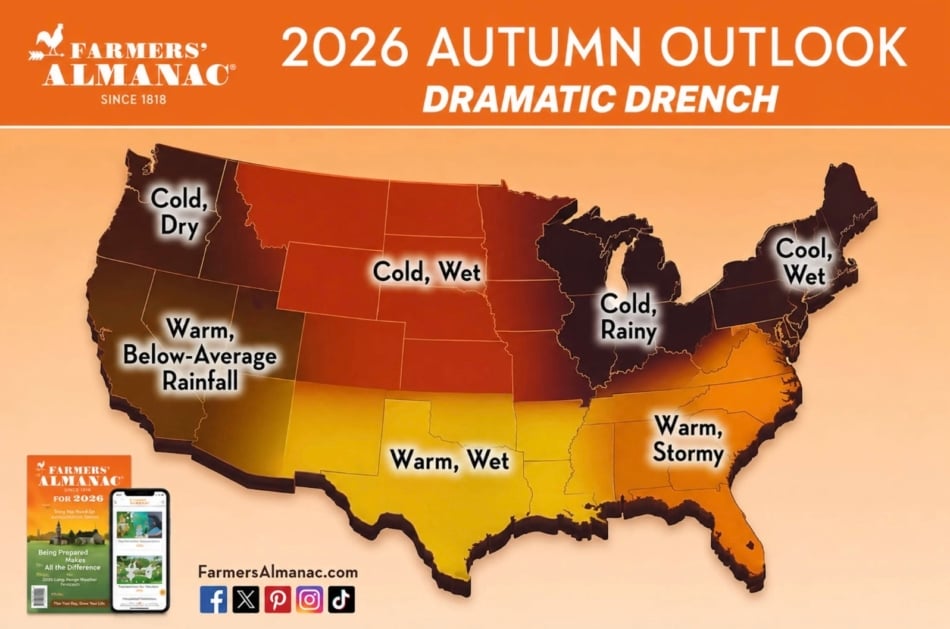
RELATED: Farmers’ Almanac 2026 Fall Weather Forecast
First, Why Do Leaves Change Color?
The biggest signal telling a tree that autumn is approaching isn’t frost. It’s the shortening length of daylight.
As summer winds down and nights grow longer, deciduous trees begin preparing for winter. Chlorophyll—the pigment responsible for a leaf’s green color and an essential part of photosynthesis—begins to break down.
As the green fades, other colors reveal themselves.
Yellow and orange pigments, called carotenoids, have been hiding inside many leaves all summer.
Red and purple colors come largely from pigments called anthocyanins, which some trees produce in greater amounts during autumn.
Different species naturally produce different colors, which is why birches and aspens often glow yellow while maples, dogwoods, sumacs, and some oaks can turn brilliant shades of red.
Want to go deeper into the pigments—and an old Algonquin legend explaining autumn’s crimson leaves? Read our guide to why leaves change color in fall.
But knowing why leaves change color is only half the story.
The weather determines just how impressive that color becomes.
Sunny Days Can Make Fall Colors Brighter
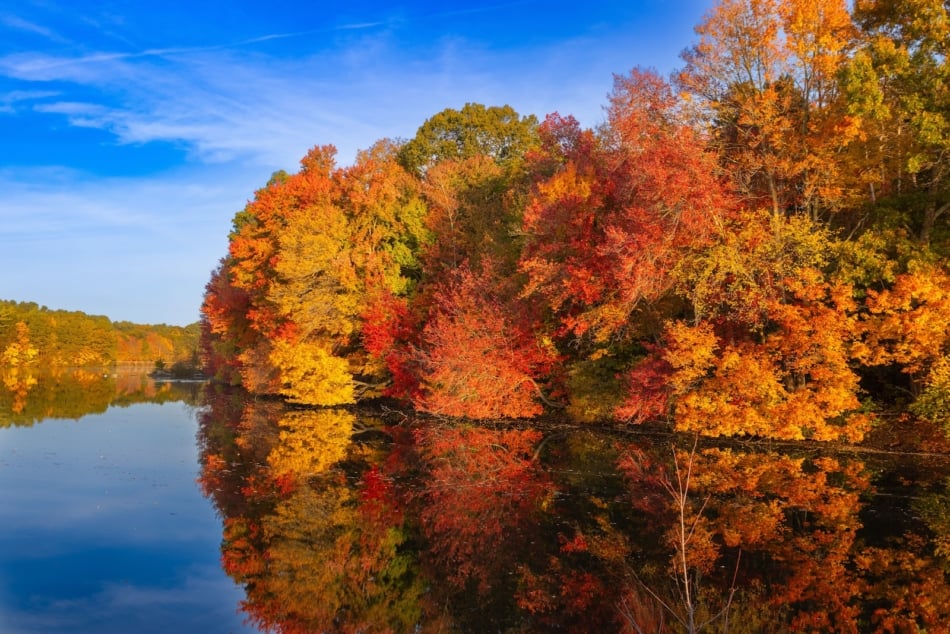
A stretch of clear, sunny weather during early autumn can be excellent news for leaf peepers.
Leaves continue producing sugars on sunny days. As the tree begins sealing off the connection between leaf and branch in preparation for winter, some of those sugars can become trapped inside the leaf.
That process encourages the production of anthocyanins—the pigments responsible for many of autumn’s brightest reds and purples.
That’s why a classic fall pattern of bright sunshine by day and chilly weather at night can help produce especially vivid color.
According to the U.S. Forest Service, some of the best conditions for brilliant red autumn color are warm, sunny days followed by cool nights.
It’s one of those occasions when the weather many people consider “perfect fall weather” is pretty close to perfect for the trees, too.
Cool Nights Help—But A Hard Freeze Can Hurt
Those crisp nights are an important part of the recipe.
Temperatures dropping into the 40s can help slow the movement of sugars out of the leaves, encouraging stronger development of red pigments in certain species.
But there is an important distinction:
Cool is good. Frozen is not.
An early hard freeze can damage leaf tissue before the color show has fully developed. Instead of brilliant reds and oranges, affected leaves may brown quickly or fall from the tree.
So despite the old belief that frost “paints” the leaves, frost isn’t what causes autumn color.
In fact, an early freeze can shorten the show.
Curious about when freezing temperatures normally arrive where you live? Check your average first frost date before autumn gets underway.
Does Rain Make Fall Foliage Better?
Yes—but timing matters.
Trees need enough moisture during spring and summer to enter autumn healthy and well hydrated.
A reasonably wet growing season can help trees hold onto healthy leaves long enough to produce good fall color.
But endless gray, wet weather during the color-changing period isn’t necessarily ideal either. Extended cloudy conditions mean less sunlight, which can limit some of the sugar production involved in developing the brightest reds.
The dream scenario is less “rainy fall” and more:
Enough rain during the growing season, followed by stretches of sunny, pleasant weather as autumn arrives.
Does Drought Affect Fall Colors?
It certainly can.
Severe or prolonged drought puts trees under stress. Instead of patiently preparing for winter, drought-stressed trees may begin shutting down early.
Leaves can curl, develop brown edges, turn dull colors, or simply fall before they ever reach their usual autumn brilliance.
In a particularly dry year, you might even notice individual trees changing weeks before their neighbors.
That isn’t necessarily a sign that fall itself is arriving early. It may simply be a stressed tree trying to conserve water.
University extension experts note that drought-stressed deciduous trees can experience premature discoloration and early leaf drop.
So when you spot one yellowing maple in August, don’t assume winter is knocking on the door just yet.
Heat Can Delay the Show
Warm autumn weather doesn’t necessarily ruin fall foliage, but prolonged heat can slow things down.
Shortening daylight continues signaling that the season is changing, but unusually warm nights can delay some of the chemical processes associated with brilliant color.
That means an extended period of summer-like warmth in September can sometimes push peak foliage later than expected.
This is one reason peak fall color dates are estimates rather than appointments.
Temperature, rainfall, elevation, latitude, tree species, and even the weather over the previous several months all play a role.
See our Fall Foliage Dates and Destinations guide for the typical peak-color window in your state.
Don’t Forget the Wind
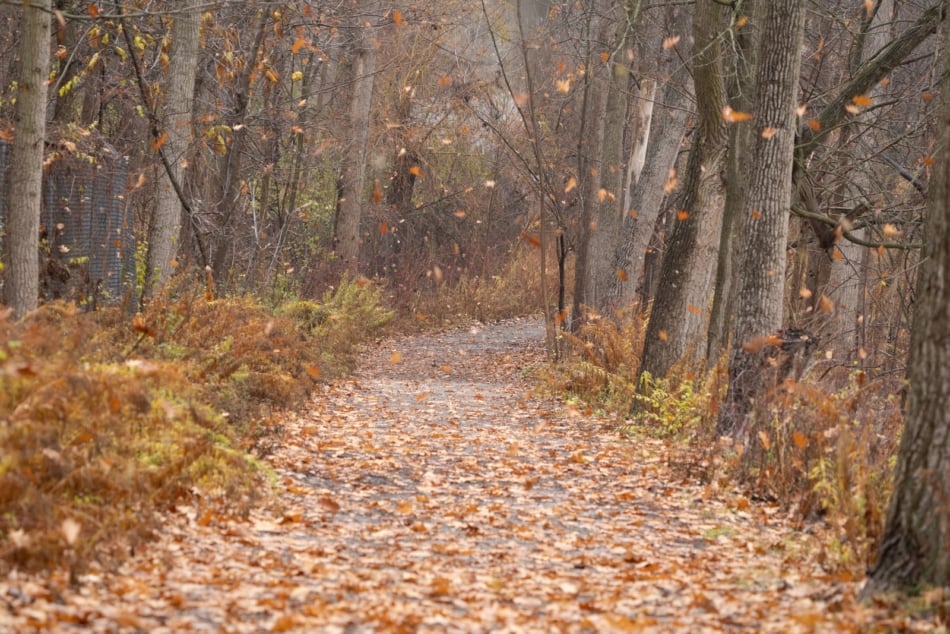
After weeks of waiting for peak color, one strong autumn storm can bring the show to an abrupt end.
As autumn progresses, trees gradually form a layer of cells at the base of each leaf stem that eventually allows the leaf to detach.
Near peak color, those leaves are much easier for strong winds and heavy rain to remove.
That means foliage can be glorious on Friday—and substantially thinner by Monday after a windy weekend.
If you’re planning a leaf-peeping trip, keep an eye not only on temperature but also on approaching storms.
The Perfect Recipe For A Beautiful Fall
Put everything together, and the ideal autumn foliage season looks something like this:
Spring and summer: Adequate rainfall keeps trees healthy.
Late summer: No prolonged drought or extreme stress.
Early fall: Plenty of sunny days.
At night: Temperatures become crisp and cool but remain above freezing.
Around peak color: Calm weather allows leaves to stay on the trees.
It sounds simple, but getting all those ingredients in the right order is surprisingly difficult.
That’s why truly spectacular foliage years are memorable.
Why One Tree Can Look Better Than Another
Weather isn’t everything.
Tree species, genetics, soil conditions, elevation, exposure to sunlight, insects, disease, and overall tree health all influence color.
That’s why two trees growing a few hundred feet apart can behave differently.
You may even notice that the sunny side of a single tree becomes more intensely red than branches growing in shade.
And each species has its own autumn personality.
Sugar maples may produce brilliant orange, yellow, and scarlet.
Red maples can become deep crimson.
Aspens and birches typically turn yellow and gold.
Dogwoods and sumacs can produce striking reds and purples.
Oaks often hold their russet, bronze, and brown leaves later into the season.
A mixed hardwood forest is especially impressive because all these colors reach the landscape at slightly different times.
What About Fall 2026?
The next several weeks will tell the story.
Our 2026 Fall Weather Forecast calls for widespread warmth during September before cooler weather becomes increasingly established later in the season.
Exactly how those temperatures combine with rainfall, sunshine, nighttime lows, and local tree health will ultimately determine the quality and timing of this year’s foliage.
And remember: peak color moves gradually from north to south and from higher elevations to lower elevations.
Northern forests and high mountain country can begin turning while communities farther south are still very much enjoying summer.
Check the Farmers’ Almanac peak fall foliage dates before planning your autumn road trip.
One Last Bit Of Fall Wisdom
When the woods suddenly begin to glow, enjoy them while you can.
Fall foliage is a remarkably temporary display—the result of months of tree growth followed by just the right combination of shortening days, temperature, sunshine, moisture, and weather.
Some years Mother Nature gets the recipe exactly right.
And when she does, there may be no finer show on Earth.
Frequently Asked Questions
What makes fall leaves especially bright?
Warm sunny days combined with cool—but not freezing—nights tend to favor brilliant fall colors, particularly reds. Healthy trees and adequate moisture during the growing season also help.
Does cold weather make leaves change color?
Shortening daylight is one of the primary signals that initiates the seasonal change. Cool temperatures influence how quickly leaves change and how intense some colors become.
Does frost make leaves change color?
No. Leaves can begin changing well before the first frost. A hard freeze occurring too early can actually damage leaves and shorten the fall foliage season.
Does drought make leaves change earlier?
Severe drought can stress trees and cause leaves to discolor or fall prematurely. Early color on a drought-stressed tree isn’t necessarily evidence that autumn has arrived early.
What temperature produces the best fall foliage?
Cool nights in roughly the 40s combined with sunny days are favorable for brilliant autumn reds. Temperatures should ideally remain above freezing until color has had time to develop.
When does fall foliage peak?
Peak foliage varies enormously by latitude and elevation. Northern and high-elevation areas generally change first, followed gradually by areas farther south and lower in elevation. Consult the Farmers’ Almanac Fall Foliage Dates and Destinations guide for typical peak dates by state.


- Farmers' Almanac Staff

- Farmers' Almanac Staff
- Farmers' Almanac Staff
- Farmers' Almanac Staff