

Storing Potatoes Onions and Garlic: A Year-Round Guide
Check out our useful tips on how to store these vegetables for best flavor.
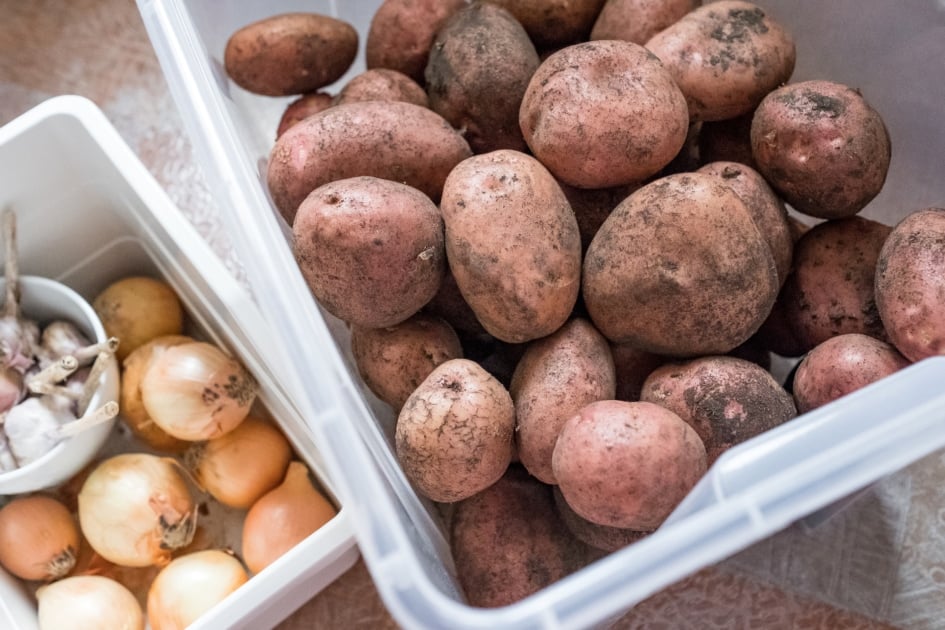
Quick Reference: Storing Potatoes, Onions, and Garlic
- Potatoes: cure at 50 to 60 degrees for about two weeks, then store at 35 to 40 degrees, cool, dark, dry, and well ventilated. Never wash before storing.
- Onions: cure at 75 to 85 degrees, trim stalks to one inch, store at 35 to 40 degrees in a mesh bag or ventilated crate.
- Garlic: cure like onions, then braid the stalks and hang in a cool, dry place.
- Keep them apart: do not store potatoes with onions. Onions give off gases that hurry potatoes toward sprouting and spoilage.
- The hard part: finding a spot that stays cool but never dips below freezing.
The beauty of root vegetables is that many of them will keep for a long time. That is especially true of potatoes, onions, and garlic, the three crops that carry a country kitchen from one harvest to the next. If you grew your own this season and want to put the surplus by, the rules are simple and the temperatures matter. Here is how to cure and store each one so it lasts through the winter of 2026 and into next spring.
Storing Potatoes, Onions, and Garlic: The Basics
Every root crop wants the same four things in storage: cool, dark, dry, and well ventilated. What changes from crop to crop is the curing temperature and a few small steps before the bulbs and tubers go into their winter quarters. Get the curing right and you toughen the skins, which is what lets the harvest keep for months instead of weeks. One rule holds across all three: store potatoes away from onions. The two give off gases that speed each other toward sprouting and soft spots, so keep them in separate containers and separate corners.
Potatoes
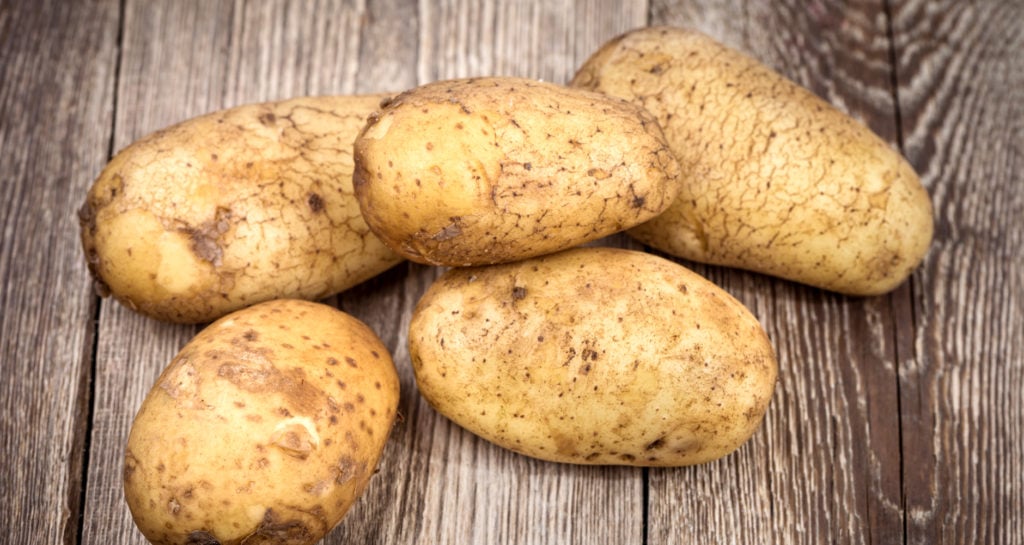
Three things are key to storing potatoes for the year: curing them, holding them at the right temperature, and keeping moisture under control.
When you harvest your potatoes, the first job is to rub away any dirt. Never wash potatoes you plan to store, because that introduces too much moisture and invites rot.
To cure them, lay the potatoes out in a cool, dry, dark place. Keep the temperature between 50 and 60 degrees and let them rest for about two weeks. Curing toughens the skins, which is what helps the potatoes keep longer.
For long-term storage, move the cured potatoes to a cool, dry, dark spot where the temperature will not fall below freezing or rise above 60 degrees. They keep best between 35 and 40 degrees. Use a well-ventilated container, a crate, a cardboard box with holes punched in it, or anything that lets excess moisture evaporate. Keep the container covered to block light, and your spuds will not turn green or sprout. Skip the main refrigerator, which is colder than ideal and turns the starch to sugar. Colorado State University Extension’s guide to storing home-grown vegetables confirms the same cool, dark, ventilated conditions if you want to read the science behind the rule.
Onions
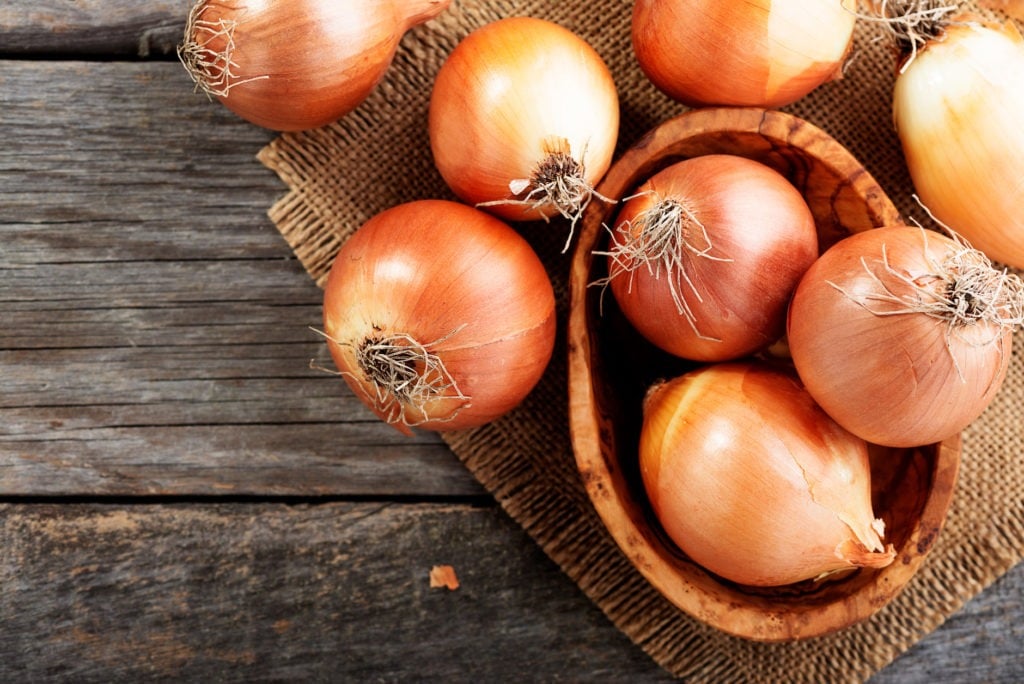
Some onions keep better than others. If you want onions to last through the winter, choose varieties with a strong, hot flavor rather than sweet ones. Sweet onions tend to keep for only a few weeks.
Onions are ready to harvest when the stalks start to fall over in late summer or fall. The first step before storage is to cure them, and onions want a dry, warm spot of 75 to 85 degrees for that.
If the weather is set to stay dry for the next two to four weeks, you can pull the onions and lay them down right where they came out of the garden. If rain is coming, move them indoors, onto the porch, or into the garage. Lay them out in a single layer and wait until the stalks dry out.
Once they are dry, trim the stalks back to about one inch and store the onions in a well-ventilated container or mesh bag. As you trim, discard any onion that still has green in the center of the stalk, since those will not keep long. As with potatoes, onions store in a cool, dark place, and the ideal long-term temperature is between 35 and 40 degrees. Just remember to keep that crate well away from the potatoes.
Garlic
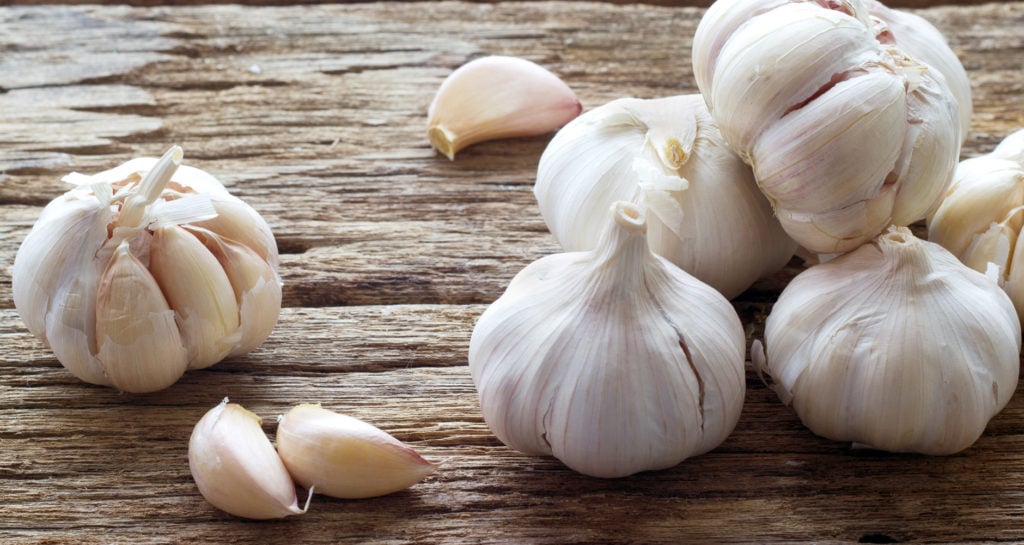
Curing and storing garlic is much like onions, with a couple of extra steps. As with onions, wait until the garlic stalks fall over at the end of the growing season, then pull the bulbs and lay them out to cure. Once cured, you will not cut the stalks off. Instead, use them to braid heads of garlic together into a long garlic rope. Then choose a cool, dry place to hang it, just as you did with the onions.
The advantage of a braid is that you can hang it, so you do not need a well-ventilated container. If you worry about your garlic sprouting from light exposure or collecting dust all winter, make covers from paper lunch bags. Cut a hole in the bottom of the bag, thread the unbraided remainder of the stalks through it, and your garlic will stay safe through the season.

Storage Conditions at a Glance
Each crop has its own curing temperature, but they all land in the same cool, dark, dry corner for the long haul. Here is the whole season on one card.
| Crop | Curing Temperature | Curing Time | Long-Term Storage |
|---|---|---|---|
| Potatoes | 50 to 60 degrees | About two weeks | 35 to 40 degrees, covered, ventilated |
| Onions | 75 to 85 degrees | Two to four weeks until stalks dry | 35 to 40 degrees, mesh bag or crate |
| Garlic | 75 to 85 degrees | Until stalks fall and dry | Cool and dry, braided and hung |
Finding the Right Storage Spot
The biggest challenge to keeping root vegetables through the winter is finding a place that stays cool but never dips below freezing. In milder climates, the porch or an unheated garage will do. In harder winters you may need a refrigerator designed for root crops, or a proper cool cellar. A spare closet on an outside wall, an insulated basement corner, or a bulkhead stairwell can all hold steady in the 35 to 40 degree range if you watch them with a thermometer.
Whatever spot you choose, check it every few weeks. Pull out any potato, onion, or bulb that has gone soft or started to sprout before it spreads to its neighbors. If you are still putting the rest of the garden by, our guide to growing your own potatoes covers the harvest step that comes right before curing, the Gardening by the Moon Calendar helps you time it, and our companion planting guide helps you plan next year’s beds.

Storing Potatoes, Onions, and Garlic: Frequently Asked Questions
What is the best temperature for storing potatoes long term?
Potatoes keep best between 35 and 40 degrees in a cool, dark, dry, well-ventilated spot. Never let the temperature fall below freezing or rise above 60 degrees. Cure them first at 50 to 60 degrees for about two weeks to toughen the skins, and keep the container covered so the potatoes do not green or sprout.
Can you store potatoes and onions together?
No. Store potatoes and onions in separate containers and separate spots. Onions give off gases that hurry potatoes toward sprouting and spoilage, so keeping them apart helps both crops last longer through the winter.
Should you wash potatoes before storing them?
No. Rub off loose dirt by hand but never wash potatoes you plan to store, because the extra moisture invites rot. Save the washing for the day you cook them.
How do you cure onions and garlic for storage?
Harvest both when the stalks fall over in late summer or fall, then cure them in a dry, warm spot of 75 to 85 degrees. Spread them in a single layer until the stalks dry out, usually two to four weeks. Trim onion stalks to about one inch before storing, but leave garlic stalks on so you can braid the heads together.
Which onions keep the longest in storage?
Strong, hot-flavored onions keep far longer than sweet onions, which tend to last only a few weeks. When you trim the stalks, discard any onion that still has green in the center, since those will not keep well either.
What if I do not have a root cellar?
You do not need one. In milder climates an unheated porch or garage works. Elsewhere, an insulated basement corner, a closet on an outside wall, or a refrigerator built for root crops can hold the 35 to 40 degree range. The only firm rule is to keep the spot above freezing and check it every few weeks.


Amber Kanuckel
Amber Kanuckel is a freelance writer from rural Ohio who loves all things outdoors. She specializes in home, garden, environmental, and green living topics.
- Amber Kanuckel

- Amber Kanuckel

- Amber Kanuckel
- Amber Kanuckel





I harvested my onions and dried properly. They are getting soft and rotting. What did I do wrong?
I heard it’s best to harvest mid- August here in Saskatchewan…. let them dry in the garden for a couple weeks as long as they don’t get rained on. This gives them enough time to dry out before going into storage bags. I actually left mine in the shop for more like 4-5 weeks to dry after I brought them in from the garden. I still lost a few but not too many. Still eating garden onions in February! So I’d say it’s a success.
Fantastic, Valerie! Thanks for sharing.
I live in a small flat and have tried to grow onions and garlic as they sprouted in the kitchen basket but after soiling them they grow a while and than they seem to die how to know and what to do ?
We grow garlic (hard neck) and have stored in our basement in a basket that is hung by a string from the ceiling, by the end of winter they are sprouting and moldy. This year I stored them in mesh bags that oranges come in and hung them down in my cool basement from the ceiling. I did not crowd them in there and I am hopeful. Time will tell.
Tip from a friend in Georgia for storing onions/shallots/garlic. Old pantyhose. Place in toe of pantyhose, tie a knot, put in another one, tie a knot etc. Hang in closet/pantry. They keep forever. If you have an abundance of unwearable hose just cut below the knot for however many you need or else untie knot and save for next batch.
Those directions are for softneck garlic,hardneck is different.
Our harvest for these crops is spring in south Texas. The only place that is dark and between 35-60 degrees is a refrigerator. Any suggestions for an alternative method (other than eating the potatoes)?
Hi Speckled Sparrow, We do say, “Otherwise, you may need to invest in a fridge that is designed for root crops or store your root veggies in a cool cellar.” Might be the solution. Good luck!
I wish we had a root cellar, but most farmsteads don’t have those anymore. But yes, that would be a great place for storage!!!
There is a keeper sweet now that is named Candy Sweets. These onions have a sweet flavor and will keep. These onions are grown in the Hermiston Oregon area. I really like these onions over the Walla Walla Sweets.
We use a root cellar and have since I can remember more then 70 years , potatoes , sweet potatoes, yams, carrots, turnips, onions , garlic , all together some on a straw bed , some hanging , lasting from September to when we cut potatoes for replanting.
It’s probably best to NOT store onions and potatoes in the same storage place. Is that correct? We store in entirely two different locations and they both keep well into March and April.
Hi Gladys, yes, you do NOT want to store onions and potatoes together.